• Thanks for stopping by. Logging in to a registered account will remove all generic ads. Please reach out with any questions or concerns.

GBAD - The return of 'FOBS'

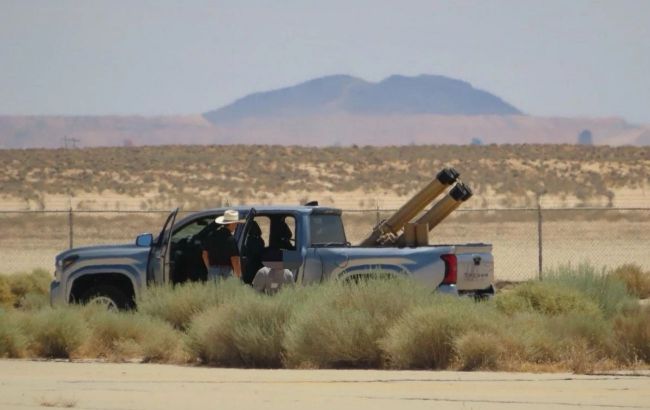
Private enterprise air defence in the US.


"U.S. startup Impact Drones has launched out of stealth offering drone interceptors as a service to protect data centers, airports, power grids and other infrastructure, initially overseas as U.S. counter-drone legislation evolves.'

Trespassers, birds, windshear,CUAS -


"IMPACT Drones
"Air Defense as a Service for Civilian Infrastructure.

"IMPACT builds autonomous interceptor drones that ship in a sealed box. The box sits at the site it protects (data centers, power grid, airports, bases) with no crew on the pad. When sensors cue a hostile drone, an interceptor pierces its own frangible lid, launches, and rams the target, guided by onboard visual navigation that keeps working when GPS is jammed. Legacy effectors cost $1M+ per shot against $30k threats; our interceptors cost like the threat and launches scale with the swarm. Sites subscribe to protection instead of buying missiles: hardware, reloads, and monitoring included. Air defense as a Service."
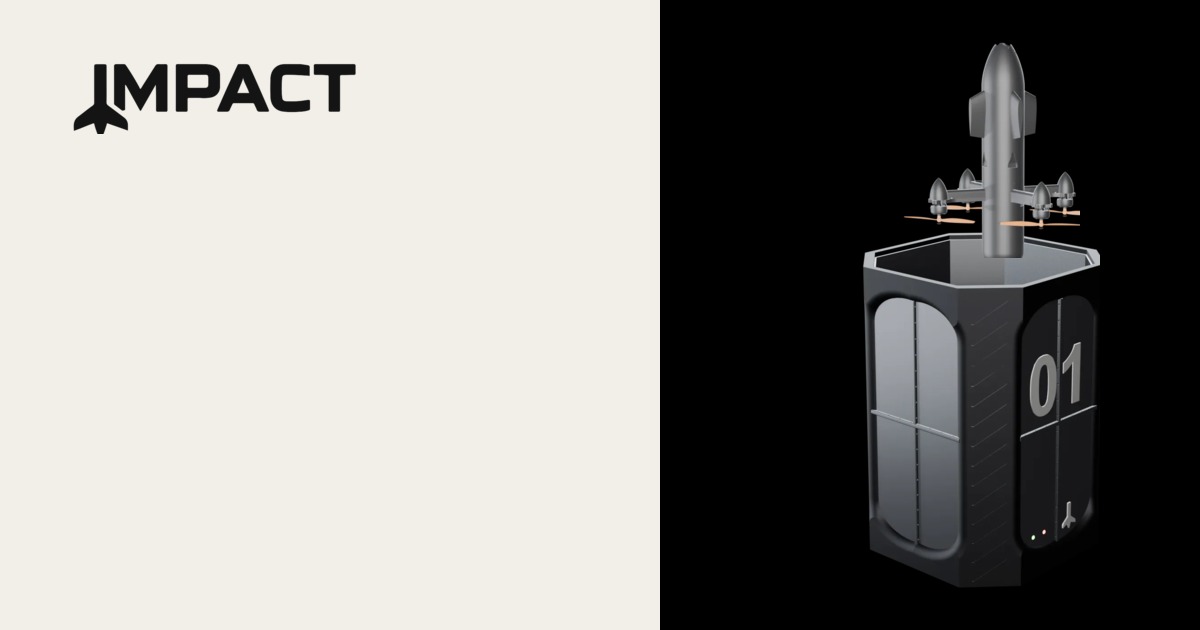


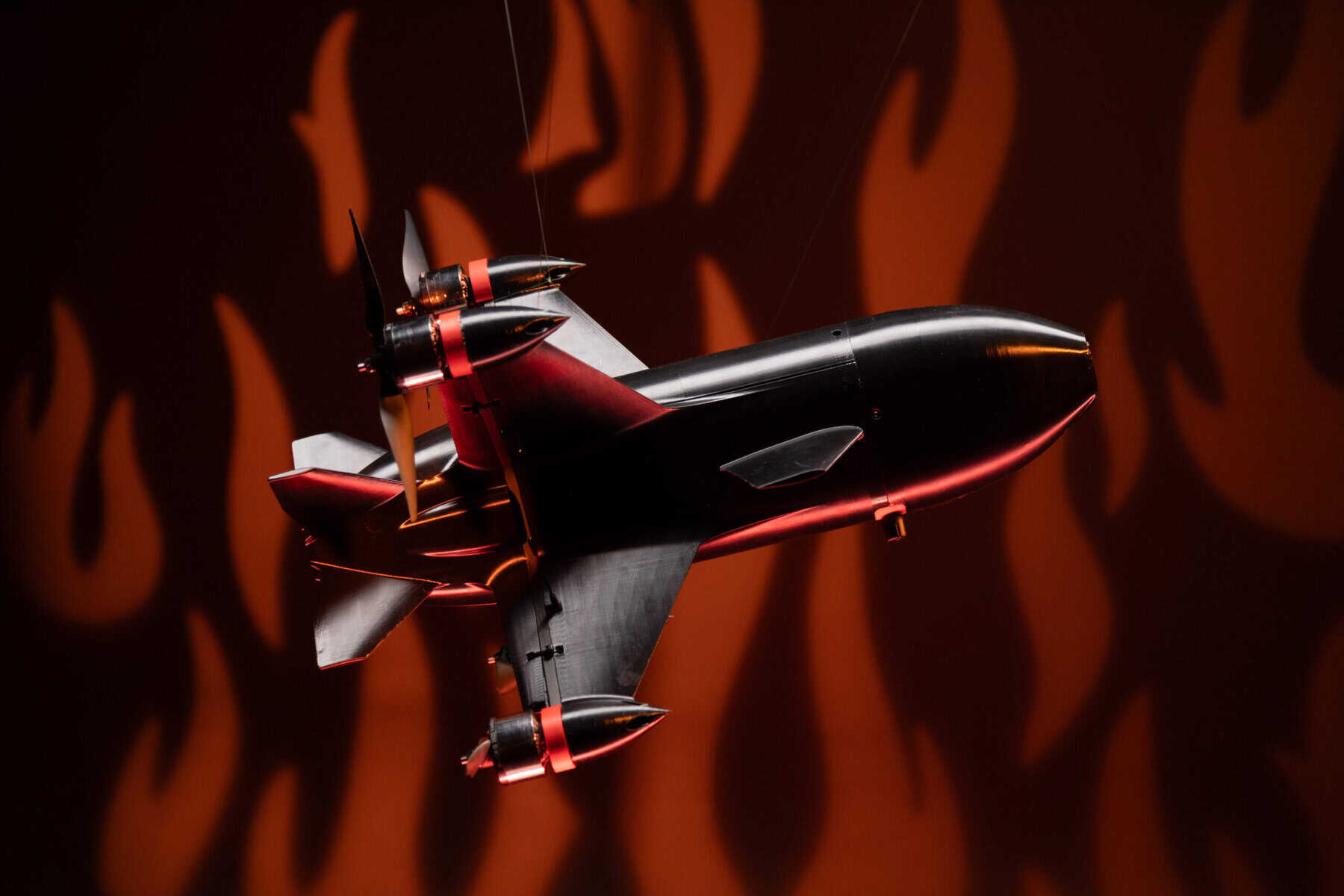
A combination of battery powered quadcopters (300 kmh local counter) and a jet powered long range pursuit interceptor (825 kmh)
 
A Canadian entry into Drone services


Can the same interceptor that is deployed to destroy a flying drone also be deployed to pursue a trespasser by police?
 

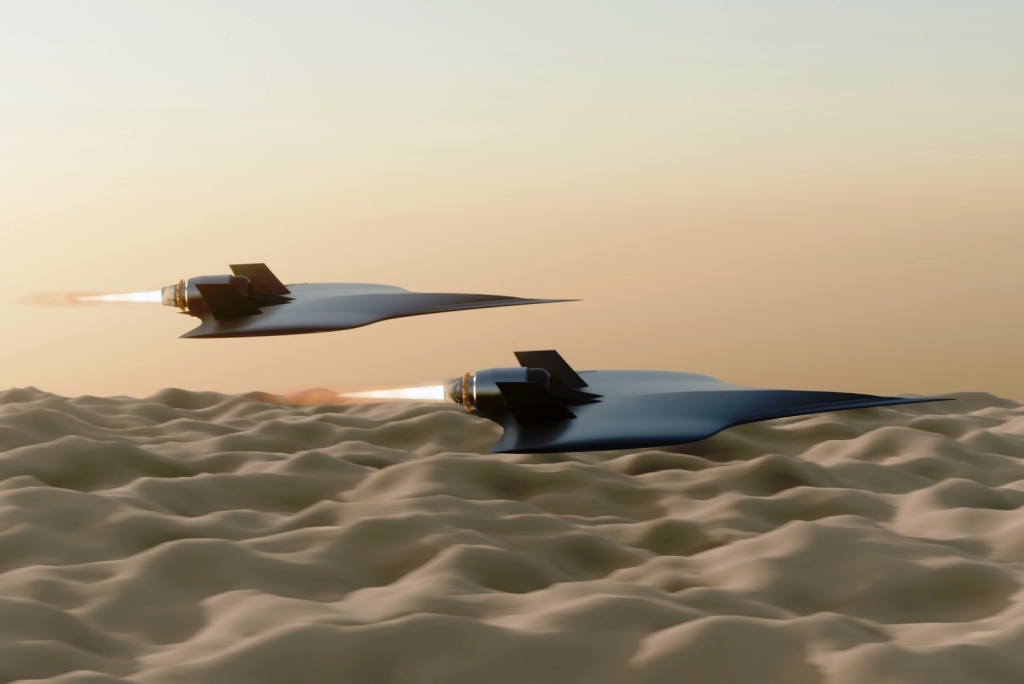
A jet powered CUAS drone

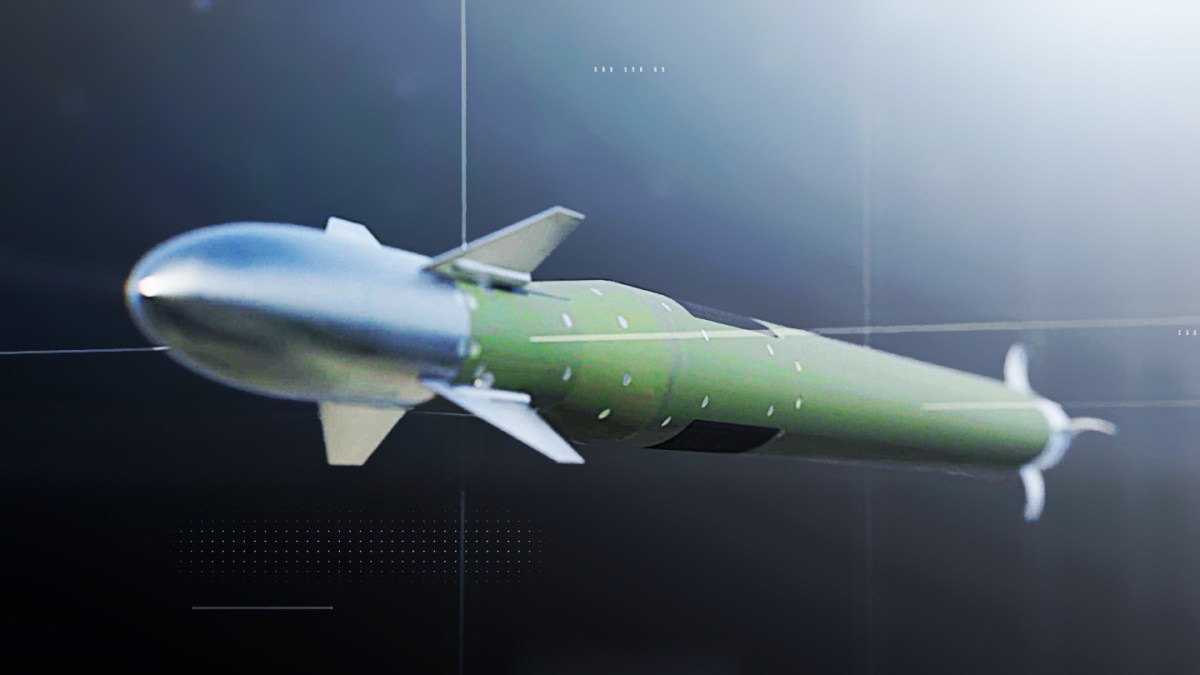
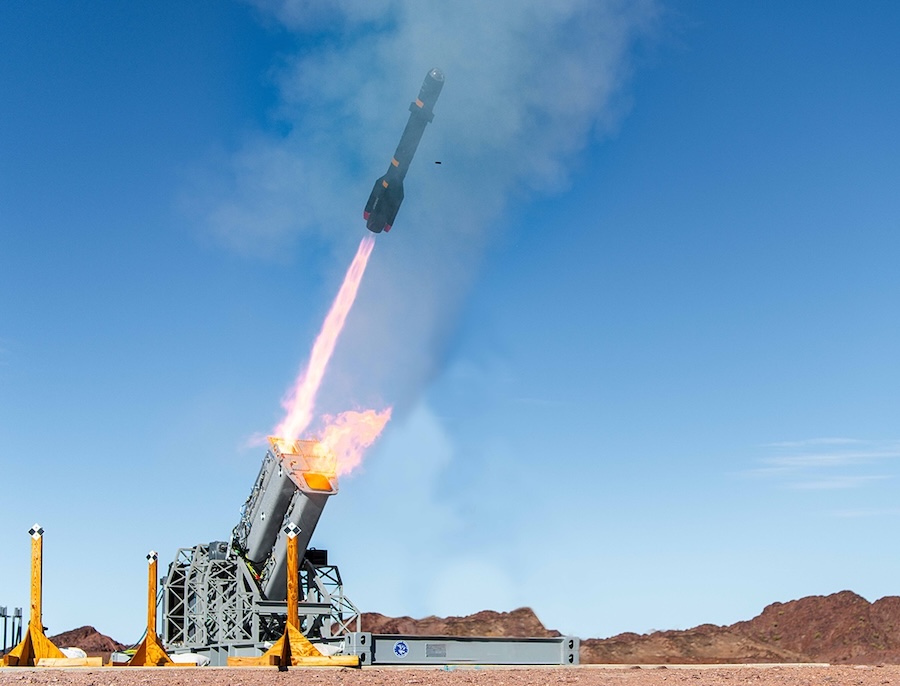
"Skyhammer is a tube-launched, radar-guided interceptor roughly 18 kilograms (40 pounds) in weight and under a meter (3.3 feet) long, powered by a small turbojet engine that pushes it to speeds of up to 700 km/h (435 mph) across a range of more than 30 km (19 miles), fast enough and far enough to intercept Iranian-designed Shahed-style drones,"

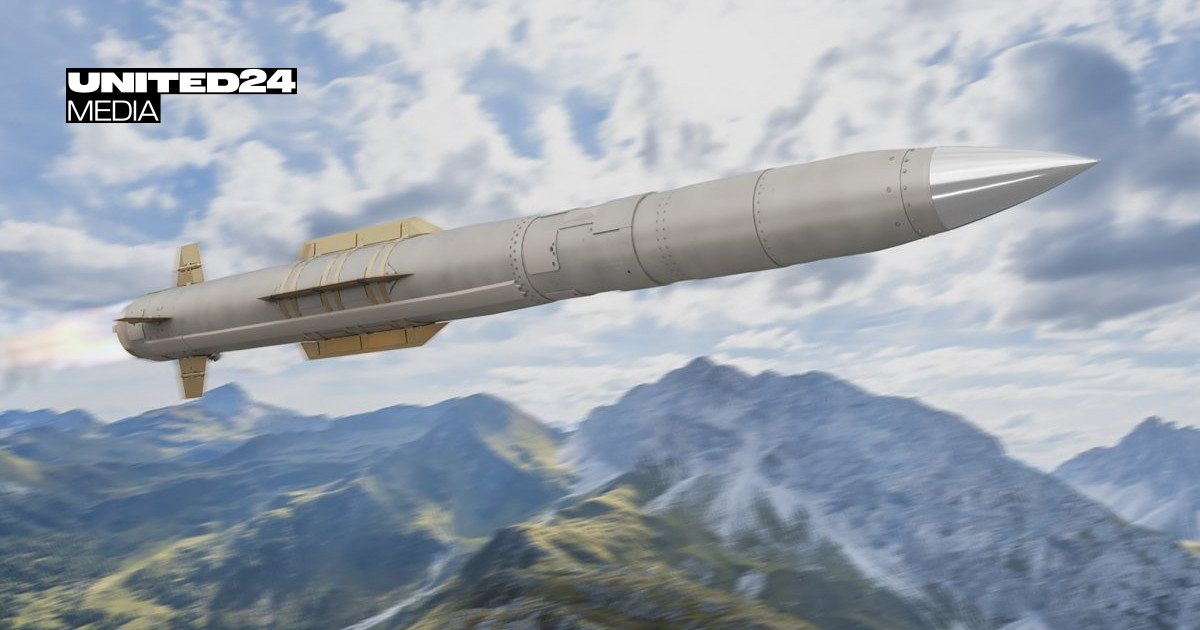
"What separates Skyhammer from a conventional surface-to-air missile is price. Traditional interceptor missiles used by Western militaries, weapons like the Advanced Short Range Air-to-Air Missile carried by RAF Typhoon jets, cost roughly $270,000 (£200,000) apiece, a price tag built around defeating high-value threats like enemy fighter jets rather than a drone that itself might cost only a few thousand dollars to build. Cambridge Aerospace has said publicly that it designed Skyhammer to close that gap, targeting a unit cost in the tens of thousands of dollars, roughly one to two percent of what a traditional interceptor costs"

1% of $270,000 is $2,700
2% 0e $270,000 is $5,400
 
. Cambridge Aerospace has said publicly that it designed Skyhammer to close that gap, targeting a unit cost in the tens of thousands of dollars, roughly one to two percent of what a traditional interceptor costs"

1% of $270,000 is $2,700
2% 0e $270,000 is $5,400
Yeah. The example math doesn't work out. But it's a start, especially if they can really get it down into the $3-5,000 range and start producing them at scale.

We still need something in the sub $1,000 range to take out quadrocopters and Lancet/V2U types of systems.

🍻
 
Yeah. The example math doesn't work out. But it's a start, especially if they can really get it down into the $3-5,000 range and start producing them at scale.

We still need something in the sub $1,000 range to take out quadrocopters and Lancet/V2U types of systems.

🍻

AI offerings

Low-cost Counter-Unmanned Aerial Systems (C-UAS) rely on attritable interceptors ranging from $2,100 kinetic collision drones to supersonic tactical missiles priced under $100,000–$150,000. These systems aim to fix the economic mismatch of firing multimillion-dollar traditional air-defense missiles at cheap aerial threats.

Leading Low-Cost C-UAS Interceptor Solutions

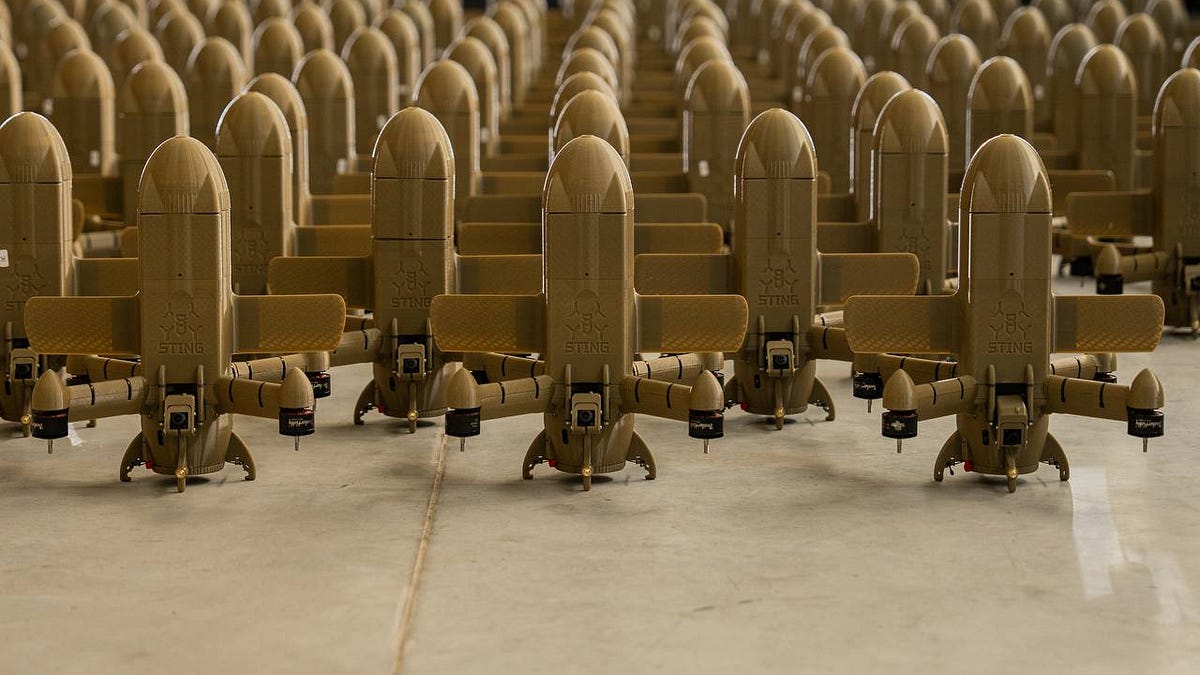
Ukrainian "Sting" Interceptor Drones: Small, highly agile FPV-style kinetic drones designed to crash into loitering munitions, costing roughly $2,100 to $2,500 per unit.

MaXon Systems Autonomous Drones: Semi-autonomous interceptor drones deployed in Ukraine targeting Shahed-type drones, valued at approximately $3,500 per engagement.

Merops Interceptor Drones: Deployed to protect field personnel against one-way attack drones at roughly $15,000 per unit, with potential scale reductions down to $3,000.

X-Bow Buckler: A solid-rocket supersonic interceptor designed for Group 3 drones targeting a unit cost under $100,000.

US Army Next Generation Counter-UAS Missile (NGCM): An active solicitation framework pushing industry developers to engineer all-up rounds priced under $150,000 for ranges exceeding 16–25 kilometers.


Daft buggers are still mucking around looking for a marketing advantage to justify their prices and contracts.

They could just be producing more of what they know works and buy working kit from other suppliers.
 
For consideration

The closer the attacking missile gets to the target the easier it is for the target to eliminate the incoming missile.

The closer the missile gets to the target the less room for manoeuver the missile has and the easier it is to predict the missile's flight path.

Engaging incoming missiles at distance depletes the attack but is expensive and has a lower probability of intercept.

Engaging incoming missiles in the last second before impact has a greater chance defeating the incoming missile given adequate tracking ability, ability to project force in 360 degrees and adequate supplies of ammunition.

....

The M230 LF (XM914) firing the 30x113 XM 1223 as a replacement for the M2HB firing ball seems to me to make a better last ditch force protection weapons system for individual vehicles and small units.


In a Stryker Brigade

Equip the APCs, C2 and support vehicles with the M230/XM1223 combination
Replace the Dragoon 30s with SkyRanger 30s (supplemented with lasers and SAMs)
Keep the M-SHORADS armed with the M230s for point defence, like the APCs etc, but have them focus on SAMs (NGSRI) and electric CUAS interceptors.


Essentially, in my view, these AI equipped turrets are akin to the Trophy Active Protective Syatems but with greater range and deeper magazines. The disaadvantage is that they can only cover one incomer at a time.
 
Deleted due to paywall

Blackwater moving into the commercial air defence business. Design, build and operate air defence systems for civilian infrastructure.
 
Last edited:
GBAD or CCA?


Clarifying the state of play of CUAS drones.

Interesting suggested set up.

Interceptions require a pilot.

Radars and human spotters on the ground detect the targets.
A crew of three, a pilot, a navigator and an armourer, manage a battery of interceptors and cover a sector.

The interceptors have lives measured in minutes before they need to return to base for recharging.

Can the crew launch the interceptors at intervals to keep a constant presence of interceptors in the sector, hovering at altitude, and the pilot taking control for the final intercept?

AI doesn't seem to have closed the loop yet.


....

Back in March 33,000 interceptions were apparently made by Wild Hornet Sting type quadcopters. In July this number fell to 2 to 3000.

It is questionable which is running short first, targets or interceptors.

...

Assume the 33,000 interceptions
That is 1,000 a day.
40 an hour.

Assume that every interception involves a pilot, I doubt that one pilot could drop targets at a rate of 40 an hour, 24/7 for 31 days.
On the other hand, 40 pilots and crews might maintain 40 an hour for a shift.

33,000 interceptions
100 pilots and crews with 100 batteries of battery powered UAVs?

And the pilots don't have to be local to the launch sites. They can be thousands of kilometers away.
 
Last edited:
And the pilots don't have to be local to the launch sites. They can be thousands of kilometers away.
If you want them to be effective, then they need to be relatively near, solely due to latency.

The bandwidth requirements for large scale applications is significant.
 
If you want them to be effective, then they need to be relatively near, solely due to latency.

The bandwidth requirements for large scale applications is significant.


Per the article

"Gorn told me that he had worked with the Hornet Vision Ctrl within Ukraine, and that his experience with the system was highly positive. He described it as a very promising technology. “One of its major advantages is that a single crew can cover several positions. One pilot is enough to cover part of the front, while only spotters need to remain on the ground. They are much easier to train, and this does not significantly affect the quality of the mission,” Gorn said.

"He noted that there is some control latency — around 0.2 seconds — but in practice it feels lower and is barely noticeable. After one or two flights, the pilot effectively stops noticing it.

"Gorn also emphasized that distance itself is not the key factor limiting this type of remote control. If the system is built properly, geography is not the problem."

.....

"In late June 2026, Ukraine’s MoD codified the Hornet Vision Ctrl system, which allows pilots to remotely control drones from anywhere in the world. It was officially unveiled in March 2026. Thanks to this technology, more than 600 targets have been destroyed remotely in less than three months.

"Also, Wild Hornets announced that the Hornet Vision Ctrl system allowed them to set a new distance record for controlling STING. According to the company, the pilot was located abroad and controlled a drone operating in northern Ukraine, around 2,000 km away from him.

"In a major interview with DOU, a Wild Hornets representative said that the control system is a key component of interceptors’ effectiveness. Hornet Vision Ctrl emerged because of a shortage of Chinese digital systems. “We were forced to create our own system. It is not just about data transmission. It is about remote control, positioning, AI systems, and controlling different drones from different platforms — in the air, on land, and at sea,” the representative mentioned, speaking on the condition of anonymity.

"The system includes a ground command-and-control station with a digital video system, a 360-degree omnidirectional antenna, and equipment to connect to the UAV operator’s workstation.

"The main advantage of the Hornet Vision antenna is 360° coverage, which allows two-person crews to operate without a separate operator to turn the antenna. Another feature is one-way communication, which increases the system’s resilience to EW."
 
Back
Top