• Thanks for stopping by. Logging in to a registered account will remove all generic ads. Please reach out with any questions or concerns.

New Canadian Shipbuilding Strategy

  • Thread starter Thread starter GAP
  • Start date Start date
I am not convinced the battleships production was halted because they wanted to build more frigates and destroyers, but more because they realized almost right away that battleships were not the top dog anymore and rather just big targets with no benefits. They did continue and increased the production of aircraft carriers, for instance.

BTW, the corvettes developed the tactics for convoy escort function (raspberry and half-raspberry), but none related to the work of hunter-killer groups. Those came mostly from the brilliant mind of Capt Johnny Walker, a RN long serving regular.
They were halted because it was clear they would not be ready in time to take part in hostilities, with delays in every aspect, because all the sub contractors making ship components were carrying full order books. They would have very much liked to have another 4 modern Battleships (Which would also allow them to layup the remaining Revenge class that were obsolete at the beginning of WWII. You note that Vanguard carried older turrets and guns to speed up commissioning.
 
Possibly this 'trip down memory lane' on the shipbuilding of the DDH-280s has been posted before? ... I don't know. I just stumbled across it today and found it most interesting. A lot of what was being done at the time (gas turbine engines, two helicopter hanger with RAST (bear trap)) were all pretty innovative, compared to what other navies had.

But if not read before - it could be of interest - especially some of the deliberations and how the design changed ...

The article starts on page-6 of this June-1998 Maritime Engineering Journal.


The Brits and Yanks are in the same place we are. No frigates.

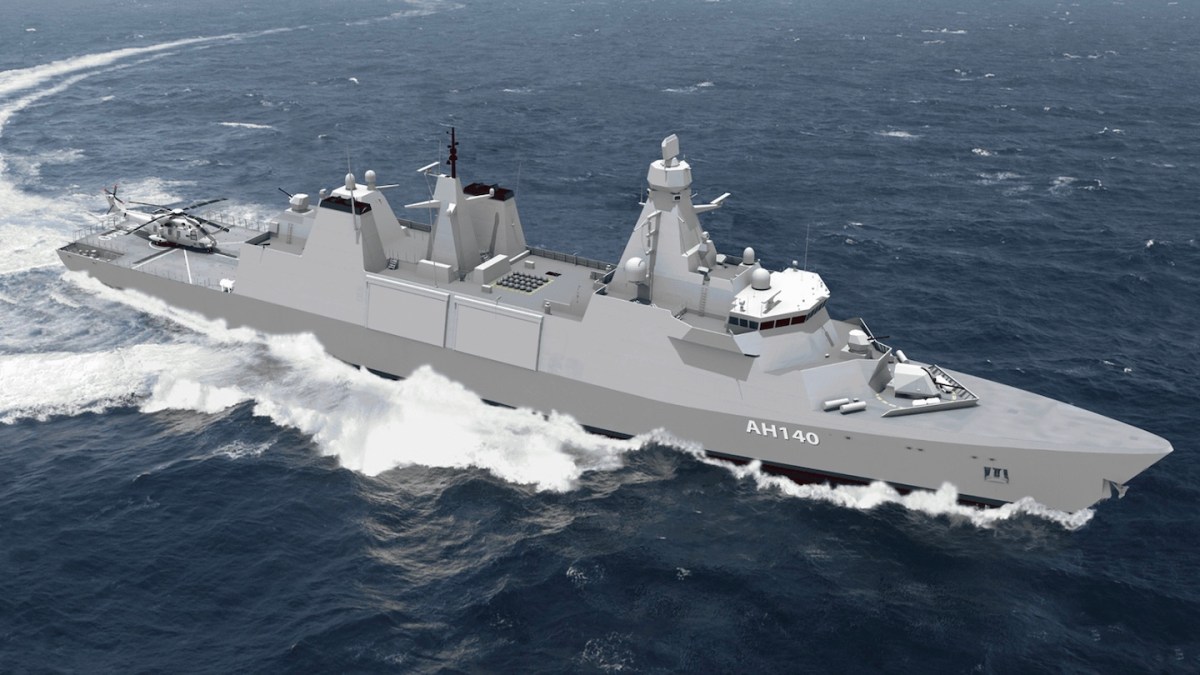
The Yanks are desperate enough they are looking at buying ships offshore. Babcock would love some of that action and has open lines. The Brits aren't buying in large numbers. The lines could be available in short order if..... if the Danes don't buy and more importantly, if there are no delays.

So delays on the Type 31s now are PR poison.
 
Its nothing to be jealous of - they cant afford this. Their economy is in absolute shambles. Theyre running a 31% inflation rate for example.
Possibly this 'trip down memory lane' on the shipbuilding of the DDH-280s has been posted before? ... I don't know. I just stumbled across it today and found it most interesting. A lot of what was being done at the time (gas turbine engines, two helicopter hanger with RAST (bear trap)) were all pretty innovative, compared to what other navies had.

But if not read before - it could be of interest - especially some of the deliberations and how the design changed ...

The article starts on page-6 of this June-1998 Maritime Engineering Journal.
Everything I've read about the 280s during that time comments of how revolutionary they were.
More then a few of the articles and papers that I've read also mentioned just how close the Navy's engineering side came to breaking.
The talent pool wasn't a deep or as broad as the Government and the Navy had assumed.
On top of that there was a lot of reorganization going through out both the Government and the Canadian Forces.
I believe the phrase is " interesting times ".
But they managed to pull it off and got all four Destroyers from paper to underway.
It's a great deal to be proud of.
 
Recent work being undertaken at Irving Shipbuilding to expand the facility, specifically with building the new OmniLift ship lift.

A major milestone is taking shape in Nova Scotia.

McNally, a Weeks Marine subsidiary, has placed the final of 14 concrete caissons and 18 keys for Irving Shipbuilders, a partner in the National Shipbuilding Strategy (NSS) with the Canadian Federal Government.

These are the largest caissons McNally has ever built, with some as large as 41 meters long, 21 meters wide and 21 meters high. Their size required the team to modify its J.G. Burke semi-submersible barge to accommodate the massive structures.

The Irving Shipyard project also involves extensive dredging and demolition of existing marine structures. Once complete, the infrastructure will provide additional dock space and support a new ship lift, helping Irving Shipbuilding launch warships being built for the Royal Canadian Navy.

We're proud of our team for taking on this complex marine construction challenge and reaching another important milestone.

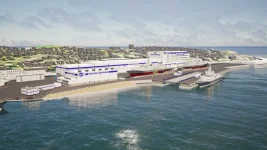
The OmniLift is rated for 30,000t and a 167m long vessel, being specifically designed to deal with the upcoming River class Destroyers. The image size isn't amazing but you can see the expansion to Irving Shipyard to provide additional working area below as well. Considering how large these ships are, it shows the size of the future yard with them ashore. The OmniLift is expected to be operational in 2028.


hmW1PdU.jpeg


YNbFuVG.jpeg


HKGkX60.png


Here is also a video rendering showing the system in action:


Additional info on the overall scale of expansion work at Irving:

Kiewit was selected to execute major marine infrastructure upgrades at the Irving Shipyard in Halifax, Nova Scotia, supporting Canada’s National Shipbuilding Strategy. The project will enable construction of the country’s next generation of navy vessels. Scope of work includes:
  • Demolition of existing steel piles and three marine dolphins
  • Dredging of 100,000 m³ of Class B and 6,800 m³ of Class A material
  • Placement of 21,600 tonnes of Rockfill No. 1 and 110,500 tonnes of Rockfill No. 2
  • Installation of 14 large-scale caissons measuring up to 41m by 19.6m by 21m
  • Construction of caissons requiring 6,800 tonnes of reinforcing steel and 47,400 m³ of concrete
 
Recent work being undertaken at Irving Shipbuilding to expand the facility, specifically with building the new OmniLift ship lift.


The OmniLift is rated for 30,000t and a 167m long vessel, being specifically designed to deal with the upcoming River class Destroyers. The image size isn't amazing but you can see the expansion to Irving Shipyard to provide additional working area below as well. Considering how large these ships are, it shows the size of the future yard with them ashore. The OmniLift is expected to be operational in 2028.


hmW1PdU.jpeg


YNbFuVG.jpeg


HKGkX60.png


Here is also a video rendering showing the system in action:


Additional info on the overall scale of expansion work at Irving:

I'm happy to see that Irving went with the automated solution and not the old fashion Maritime manual, seasonal employment solution. I'm glad that we've moved beyond Jean Valjean


1793809158972.png
 
Back
Top