• Thanks for stopping by. Logging in to a registered account will remove all generic ads. Please reach out with any questions or concerns.

The RCAF's Next Generation Fighter (CF-188 Replacement)

Spitfires and Hurricanes.
Not to mention the Beaufighter, Blenheim, Defiant, Mosquito, Fulmar, Firefly, Gladiator, Tempest, Typhoon, and Mustang...

It's almost as if, when facing a full scale war, having one magical "do-all" aircraft isn't possible. Not that we'd plan for that. We'll buy 88 of the most delicate aircraft we can buy, because they are "amazing", and not consider what happens when "amazing" doesn't beat "present", "available", or most critically "replaceable".
 
I can see an on-going need for the CF18 unless we end up with a dual fleet. Even if we were reinforcing for NATO an F35 would be overkill if going up against a swarm of drones except as a director or am I selling its capabilities short.

There might be an opportunity to do just that?

The superhornet production line will be shutting down soon to retool for the F47. With the pending changes in US government, hopefully to one more Canada friendly, maybe the line could be moved north to Boeing Canada and keep on making new frames and parts?

As much as I like things about the Gripen and Sweden's willingness to do business, it still has a lot of critical components that come from the US, and while new superhornets wouldn't be identical to the current CF18s, I would think a lot of the experience and institutional knowledge within RCAF would be make it a quicker win.

Keep the full F35 order going, but also build a new fleet of F18Fs to do the less exciting work at a lower cost.
 
Not to mention the Beaufighter, Blenheim, Defiant, Mosquito, Fulmar, Firefly, Gladiator, Tempest, Typhoon, and Mustang...

And their multiple marks... 👍


It's almost as if, when facing a full scale war, having one magical "do-all" aircraft isn't possible. Not that we'd plan for that. We'll buy 88 of the most delicate aircraft we can buy, because they are "amazing", and not consider what happens when "amazing" doesn't beat "present", "available", or most critically "replaceable".
 
Not to mention the Beaufighter, Blenheim, Defiant, Mosquito, Fulmar, Firefly, Gladiator, Tempest, Typhoon, and Mustang...

It's almost as if, when facing a full scale war, having one magical "do-all" aircraft isn't possible. Not that we'd plan for that. We'll buy 88 of the most delicate aircraft we can buy, because they are "amazing", and not consider what happens when "amazing" doesn't beat "present", "available", or most critically "replaceable".

Interesting notes on why both Spitfires and Hurricanes were ordered.

Spits were more advanced but more expensive, took longer to build and didn't have the requisite maintenance base to support their new all metal construction.


"In June 1936, the Air Ministry placed its first order for 600 aircraft. On 26 June 1936, the Air Ministry approved the type name of "Hurricane" that had been proposed by Hawker"

"It was significantly cheaper to produce than the Supermarine Spitfire and took 10,300 man hours per airframe to produce, compared to 15,200 for the Spitfire, which had many parts formed by hand, with English wheels. As war was looking likely, and time was of the essence in providing the RAF with an effective fighter, the authorities expected problems with the more advanced Spitfire, while the Hurricane made use of well-proven manufacturing techniques. The service squadrons were also already experienced in maintaining aircraft structurally similar to the Hurricane. A fabric-covered wing was initially adopted to accelerate production, while a higher-performing, stressed-skin metal wing was introduced in late 1939."

"on 3 June 1936, the Air Ministry placed an order for 310 Spitfires, at a cost of £1,395,000, before the A&AEE had issued any formal report. "


Hurricanes chased bombers in the Battle of Britain. The Spits kept the fighters off of the Hurricanes. Hurricanes accounted for 60% of the kills.

.....

The German bombers flew like UAVs and Cruise Missiles - slow and steady on a fixed course with little to no evasion.

 
Not to mention the Beaufighter, Blenheim, Defiant, Mosquito, Fulmar, Firefly, Gladiator, Tempest, Typhoon, and Mustang...

It's almost as if, when facing a full scale war, having one magical "do-all" aircraft isn't possible. Not that we'd plan for that. We'll buy 88 of the most delicate aircraft we can buy, because they are "amazing", and not consider what happens when "amazing" doesn't beat "present", "available", or most critically "replaceable".

88 F35s
176 Grippens
+A10s
+Apaches

That's my dream
 
88 F35s
176 Grippens
+A10s
+Apaches

That's my dream
Oh you dream in Technicolor as well?
Disney Perfect Loops GIF
 
Adequate....


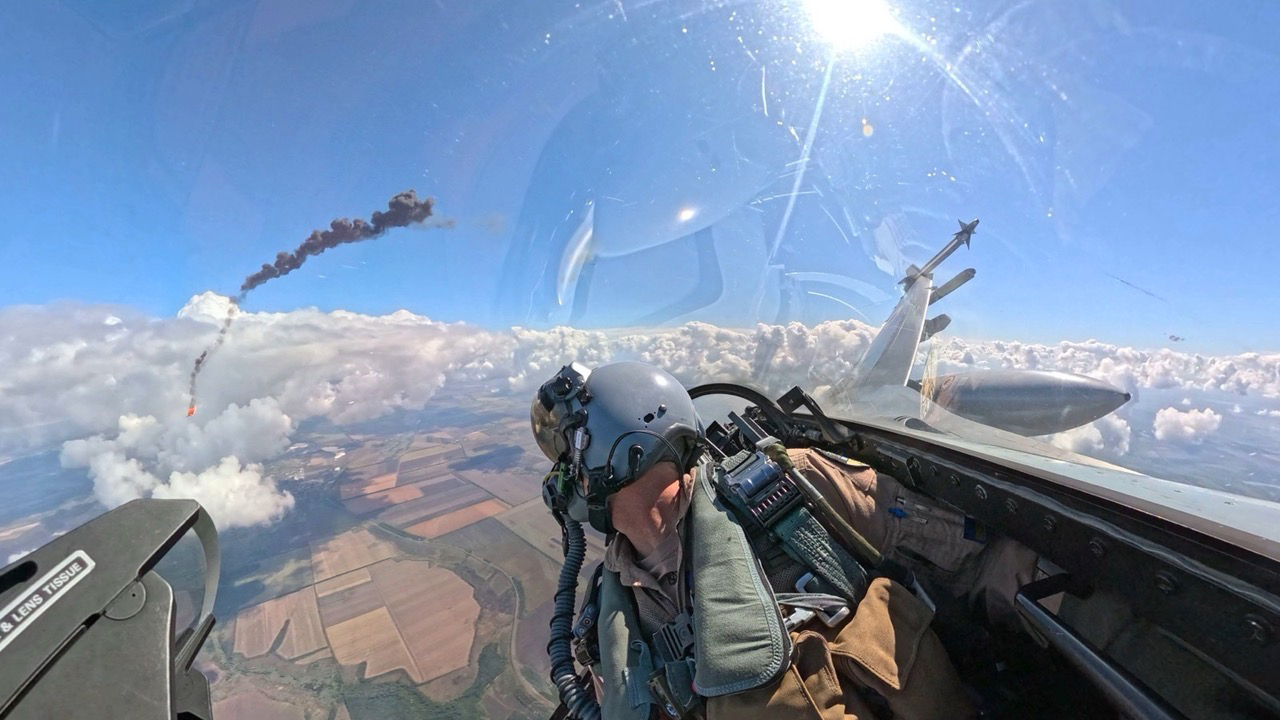
"Ukrainian F-16s have scored 4,700 shoot-downs of Russian one-way attack drones, 1,100 of which took place in October, a Ukrainian government spokesperson said at a separate event Nov 5. To knock out the drones, Ukrainian pilots have mainly relied on the F-16’s 20mm gun."

....

For context, 4700 represents the approximate number of OWEs launched monthly by Russia. So 1100 is about 25% of the numbers attacking.

....

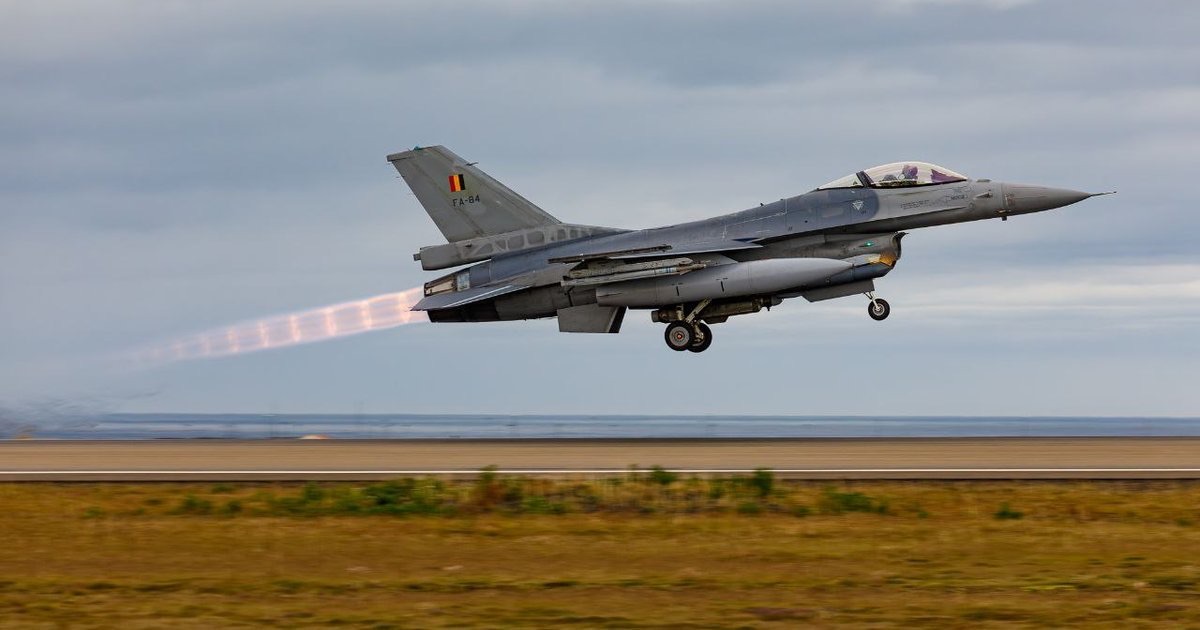
F16s are also armed with 70mm APKWS II


Further to....


"One Ukrainian F-16 pilot shot down nine Russian drones in a single sortie, using only the plane’s cannon. Days earlier, the same pilot had downed eight in one flight,"

"On the first of the two flights, the pilot destroyed eight Russian drones, firing 400 rounds from the F-16’s 20mm M61A1 Vulcan cannon and landing with 100 to spare, the wing said. Days later, he went up again and broke his own record, downing nine and returning with 80 rounds still in the belt."

"The gun is partly a workaround for scarcity. Ukraine’s F-16s are so short of air-to-air missiles that pilots increasingly meet drones with the cannon, saving the missiles for harder targets. But it is a blunt instrument: the 20mm rounds behave like grenades when they fall back to the ground, able to strike a wide area and kill the very civilians the jets are trying to protect."
 
I'm not sure I can envision a scenario where Canada would face a high volume and sustained barrage of Shahed-type drones that would justify a separate 4th Generation fighter fleet specifically to counter such a threat.
 
I'm not sure I can envision a scenario....

How very Canadian of you. 😉

Canada is buying aircraft other than 5th generation fighters. Ukraine and the US are both demonstrating that with appropriate armaments even 3rd and 4th geneneration fighters, propeller driven trainers and helicopters can be effective against UAVs and Cruise Missiles. Much the same way that GBAD platforms are effective using the same armaments. The differences lie in the speed at which the platforms can relocate and "check-to-the-threat".

Our purchase practices should ensure that all our platforms should be capable of being armed and that there should be adequate stocks of arms and production facilities to support their use.
 
Last edited:
How very Canadian of you. 😉
Then go on and enlighten me. Unless you're talking about the United States, from which secure landmass is an enemy launching drones against Canadian targets? If you're instead thinking about drones launched from container ships then you're better off sinking the ship(s) than sitting back and defending against the drones.

We definitely need to learn the lessons that Ukraine is giving us but Canada is NOT Ukraine. The likely threats we face are not the same simply due to our geography. What is the opportunity cost to Canada of purchasing a fleet of aircraft specifically to defend against mass drone attacks that are low probability? What other important capabilities are you willing to give up for that?

I realised my jocular response was curt so I elaborated as you were typing. I invite you to re-read my edited response above.

Cheers.
 
Then go on and enlighten me. Unless you're talking about the United States, from which secure landmass is an enemy launching drones against Canadian targets? If you're instead thinking about drones launched from container ships then you're better off sinking the ship(s) than sitting back and defending against the drones.

We definitely need to learn the lessons that Ukraine is giving us but Canada is NOT Ukraine. The likely threats we face are not the same simply due to our geography. What is the opportunity cost to Canada of purchasing a fleet of aircraft specifically to defend against mass drone attacks that are low probability? What other important capabilities are you willing to give up for that?
We have 5000 reasons based in Latvia to consider a less maintenance supplement to the F35 to provide airborne coverage a la the F16 that Ukraine is using effectively. Unless we are planning on withdrawing to NA and pulling up the drawbridge so to speak other obligations are certain to occupy our future employment of our armed forces. It is better if we can provide at least some of our own defense when that occurs without having to totally rely upon our allies to provide it.
 
The canard of needing twin engines for arctic operations was an invention by the RCAF to eliminate the F16 and drive the choice to the F15 in th competition where we ultimately acquired th CF18.
That is the first time I've heard that, but it doesn't surprise me.
 
Back
Top