• Thanks for stopping by. Logging in to a registered account will remove all generic ads. Please reach out with any questions or concerns.

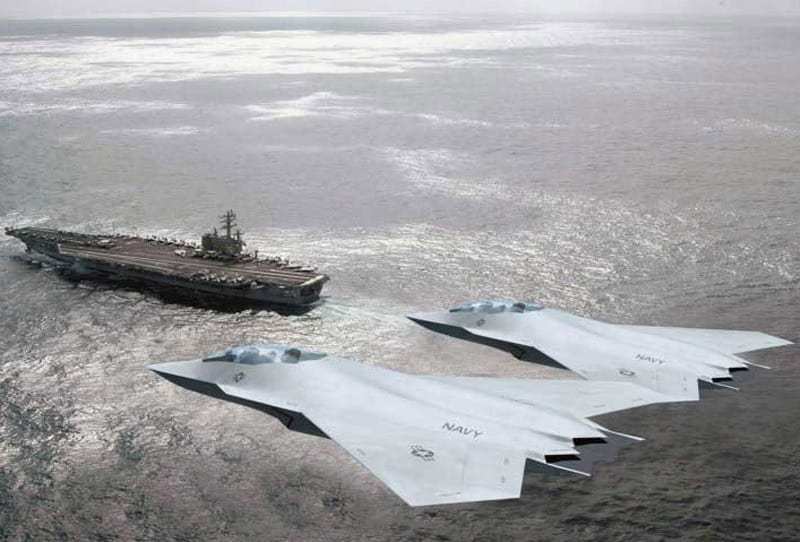
The Fifth Generation Air Force

This is where we should we be moving to.


I only add that we need to do the above with more space assets.

I like the idea and direction. Too bad, we can't even pick a replacement for the CF-18. Never mind something like that.
 
Has anyone heard more about Trump redesigning the F-35 with 2 engines?

Thankfully, he doesn't have the same ability to interfere on this, as he did on the aircraft carrier and next gen destroyer.
 

Target drones seem to be converted into tactical drones fairly regularly.
 
Most folks don't seem to recall that back in the 1980s, when cruise missiles were a new concept, Trudeau - the first of that name - entered into an agreement with the US to allow testing them in Canada.

:cool:
 
Most folks don't seem to recall that back in the 1980s, when cruise missiles were a new concept, Trudeau - the first of that name - entered into an agreement with the US to allow testing them in Canada.

:cool:

Oh I remember. The peaceniks at the time also had undue influence at the time and there were big protests that make modern protests in North America look like a community walk.
 
Oh I remember. The peaceniks at the time also had undue influence at the time and there were big protests that make modern protests in North America look like a community walk.
That was peak anti-nuke campaign time across the west. Massive protests in Europe against cruise and Pershing and back here against cruise testing. A lot of very naive stuff, like the City of Ottawa vote on declaring the city a nuclear free zone in 1982, championed by then mayor Marion Dewar. I'm hearing 99 Luftballons even as I type. I seem to recall that post the collapse of the USSR there was a fair bit of evidence that Soviet funds were finding there way into some of these campaigns.
 
That was peak anti-nuke campaign time across the west. Massive protests in Europe against cruise and Pershing and back here against cruise testing. A lot of very naive stuff, like the City of Ottawa vote on declaring the city a nuclear free zone in 1982, championed by then mayor Marion Dewar. I'm hearing 99 Luftballons even as I type. I seem to recall that post the collapse of the USSR there was a fair bit of evidence that Soviet funds were finding there way into some of these campaigns.

Some? Some?

Most would be more appropriate. From the "Veterans for Peace" in Canada, the UK and the US, with their white berets at Remembrance days, to the "Better Red Than Dead" European movements, through just about every "peace-nicks" of the time, the major funding was coming from the International Peace Institute, in Helsinki, which was an elaborate front for the KGB directorate charged with the undermining of the NATO alliance.
 
Britain’s next generation fighter jet will be the Royal Air Force’s last manned combat aircraft, its chief has said.

Air Chief Marshal Sir Harv Smyth said the Global Combat Air Programme (GCAP), a project involving Britain, Italy and Japan building a sixth-generation stealth combat aircraft, required a crew but future projects would be drones.

He said Britain’s air and space force would combine its Typhoons and F-35s with autonomous systems to adapt the military to new technology.

Writing in The Telegraph, the RAF chief said: “I firmly believe that AI-enabled, uncrewed aircraft will transform military aviation as profoundly as the shift from propellers to jets.”


Sorry for the paywall. I have run out of freebies. I recommend a subscription.

...

To the point ... even retiring pilots are now accepting the rise of the robot.
 
I have a horrible penchant for over simplifying an issue, but . . . I do wonder why this project is the UK's last manned fighter project rather than its first unmanned fighter project. It seems to me that drone aircraft are already starting to look viable and by the time this project is ready to deliver, the ability to manage swarms of drones - remotely or autonomously - should be common-place.

I always wondered with all the concepts being built into the F-35 why it wasn't a two-man aircraft like the F-14 was with a pilot and a radar intercept officer - basically one guy dedicated to flying the bus while the other was free to handle all the systems including radars and weapons.

For that matter do you even still need the F-35 part of the system - or can one handle fleets of drones from an airborne or ground-based control centre?

:unsure:
 
Stealth fighters and unmanned stealthy aircrafts operating against an enemy's similar ones will always benefit from one sensor that airborne or ground-based control centre cannot provide: the Mark I eyeball.
 
I have a horrible penchant for over simplifying an issue, but . . . I do wonder why this project is the UK's last manned fighter project rather than its first unmanned fighter project. It seems to me that drone aircraft are already starting to look viable and by the time this project is ready to deliver, the ability to manage swarms of drones - remotely or autonomously - should be common-place.

I always wondered with all the concepts being built into the F-35 why it wasn't a two-man aircraft like the F-14 was with a pilot and a radar intercept officer - basically one guy dedicated to flying the bus while the other was free to handle all the systems including radars and weapons.

For that matter do you even still need the F-35 part of the system - or can one handle fleets of drones from an airborne or ground-based control centre?

:unsure:

WRT the two seat F35 - I think the question is whether or not the "front-seater" is required. Given the ability of planes to fly themselves, and the inabilty of pilots to fly these inherently unstable designs without electronic support, the "pilot" seems to be more of a WSO/Mission Commander.

The rest of the article, also behind paywall, from the commander of the RAF:


On Remembrance Sunday, I had the enormous privilege of laying a wreath at the Cenotaph alongside my fellow Service Chiefs. My thoughts were personal: of my younger brother, an ex-serviceman who sadly passed away earlier this year, and of generations before who gave their lives for this country. That sacred place brings into stark relief the responsibility of leading today’s RAF: to deter potential adversaries so that another generation avoids such sacrifice.

We must continue to learn from today’s wars, not prepare for yesterday’s. Today’s world is more volatile and unpredictable than at any time in my career, meanwhile technology is transforming warfare at a breakneck pace. We are neither alarmist nor complacent about this, but we are adapting – and quickly.

Russia’s illegal invasion of Ukraine shows the terrible cost when neither side controls the air above the battle: an attritional stalemate grinding on for almost five years. Events far beyond our shores can now have immediate consequences for Britain and our interests. Geography alone can no longer insulate us from instability elsewhere in the world.

Control of the air remains fundamental. Without it, armies cannot manoeuvre freely, navies are vulnerable, and civilians exposed. Securing the skies has been the RAF’s first duty for more than a century. That duty endures; how we fulfil it for the future is evolving.

Every day, Typhoons stand ready to defend our airspace, Poseidons monitor our seas above and below the surface, intelligence specialists monitor emerging threats, and engineers and logisticians keep our aircraft flying. Quietly, without fanfare, the brilliant people of the RAF enable the UK to anticipate, understand, and respond to danger, at distance and with pace and precision.

We are already adapting. With industry, we recently integrated a low-cost, laser-guided rocket system onto our Typhoon jets in just 42 days. This rapid achievement has helped counter Iranian attack drones and protected lives. That is the pace that we will deliver across our entire service.

As well as this, our new remotely piloted aircraft, Protector, completed its first UK operational mission in October, tracking Russian shipping through the English Channel for 10 uninterrupted hours in controlled airspace. With endurance of up to 40 hours, the potential of this uncrewed system is phenomenal.

By far, uncrewed systems promise the greatest change. Ukraine’s inexpensive drones gather intelligence and reach far beyond the front line. I firmly believe that AI-enabled, uncrewed aircraft will transform military aviation as profoundly as the shift from propellers to jets. Uncrewed fighter jets will start flying in UK airspace next year. This is exciting and necessary in equal measure.

The future RAF will combine Typhoons and F-35s with autonomous systems. The Global Combat Air Programme (GCAP) with Italy and Japan will build on this approach. Used properly, AI and machines will tackle the most dangerous tasks instead of humans, but technology must enhance human judgment, not replace accountability. The GCAP jet is perhaps the last crewed fighter we will ever build, not because people will become less important, quite the opposite.

Space matters equally. It’s the ultimate high ground, and navigation, communications, banking, national security, modern life all depend on satellites. Adversaries understand this dependence and are already interfering with it. Monitoring and defending space on behalf of UK Defence is core RAF business, not a distant ambition, with our Space Command specialists already world-leading in many respects.

Investment backs our transformation. The Defence Investment Plan sets out £28bn for air capabilities from now until 2030, alongside wider space and autonomous investment. There will be £1.1bn for Typhoon aircraft, £2.2bn for more F-35s and £300m to begin developing a new autonomous combat aircraft, Stormfighter, which we aspire to bring into service from 2030.

Working differently with British industry, we must turn investment into aircraft, weapons and capability at the pace the threat demands.

This all said, our greatest advantage remains our people. Around 300 new RAF trainees now graduate monthly; the RAF is growing again. We will ensure they have excellent equipment, training and support: ready to deter and, if deterrence fails, to fly, fight and win.

But such readiness requires available aircraft, modern weapons, resilient bases and intimate integration with fellow Services and Nato allies.
https://www.telegraph.co.uk/news/2025/07/16/harrier-pilot-iraq-raf-chief/
We strengthen the RAF to prevent war, not seek it. Deterrence works when adversaries judge that attacking Britain and our allies is simply not worth the price.

Reflecting on the Cenotaph, honouring those who served means ensuring that today’s RAF is ready for whatever comes tomorrow.

 
Stealth fighters and unmanned stealthy aircrafts operating against an enemy's similar ones will always benefit from one sensor that airborne or ground-based control centre cannot provide: the Mark I eyeball.
The obsession with the Mk I eyeball over much more capable sensors is an ongoing military problem.

If you are engaging enemy targets at visual range then your day is going very badly.
 
The obsession with the Mk I eyeball over much more capable sensors is an ongoing military problem.

If you are engaging enemy targets at visual range then your day is going very badly.

 
The obsession with the Mk I eyeball over much more capable sensors is an ongoing military problem.

If you are engaging enemy targets at visual range then your day is going very badly.

‘Meatbags,’ in whatever platform, come with a variety of limitations on the capability. Sometimes the limitations are judged worthy. Perhaps (likely, IMO) in the future, that judgement will be more demanding.
 
The obsession with the Mk I eyeball over much more capable sensors is an ongoing military problem.

If you are engaging enemy targets at visual range then your day is going very badly.
its not an obsession, its a fact. With all the gadgets available that are imaginable, the University of Milan did a safety study of runway incursions. Ground surveillance radar was available, stop lights at all taxi crossings likewise, displayed taxi routes on aircraft displays was available. With all of that, the inclusion of a visual check of the runway length prior to issuing a landing clearance brought the safety factor from 10 to the minus 6 to the more optimal 10 to the minus 8. Machines are good, eyeballs are good, together, as Tony would say They're GREEEET
 
Until they aren’t, like Jazz 8646 and Truck 1’s eyeball-enabled interaction that slid 10^-8 to a 10^0…or AA5342 and PAT25 in DC…also an end-state 10^0.
 
Back
Top