• Thanks for stopping by. Logging in to a registered account will remove all generic ads. Please reach out with any questions or concerns.

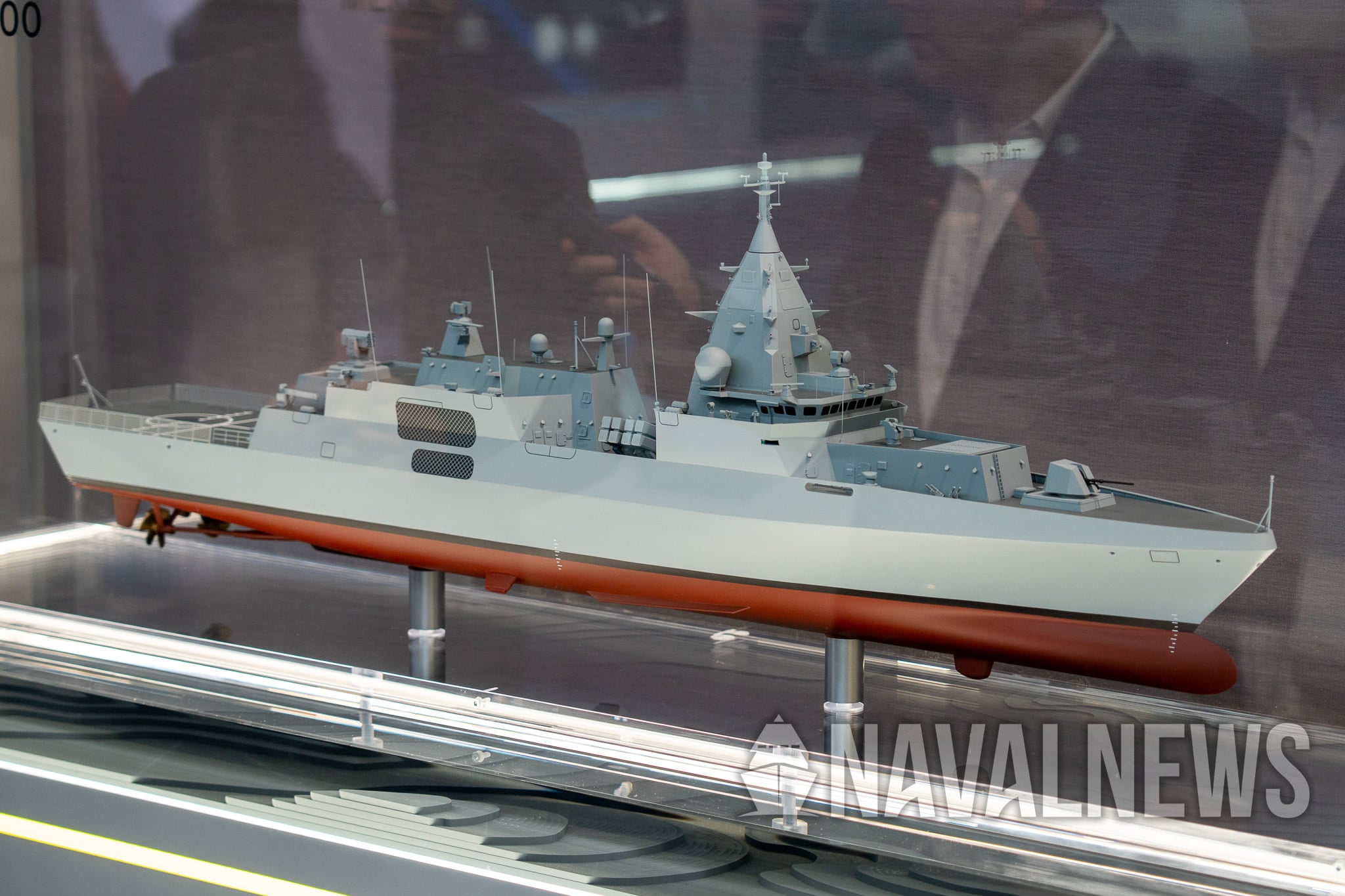
Continental Defence Corvette


Damn I love this ship. I was a fan of the A-200 before but the new version is so cool. I think Germany also is buying CMS 330 for this ship as well. I know its not really a corvette.
 

Damn I love this ship. I was a fan of the A-200 before but the new version is so cool. I think Germany also is buying CMS 330 for this ship as well. I know its not really a corvette.
CMS330 & Aegis are destined for the F127. SAAB is on the F128.
 
Aussie cautionary tale

I think the CDC shows that we at least learned some of the lessons the RAN learned.

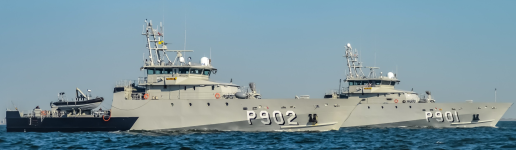
Trying to make a "light" combattant with just a bigger gun is a great way to make a ship unsuited to combat. The CDC concept of a CPF-lite makes a lot more sense, and we reached that conclusion before launching a single MCDV replacement.
I think there is a role for a ship roughly the size of a MCDV for training, mine clearance and as a platform to support AUV/ASV ops and testing. Perhaps a class of 4 for 2 on each coast
 
I think there is a role for a ship roughly the size of a MCDV for training, mine clearance and as a platform to support AUV/ASV ops and testing. Perhaps a class of 4 for 2 on each coast

How about building CPF hulls (4500 tonnes) that can be crewed by 40 to 50?

Lightly armed in peacetime for training and coastal patrols but suitable for up gunning and crew enlargement in a crisis.

Most of the hull life and running gear would be under light loads and costs of the hulls would be low as would crew costs.

In a crisis load the hull up with containerized weapons systems and munitions as well as operators.

Make the weapons, sensors and munitions independent of the hull.

Replacement costd for the hulls sould also decrease.
 
Up gunning is not realistic nowadays. You can't "up-gun the main radars, electronic warfare suites, sonars, ops room consoles, combat systems or even most of your AAW launch tubes. They have to be there from the start and they make up the bulk of the cost of building the ship.
 
Up gunning is not realistic nowadays. You can't "up-gun the main radars, electronic warfare suites, sonars, ops room consoles, combat systems or even most of your AAW launch tubes. They have to be there from the start and they make up the bulk of the cost of building the ship.

With respect I think you are wrong.

I think that "containerization", an accepted concept in the USN (PODS in the RN and Stanflex in Danish service), is making the concept ever more practicable, especially when applied in concert with uncrewed vessels.


With respect I think you are wrong.

I think that "containerization", an accepted concept in the USN (PODS in the RN and Stanflex in Danish service), is making the concept ever more practicable, especially when applied in concert with uncrewed vessels.
The Danes are dropping Stanflex, because they realized they never swapped modules, and making/integrating modules was more expensive than just building the ship the way they wanted it.

Containers of standalone/networked systems makes some sense, but as an extra... not a basis for a platform.
 
@Furniture has it right. Danes are walking away from STANFLEX. CUBE and some containerized systems are excellent options... we've been doing that on the MCDV's since 1998. The dive containers, the habitation pods, storage containers, mine payload containers, sidescan towed arrays. This is going to get bigger with PRO as they are working on a HADR container/containerized system.

I think there is a role for a ship roughly the size of a MCDV for training, mine clearance and as a platform to support AUV/ASV ops and testing. Perhaps a class of 4 for 2 on each coast
AOPS is a much better platform for testing. They have the space, power and accommodations to do it, whereas the MCDV's were very limited. Look at the recent MAX sail when they tested OTH drones, UUV's and sensors in the Arctic on a nice long trip. MCDV could never have done that.

And as far as training, the ORCA replacement will be larger and better training options (with more vessels as well, at least that's the plan). Mine clearance isn't done with ships really anymore. Remote minehunting is the way, and you can pretty much do that from any platform with a big crane and work deck.
 
With respect I think you are wrong.

I think that "containerization", an accepted concept in the USN (PODS in the RN and Stanflex in Danish service), is making the concept ever more practicable, especially when applied in concert with uncrewed vessels.
There is certainly merit to modularity for supplementary capabilities, supporting uncrewed systems and facilitating through-life modernization. However, even if we put aside the technical challenges of containerizing primary warfare systems, there is a fundamental difference between embarking a weapon system and generating a credible warfare capability. A ship's crew needs to routinely train with its weapons and sensors, develop and refine its doctrine and procedures, and have its collective warfare proficiency validated through exercises and workups. You cannot simply embark weapon systems and additional operators in a crisis and expect the ship to function as a cohesive fighting unit.

Then there is the economic argument. If you genuinely intend to up-gun these ships in wartime, you need to have already procured those systems, maintained them ashore, and trained sufficient personnel to operate and maintain them. You aren't going to issue a procurement contract for an AAW system when hostilities commence. If you're already bearing those costs, why not permanently install and integrate those systems into the ship, where they can contribute to operational readiness throughout its service life? Alternatively, if the intention is to procure fewer weapon systems than hulls, you're effectively limiting the number of credible combatants you can generate precisely when demand for those capabilities will be greatest.

My concern is that the enthusiasm for containerization risks conflating potential capability with actual operational capability. PODS could effectively become Fitted For But Not With, rebranded as innovation.
 
Back
Top