• Thanks for stopping by. Logging in to a registered account will remove all generic ads. Please reach out with any questions or concerns.

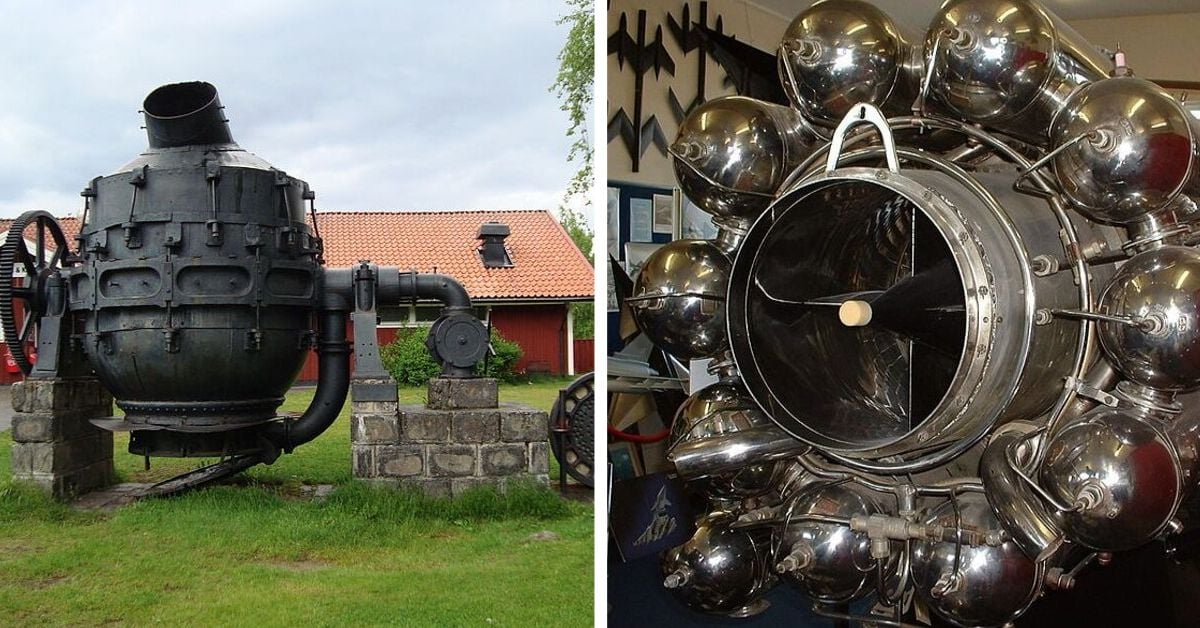
What have the Brits ever done for us?

Kirkhill

Puggled and Wabbit Scot.
Subscriber
Donor
Reaction score
11,979
Points
1,160
British contributions to governance include the Westminster system (parliamentary democracy, rule of law), constitutional monarchy (limited executive power), common law, civil service, devolution, local government (corporations/boards), parliamentary scrutiny, human rights concepts (via empire abolition/reform), independent judiciary, and introducing Western models (education, administration) globally, shaping modern governance worldwide despite complex colonial legacies.

Core Principles & Systems
  • Parliamentary Democracy: The concept of an elected legislature (Parliament) with supreme power, accountable to the people, with a government drawn from it.
  • Constitutional Monarchy: The Sovereign acts as Head of State, but political power rests with Parliament, limiting executive authority (e.g., Royal Prerogative powers are exercised by ministers).
  • Rule of Law & Common Law: Emphasis on laws applying equally to all, independent courts, and judge-made law (common law) developing over time.
  • Independent Civil Service: A professional, impartial body serving the government of the day, not political factions, placed on a statutory footing.
  • Separation of Powers: Evolving separation between legislative (Parliament), executive (Government), and judicial (Courts) functions, with mechanisms for checks and balances.

Institutional & Administrative Models
  • Westminster System: The model of government adopted by many former colonies (Canada, Australia, India), featuring Prime Ministers, Cabinets, and Question Time.
  • Local Governance: Introduction of municipal corporations and district boards for local administration with elected members.
  • Devolution: Transferring legislative and executive powers to regional governments (Scotland, Wales, Northern Ireland).
  • Judicial Independence: Establishing courts separate from direct government control, protecting rights and ensuring fair trials.

Global Impact (Via British Empire)
  • Abolition of Slavery: Britain's naval power was crucial in suppressing the transatlantic slave trade, a major moral/governance shift.
  • Spread of English Language: Facilitated global communication and legal/administrative practices.
  • Introduced Western Education/Law: Established legal systems and educational institutions in colonies, shaping new elites and governing structures.
  • Chartered Companies & Administration: Used bodies like the East India Company to establish administration, laying groundwork for modern states (e.g., India, Nigeria).

Modern Contributions
  • UN Peacekeeping: Contributing personnel and expertise to global stability operations.
  • Constitutional Reform: Ongoing efforts to modernize Parliament (House of Lords reform, accountability) and define national values/rights.
And....
 
British contributions to capitalism involve pioneering industrialization fueled by colonial exploitation and the slave trade, creating early global finance, while its socialism emerged from industrial hardships, giving rise to influential thinkers (Owen, Morris), the powerful Labour movement, the welfare state (NHS), and models like democratic socialism and the "British Road to Socialism," blending radical ideas with practical, parliamentary reforms.

Contributions to Capitalism
  • Industrial Revolution: Britain spearheaded the shift from agrarian to industrial economies, creating factory systems, coal mining, and textile mills, fundamentally changing work and production.
  • Colonialism & Slavery: The slave trade and colonial exploitation provided capital, raw materials, and markets, significantly boosting British industry and early capitalism.
  • Enclosures: The enclosure of common lands forcibly displaced rural populations, creating the necessary industrial workforce.
  • Finance & Trade: Britain established early global financial systems, facilitating capitalist expansion.

Contributions to Socialism
  • Utopian Socialism: Figures like Robert Owen (New Lanark) pioneered improved working conditions, education, and co-operative movements, influencing early socialist thought.
  • Working-Class Organization: Britain saw the first autonomous trade unions and strong working-class movements, including the Chartists, advocating for workers' rights.
  • Labour Party & Welfare State: The Labour Party's 1945 victory established key socialist reforms like nationalization, full employment goals, and the NHS, creating a robust welfare state.
  • "British Road to Socialism": A unique path to socialism through democratic, parliamentary means, adapting Marxist ideas to the British context, focusing on social change via the existing state.
  • Radical Thinkers: Influential socialist thinkers like William Morris and historians of the New Left (Thompson, Hill) drew on British radical traditions.

Interplay & Evolution
  • From Revolution to Reform: British socialism evolved from radical, utopian visions to pragmatic parliamentary action, establishing a mixed economy with strong social safety nets, differing from purely revolutionary models.
  • Debates on Planning: Post-war attempts at economic planning saw shifts from detailed control towards market management, highlighting ongoing tensions between socialist ideals and capitalist realities.
Banks and bankers, jobs and unions, Adam Smith and Owen, Levellers and Chartists and Masons, Co-operatives, insurance funds and pensions.
 
British contributions to capitalism involve pioneering industrialization fueled by colonial exploitation and the slave trade, creating early global finance, while its socialism emerged from industrial hardships, giving rise to influential thinkers (Owen, Morris), the powerful Labour movement, the welfare state (NHS), and models like democratic socialism and the "British Road to Socialism," blending radical ideas with practical, parliamentary reforms.

Contributions to Capitalism
  • Industrial Revolution: Britain spearheaded the shift from agrarian to industrial economies, creating factory systems, coal mining, and textile mills, fundamentally changing work and production.
  • Colonialism & Slavery: The slave trade and colonial exploitation provided capital, raw materials, and markets, significantly boosting British industry and early capitalism.
  • Enclosures: The enclosure of common lands forcibly displaced rural populations, creating the necessary industrial workforce.
  • Finance & Trade: Britain established early global financial systems, facilitating capitalist expansion.

Contributions to Socialism
  • Utopian Socialism: Figures like Robert Owen (New Lanark) pioneered improved working conditions, education, and co-operative movements, influencing early socialist thought.
  • Working-Class Organization: Britain saw the first autonomous trade unions and strong working-class movements, including the Chartists, advocating for workers' rights.
  • Labour Party & Welfare State: The Labour Party's 1945 victory established key socialist reforms like nationalization, full employment goals, and the NHS, creating a robust welfare state.
  • "British Road to Socialism": A unique path to socialism through democratic, parliamentary means, adapting Marxist ideas to the British context, focusing on social change via the existing state.
  • Radical Thinkers: Influential socialist thinkers like William Morris and historians of the New Left (Thompson, Hill) drew on British radical traditions.

Interplay & Evolution
  • From Revolution to Reform: British socialism evolved from radical, utopian visions to pragmatic parliamentary action, establishing a mixed economy with strong social safety nets, differing from purely revolutionary models.
  • Debates on Planning: Post-war attempts at economic planning saw shifts from detailed control towards market management, highlighting ongoing tensions between socialist ideals and capitalist realities.
Banks and bankers, jobs and unions, Adam Smith and Owen, Levellers and Chartists and Masons, Co-operatives, insurance funds and pensions.
Yeah, but other than that???
 
They improved the quality of humour in general which, in many cases, was based on alot of hard truths that others weren't willing to lean into...


1766595670467.png


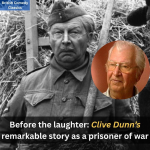
“Don’t panic!” Clive Dunn is remembered by millions as Dad’s Army’s excitable Lance Corporal Jones but before the laughter, Dunn lived through four years of fear, hunger, and endurance as a prisoner of war during the Second World War — an experience that shaped both his humour and his humanity.

Born in 1920 into a theatrical family, acting was in his blood. His parents were music hall performers, and by the late 1930s Clive was already appearing in repertory theatre. But when war broke out in 1939, the 19-year-old actor decided he couldn’t stand aside while others served. He enlisted in the British Army in 1940, joining the 4th Queen’s Own Hussars — the same regiment later made famous by Winston Churchill.
Dunn was posted to Greece, part of the British force sent to resist the advancing German army. In April 1941, his unit fought at the Corinth Canal before being surrounded and captured. He was just twenty-one. For the next four years, he would live behind barbed wire, mostly in Austria, enduring bitter winters, starvation, and isolation — and yet somehow managing to find moments of comedy and courage.

At one point, thanks to sympathetic fellow prisoners working in the camp’s records office, Dunn was deliberately “lost” in the German system — his papers removed so that he effectively didn’t exist. For months, he lived “in smoke,” hiding every time there was a roll call to avoid being transferred to another camp. “All sorts went on that the Nazis were unaware of,” he later said. One of the prisoners showed him a crystal radio set hidden inside a hollowed-out book in the library. Each night, the men secretly tuned in to the BBC, sharing news from home across the camp within minutes.

Dunn threw himself into the camp’s makeshift theatre. He performed in a production of The Skin Game and later played the female lead — a gypsy princess — in an ambitious Christmas show of Ivor Novello’s Glamorous Nights, complete with costumes, orchestra and chorus. “It was the highlight of the camp,” Dunn recalled. The production was so successful that the men planned a full week’s run, but tragedy struck when the stove in the theatre caught fire, burning the building to the ground.

Determined to lift spirits again, the prisoners organised a concert. Dunn borrowed a few jokes from a friend, Johnny McGeorge, just minutes before American bombers accidentally hit the camp, killing forty prisoners — including McGeorge. “I’d just walked away from his hut,” Dunn said quietly years later. “Three minutes earlier, and I’d have gone with him.” Remembering his training as a medic, Dunn rushed to the cratered ground, rescuing the wounded and helping the camp surgeon operate on the injured. “We even had better Red Cross drugs than the Germans,” he said. “We used to slow down recoveries to give the men more time off work.”

Eventually, exhausted from hiding, Dunn asked to be made an “official” prisoner again. He was sent to a small village, Gundorf, where he worked on a farm for a kind family who treated him well and fed him properly. For the first time in years, he felt a sense of calm. “It had a peaceful atmosphere,” he recalled. “For a little while, I could almost forget there was a war.”

When the German front began to collapse in the spring of 1945, Dunn’s guards announced they were leaving. He marched with other prisoners across villages, picking up dozens more along the way until their lone guard, weary of war, simply said, “Auf wiedersehen,” and deserted. The prisoners carried on westward, scavenging food and bartering whatever they could. Dunn even stole a handcart to carry supplies, and in one village discovered a pile of Red Cross parcels dumped as rubbish. Incredibly, one of them was addressed to him — sent by his church — containing 400 Sweet Caporal cigarettes. He shared them among the men, using the cigarettes as bartering currency for food. At another farm, the men lit small fires and boiled potatoes they’d found on carts — “our first decent meal in weeks,” he said.

The long march ended at a camp in Markt Pongau, surrounded by barbed wire. The prisoners didn’t know it, but the Germans intended to use them as hostages in the war’s final days. Starving again, Dunn and several others escaped through a gap in the wire and broke into a warehouse in search of food. All they found were sacks of sugar, which he lived on for three days — “raw or boiled in water, or in tea if we were lucky.”

After nearly a week in the camp, with most of the guards gone, American troops in jeeps finally arrived. The men were free.

Dunn was transported through Salzburg and Belgium before returning to England. The war in Europe was over, but Japan was still fighting, and Dunn remained in the army. After a short leave to visit his parents, he was assigned to a base in northern England — where his new “vital duty,” he joked, was picking up bits of paper around the perimeter for weeks on end. Despite requesting to be discharged on medical grounds, he served until late 1946, finishing his service as a medical orderly in Devizes.

When peace finally allowed him to return to acting, he re-registered with Equity, changing his name from Robert Dunn to Clive Dunn. Within a few years, he was back on stage and radio, and by the late 1960s, his gentle, comic warmth made him a household name in Dad’s Army.

“The one thing the war taught me,” he said later, “was that I was a coward. There were so many terrifying things happening… all those bullets and bombs.” Yet his humility and humour told another story — one of bravery of a quieter kind.

Clive Dunn survived hardship, loss, and fear, yet came home determined to make people laugh. Behind the catchphrases and the chaos of Dad’s Army, there was a man who had truly seen war — and turned it into something the nation would never forget.


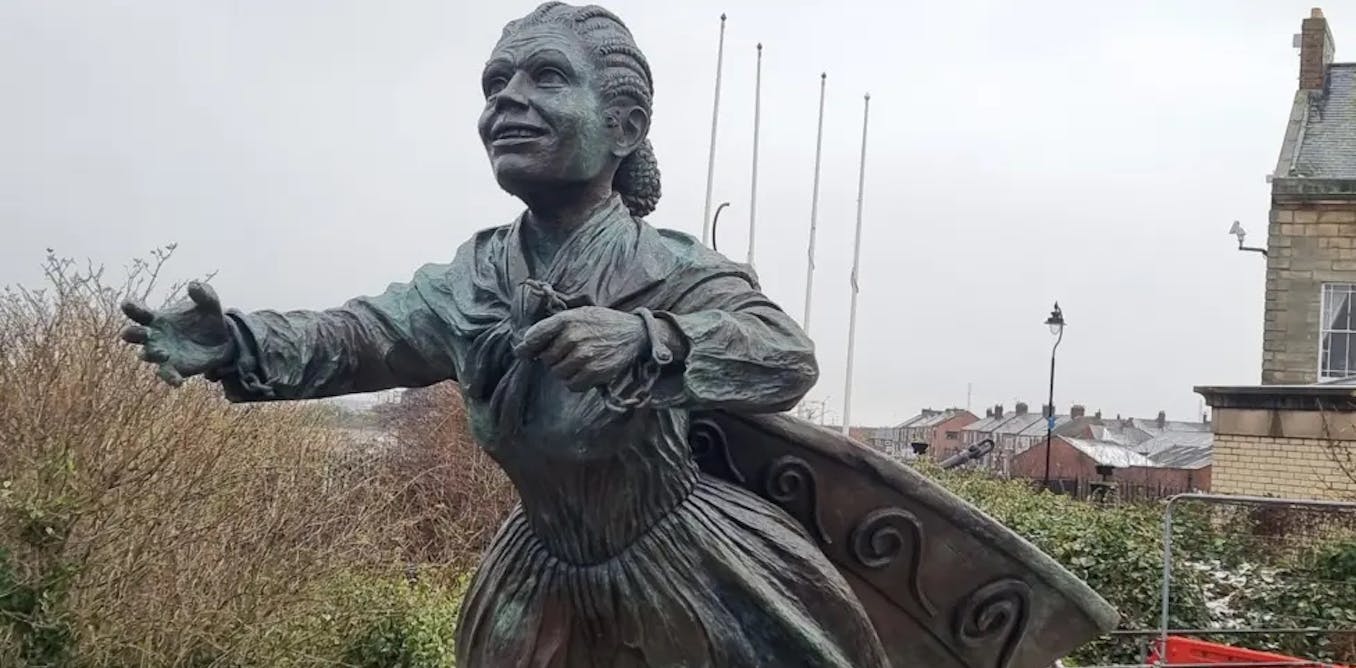
The Underground Railroad to North Shields..... freedom from slavery in Britain (from 1772 in England and 1778 in Scotland)

"In the 19th century, the north-east was a thriving hub of anti-slavery activity, playing host to many Black abolitionists and playing an active part in publishing Black literature and facilitating freedom. Examples of this include the local Quaker sisters-in-law Anna and Ellen Richardson, who raised funds for the freedom of Frederick Douglass, and the Spence family, who welcomed Macham in North Shields and helped her start her new life."

"Many workers in industrialised places in Britain in the Victorian era – such as Manchester, the coal fields of Wales and the north-east of England – also claimed to feel “enslaved”. They saw parallels between their condition and that of the American slave, an idea perpetuated in contemporary literature such as Uncle Tom’s Cabin (1852).

"Of course, the experience of a white, free workforce cannot realistically be compared with the life of those in chattel slavery. However, the feeling of oppression, capitalist exploitation, poverty and mutual support among struggling people meant that regions like the north-east were ideally placed to welcome those fleeing persecution and seeking refuge."

.....

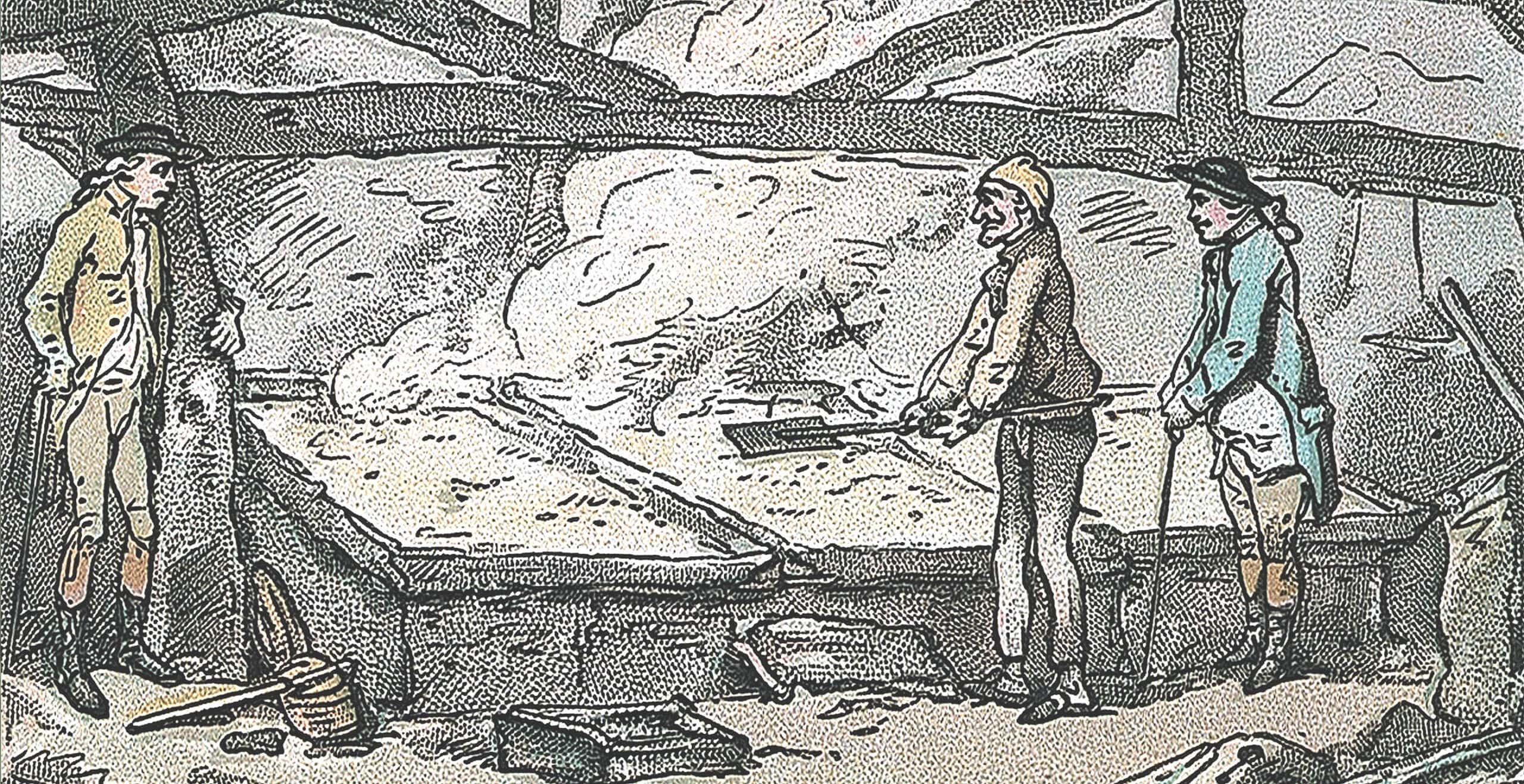
The North of England wasn't just a refuge for runaways from the colonies. It was also a refuge for runaways from the coal pits of Scotland where permanent indentures had been enforced by the Crown since 1606. Longer than in the US.


In 1772 slavery in England was confirmed as being illegal.
In 1775 slavery in the Sottish pits was found illegal,
In 1778 black slavery was confirmed as illegal in Scotland as well

Henry Dundas was actively engaged in abolishing all types of slavery in Scotland.
His characteristic tactic was gradualism - taking time to allow both sentiment and the economy to adjust, to bring the slave owners along, even if it meant buying out their slaveholdings with public funds.

Although coal miners were found to be free in 1775 the last Scottish coalminer wasn't released from indenture until 1799. 25 years later.

In 1792 William Wilberforce presented a Quaker sponsored petition to Parliament to abolish the purchase of slaves from Africa. Dundas supported tge bill but argued for a similar gradualist aproach as applied in Scotland. But in calling for the same sunset date of 1799 he was actually proposing a more aggressive change.

Both proposals failed and it wasn't until 1807 that the bill was passed with Royal Assent on 25 March. The American law prohibiting the importation of slaves was signed into law by Thomas Jefferson on 2 March of that same year.

In 1833 slavery was abolished throughout British controlled domains and the public purse bought the freedom of all the remaining slaves by buying out their "contracts".

.....

The Quaker origins of the movement.


Just another bunch of anti-establishment dissenters resulting from the Reformation.
 
Back
Top