• Thanks for stopping by. Logging in to a registered account will remove all generic ads. Please reach out with any questions or concerns.

Canada moves to 2% GDP end of FY25/26 - PMMC

Shockwave 13. I heard that was quite the brawl, especially when the Americans cheated by putting pool balls in their bandanas.

Dunno, that was 16 years ago now...

Fort Irwin was the first time I heard about US Soldiers killing themselves on base wide runs. Also challenged an American soldier to a long distance run; won't say who won but I ended up getting so dehydrated I stopped to drink water out of a discarded plastic water bottle on the side of the road. Pretty fond memories of there, obviously.

Were we there at the same time ? I spent a few weeks with S&T Coy and then got moved to what was supposed to the Kandahar City PRT.
 
What could possibly be going on thats controversial? Federal waterbomber fleet by the RCAF?

McGuinty did a keynote address at UoC today, so the "teasing" for Monday happened during that.

Haven't gone through it myself yet but here it is, 1 hour long.


EDIT: Relevant section starts @ 04:20, not quite informed enough to know why it would possibly be controversial.

EDIT 2: Unless the controversial bit is the partners?

🇨🇦 - Calian, CAE, Norcada, Lockheed Martin Canada
🇺🇸 - Dell Technologies, General Dynamics Mission Systems, Data Dynamics


This is what has been released so far.

 
Last edited:
Even at reserve units we're getting unprecedented shotgun ammo allotments. Certainly seems to be a lesson learned.
If the lesson is wrong, does it count as learned?
Time to crank up a national CAF skeet shooting program ;)
While everything I can collate shows the shotgun is effectively worthless in C-UAS. I do like the idea of national skeet shooting.

1) Skeet shooting helps training for movers, and the required safety area is a lot less for 12ga birdshot than 5.56mm.

2) It appears that shotgun issuance helps with morale - as the soldiers believe either they have a C-UAS option - and/or the CoC at least cares to try to give them something.
 
Even at reserve units we're getting unprecedented shotgun ammo allotments. Certainly seems to be a lesson learned.
Not so much lesson learned as we don’t have any alternative at the moment and have to pretend to do something.

Don’t get me wrong, I love shotgun shooting (5-stand is my preference at the moment and likely would be the best practice for drone shooting as it covers so many different directions and angles) but it is a last ditch attempt to stop a drone and of very questionable effectiveness.

Shooting clays tops out at about 100km/h (most are 60-70km/h) a drone generally will travel 180km/h+ when going in for the kill. Basically double the speed of the sporting clays, coming straight at you. Not exactly a game I would want to play and it makes carrying a shotgun for combat a item of questionable value.
 
Not so much lesson learned as we don’t have any alternative at the moment and have to pretend to do something.

Don’t get me wrong, I love shotgun shooting (5-stand is my preference at the moment and likely would be the best practice for drone shooting as it covers so many different directions and angles) but it is a last ditch attempt to stop a drone and of very questionable effectiveness.

Shooting clays tops out at about 100km/h (most are 60-70km/h) a drone generally will travel 180km/h+ when going in for the kill. Basically double the speed of the sporting clays, coming straight at you. Not exactly a game I would want to play and it makes carrying a shotgun for combat a item of questionable value.

Even better?

It’s not hockey ;)
 
Interesting timing… in the last few months I’ve happened upon a couple Government of Alberta jobs posted for Ottawa focusing on building Alberta’s presence in the defence space. One was basically a policy analyst job a few months ago, and here’s another: Manager, Defence Strategic Initiatives

The one I saw a couple months ago read as looking for someone well versed and connected in the defence sector. GoA’s making a definite push in this direction. Probably a wise strategic move.
 

Sam Mehta, President, Space & Mission Systems and Communications & Spectrum Dominance, L3Harris

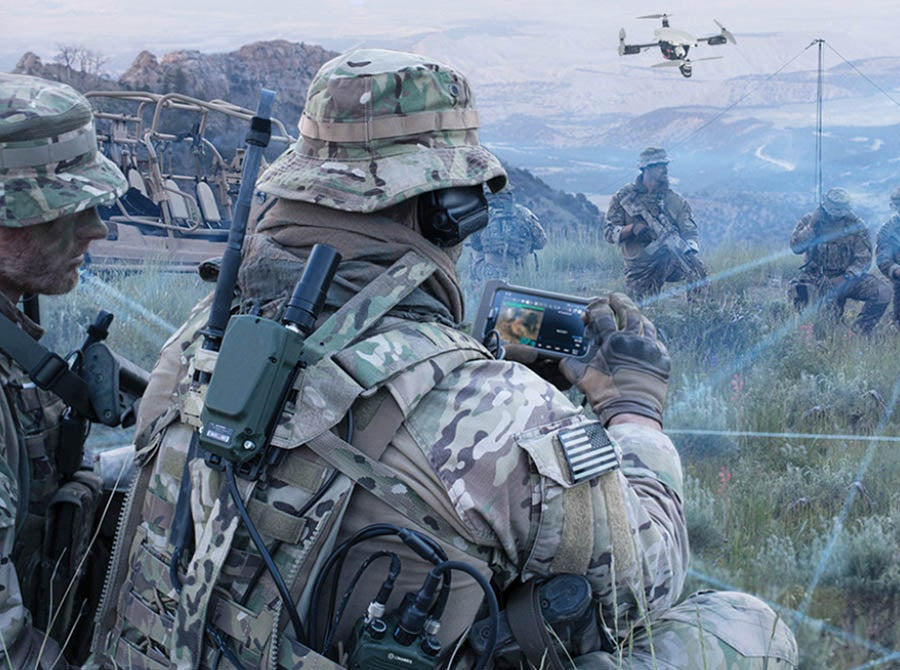
"We’re seeing the urgent threat scenario play out around the world right now with current conflicts and current capabilities. This isn’t a “what will warfare look like in 2035?” scenario. The future of warfare has come and it’s come in a few different forms.

"One is asymmetric warfare..... highly capable, low-cost, highly proliferated UAS (unmanned aerial systems) vehicles delivering unprecedented amounts of challenge and damage to more exquisite, higher-cost system....

"The second one..... fought within the electromagnetic spectrum every day.....rendering communication systems and radar systems ineffective so that your enemies can’t communicate or get an early warning of incoming threats.

"Third is the ability to be able to scale quickly.'
 
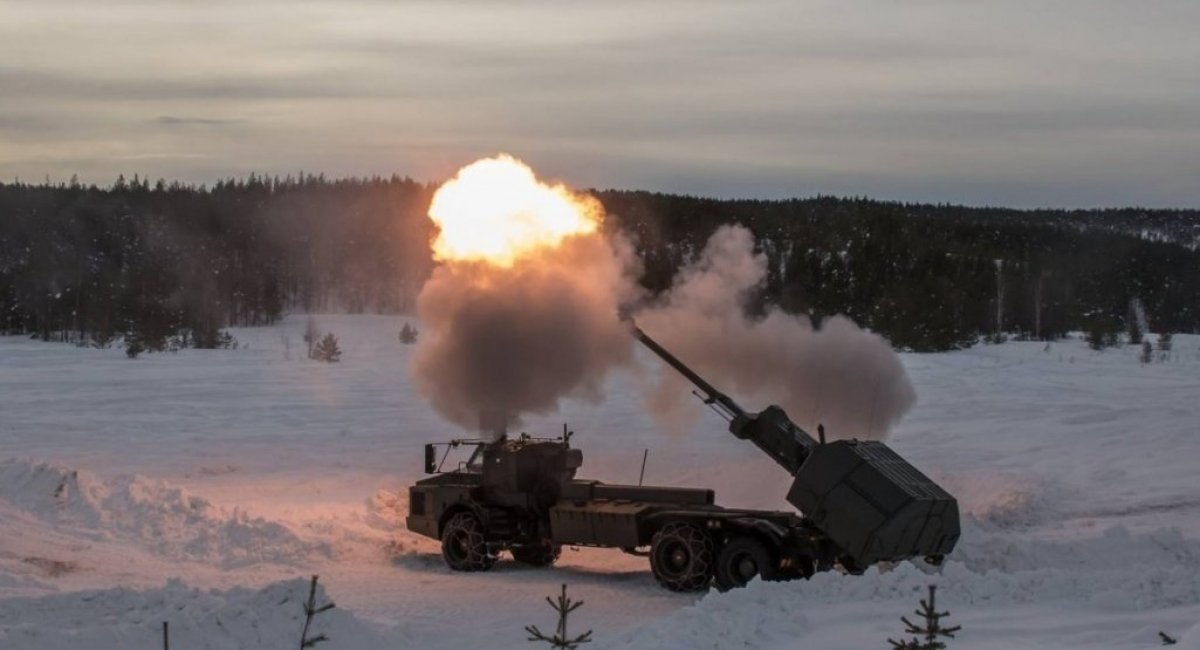
Previously reported that BAE Bofors is cranking up production by 400%


Now I see that BAE Hagglunds is forecasting an equivalent increase in CV90 and BvS10 production.

"Hägglunds expects to build almost 300 combat vehicles in 2026 and more than 400 in 2027, according to Arseneault."
"Those production figures do not include a separate five-nation CV90 programme that remains under negotiation. Arseneault said the potential deal could cover more than 400 additional vehicles."

....

This is concurrent with this news


...

Giddyup!
 
We need to start producing something like this at the federal level. 40mm carrier. Anyone who can commercialize this will stand beside Maxim, Colt, and Garand as a weapons designer.

High-Strain-Rate Kinetic Fouling Matrix

40mm-deployable, Counter-UAS (C-UAS) payload utilizing a Non-Newtonian Shear-Thickening Fluid (STF) nanocomposite. Formulation must remain a low-viscosity fluid during ballistic transit and spatial dispersal, yet undergo an instantaneous, reversible phase transition into a high-tensile, macroscopic entangling solid upon high-velocity mechanical impact with drone rotors.

1. Rheological Design & Nanocomposite Architecture
To maximize the critical shear rate differential between aerodynamic dispersal xxx and rotor impact xxx, a highly concentrated colloid must be engineered near its maximum packing fraction.
  • Continuous Dispersant Phase: Low-molecular-weight Polyethylene Glycol. The ether oxygen backbone provides excellent chemical stability, wide operational temperature windows and optimal Newtonian baselines to prevent premature thickening during low-shear gas deployment.
  • Dispersed Nanoparticle Phase: Monodisperse, hydrophilic fumed silica (xxx nominal diameter) or surface-functionalized poly(methyl methacrylate) (PMMA) spheres. Spherical morphologies are critical to ensure predictable, isotropic hydrocluster formation.
  • High-Tensile Interlocking Fillers: Surface-modified Single-Walled Carbon Nanotubes (SWCNTs) or aramid pulps functionalized with silane coupling agents.

2. Microstructural Thickening Mechanism
At rest and during sub-critical flight dispersal, steric or electrostatic repulsive forces dominate, allowing the nanoparticles to flow smoothly around one another.

Upon propeller blade contact, the applied hydrodynamic stress overcomes these repulsive barriers. The particles are driven out of their equilibrium positions into localized, tightly packed aggregates.

The nano-filament strands become mechanically entrapped and squeezed within hydroclusters. This induces a catastrophic, mass-dilatant spike in viscosity. The continuous spinning motion of the rotor acts as a mechanical spool, pulling the localized high-viscosity mass into macroscopic, fibrillar ropes.

This transfers rotational kinetic energy into tensile strain, wrapping and binding the motor shaft to cause an instantaneous mechanical stall.

3. Critical Thermodynamic and Physical Constraints
  • Solvation & Particle Volume Fraction: The operational window must sit precisely between xxx and xxx. Exceeding this threshold risks premature jamming inside the 40mm canister during launch acceleration. Falling below it prevents the formation of continuous hydroclusters, causing the material to merely splash off the rotor.
  • Viscoelastic Relaxation Dynamics: The relaxation time of the fluid must be synthetically tuned via chemical crosslinking density to prevent immediate reversion to a liquid state once the propeller slows, ensuring permanent rotor immobilization.

Existing tech. Existing platforms. Existing supply chains.

 
So….a spiderman web slinger?
More like a structural mist. First round releases at 100m, second 75m, etc. As long as any part of it touches the propellers it turns the entire cloud into string it wraps around itself. Its a similar principle to chainsaw gloves/pants. It could be fired high and then settle on an area. This gets around the direct hit tracking problem for infantry.
 
Back
Top