• Thanks for stopping by. Logging in to a registered account will remove all generic ads. Please reach out with any questions or concerns.

All Things First Nations - CF help, protests, solutions, residential schools, etc. (merged)

Some trouble brewing in Nova Scotia.

Northeast Nova RCMP seized illegal cannabis, arrested two people and responded to protests on April 2, and the investigations continue.
Yesterday, at approximately 7:30 a.m., RCMP officers executed a search warrant under the authority of the federal Cannabis Act at an illegal cannabis storefront on Hwy. 4 in Potlotek.
Officers safely arrested two men on the premises in relation to the federal Cannabis Act and seized cannabis products.
Following the search, a group gathered in the area in protest and blocked Hwy. 4. In consideration of protester safety, officers chose not to leave the premises using their vehicles. Once officers cleared their vehicles of weapons, they departed on foot and their vehicles remained in Potlotek.
Hwy. 4 was illegally blocked by heavy equipment and a group of protesters throughout the day.
Balancing respect for protesters’ rights with enforcing the law, the Richmond County District RCMP and the Nova Scotia RCMP Division Liaison Team engaged in communications with community leaders, working toward resolving the situation peacefully.
At approximately 1 p.m., the Nova Scotia RCMP received a report of people unlawfully obstructing the highway at Exit 10, Hwy. 102. RCMP officers responded in their role of promoting public safety. Hwy. 102 was reduced to one lane in both directions for several hours. One non-injury collision was reported.
Communications among officers from the local RCMP Detachments, the RCMP Division Liaison Team and community leaders related to this protest were ongoing to help ensure the safety of all.
Later in the day, the Nova Scotia RCMP received reports of protesters obstructing Hwy. 105 in Whycocomagh and Hwy. 104 in Paqtnkek resulting in some delays for motorists.
Overnight, the RCMP continued dialogue with community leaders regarding the blockade on Hwy. 4 in Potlotek.
Today, April 3, at approximately 8:30 a.m., the Richmond County District RCMP, supported by Northeast Nova RCMP, worked with community leaders to remove the blockade on Hwy. 4 and fully open the roadway.
The seven RCMP vehicles that remained in Potlotek after the search warrant execution on April 2 were removed from the community this morning. Damage to the vehicles includes broken windows, dents, deflated tires, removed tires, and urine-soaked interior surfaces.
The investigations into the illegal sale of cannabis, the illegal blockade of Hwy. 4, the damage to the police vehicles, and related criminal offences are ongoing.
The RCMP wishes to thank the public, including members of Potlotek First Nation, who have provided information related to the damage to the police vehicles.
Anyone with information who has not yet spoken to police is asked to contact Richmond County District RCMP at 902-258-2213. To remain anonymous, call Nova Scotia Crime Stoppers, toll-free, at 1-800-222-TIPS (8477), submit a secure web tip at www.crimestoppers.ns.ca , or use the P3 Tips app.
 
Some trouble brewing in Nova Scotia.

Northeast Nova RCMP seized illegal cannabis, arrested two people and responded to protests on April 2, and the investigations continue.
Yesterday, at approximately 7:30 a.m., RCMP officers executed a search warrant under the authority of the federal Cannabis Act at an illegal cannabis storefront on Hwy. 4 in Potlotek.
Officers safely arrested two men on the premises in relation to the federal Cannabis Act and seized cannabis products.
Following the search, a group gathered in the area in protest and blocked Hwy. 4. In consideration of protester safety, officers chose not to leave the premises using their vehicles. Once officers cleared their vehicles of weapons, they departed on foot and their vehicles remained in Potlotek.
Hwy. 4 was illegally blocked by heavy equipment and a group of protesters throughout the day.
Balancing respect for protesters’ rights with enforcing the law, the Richmond County District RCMP and the Nova Scotia RCMP Division Liaison Team engaged in communications with community leaders, working toward resolving the situation peacefully.
At approximately 1 p.m., the Nova Scotia RCMP received a report of people unlawfully obstructing the highway at Exit 10, Hwy. 102. RCMP officers responded in their role of promoting public safety. Hwy. 102 was reduced to one lane in both directions for several hours. One non-injury collision was reported.
Communications among officers from the local RCMP Detachments, the RCMP Division Liaison Team and community leaders related to this protest were ongoing to help ensure the safety of all.
Later in the day, the Nova Scotia RCMP received reports of protesters obstructing Hwy. 105 in Whycocomagh and Hwy. 104 in Paqtnkek resulting in some delays for motorists.
Overnight, the RCMP continued dialogue with community leaders regarding the blockade on Hwy. 4 in Potlotek.
Today, April 3, at approximately 8:30 a.m., the Richmond County District RCMP, supported by Northeast Nova RCMP, worked with community leaders to remove the blockade on Hwy. 4 and fully open the roadway.
The seven RCMP vehicles that remained in Potlotek after the search warrant execution on April 2 were removed from the community this morning. Damage to the vehicles includes broken windows, dents, deflated tires, removed tires, and urine-soaked interior surfaces.
The investigations into the illegal sale of cannabis, the illegal blockade of Hwy. 4, the damage to the police vehicles, and related criminal offences are ongoing.
The RCMP wishes to thank the public, including members of Potlotek First Nation, who have provided information related to the damage to the police vehicles.
Anyone with information who has not yet spoken to police is asked to contact Richmond County District RCMP at 902-258-2213. To remain anonymous, call Nova Scotia Crime Stoppers, toll-free, at 1-800-222-TIPS (8477), submit a secure web tip at www.crimestoppers.ns.ca , or use the P3 Tips app.

The Premier of NS has a bee in his bonnet about reserves selling weed. It's a weird hill to pick to die on honestly.

 
... It's a weird hill to pick to die on honestly.
The importance of the hill may depend on how much the Houston & Co. think they could be making in tax revenues if all those on-reserve pot shops were regulated provincially, too. Could also be a bit of "law and order" thing, one law for all, etc.?

Here in Ontario, I get the sense a lot of pot shops on reserve are outside the provincial licensing framework (but under FN-approved rules/frameworks), but that's not one Ford & Co. chooses to actively/publicly wrestle with right now.
 
The importance of the hill may depend on how much the Houston & Co. think they could be making in tax revenues if all those on-reserve pot shops were regulated provincially, too. Could also be a bit of "law and order" thing, one law for all, etc.?

Here in Ontario, I get the sense a lot of pot shops on reserve are outside the provincial licensing framework (but under FN-approved rules/frameworks), but that's not one Ford & Co. chooses to actively/publicly wrestle with right now.
There’s lots of that in the prairies too. It’s mostly being ignored at present because there are some questions that need to be answered.
 
One for the RRU/RRMC grads...

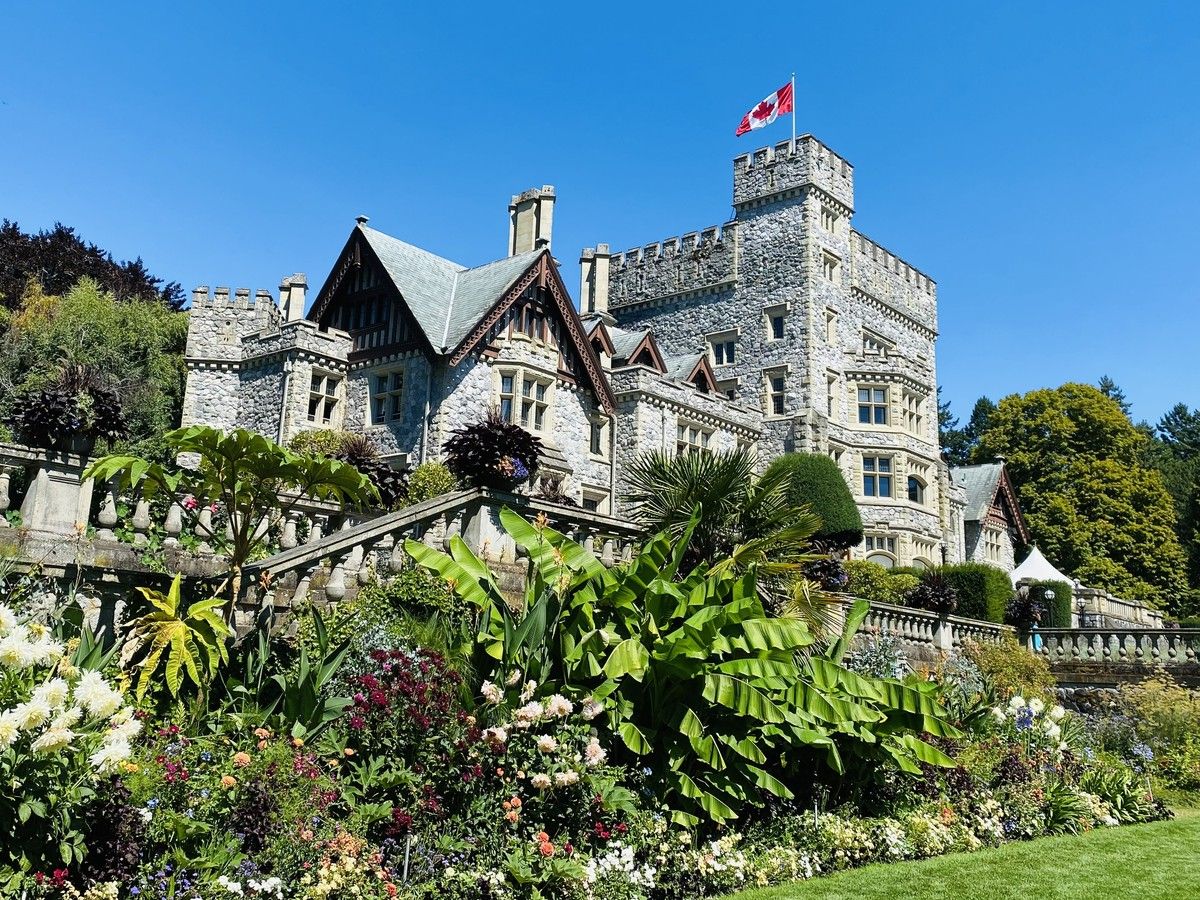
Esquimalt Nation sues Canada for Hatley Park in Victoria, claims it is excluded from new treaty

The Esquimalt Nation's 384 members are suing Canada's attorney general for treaty rights for Hatley Park, home of Royal Roads University, in a lawsuit filed in B.C. Supreme Court, claiming it's left out of the treaty between Ottawa and the Songhees Nation.

The Esquimalt Nation, which has a small reserve on the south of Vancouver Island, is suing Canada’s attorney general, claiming Victoria’s Hatley Park, which is 10 times larger and home of Royal Roads University, belongs to it and not the neighbouring Songhees Nation.

“Esquimalt has not consented to and opposes the designation of Hatley Park as Songhees treaty lands and its transfer to Songhees Nation” through a modern-day treaty the Songhees and four other First Nations signed with the province in 2015, according to a notice of civil claim filed in B.C. Supreme Court.

The Te’mexw Treaty Association agreement in principle is nearing the end of Stage 5 of the six-part B.C. Treaty Commission process, it said. The loss of most of Esquimalt’s traditional territory continues to “significantly interfere with the Esquimalt’s rights, title and culture and harms its members, and deprives them of lands and resources that sustained their way of life for millennia,” according to the claim.


The lands and resources that sustained a few people here and there for millennia are now needed to sustain millions of people in this province.

The ways of life that sustained people for millennia have been replaced by ways of life that allow people to flourish, not merely subsist.
 
Speaking of MMIWG

Killer's Indigenous heritage cited in lesser sentence for shooting of wife

Got drunk and shot his wife in the head. Crown asked for 16 years - he got 6 years and 9 months.

Official reports from Canadian police and Statistics Canada identify the main perpetrators of homicides against Indigenous women and girls as primarily Indigenous men (or persons of Aboriginal origin) who were known to the victims—most often intimate partners, family members, or acquaintances.

www150.statcan.gc.ca

The key data-driven official sources are:The RCMP’s 2014 National Operational Overview (and 2015 update) on missing and murdered Aboriginal women. These analyzed police records of 1,017 homicides (1980–2012) and related missing cases. They found that most female homicides (Aboriginal and non-Aboriginal) were committed by men who knew their victims (>90% had a prior relationship). For Indigenous female victims specifically, perpetrators were more often acquaintances (30%, including casual or criminal associates) than for non-Indigenous victims (19%), and slightly less often current/former spouses (29% vs. 41%). In the 2015 update (RCMP jurisdictions, 2013–2014), offenders were known to victims in 100% of solved Aboriginal female homicides, with 73% involving spouses or family members. Perpetrators were overwhelmingly male (89%), younger on average (age 30), had higher rates of criminal records (71%), prior violent offenses (53%), substance use at the time of the incident (71%), and motives often tied to arguments/quarrels (40%).

mmiwg-ffada.ca

In 2015, RCMP Commissioner Bob Paulson officially confirmed (in a letter responding to inquiries from Indigenous leaders) that consolidated data from nearly 300 police agencies showed 70% of offenders in solved murders of Aboriginal women were of Aboriginal origin, 25% non-Aboriginal, and 5% unknown ethnicity. This was not broken out in the published operational overview (due to RCMP “bias-free policing” policy on ethnicity data) but was an official statement based on internal police records.

cbc.ca

Statistics Canada’s 2023 analysis of homicide court outcomes (2009–2021, with detailed 2014–2021 data) is the most recent official statistical report. It states that 86% of persons accused of killing an Indigenous woman or girl were themselves Indigenous (compared to 94% non-Indigenous accused when the victim was non-Indigenous). 81% of Indigenous female victims were killed by someone they knew: intimate partner (35%), acquaintance (24%), or family member (22%). Only 8% were strangers (vs. 12% for non-Indigenous victims). Accused persons in Indigenous-victim cases also had higher prior criminal convictions (72%) and substance use (69%), with arguments/quarrels as the motive in 49% of cases.

www150.statcan.gc.ca

The 2019 final report of the National Inquiry into Missing and Murdered Indigenous Women and Girls (MMIWG) does not provide its own comprehensive perpetrator statistics or contradict the above patterns with new data. Instead, it critiques the 70% figure as “not factually based” or reliable (citing concerns over sample size/methodology in some RCMP analyses) and emphasizes broader systemic factors (colonialism, racism, government/institutional failures, and socio-economic conditions) as root causes. It acknowledges intra-community violence in some recommendations (e.g., healing for Indigenous male perpetrators) but frames the issue primarily as a national human-rights crisis requiring societal and structural responses rather than focusing on offender demographics.

en.wikipedia.org

In short, RCMP operational data and Statistics Canada homicide statistics consistently show that the large majority of solved cases involve Indigenous perpetrators known to the victims (partners, family, or acquaintances), not strangers or non-Indigenous outsiders as the primary group. These patterns align with general trends in female homicides in Canada but occur at disproportionately high rates for Indigenous women. The National Inquiry report shifts emphasis to systemic explanations without disputing the core relational data from police records
 
Back
Top