• Thanks for stopping by. Logging in to a registered account will remove all generic ads. Please reach out with any questions or concerns.

Army Reserve Restructuring

'm not saying that we should get rid of the Cadet Program, but I am saying that it should be re-amped to have more applicability to the CAF or at least more exposure to it. At present there are no qualifications that carry over that the average cadet will have. It causes me to ask questions if someone spends seven years in the Cadet program and then is told to hide the fact that they were a cadet when they join the CAF.
Fair enough, you raise two interesting points.

Point 1; Cadet training vs. CAF training. Everything I learned on PLQ I had learned 8-10 years earlier as a cadet, even as far down as preparing and instructing lesson plans. I spent 6 weeks learning pace stick, and company parade drill as a cadet. By the time I was a Pte on BMQ I had spent as much time teaching drill in cadets as some of the instructors on my course had been in the CAF.

Point 2; Cadets hide their experience as cadets, because it is used against them by the CAF members teaching them BMQ. I didn't tell anyone I was a cadet in basic because I didn't want a target on my back. My course staff figured it out when I did too well on the individual drill test for my cornflake in week 4. I got called out by another section's MS, because my score was too high and my drill was too sharp.

Neither of those problems are problems with the cadet programme, they are problems in the CAF. Weak jr leaders pick on former cadets because they feel threatened, and want to find a person to make an example of.

I will grant you this, there are some former cadets who are insufferable, but they aren't the majority.

A Re-amp of the Cadet Program would need to start with the CIC. I'm not convinced that the vast majority of CIC need to be officers to perform their jobs. Many of them could be NCM's or we could create a third category of ranks for them similar to US Warrant Officers. Either way, I don't think that anyone who doesn't have a university degree or sufficient service that would allow them to CFR should be given a commission. I also think it would do hugh things for the Program if CIC had to go through BMQ/BMOQ mixed in with everyone else.
CIC is a bit of a separate topic from the cadet programme writ large.

I agree 100% that the CIC has no business being CAF. Like the Navy League, they should be civilians who hold military sounding titles within the cadet organization. I also think there should be more Res and Reg involvement in the programme, but that has risks.
 
I'm a big fan of the cadet movement as a whole although I never was one (:giggle: went from boy scouts right to the Militia).

I tend to look with some envy at the UK system.

They're organizational structure is not much different from Canada, but the general appearance and deportment of their cadets (they wear a proper looking multi-cam combat uniform), and more applicable fieldcraft and other military training produces a sharper looking kid. Sharper appearance and decent training (they receive 5.5 million rounds 5.56mm every year and use a semi auto only version of the SA80) leads to more recruits and a higher transfer to reg and res forces on reaching the right age to join.

I must admit I haven't been too fond of the general CIC that I've dealt with although there are some good ones. If I can sum it up the general lot of CIC that I see are slovenly with poor standards for themselves which translates into poor standards for their kids. I doubt many of them could turn out this product.

500px-Cadets_Saint_Peter_Port_2012_a.jpg


Our kids deserve better support.


🍻
 
I'm a big fan of the cadet movement as a whole although I never was one (:giggle: went from boy scouts right to the Militia).

I tend to look with some envy at the UK system.

They're organizational structure is not much different from Canada, but the general appearance and deportment of their cadets (they wear a proper looking multi-cam combat uniform), and more applicable fieldcraft and other military training produces a sharper looking kid. Sharper appearance and decent training (they receive 5.5 million rounds 5.56mm every year and use a semi auto only version of the SA80) leads to more recruits and a higher transfer to reg and res forces on reaching the right age to join.

I must admit I haven't been too fond of the general CIC that I've dealt with although there are some good ones. If I can sum it up the general lot of CIC that I see are slovenly with poor standards for themselves which translates into poor standards for their kids. I doubt many of them could turn out this product.

500px-Cadets_Saint_Peter_Port_2012_a.jpg


Our kids deserve better support.


🍻
I remember when "Cadets" were a mandated part of high school. Each year culminated with an inspection and various demos. All participated at one level or another. Maybe a relook?
 
Fair enough, you raise two interesting points.

Point 1; Cadet training vs. CAF training. Everything I learned on PLQ I had learned 8-10 years earlier as a cadet, even as far down as preparing and instructing lesson plans. I spent 6 weeks learning pace stick, and company parade drill as a cadet. By the time I was a Pte on BMQ I had spent as much time teaching drill in cadets as some of the instructors on my course had been in the CAF.

Point 2; Cadets hide their experience as cadets, because it is used against them by the CAF members teaching them BMQ. I didn't tell anyone I was a cadet in basic because I didn't want a target on my back. My course staff figured it out when I did too well on the individual drill test for my cornflake in week 4. I got called out by another section's MS, because my score was too high and my drill was too sharp.

Neither of those problems are problems with the cadet programme, they are problems in the CAF. Weak jr leaders pick on former cadets because they feel threatened, and want to find a person to make an example of.

I will grant you this, there are some former cadets who are insufferable, but they aren't the majority.


CIC is a bit of a separate topic from the cadet programme writ large.

I agree 100% that the CIC has no business being CAF. Like the Navy League, they should be civilians who hold military sounding titles within the cadet organization. I also think there should be more Res and Reg involvement in the programme, but that has risks.
100% agree on the CIC officers, no need for them to hold a commission.

It is those insufferable cadets who think they know everything joining which cause the rift. Lots of cadets also get a poor idea of what the CAF is like due to how poorly run some cadet units are. They seem to think Full Metal Jacket is the game plan.
 
100% agree on the CIC officers, no need for them to hold a commission.

It is those insufferable cadets who think they know everything joining which cause the rift. Lots of cadets also get a poor idea of what the CAF is like due to how poorly run some cadet units are. They seem to think Full Metal Jacket is the game plan.
They also seem to often have a revulsion to joining as NCMs and believe the only acceptable thing to do next is to become an officer. Not universal of course but seems like a common thing
 
For @Kirkhill

I was just looking up some German army establishment issues and came across this little mention of the new German Army's Homeland Defence Division which, I expect, falls right into your view of a homeland defence force.

I've tried to gather some additional info by visiting their German websites but it's pretty sparse. It does provide the following mission statemt

The core tasks of the German Armed Forces' homeland security include:

Property protection: Homeland security forces secure and protect critical infrastructure that is important for the defense of the homeland and for the logistics of Germany as a hub: ports, airports, bridges, railway lines, energy facilities, digital networks and other defense-relevant infrastructure.

Drone defense: Homeland security forces are responsible for the reconnaissance and defense against drones that spy on and threaten critical infrastructure within the country.

Host Nation Support: Homeland security forces ensure freedom of movement for own and allied troops who are preparing for deployment in Germany, are on their way to their deployment location, or for the secure return of, among other things, damaged equipment, wounded and prisoners of war.

Training: The training companies of the home defense regiments teach soldiers the military trade and train the next generation for their own units.

Disaster relief: Homeland security forces support civilian authorities in managing natural disasters and major emergencies as part of official assistance. This official assistance is clearly regulated in the Basic Law.

They are greatly helped by the fact that every German soldier is, upon release, retained in the "general" reserve for six years. There are three types of reservist

The German Armed Forces distinguish between the General Reserve, the Territorial Reserve, and the Troop Reserve. Every reservist belongs to one of these three categories. Which one depends on whether the individual is assigned to a specific duty position. This assignment is called a posting.

Think of the "general" reserve like a mandatory supplementary reserve list; the territorial reserve as the Homeland division identified above; and the "Troop" reserve as our Primary reserve.

I don't trust the numbers that I've seen there but they consider the total general reserve force for all services (including former draftees) at around 860,000 of which they aim to have about 200,000 as "active" reservists (ie "territorial" or "troop"). The "troop" reserve seems to be around 12,500 at this time.

Reservists do not need to be former service members and civilians can enroll specifically for that. I've looked for but not found a training regime for them.

🍻
 
For @Kirkhill

I was just looking up some German army establishment issues and came across this little mention of the new German Army's Homeland Defence Division which, I expect, falls right into your view of a homeland defence force.

I've tried to gather some additional info by visiting their German websites but it's pretty sparse. It does provide the following mission statemt


They are greatly helped by the fact that every German soldier is, upon release, retained in the "general" reserve for six years. There are three types of reservist


Think of the "general" reserve like a mandatory supplementary reserve list; the territorial reserve as the Homeland division identified above; and the "Troop" reserve as our Primary reserve.

I don't trust the numbers that I've seen there but they consider the total general reserve force for all services (including former draftees) at around 860,000 of which they aim to have about 200,000 as "active" reservists (ie "territorial" or "troop"). The "troop" reserve seems to be around 12,500 at this time.

Reservists do not need to be former service members and civilians can enroll specifically for that. I've looked for but not found a training regime for them.

🍻

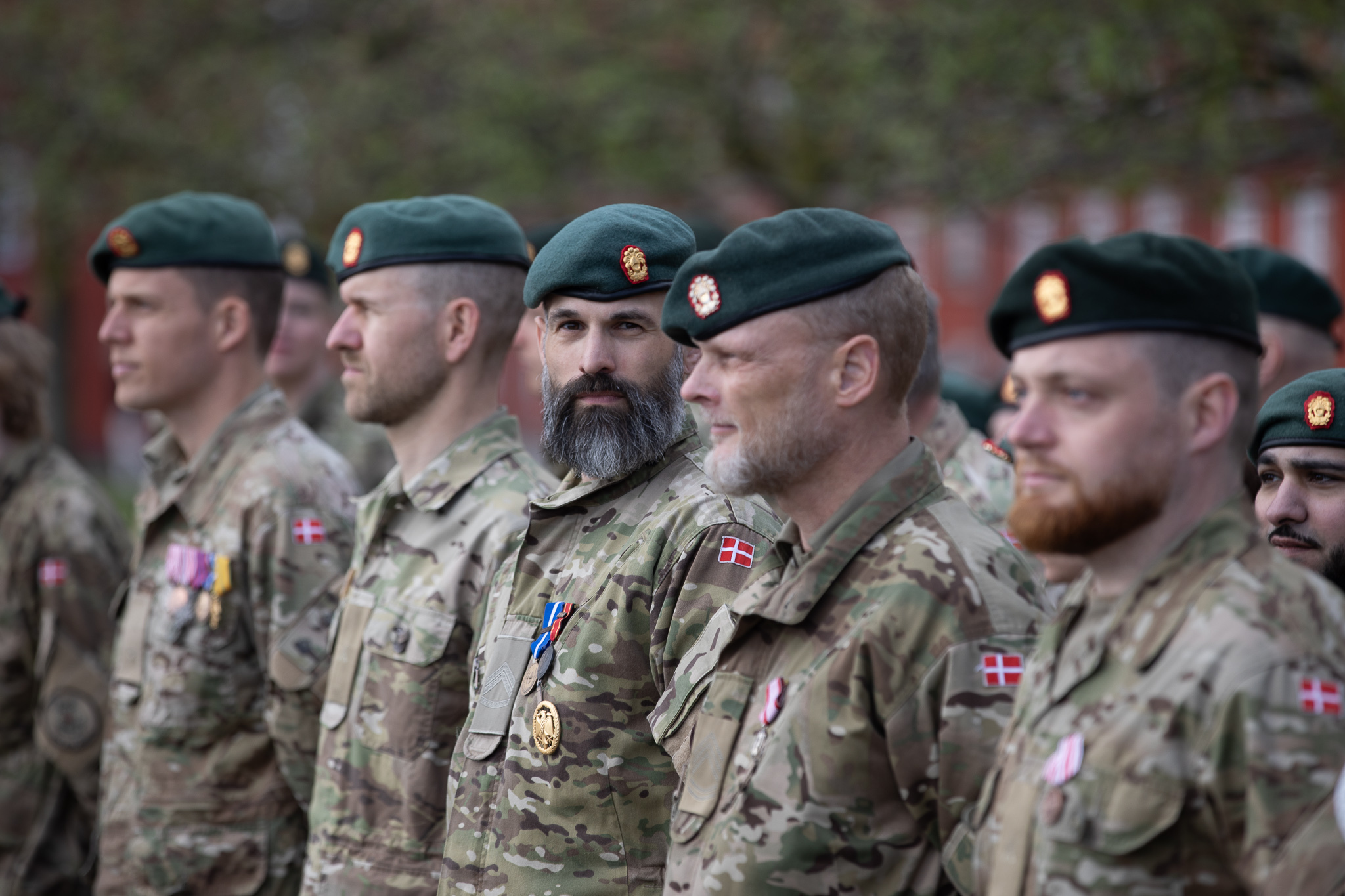
Thanks for that. It sounds very close to the Danaish model I have mentioned in the past, at least in terms of the tiers and responsibilities. There might be a little less compulsion in the Danish system although their system also provides for compulsion if there aren't enough volunteers.


Click on the Dansk link to get all the info. It automatically translates to English.
 
Danish Tasks

National tasks

Guarding airfields
Guarding critical infrastructure
Water monitoring
Host nation support
Support for the Armed Forces
Support for the Police
Support to other authorities


International assignments

Protecting the EU's external borders
International cooperation
Overview of international assignments


Danish training regime

Our education can be divided into three categories.


Basic education

As a new volunteer, you must complete our mandatory basic training of at least 250 hours, unless you have previously served in the military. It is a basic military training with four modules that you must complete within the first three years. (See figure below).

During the training, you will learn about weapons, first aid, combat and tactics, and guard duty. Each module lasts 4-9 days, but you can also choose to complete the entire course over three weeks at the Home Guard boot camp.

The training is divided into three different tracks: Naval Home Guard, Air Force Home Guard and Army Home Guard (including Police and Corporate Home Guard). For all three tracks, it is possible to complete modules 1 and 4 in all local subdivisions of the Home Guard.


Functional training

Once you have completed your basic education, or if you are a former conscript, you have the opportunity to continue your development with our specialized education and courses. We have many different ones, so there is a good chance that you can build on your training and education with something that matches both your interests and your level of ambition.

For example, you can train as:

Vessel master
Navigator
Security specialist
Dog handler
Nurse
IT Commander
Press and recruitment officer


Leadership training

If you would like to continue your development further, you can take one of our leadership training courses that will give you a deeper understanding of the dynamics of group collaboration. The goal is to develop your leadership skills through a focus on stronger group collaboration and relationship building.

The outcome of the training is a number of tools that are useful in the Home Guard, but which also have great value in business.

In our leadership training courses you will learn about:

Decision-making processes
Systematic problem solving
Human conditions
See, listen and understand
Influence and participation
Assumption about people
Communication options
Communication problems
 
I was just looking up some German army establishment issues and came across this little mention of the new German Army's Homeland Defence Division which, I expect, falls right into your view of a homeland defence force. . . .

Reservists do not need to be former service members and civilians can enroll specifically for that. I've looked for but not found a training regime for them.

🍻

A couple of videos about training for Heimatschutz. While they may be a bit short on specifics, does provide a sense of the training intensity (or lack of intensity) and motivation of directly enrolled reservists. Both are in German, but the first one is auto-dubbed in English if viewed on YT site; the second would have to have closed captions auto-translated.

Most of the reservists depicted in this one makes me think of a "Dad's Army". Seems like many who chose alternate civilian service instead of military service back when they were younger in the conscription era, now see this as appropriate.


A couple of videos about training for Heimatschutz. While they may be a bit short on specifics, does provide a sense of the training intensity (or lack of intensity) and motivation of directly enrolled reservists. Both are in German, but the first one is auto-dubbed in English if viewed on YT site; the second would have to have closed captions auto-translated.

Most of the reservists depicted in this one makes me think of a "Dad's Army". Seems like many who chose alternate civilian service instead of military service back when they were younger in the conscription era, now see this as appropriate.


The first thing that I note is that they are properly equipped with real soldier's uniforms and not some vagabonds in coveralls and have standard weapons, webbing and packs and some basic fieldcraft skills.

🍻
 
Another article about the Danish Homeguard


"Colonel Kim Willum H. Guldbech, Chief of the Resource Division, told Last Week in Denmark, “Our primary purpose is to support the Danish Armed Forces, our allies, and Danish society as a whole. In times of crisis or war, we guard and perform surveillance in the air, at sea, and on the ground, especially defending critical infrastructure and supporting NATO allies passing through Denmark. During floods or climate-related disasters, for instance, we assist emergency services by filling sandbags, delivering medicine and food, and evacuating affected civilians. That frees up resources for first responders to focus on urgent needs.”

"What began as local defense units has grown into a coordinated, NATO-recognized force. From anti-aircraft patrols to airfield defense, to cybersecurity and counter-sabotage measures, the Home Guard plays a critical role in Denmark’s defense strategy."

"These units help with everything from border control to cyber defense, maritime patrols, search-and-rescue, and crowd control at public events like the Copenhagen Marathon."

....

The Home Guard is surprisingly open to internationals. Yes, even if you weren’t born in Denmark. To apply, you need to:

Be at least 18 years old (there’s no upper age limit)
Have lived in Denmark for at least 5 years and hold permanent residency
Speak a basic level of Danish; enough to understand instructions and communicate during training. There’s no official language test or module, but your Danish will be assessed during the initial interview.
Be willing to undergo background checks and commit to training
It doesn’t matter if you have no prior military experience. In fact, many recruits have civilian backgrounds.

“All residents who have had permanent residency in Denmark for five years or more are welcome,” says Colonel Guldbech. “We only require that volunteers understand Danish to a certain extent, as we don’t currently offer military education in English.”

...

"Once accepted, you’ll attend Home Guard Primary School in your spare time. Over the first year, you’ll receive instruction in:

First aid and emergency response
Basic shooting and weapons handling
Protection against chemical/biological threats
Crisis communication and leadership
If you’ve never done military service, you’re expected to complete around 250 hours of training over your first three years. After that, you’ll need to volunteer just 24 hours annually to remain active."
 
Facilities

Danish Home Guard (Hjemmeværnet) local centres, often referred to as a "distriktscenter" or platoon/squadron base, are designed to support voluntary military activities, training, and emergency response.

Based on the functions of the Danish Home Guard, these local centres generally feature:

Training and Operational Facilities: Rooms for briefings, planning, and tactical training.
Armouries/Weapons Management: Secure facilities for the storage and maintenance of weapons and ammunition for training.
Equipment Storage: Logistics areas for storing uniforms, personal gear, and specialized equipment for police support or search and rescue (SAR).
Communication Centres: Equipment and terminals, often including VHF radio, for coordinating with the army, police, and other emergency authorities.
Classrooms: Dedicated spaces for first aid training, shooting theory, and other technical instruction.
Social and Administrative Areas: Office spaces for staff and lounges for volunteers to meet.

These centres are part of the local infrastructure that supports the Home Guard's tasks, including guarding, monitoring, and logistical aid.


...

Structure OverviewTotal Units: The organization is organized into regions, districts, and roughly 550 companies/units.

Army Home Guard (Hær Hjemmeværnet): Organized into five Total Defence Regions, which are subdivided into 15 Army Home Guard Districts.

Police Home Guard (Politihjemmeværnet): Comprises 47 companies.

Infrastructure Home Guard: Includes nine specialized companies.

Local Coverage: Every municipality has at least one Army Home Guard Company (Hjemmeværnskompagni - HVK).

The force also includes specialized units, such as the Special Support and Reconnaissance Company (SSR)
 
Facilities

Danish Home Guard (Hjemmeværnet) local centres, often referred to as a "distriktscenter" or platoon/squadron base, are designed to support voluntary military activities, training, and emergency response.

Based on the functions of the Danish Home Guard, these local centres generally feature:

Training and Operational Facilities: Rooms for briefings, planning, and tactical training.
Armouries/Weapons Management: Secure facilities for the storage and maintenance of weapons and ammunition for training.
Equipment Storage: Logistics areas for storing uniforms, personal gear, and specialized equipment for police support or search and rescue (SAR).
Communication Centres: Equipment and terminals, often including VHF radio, for coordinating with the army, police, and other emergency authorities.
Classrooms: Dedicated spaces for first aid training, shooting theory, and other technical instruction.
Social and Administrative Areas: Office spaces for staff and lounges for volunteers to meet.

These centres are part of the local infrastructure that supports the Home Guard's tasks, including guarding, monitoring, and logistical aid.


...

Structure OverviewTotal Units: The organization is organized into regions, districts, and roughly 550 companies/units.

Army Home Guard (Hær Hjemmeværnet): Organized into five Total Defence Regions, which are subdivided into 15 Army Home Guard Districts.

Police Home Guard (Politihjemmeværnet): Comprises 47 companies.

Infrastructure Home Guard: Includes nine specialized companies.

Local Coverage: Every municipality has at least one Army Home Guard Company (Hjemmeværnskompagni - HVK).

The force also includes specialized units, such as the Special Support and Reconnaissance Company (SSR)

And, from what I saw of them, they are not nearly as well trained as our own militia...
 
And, from what I saw of them, they are not nearly as well trained as our own militia...
But you saw them?

They also serve who only stand and wait. Even if they are not Commandos-in-waiting.

Apparently they are willing to stand stag at airfields and fill sandbags.
 
Back
Top