- Reaction score
- 43,546
- Points
- 1,210
Sensors beyond the mk I eyeball make it a better Search platform.Size wise it's a Buffalo, for STOL and rough airfield I do not believe it's anywhere as capable as the old Buff.


Sensors beyond the mk I eyeball make it a better Search platform.Size wise it's a Buffalo, for STOL and rough airfield I do not believe it's anywhere as capable as the old Buff.
In the Global 6500 announcement the other Day, Fuhr mentioned that we are buying 6 Globals "with options for 4 more".Just depends where those projects are at. I said this before. The services that anticipated the spending surge and staffed up are getting their wishlist ticked off. But if nobody wants to do staff jobs in your service and they aren't filled, well.....
Additional lines of tasking require additional aircraft. If the RCAF sees growing demand, then it is possible that the fleet would grow, likely keeping some (four?) configured for VVIP, and the rest (six?) more easily configured for more pax / cargo /medevac.In the Global 6500 announcement the other Day, Fuhr mentioned that we are buying 6 Globals "with options for 4 more".
WHAT?? could they possibly be since it seems the option stuff is done

The other 4 are to replace the snowbirds, lol.In the Global 6500 announcement the other Day, Fuhr mentioned that we are buying 6 Globals "with options for 4 more".
WHAT?? could they possibly be since it seems the option stuff is done
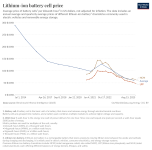
I think there is some risk in expecting that some kind of linear 'Moore's Law' advancement works equally in all situations, or works at all.

Perhaps finally providing a replacement aircraft for the cosmo. For those under 50, the CAF used to run regular scheduled flights from base to base across Canada using an airframe that was based on the CV44/54. Incidentally, it wasn't our first choice; that was the viscount but Canadair had bought the rights to the convair and was looking for a market.In the Global 6500 announcement the other Day, Fuhr mentioned that we are buying 6 Globals "with options for 4 more".
WHAT?? could they possibly be since it seems the option stuff is done
So there might be a return of the Challenger Blue fleet for JTF 2 and other high priority moves then?Additional lines of tasking require additional aircraft. If the RCAF sees growing demand, then it is possible that the fleet would grow, likely keeping some (four?) configured for VVIP, and the rest (six?) more easily configured for more pax / cargo /medevac.
There are many tasks where a small transoceanic aircraft makes more sense than a larger one.

I would actually pay good money to watch a four ship Global 6500 air display…The other 4 are to replace the snowbirds, lol.
I would actually pay good money to watch a four ship Global 6500 air display…
You imagine too small, my internet friend!I've seen a Herc 4-ship in trail. Something like that I imagine?


The sensors are mostly agnostic to the airframe, the C-127J would have the same sort of setup. What I am thinking here is actually in regards to a tactical transport version for short rough airfields. I don't think the Airbus airframe is rated for those, but would be happy to be proven wrong.Sensors beyond the mk I eyeball make it a better Search platform.

Sensors beyond the mk I eyeball make it a better Search platform.
We bought 17? high tech searchers that cost a fortune and are more at home on asphalt runways.
How many short field transport aircraft and Bell 412s could we have bought for the money? Even if we equipped them all with WESCAM MX-8s.
With them widely distributed in the hands of local pilots I think response times snd local perceptions would both improve.
This is ignorant to how SAR works. When they get a call that is far away, the FWSAR and RWSAR leave at the same time. The FWSAR gets overhead, locates the victim and drops aid (including SAR Techs if needed). The FWSAR will stay overhead to provide Top Cover till the RWSAR is there to pick them up.
Nah. You'll get pilots who aren't experienced flying in rough conditions adding to the victim count. And that's if those optics are maintained properly. Which almost assuredly won't happen given the cost of doing so.
At least the CASARA guys coordinate with the CAF, CCG, and ATC. I wouldn't trust people even less organized that.

Mate, I'm so old that my first flight in the military (also first flight ever) was on a Yukon cross country shuttle. Add in Cosmos and the 707 shuttle. Had a short flight in a DC-3 out of Winnipeg once - an engine quit just after takeoff so quick turn around to land. Buffalos and Hercs. Once in a Tracker and once in the backseat of an F-5 on my FAC course. For helicopters the Kiowa, Huey and Voyageurs - a lot in the latter two.For those under 50, the CAF used to run regular scheduled flights from base to base across Canada using an airframe that was based on the CV44/54


Size wise it's a Buffalo, for STOL and rough airfield I do not believe it's anywhere as capable as the old Buff.

and the Alberts for S&R. (sigh)Mate, I'm so old that my first flight in the military (also first flight ever) was on a Yukon cross country shuttle. Add in Cosmos and the 707 shuttle. Had a short flight in a DC-3 out of Winnipeg once - an engine quit just after takeoff so quick turn around to land. Buffalos and Hercs. Once in a Tracker and once in the backseat of an F-5 on my FAC course. For helicopters the Kiowa, Huey and Voyageurs - a lot in the latter two.
Lot of air time for a mud gunner.
Edit - I actually have to correct that. My first and second flights ever were as a reservist in the back of a Herc. The Yukon was my first flight in the RegF and therefore my third flight.
"Meeting the sched" was a routine part of my life growing up. Mum and Dad were always going out to the AMU in Lahr or at Uplands to have a chat with whoever might be coming through.Mate, I'm so old that my first flight in the military (also first flight ever) was on a Yukon cross country shuttle. Add in Cosmos and the 707 shuttle. Had a short flight in a DC-3 out of Winnipeg once - an engine quit just after takeoff so quick turn around to land. Buffalos and Hercs. Once in a Tracker and once in the backseat of an F-5 on my FAC course. For helicopters the Kiowa, Huey and Voyageurs - a lot in the latter two.
Lot of air time for a mud gunner.
Edit - I actually have to correct that. My first and second flights ever were as a reservist in the back of a Herc. The Yukon was my first flight in the RegF and therefore my third flight.
I can't say that I've heard that nickname before - were those the Labradors - the Navy version of the Voyageur?and the Alberts for S&R. (sigh)
I can't say that I've experienced much in the way of scheduling issues during my days. The service was Spartan but pretty decent. Priority 5 flying was always a bit of a risk especially for us army guys. Living in Shilo or Petawawa it was always a bit of a risk if you got bumped. Catching an alternate civilian flight was dreadfully expensive in those days. Airfares would make your eyes water. (Long distance telephone as well) I usually drove home for the Christmas and summer holidays - Once over the Lakehead in winter and thereafter through Chicago and Detroit."Meeting the sched" was a routine part of my life growing up. Mum and Dad were always going out to the AMU in Lahr or at Uplands to have a chat with whoever might be coming through.
I remember one occasion when Dad was supposed to be flying to Edmonton and ended up on 3 of the 5 707s in the same day and never got further than Trenton. Took off from Uplands on the first. Landed at Trenton and then grounded by mechanical problems. Boarded another to continue the journey, took off, turned around and landed. Grounded again. Board the 3rd eastbound and back to Ottawa.
Many a flight from Lahr to Gatwick in the back of a Herc, and once to Prestwick. Also in the Cosmo from Lahr to Upper Heyford once.
Wasn't a bad life as a brat...

Don't get me wrong, I'm not complaining. I seem to recall the Priority 5 was also very egalitarian since it was based on time in rather than rank.I can't say that I've heard that nickname before - were those the Labradors - the Navy version of the Voyageur?
I can't say that I've experienced much in the way of scheduling issues during my days. The service was Spartan but pretty decent. Priority 5 flying was always a bit of a risk especially for us army guys. Living in Shilo or Petawawa it was always a bit of a risk if you got bumped. Catching an alternate civilian flight was dreadfully expensive in those days. Airfares would make your eyes water. (Long distance telephone as well) I usually drove home for the Christmas and summer holidays - Once over the Lakehead in winter and thereafter through Chicago and Detroit.
I really can't complain about the RCAF in those days. They were pretty accommodating. When I was in Kingston for my command and staff course the Nav school in Winnipeg flew a Herc down to us to take all the western folks from Manitoba and Alberta home and back for the Thanksgiving weekend. Their box lunches were always better too.


