• Thanks for stopping by. Logging in to a registered account will remove all generic ads. Please reach out with any questions or concerns.

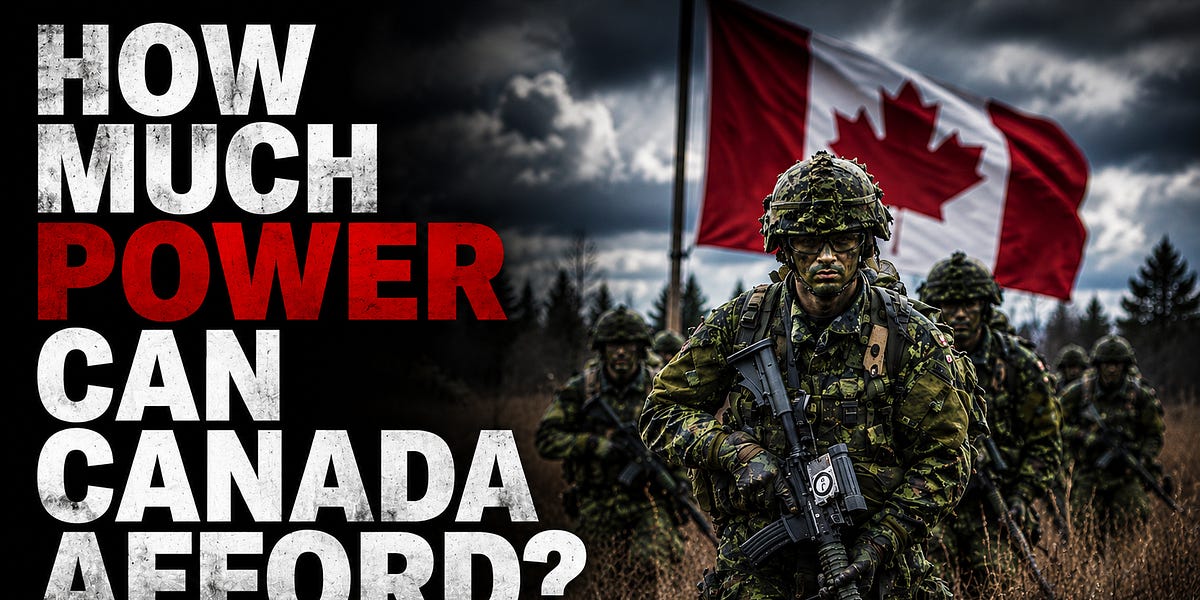
Canada moves to 2% GDP end of FY25/26 - PMMC

I am willing to sell goods and services.

I am not willing to let out of control immigration, infiltration of our organizations and process, real estate investment, or influencing activities take place.

We can do business but they, largely, need to stay over there.

Which reminds me of a famous poem ;)

We and They​


Father, Mother, and Me,
Sister and Auntie say,
All the people like us are We,
And every one else is They.
And They live over the sea,
While We live over the way,
But - would you believe it?
-They look upon We
As only a sort of They!

We eat pork and beef
With cow-horn-handled knives;
They who gobble Their rice off a leaf,
Are horrified out of Their lives.
And They who live up a tree,
And feast on grubs and clay,
(Isn't it scandalous?) look upon We
As a simply disgusting They!

 
But in the name of all that's holy what is going to be done with 5280 LAVs - unless we are planning on selling them?

100,000 Regs
100,000 Primary Reserve
300,000 Supplementary Reserve
5,280 LAVs

Got to thinking again, sorry.

Two lines of thought: People and vehicles

On the vehicles front.

500,000 people.

How many people per vehicle does a modern force use?

Allowing for vehicles with crews of one to four, dismounted forces and sedentary forces in offices and warehouses ratios of 5 to 10 people per vehicle are suggested.

On the other hand the Toronto police service operates a fleet of 792 marked vehicles, 788 unmarked vehicles and 129 support vehicles with a strength of 5396 active officers out of a total strength of 7600. 7600 people operating 1709 vehicles. 4.4 people per vehicle. 3.2 officers per vehicle.

The RCMP, with a strength of about 33,000, including 19,000 officers, operates a fleet of 12,000 on road vehicles. It also operates 1700 to 3400 snowmobiles and ATVs, 300 vessels and 30 or so aircraft. 2.8 people per street vehicle. 1.6 officers per street vehicle. The special purposes fleet is on top of that.

So a chosen ratio of people to vehicle is somewheres between 2 and 10.

Regs - 100,000 people - 10-50,000 vehicles
Primarey Reserve - 100,000 people - 10-50,000 vehicles
New Reserve - 300,000 people - 30-150,000 vehicles.

Somewhere between 50 and 250,000 vehicles required for this combined force - on top of the 105,000 police employees - 72,000 officers and 33,000 civilians with 20 to 25,000 vehicles.

Somehow 5000 light armoured vehicles looks a lot less unrealistic.

.......

Line 2: People.

Is the new reserve a Defence Force? Or is it a Security Force? Should it be templated on the CAF, the Army specifically, or should it be templated on the RCMP?

The tasks for the new force seem to be more aligned with domestic community service than with foreign service and armed service seems to be only part of the expected service. The RCMP is the federal government's community presence. Why not align this new reserve with the RCMP?
There has been some discussion of splitting the RCMP into two entities, one focused on street policing and one on purely investigative work.

You could even roll the Rangers into the new reserve and enploy the reserve on Ranger terms. Have the Rangers maintain their identity within a new Canadian Security Force, distinct from the Canadian Armed Forces. The CAF would hold on to the Primary Reseve as an integral part of the CAF and distinct from the Canadian Security Force.

Something more akin to the RUC B Specials (Royal Ulster Constabulary) without the religious affiliation, than the RUR (Royal Ulster Regiment).

The Irish reference is appropriate because both the NWMP and the Royal Newfoundlad Constabulary were modeled on the Royal Irish Constabulary.

In terms of nodes for developing supporting infrastructure the RCMP operates 700 dets which may or may not include some occasional use facilities that used to be fully manned with living quarters. Other forces operate an equivalent number for a total of about 1500 community stations.

300,000 in the new reserve would mean a company sized force of 200 volunteers for each of the 1500 to 1600 stations.

....

The command structure for those 200?

4 groups of 50, each with a Captain, a Lieutenant and Lieutenant in training. 4 volunteer Captains to each full time Major. Two Majors to a Lt Col and you have battalion. 4 Battalions to a Col and you have a Brigade of 1600 spread over 8 communities or stations. Somewhere in the order of 200 brigades across the country. And based on the RCMP divisions, about 12 brigades to the division.

 
Last edited:
$9.3M (in loans) to "generate economic activity for ... businesses while strengthening Canada’s national defence and security supply chain" Alberta bound - this from the info-machine.
Details of funded projects:
  • 3-Ci Manufacturing, $300,900 in repayable funding
    Expand production capacity to better serve Canada’s growing defence industrial base with their military grade cable and wiring systems. This project supports the company’s strategic growth plans in the defence sector and will strengthen service to new and existing customers, creating economic value through new equipment investments and expanded business channels. PrairiesCan is providing $300,900 in repayable funding.
  • Canadian UAVs, $3M in repayable funding
    Deliver a fully deployable drone platform and intelligence suite that provides reconnaissance and situational awareness that can be used in defence and security applications. Canadian UAVs unmanned aerial vehicles offer cost-effective, long endurance drone solutions that can operate Beyond Visual Line of Sight. PrairiesCan is providing $3 million in repayable funding.
  • Microlynx Systems, $2M in repayable funding
    Improve the reliability and performance of high-power radio frequency amplifiers that support Arctic domain awareness, specifically advancing the transmit power amplifiers used in Canada’s Polar Over the Horizon Radar (POTHR). By reducing sustainment demands and improving uptime across northern installations, the project will lower lifecycle costs and directly support NORAD modernization and early warning capabilities. PrairiesCan is providing $2 million in repayable funding.
  • MRO Electronic Supply, $1M in repayable funding
    Launch the Defence Capacity Expansion Project (DCEP) to generate national, provincial, and regional economic benefits by creating and retaining highly skilled technical and engineering roles in advanced manufacturing, quality assurance, and defence electronics. The project will strengthen domestic production of mission critical components, support workforce upskilling, and drive regional growth through facility modernization and expanded procurement. PrairiesCan is providing $1 million in repayable funding.
  • Technalogix, $1M in repayable funding
    Design, build and test high-frequency power-amplifier products that can be used to monitor airspace and waterways across large geographical areas and in harsh conditions, including Canada's Arctic. Technalogix’s systems are engineered to provide accurate and reliable monitoring through continuous operation and in extreme environmental conditions. PrairiesCan is providing $1 million in repayable funding.
  • VizworX, $2M in repayable funding
    Commercialize their Virtual Operations Environment (VOE) platform from an advanced prototype to a deployable defence system. VOE operates as a mobile control room by integrating maps, live feeds and data tracking into a collaborative 3D closed communication environment aiding in the planning of missions, assigning of tasks and progress monitoring. PrairiesCan is providing $2 million in repayable funding.
 
Got to thinking again, sorry.

Two lines of thought: People and vehicles

On the vehicles front.

500,000 people.

How many people per vehicle does a modern force use?

Allowing for vehicles with crews of one to four, dismounted forces and sedentary forces in offices and warehouses ratios of 5 to 10 people per vehicle are suggested.

On the other hand the Toronto police service operates a fleet of 792 marked vehicles, 788 unmarked vehicles and 129 support vehicles with a strength of 5396 active officers out of a total strength of 7600. 7600 people operating 1709 vehicles. 4.4 people per vehicle. 3.2 officers per vehicle.

The RCMP, with a strength of about 33,000, including 19,000 officers, operates a fleet of 12,000 on road vehicles. It also operates 1700 to 3400 snowmobiles and ATVs, 300 vessels and 30 or so aircraft. 2.8 people per street vehicle. 1.6 officers per street vehicle. The special purposes fleet is on top of that.

So a chosen ratio of people to vehicle is somewheres between 2 and 10.

Regs - 100,000 people - 10-50,000 vehicles
Primarey Reserve - 100,000 people - 10-50,000 vehicles
New Reserve - 300,000 people - 30-150,000 vehicles.

Somewhere between 50 and 250,000 vehicles required for this combined force - on top of the 105,000 police employees - 72,000 officers and 33,000 civilians with 20 to 25,000 vehicles.

Somehow 5000 light armoured vehicles looks a lot less unrealistic.

.......

Line 2: People.

Is the new reserve a Defence Force? Or is it a Security Force? Should it be templated on the CAF, the Army specifically, or should it be templated on the RCMP?

The tasks for the new force seem to be more aligned with domestic community service than with foreign service and armed service seems to be only part of the expected service. The RCMP is the federal government's community presence. Why not align this new reserve with the RCMP?
There has been some discussion of splitting the RCMP into two entities, one focused on street policing and one on purely investigative work.

You could even roll the Rangers into the new reserve and enploy the reserve on Ranger terms. Have the Rangers maintain their identity within a new Canadian Security Force, distinct from the Canadian Armed Forces. The CAF would hold on to the Primary Reseve as an integral part of the CAF and distinct from the Canadian Security Force.

Something more akin to the RUC B Specials (Royal Ulster Constabulary) without the religious affiliation, than the RUR (Royal Ulster Regiment).

The Irish reference is appropriate because both the NWMP and the Royal Newfoundlad Constabulary were modeled on the Royal Irish Constabulary.

In terms of nodes for developing supporting infrastructure the RCMP operates 700 dets which may or may not include some occasional use facilities that used to be fully manned with living quarters. Other forces operate an equivalent number for a total of about 1500 community stations.

300,000 in the new reserve would mean a company sized force of 200 volunteers for each of the 1500 to 1600 stations.

....

The command structure for those 200?

4 groups of 50, each with a Captain, a Lieutenant and Lieutenant in training. 4 volunteer Captains to each full time Major. Two Majors to a Lt Col and you have battalion. 4 Battalions to a Col and you have a Brigade of 1600 spread over 8 communities or stations. Somewhere in the order of 200 brigades across the country. And based on the RCMP divisions, about 12 brigades to the division.


Um… anything like the ‘B Specials’ would be a great idea.

But only if you were looking for a way to help spark a three decade long civil war ;)
 
Back
Top