• Thanks for stopping by. Logging in to a registered account will remove all generic ads. Please reach out with any questions or concerns.

Canada's tanks

An old tank is better than no tank?


"The upgrade package centres around the integration of a new turret, all-electric digital fire controls, and high-resolution observation and aiming systems. These are intended to significantly improve survivability, situational awareness, and firing accuracy, while shortening engagement times. The Republic of China Army is estimated to currently operate over 400 M60 tanks, which form the backbone of its fleet alongside a similar number of CM-11 tanks, a vehicle which uses the chassis of the M60, and 80 more modern M1A2 Abrams tanks. "

"Taiwan is upgrading ~460 M60A3 tanks with electric gun control, digital fire controls, and engine enhancements to improve firepower and modernization. Led by NCSIST, this upgrade includes a 1,050hp engine, a 120mm smoothbore gun, and high-res sights to enhance survivability against modern threats. A new indigenous Remote Weapon Station (RWS) is also featured.
Asian Military Review +4
Key Modernization Features
  • Electrification: Replacement of hydraulic turret systems with modern all-electric gun control systems (AGCS), enhancing turret speed and reliability.
  • Engine Upgrade: Replacing the old 750hp engine with a 1,050hp AVDS1790-8 CR engine, providing better power for new electrical subsystems.
  • Fire Control: Integration of digital ballistic computers, high-resolution sights, and hunter-killer capabilities to enable simultaneous target tracking and engagement.
  • Weaponry & Protection: Upgrading from 105mm to a 120mm smoothbore gun, plus adding enhanced turret armor and slat armor to protect against drone threats.
  • Remote Operation: Incorporation of a remote-controlled weapon station (RWS) for improved situational awareness and crew safety.
    Asian Military Review +6
The upgraded M60A3s, often called the M60A3 "modernized" or "enhanced" variant, are intended to complement the 108 M1A2T Abrams tanks currently being delivered, bridging the capability gap for Taiwan's armored forces. The project is on track for initial batches to be delivered by late 2025

Add the upgrade to the advantages of fighting on home turf, in mountains with dug in positions,

Taiwan is 89 miles wide (9 hours cross country at 10 mph) and 245 miles long (24 hours). You can reduce those times to 3 hrs and 8 hrs respectively if moving by road. The average elevation is somewhere between 200 and 1200 m and the maximum elevation is just under 4000 m.

880 tanks, even if old, on a 240 mile long island means an average spacing on the shore line of 7 tanks for every 2 miles or so, or a couple of tanks per km. Assuming that the locals can keep the UAVs, aircraft and missiles off them they could add an interesting layer to those folks trying to close with the beaches in landing craft.
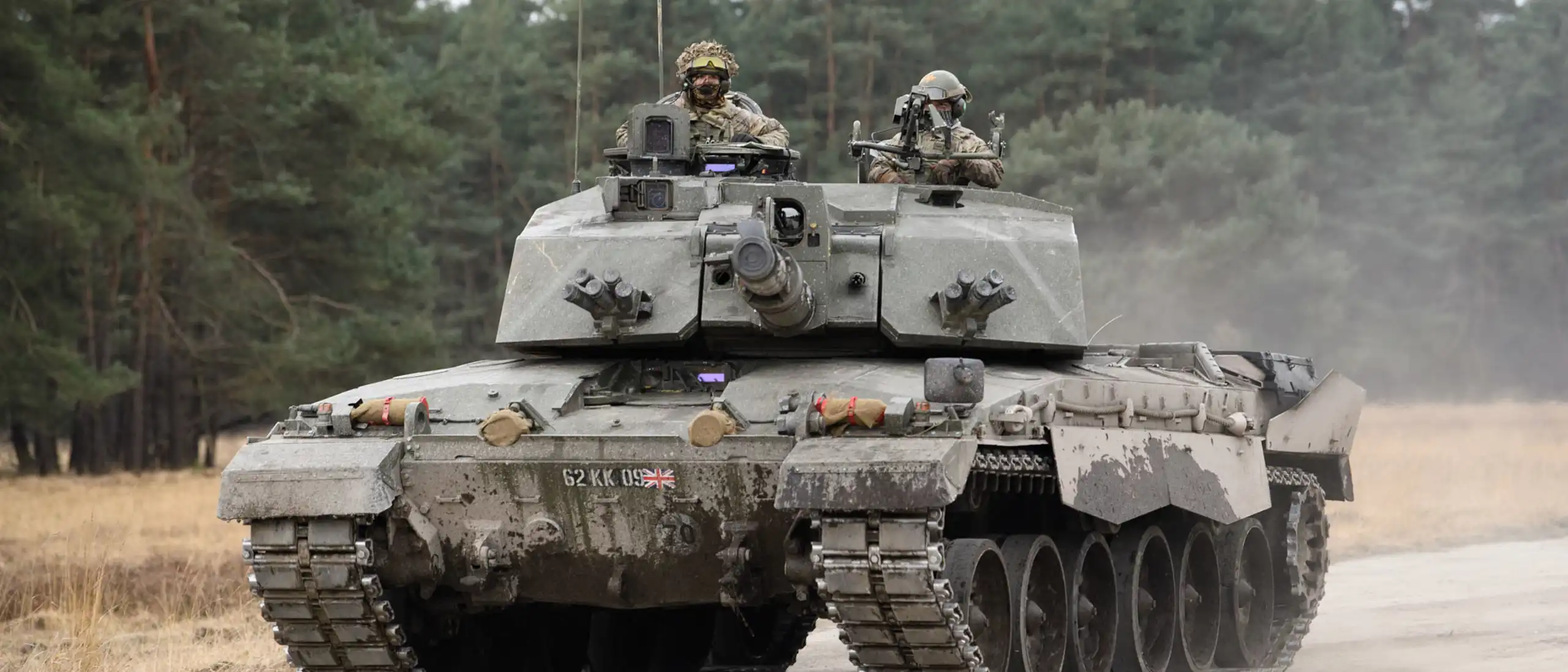
 
WRT the Brit Challengers

AI tells me

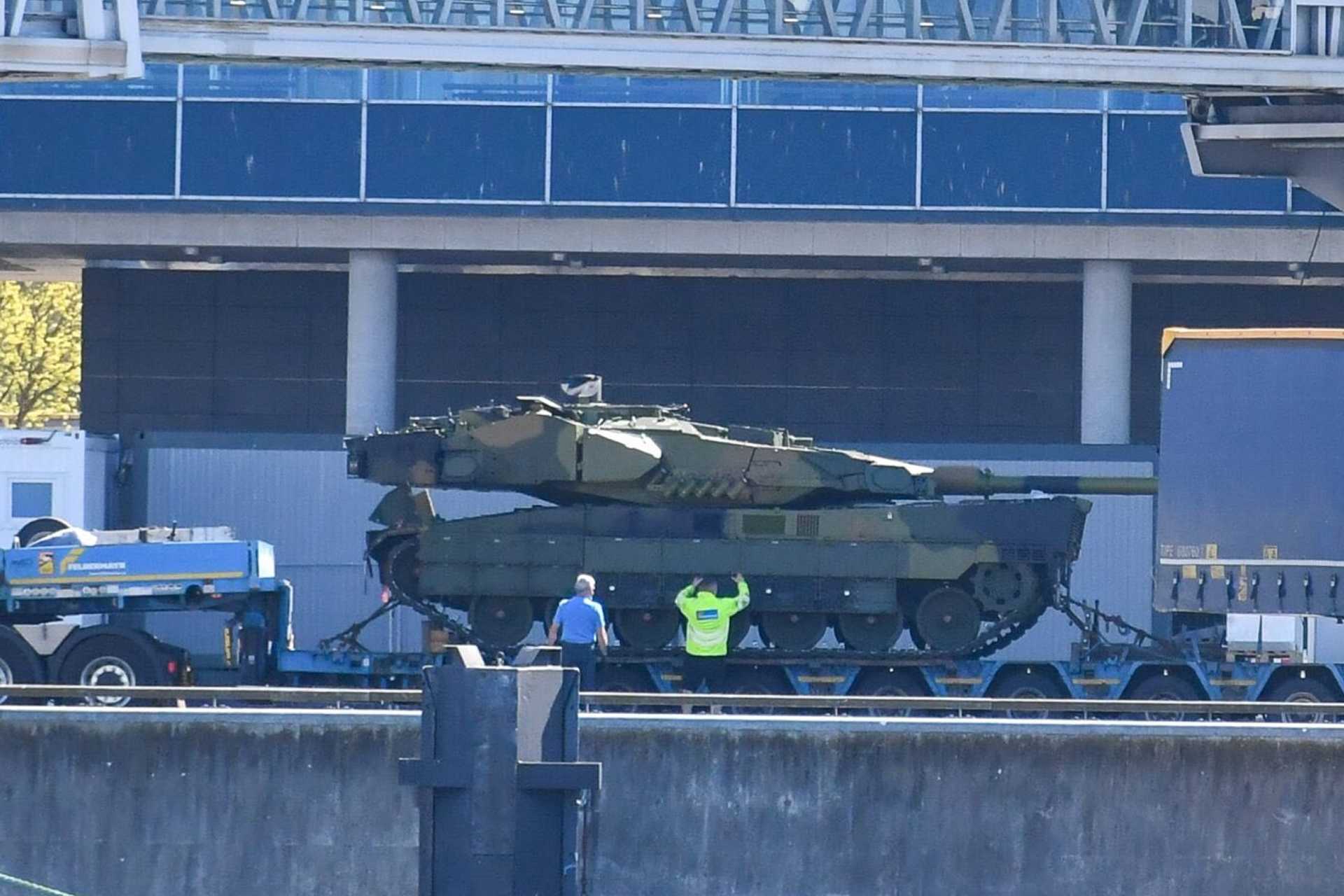
As of late 2025, the UK operates or holds in inventory approximately 288 Challenger 2 tanks, although some reports indicate a lower operational figure of around 157–213 depending on service status. The UK is upgrading 148 of these Challenger 2 tanks to the new Challenger 3 standard, with deliveries running from 2025–2030.
Wikipedia +7
  • Total Inventory: Roughly 288 Challenger 2 tanks, representing a recent increase in available hulls.
  • Upgraded to Challenger 3: 148 units (via RBSL).
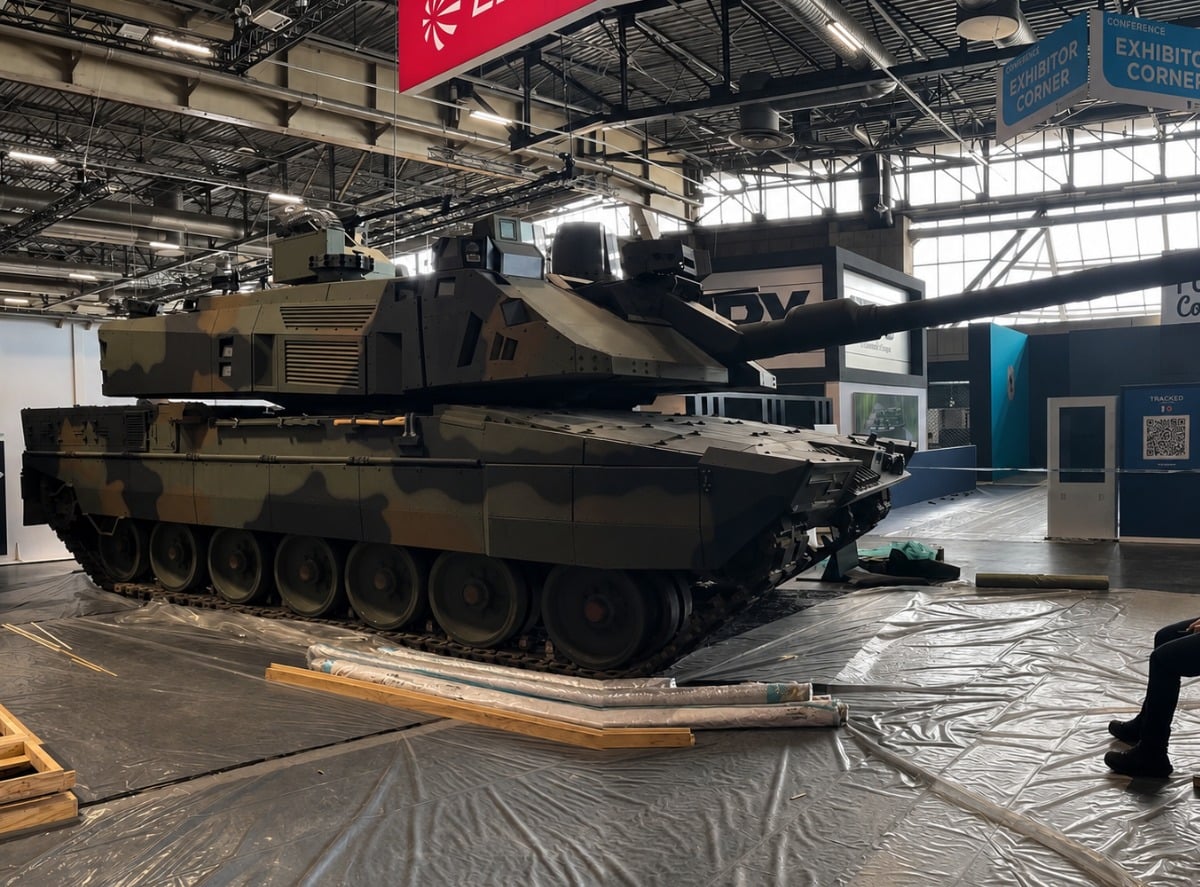
  • Challenger 3 Specs: Features a new turret, modern digital systems, and the Rheinmetall L55A1 120mm smoothbore gun.
  • Program Status: Prototype trials are underway; full operating capability is expected by 2030.
    European Security & Defence +4
The remaining Challenger 2 tanks may be used for spares, training, or placed in reserve

That concurs with what my memory recalls of recent articles.
 
Tankies using drones while on the move....


"B Squadron Leader Major Douglas Graham said: “I am converting my Challenger 2 Squadron into the first Find and Strike Squadron in the British Army. Here on exercise, we are developing tactics and procedures and trialling how we integrate ground reconnaissance and the use of drones with precision strike troops to shape the battlefield ahead of us at a greater range than ever before.”

"He added: “We are also flying drones under-armour and on the move to integrate the system’s capability into an armoured battle group so we can operate at a tempo unmatched by our enemies.”"
 
Quality vs Quantity?


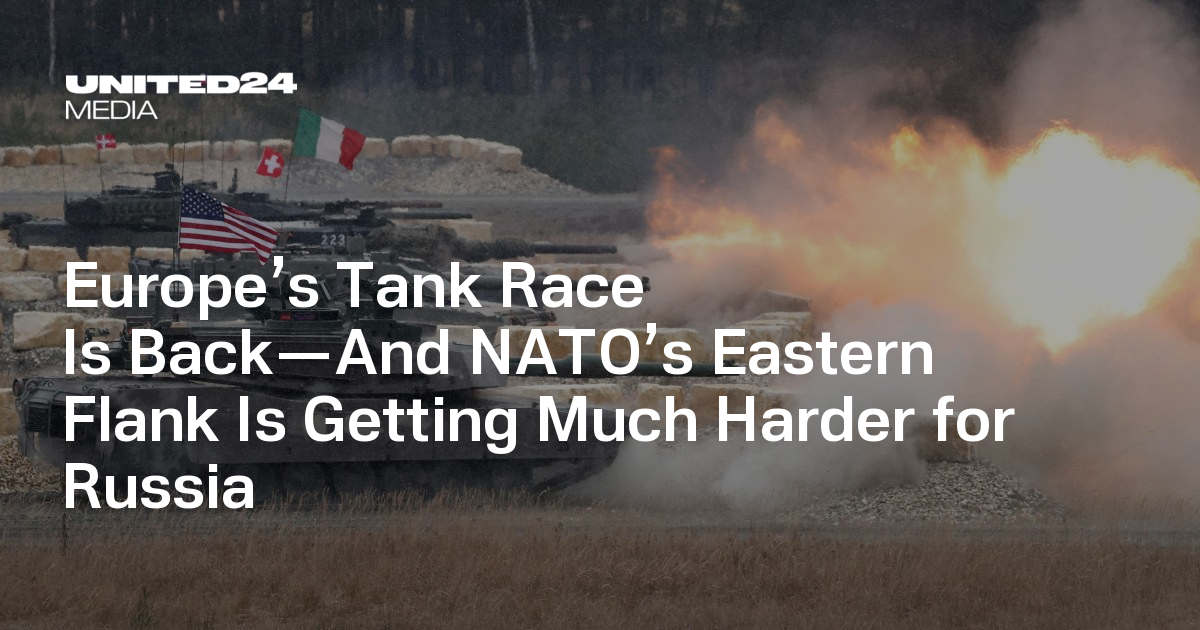
Europe’s tank balance is shifting fast, and the change matters far beyond spreadsheets. While Türkiye still fields the largest tank fleet in Europe by raw numbers, Army Recognition argues that Poland is becoming the continent’s most operationally dangerous armored power—not because it has the most tanks today, but because it is assembling the most modern, scalable, and NATO-integrated force on Europe’s eastern flank.
Europe’s armored landscape in 2026 is moving away from Cold War-style mass and toward smaller but more combat-ready forces built around newer platforms, digital integration, and deployability, according to Army Recognition on April 12.

By total fleet size, Türkiye remains first with 2,381 tanks, followed by Greece with 1,385, while Poland currently fields about 897. But Army Recognition’s core point is that the real balance is changing beneath those numbers.

That matters because not all tank fleets carry the same military value. Türkiye’s large inventory still relies heavily on older M48 and M60 variants, while Greece continues to field a sizable number of Leopard 1 tanks alongside more advanced Leopard 2 models.
Poland, by contrast, is building around newer or upgraded main battle tanks that are far better suited for high-intensity NATO warfare against a peer adversary.

As Army Recognition frames it, Europe’s future tank power is being defined less by inventory totals and more by what proportion of those fleets can actually survive, fight, and integrate in a modern battlespace.
Army Recognition notes that Russia still fields a much larger tank force overall, with roughly 3,460 tanks in active service and more than 2,100 additional older vehicles in storage.

But that number comes with a major caveat: a large share of the fleet still consists of legacy designs or heavily modernized Soviet-era platforms, including T-55s, T-62s, older T-72 variants, and several T-80 families alongside the newer T-90M.
Moscow can still generate armored mass, but Europe—especially NATO members on the eastern flank—is moving toward a force structure with fewer weak links.

According to Army Recognition, Europe’s strength increasingly rests in Leopard 2s, Abrams, and K2s: platforms with stronger fire control, better survivability, more advanced thermal sights, and much deeper digital integration.

In other words, Russia may still have more steel on paper than most individual European states, but NATO is increasingly concentrating better tanks in the places that matter most.
The most important takeaway from Army Recognition’s ranking is that Europe’s armored balance can no longer be measured by totals alone.

Türkiye may still top the list numerically, and Russia still dwarfs most individual states by scale, but the trend line is moving in NATO’s favor where it counts most: along the eastern flank, with increasingly modern fleets, shared logistics, and combat-ready formations.
So the bigger story is not that Europe has suddenly outbuilt Russia in tanks. It has not. The bigger story is that Europe—led by Poland and backed by NATO standardization—is building an armored structure that looks far more dangerous than the continent’s old tank math suggests.

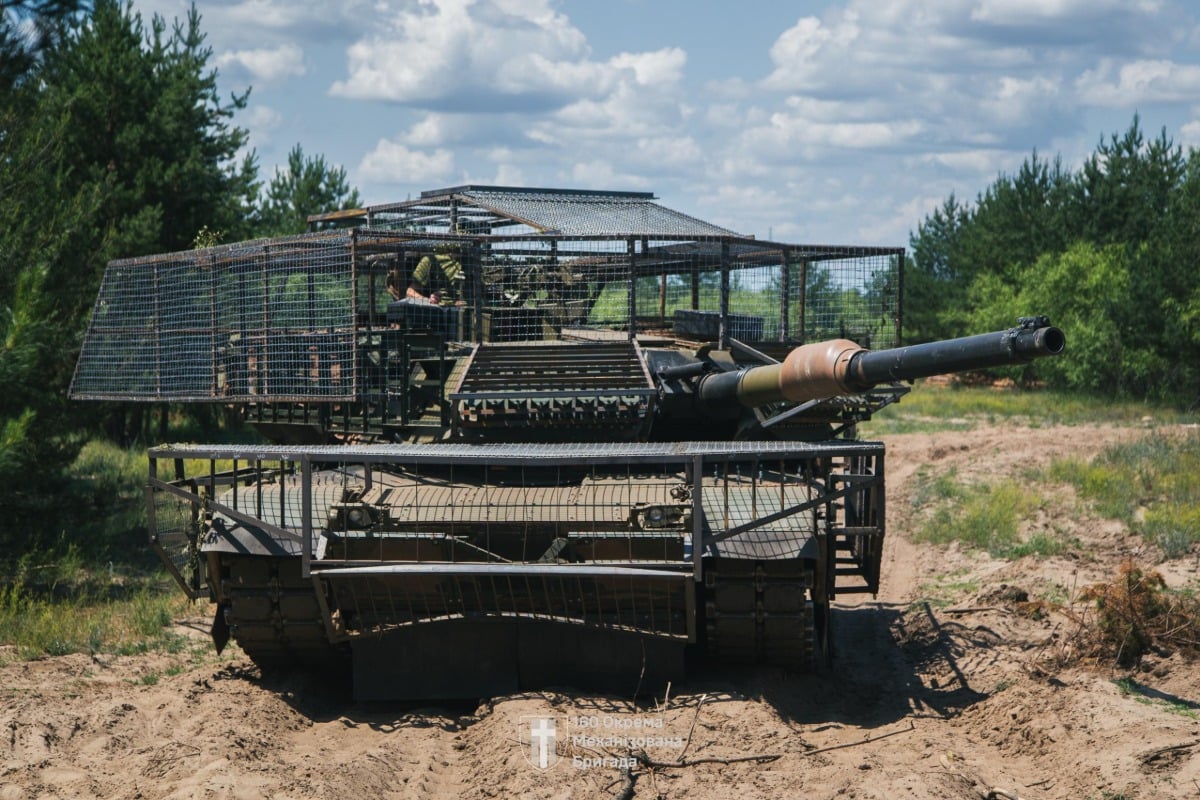
Earlier, reports emerged that during a nearly daylong attack, a Ukrainian Leopard 1A5 tank withstood 52 strikes from Russian FPV and Molniya drones. The crew had reinforced the vehicle with layered anti-drone protection.
 
WRT the Brit Challengers

AI tells me

As of late 2025, the UK operates or holds in inventory approximately 288 Challenger 2 tanks, although some reports indicate a lower operational figure of around 157–213 depending on service status. The UK is upgrading 148 of these Challenger 2 tanks to the new Challenger 3 standard, with deliveries running from 2025–2030.
Wikipedia +7
  • Total Inventory: Roughly 288 Challenger 2 tanks, representing a recent increase in available hulls.
  • Upgraded to Challenger 3: 148 units (via RBSL).
  • Challenger 3 Specs: Features a new turret, modern digital systems, and the Rheinmetall L55A1 120mm smoothbore gun.
  • Program Status: Prototype trials are underway; full operating capability is expected by 2030.
    European Security & Defence +4
The remaining Challenger 2 tanks may be used for spares, training, or placed in reserve

That concurs with what my memory recalls of recent articles.
Keep in mind UK donated 48-64 some odd to Ukraine. Based on late UK MoD reporting the 148 being converted to Chally 3, are about the only ones they still have.
 

More on that tank that survived 52 strikes.

Leopard 1A5 with locally produced and installed ERA blocks.
It sounds as if part of the defences involve upgrading scrim nets to act as cope cages.
Another part is replacing foliage to break up the outline with tufts of frayed wire cable, splayed to look like bushes and painted, then welded on to the armour or ERA boxes to get the incoming to detonate ar stand off distances.
 
Back
Top