
- Reaction score
- 31,522
- Points
- 1,260
Like a real Army almost.Imagine just being able to rotate tanks in and out of their stockpile.


Like a real Army almost.Imagine just being able to rotate tanks in and out of their stockpile.

A real army might be buying more MBT instead of medium cavalry.Like a real Army almost.

Canada has always, and will always be someone's side kick. Equipment commonality just makes things easier. We don't have the national desire to be more than a middle power.
When you're talking an Arleigh Burk, sure. A tanks not so much. Take into account all the personal, crewed and equipment we already use of theirs (M777, CF18 ect ect) I think crewing is an issue only in extreme scenarios, which we have already ruled out.
The CAF and Canada need to stop thinking we have some sort of unique set of requirements that demands we R&D and produce our own stuff.
Army uniforms are a good example, if it works for Norwary or Sweeden it will probably work for us.
CRCNs talk about the new Subs was refreshing. What ever we get is coming as manufactured by the home nation. If we have to buy everyone converters to plug things in, so be it. The meaning is we are done with Canadianization. Get the solution available.
My understanding is the K2 is essentially a derivative of the Abrams. I stand to be corrected.
Either way, the current temperature means spending any treasure on American made products is going to be a difficult sell, and rightfully so.

NATO tank commonality : Leopard, M1, Challenger, Leclerc, Ariete, PT-91 and now K2I've always been one that has suggested we use American gear where possible (barring some genuine unique Canadian requirement) simply due to the fact that we were always likely to fight in a theatre with the US and the American logistical chain has so much more depth than anyone else.
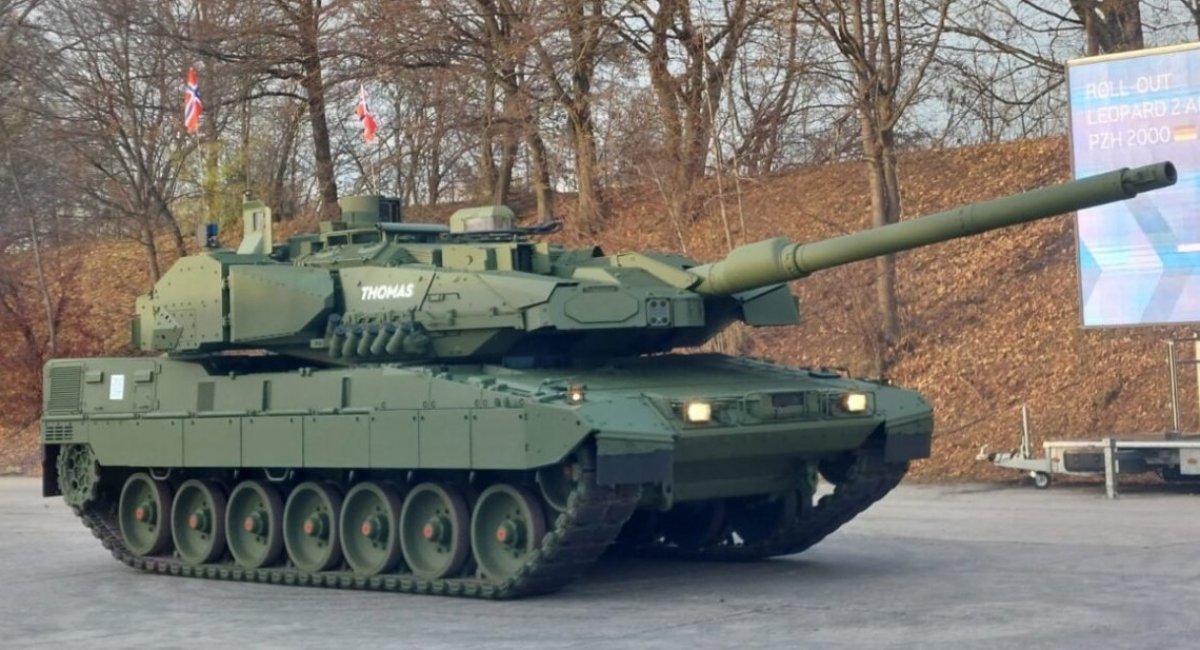
The one possible hitch to that is if the US continues to go down the road of leaving the defence of Europe to the Europeans. If the US pulls their troops out of Europe then we lose the benefits of their supply chain. In that case our best bet for commonality for tanks would be the Leopard 2. Denmark and Sweden (both partners in our Latvia Brigade) use the Leopard 2 as do Germany, Finland, Lithuania, Norway, Poland and Spain in our general operating area and of course production is in Germany.
The other option would be the South Korean K2 if we were to build in Canada so we can have our own direct supply chain as well as production in Poland which is close to where our tanks are most likely to be used.
Could we get enough tanks to justify building Leopards in Canada? In that case would we want to go with one of the proposed evolved models (which would affect our commonality with European users) or would we push for a common NATO version?
I am hopeful that once the current US administration is gone that the US commitment to Europe and NATO will veer back closer to what it was previously. I like the reduced weight and hybrid electric engine of the M1E3 and if we could order enough to justify production at GDLS-C we'd have the benefit of both commonality with the US and having our own domestic supply chain.
 en.defence-ua.com
1 Gun
4 Trucks
The Ukrainians are turning out guns faster than they can find appropriate trucks on which to mount them
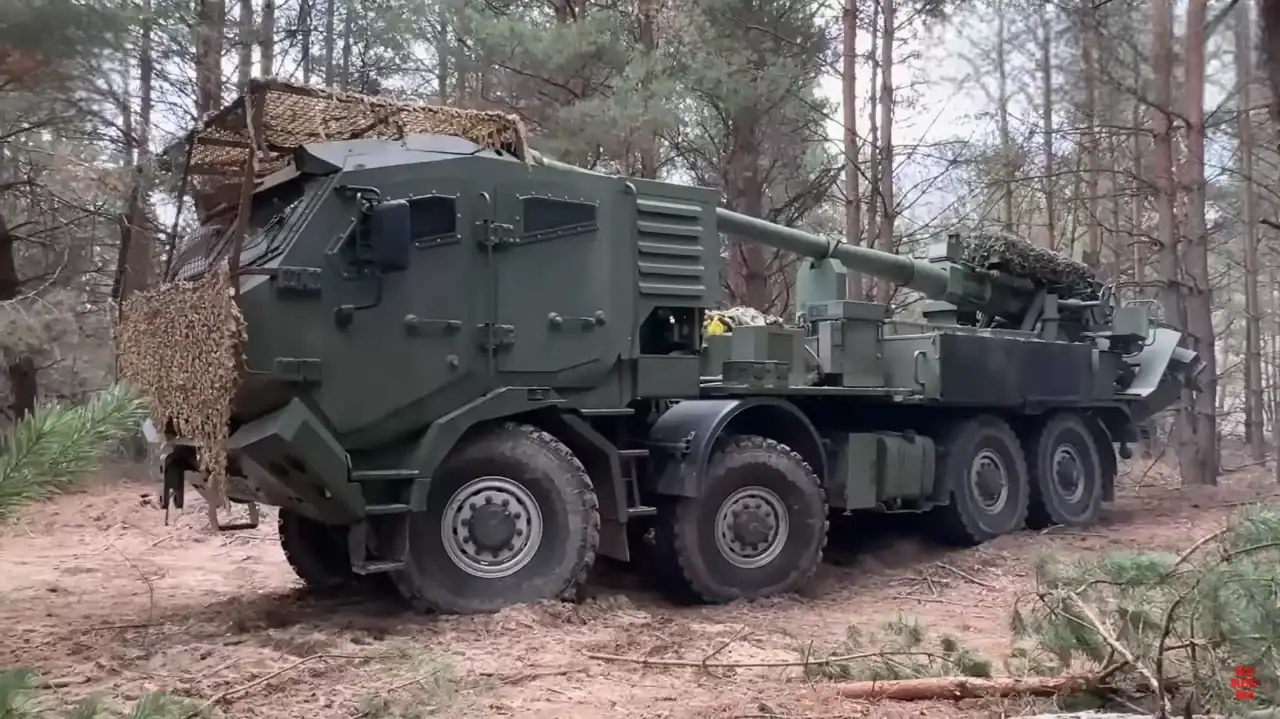
Ukrainian Bohdana Self-Propelled Artillery Systems Are Already Being Assembled on Four Different Chassis
In Ukraine, four different types of chassis are used for the Bohdana artillery system in order to increase the production rate of self-propelled guns.militarnyi.com
“Our manufacturer of Bohdana self-propelled guns has scaled up production to such an extent that the bottleneck has become the supply of chassis, not artillery systems,” Belbas noted.
There is room for both in maneouvre forces.A real army might be buying more MBT instead of medium cavalry.

So Canada, as the perennial side-kick, will never stand up for itself? Will never figure out how to defend itself?
Like a real Army almost.

 defence-industry.eu

The Romanians are in a similar position as the Poles - they are potentially on the 'front line' with Russia if Ukraine goes under the influence of the Russians, in addition, if Moldova comes under Russian influence/control as well. They are 'buffered' by Moldova today from Transnistria but that could change fairly quickly. Lastly, there is a chatter that Romania should consider 'absorbing' Moldova into Romania as it really is just a slice of Romania that Stalin took in 1940 (after it joining with Romania at the end of WW1 in 1918), which the Romanian's took back in the summer of '41 during their excursion into the Soviet Union with Nazi Germany, before Stalin taking it back again in the summer/fall of 1944.Romania signals faster main battle tank acquisition as decision on new fleet expected within months - Defence Industry Europe
During the International Armoured Vehicles conference held from 20 to 22 January in Farnborough near London, Romania announced plans to accelerate its main battle tank procurement programme.
Romania rushing a decision on 4 more tank battalions, 216 tanks and 76 suport vehicles.

From the US 2026 National Defense Strategy:I've always been one that has suggested we use American gear where possible (barring some genuine unique Canadian requirement) simply due to the fact that we were always likely to fight in a theatre with the US and the American logistical chain has so much more depth than anyone else.
The one possible hitch to that is if the US continues to go down the road of leaving the defence of Europe to the Europeans. If the US pulls their troops out of Europe then we lose the benefits of their supply chain. In that case our best bet for commonality for tanks would be the Leopard 2. Denmark and Sweden (both partners in our Latvia Brigade) use the Leopard 2 as do Germany, Finland, Lithuania, Norway, Poland and Spain in our general operating area and of course production is in Germany.
In Europe and other theaters, allies will take the lead against threats that are less severe for us but more so for them, with critical but more limited support from the United States.
Russia will remain a persistent but manageable threat to NATO’s eastern members for the foreseeable future. Indeed, although Russia suffers from a variety of demographic and economic difficulties, its ongoing war in Ukraine shows that it still retains deep reservoirs of military and industrial power. Russia has also shown that it has the national resolve required to sustain a protracted war in its near abroad. In addition, although the Russian military threat is primarily focused on Eastern Europe, Russia also possesses the world’s largest nuclear arsenal, which it continues to modernize and diversify, as well as undersea, space, and cyber capabilities that it could employ against the U.S. Homeland. In light of this, the Department will ensure that U.S. forces are prepared to defend against Russian threats to the U.S. Homeland. The Department will also continue to play a vital role in NATO itself, even as we calibrate U.S. force posture and activities in the European theater to better account for the Russian threat to American interests as well as our allies’ own capabilities. Moscow is in no position to make a bid for European hegemony. European NATO dwarfs Russian economic scale, population, and, thus, latent military power. At the same time, although Europe remains important, it has a smaller and decreasing share of global economic power. It follows that, although we are and will remain engaged in Europe, we must—and will—prioritize defending the U.S. Homeland and deterring China.
I wonder what "critical but more limited support" means in the long term. Does it mean less/no maneuver forces at the front and just air and high-level support forces? How does that affect our decisions on equipment commonality?Fortunately, our NATO allies are substantially more powerful than Russia—it is not even close. Germany’s economy alone dwarfs that of Russia. At the same time, under President Trump’s leadership, NATO allies have committed to raise defense spending to the new global standard of5% of GDP in total, with 3.5% of GDP invested in hard military capabilities. Our NATO allies are therefore strongly positioned to take primary responsibility for Europe’s conventional defense, with critical but more limited U.S. support. This includes taking the lead in supporting Ukraine’s defense. As President Trump has said, the war in Ukraine must end. As he has also emphasized, however, this is Europe’s responsibility first and foremost. Securing and sustaining peace will therefore require leadership and commitment from our NATO allies.

My guess it means that Trump wants all the troops to come from Europe but SACEUR will remain a US general.From the US 2026 National Defense Strategy:
I wonder what "critical but more limited support" means in the long term. Does it mean less/no maneuver forces at the front and just air and high-level support forces? How does that affect our decisions on equipment commonality?


The Romanians are in a similar position as the Poles - they are potentially on the 'front line' with Russia if Ukraine goes under the influence of the Russians, in addition, if Moldova comes under Russian influence/control as well. They are 'buffered' by Moldova today from Transnistria but that could change fairly quickly. Lastly, there is a chatter that Romania should consider 'absorbing' Moldova into Romania as it really is just a slice of Romania that Stalin took in 1940 (after it joining with Romania at the end of WW1 in 1918), which the Romanian's took back in the summer of '41 during their excursion into the Soviet Union with Nazi Germany, before Stalin taking it back again in the summer/fall of 1944.
Lastly, and most farfetched, is the fact that Hungary would still love to regain Transylvania again from Romania, which was theirs up until 1920. The Romanians are still 'concerned' that Hungary can't really be completely trusted still to this day.
There are over 1million ethnic Hungarians living within Romanian Transylvania today, which is about 18% of the population of Transylvania. When you look at this and then add in the over 750,000 Hungarians who live in Slovakia today (about 8% of the population), the ethnic Hungarians living in the 'Novi Sad' city and the province of Vojvodina of Serbia, which are another 200,000 and finally those ethnic Hungarians living in the former Czechoslovakia province of Sub-Carpathia with its former capital of Uzhgorod, which was seized from the Czechoslovaks in 1945 by Stalin and added to Ukraine, that's another 80,000 ethnic Hungarians. All told, that's 1m in Romania, 750k in Slovakia, 200k in Serbia and 80k in Ukraine, for a total of roughly 2million ethnic Hungarians living outside of Hungary. The number of 2 million people is about 21-22% of the current population of Hungary.
The current issue/'fight' between Hungary and Ukraine today (and why Hungary steadfastly stands with Putin on Ukraine), stems 100% from those ethnic Hungarians around the old city of Uzhgorod. There is 'talk' that Putin has 'promised' Hungary this area if they are successful in the retaking of Ukraine. Similar talk has surfaced a number of years ago with Putin and a former PM of Poland about Poland being 'given' the old Austro-Hungarian province of Galicia (capital city of Lvov/Lwow/Lemberg), the eastern portion that Stalin seized from Poland in 1945-47 and made part of Ukraine, if Russia was successful in retaking Ukraine and for Poland's 'help' in the matter.
Pre 1939 there was very large number of ethnic Germans living in Transylvania as well. The vast majority left (either by choice in 1944/45 or forcibly in 1945-47). Those that remained were basically 'sold' by Ceausescu to the West Germans (over 200,000) for the 'right' to immigrate to W Germany right up until 1989. By 'selling' I mean that W Germany paid Romania thousands of West German Deutsche marks per individual in a form of an 'exit visa'. This money was used by the Romanians in order to address their massive shortfalls in their economy. The German actress, Alexandra Maria Lara would be an example of one of these ethnic Germans from Transylvania. Alexandra Maria Lara - Wikipedia
I have 3 friends of ethnic German background who's parents or themselves came from Romanian Transylvania and where 'bought' by West Germany in the 1970's or 1980's and all settled in the area around Bamberg in West Germany, now just Germany.
The area around Hungary has the potential, though low, to become the next version of the Yugoslav Civil War because of the issues I've highlighted above.
Probably because the present PM soon won't be.Which kind of makes you wonder why some NATO countries are selling top-of-line military equipment (e.g. KF-41 Lynx) to Hungary?
In ‘93 I spent just under a month in Hungary while doing my MPA (Master’s in Public Administration) in Belgium/The Netherlands. We were there working on a project with a department in the Economic University of Budapest.Probably because the present PM soon won't be.

The engines are a b**ch to work on, being that we are struggling for techs right now? We need a tank thats as easy to maintain as possible. For that I give points to the K2, if someone can maintain it within the the confines of 2 years mandatory military service. Then its easy to learn.We should be buying Abrams. But I am pretty sure the USA has tainted that option.
Depends on what you want, no? MBT as a spear head force, MCAV then supports the rush inA real army might be buying more MBT instead of medium cavalry.
Youre backwards. MCAV screens/recces the bde advance and supports their moves by fire.Depends on what you want, no? MBT as a spear head force, MCAV then supports the rush in


