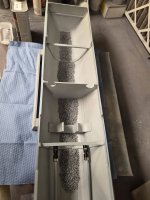
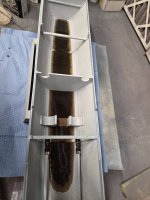
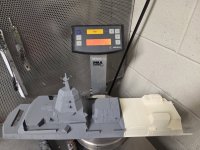
I believe it's a reference to the piping you can see in the blocks (vice just being steel). Other blocks will have full bits of equipment pre-installed, but the RCD design isn't that fully completed to allow that yet. You'll see more of that from ships 2 onwards, but that's part of the assumed 'inefficiencies' you get with first of class when you are building before the design is 100% finalized and all the equipment is selected/purchased.
In the old style of laying the keel you would build the shell, bring the piping, cabling etc in and put it all together sequentially, which is basically how they still build houses. The prebuilt homes do the same kind of modular building and assembly because it saves time, and you don't have the normal thing with plumbers, electricians and drywallers all messing up each others work if the GC isn't managing it closely.
With the modular building you do a lot more installation at the block before you assemble them together. This includes breaking the equipment down into modules you can drop in, so you can preassemble things like compressors, engines etc and drop them into the blocks that already have the piping and other connection points built in.
Some things, like pulling the cabling through the water tight bulkheads still has to wait until the mega blocks are together, but for a lot they just bolt/weld pipe flanges together after you put the blocks together. For the electrical, you can do a lot of local runs from panels to equipment inside major compartments, so really just left with pulling extended cable runs that go through sections,.
That lets you do a lot of work concurrently, and also means you can setup the module and assembly lines much more efficiently, so saves a huge amount of work and actual labour hours. The later you do it in the build, the more work it takes to get things into place, and something like 7-10 times more labour hours to install things when the ship is together than doing it at the block/mega block level.
A pretty easy to visualize example is a big diesel engine; doing it as a module you can fully assemble the engine pretty much where ever you want, so you can easily stage it to make it easier, crane it into a mega block, bolt a few things in and connect some cabling and be more or less done. If you wait until the ship is together, you usually have to bring the engine in in pieces, assemble it in place, try and do final fitup of piping in situ, etc so basically the same as an inservice job where people are contorting themselves in the bilge to try and get to things.
Just in the piping side it saves a lot of rework, by letting you do it in a pipe line where you can jig things up without interference items; that's way easier for the welders, so aside from being faster, the quality is better and much higher pass rate the first time.
Splitting off where the work is done also avoids all the interference work, where you have 3 trades trying to all do work in the same area, so just generally makes workflows easier and cuts down on a lot of the planning/deconfliction you get with normal ship repairs.
Edit:
Not sure these are the right papers, but FMI is the company that does this kind of support to our NSS, and also in the US and other countries for improving shipbuilding efficiency. That's all part of the 'Target state' that is built into the NSS to develop the shipyards to be efficient at it (and competitive). One of those things that takes decades to develop it, as a lot requires experienced people. All of their SMEs worked in shipbuilding (including in the UK German and American shipyards that did warships and subs), so learned a lot shadowing them.
https://www.nsrp.org/wp-content/uploads/2015/08/FMI-First_Benchmarking.pdf
https://apps.dtic.mil/sti/citations/ADA466922










 )
)