• Thanks for stopping by. Logging in to a registered account will remove all generic ads. Please reach out with any questions or concerns.

Continental Defence Corvette

If you had say Seaspan electricians are outfitting JSS, then move straight onto the Polar Class Icebreaker then over to JSS2, then to Corvette 1, then back to MRSV 1 and 2, then Corvette 2 etc... with limited breaks in between.
You forgot the strikes which will happen somewhere along the process. It is BC you know.
 
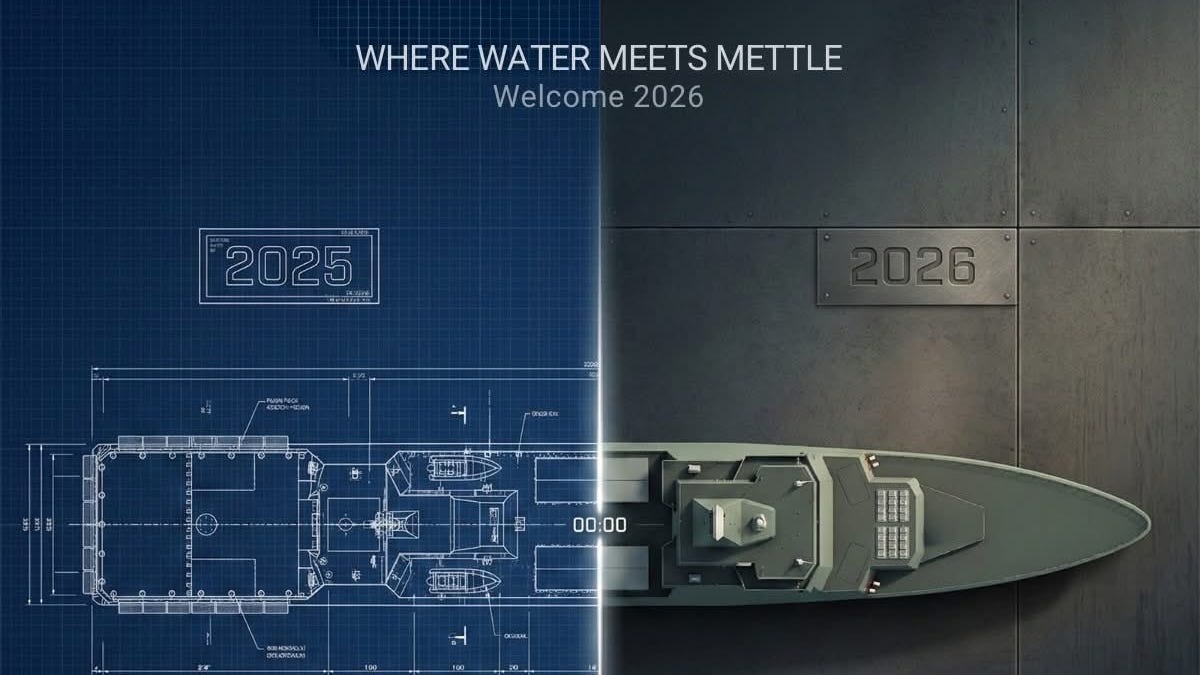
Those VLS look weird. That is not the way they are designed. They come in blocks of 8 not 12.

This makes me have less confidence in Vard not more. That's simple stuff. Shows they are not ready for the big time.

Edit: perhaps it's a place holder graphic for all the normies out there. Just for advertising.

IMG_1287.jpeg

It is strange looking for sure, however they have been using weird placeholder models for VLS for quite sometime regarding Mark 41. Amusingly as well, the NSM launchers have either been removed from the rendering like the main gun, or have been hidden below the deck in a similar “pop-up” arrangement to the Norwegian corvette Skjold.
 
Those VLS look weird. That is not the way they are designed. They come in blocks of 8 not 12.

This makes me have less confidence in Vard not more. That's simple stuff. Shows they are not ready for the big time.

Edit: perhaps it's a place holder graphic for all the normies out there. Just for advertising.
Maybe a series of 4-block Sea Ceptor launchers?
1767456091895.png
 
Noah strikes again ...

Ontario Shipyards shows off new look at Vigilance 100​


View attachment 97524

I notice they don't have Lockheed Martin Canada listed as one of their partners. If Canada does in fact build a Corvette, it's going to come with CMS330, so hopefully it's more of a "we haven't asked them yet" and not a "we don't want to work with LM Canada" type situation. Otherwise, I fear this consortium won't get the contract (which would be a shame for Canadian shipbuilding), or there will be a somewhat antagonistic relationship between LMC and the prime ("we don't want you here but Canada says we have to").
 
I notice they don't have Lockheed Martin Canada listed as one of their partners. If Canada does in fact build a Corvette, it's going to come with CMS330, so hopefully it's more of a "we haven't asked them yet" and not a "we don't want to work with LM Canada" type situation. Otherwise, I fear this consortium won't get the contract (which would be a shame for Canadian shipbuilding), or there will be a somewhat antagonistic relationship between LMC and the prime ("we don't want you here but Canada says we have to").
From what I understand of the CDC program, the RCN is just going to pick the systems that it wants (if they are Canadian) and then roll from there. They've already identified a number of systems from OSI, LMC and MDA for example that are probably going into this frigate. Vard however is a subsidiary of Ficantieri so would put Thales and other French/Italian systems onto the ship in their initial designs.
 
Also How do they recover unmanned helicopters in high seas? Would a bear trap not be useful if deploying an unmanned MPH?
The “Beartrap” is a colloquial term; Sea King used the HHRSD (Helo Hauldown Rapid Securing Device) and the Cyclone an updated (and slimmer) version called RAST (Recovery Assist Secure and Traverse). There are two limitations of these systems;
  • requires the aircraft to have a messenger cable and winch
  • slower, as the recovery cable has to be hooked up ands hauled in.

There are more modern systems, well suited to smaller aircraft, such as ASIST (Aircraft Ship Integrated Secure and Traverse) which use a different mode of recovery and don’t require the cable.

In any case, what aircraft you are going to operate and in what expected pitch and roll should be determined. A full size RAST is completely inappropriate for small to medium unmanned.
 
That was VARD marketing, before the CRCN said the intent it to not have crewed helos embarked.

As for recovery in bad weather, the solution is to not launch in bad weather... That sort of bad weather is never a surprise these days.
 
That was VARD marketing, before the CRCN said the intent it to not have crewed helos embarked.

As for recovery in bad weather, the solution is to not launch in bad weather... That sort of bad weather is never a surprise these days.
but the need to fly a mission arises regardless of weather conditions. There were any number of a/c catapulted off in hellish weather on the Murmansk run with no hope of finding a useable deck on the return.
 
Topshee has indicated that he doesn’t want a crewed vehicle. I’ll try to find the interview where he stated something to that effect.
He said he didn’t want a Cyclone on it:
there’s no world in which I will design a Canadian Continental Defence Corvette to carry a Cyclone helicopter, because there’s no world in which I see that becoming a useful helicopter, and if that changes, great, but by the time it does, we’ll probably be really good at uncrewed and remotely operated systems.
Canadian Defense Review - Vice Admiral Angus Topshee Future Interview - 2925/99/22

I don’t recall him saying he didn’t want any crew helicopter (if something else became an option).

I also note that he added “probably” to “be really good at uncrewed…” to hedge his bets.

I also note that in later interviews he stepped back from the Cyclone is a lost cause and started talking about what needs to happen to fix it.
 
While you cannot operate a medium to large helicopter from a deck and hangar designed for a small one, the reverse, operating a small helicopter from a deck and hangar designed for a medium to large one, is perfectly possible. So to that extent, Topshee is wrong. He should have the CDC designed for an embarked helicopter in the same class as the cyclone, because, at this point in time, if something happens that require extra ASW muscle, medium helicopters embarked are still the best option.
 
*Crewed helicopters
I agree with this correction. Not only is crewed a more nautical and air force term, it is an accurate term (IMHO). Crewed means someone is in the aircraft. Manned means someone is controlling the aircraft. Crewed also refers to whole of vehicles, manned refers to stations/positions within that vehicle (the gun is manned, the driver position is manned, but the tank as a whole is crewed).
 
I see the V100 has provision for 4x 40ft containers at the modular mission payload deck- is the Mk. 70 VLS an option or are there significant integration barriers that make it a non-starter to have "as needed" Strike length capability?
 
He said he didn’t want a Cyclone on it:

Canadian Defense Review - Vice Admiral Angus Topshee Future Interview - 2925/99/22

I don’t recall him saying he didn’t want any crew helicopter (if something else became an option).

I also note that he added “probably” to “be really good at uncrewed…” to hedge his bets.

I also note that in later interviews he stepped back from the Cyclone is a lost cause and started talking about what needs to happen to fix it.
I'm one of those that believes that the advantages of a crewed helicopter on the CDC (and AOPS) outweigh the disadvantages. Not just for ASW but for transport, liaison, SAR, medevac, etc. If the CDC's and AOPS are going to be operating in the far north they will not always have quick support available from land-based aircraft.

On the ASW side I am of the opinion that the CDC's should have the ability to prosecute any submarine contacts that they detect on their own. I'm guessing that maintaining contact on an enemy submarine in the complex acoustical environment of the far north - ice cover, fresh melt water on top of sea water, temperature variations, currents, etc. - so you may need to engage a target quickly, maybe more quickly than other ASW assets like P-8's can respond to assist. UAV's are a possible solution but they are still experimental and platforms like the T-600 are electric which makes me wonder about their performance and endurance in the Arctic where batteries have serious performance issues.

The RCAF currently operates 4 x main helicopter fleets - CH-146 Griffons for light utility/recon, CH-147's for heavy transport, CH-148 Cyclones for ASW and CH-149 Cormorants for SAR.

The nTACS program is already looking to replace the Griffons with and armed element included as well as presumably increased transport capacity for the disaster/emergency response, mobility and expeditionary requirements. It's understood that there may be multiple platforms required.

Objective​

The aim of the nTACS Project is to deliver modern technologies that will fill existing and anticipated Tac Avn capability gaps in Aerial Firepower, C4ISR, Mobility, and Support to SOF. It will also support credible continental defence and deterrence, provide disaster and emergency response, and enable expeditionary operations with joint and allied partners, including against threats from militaries with advanced capabilities.
The Cormorant's are already undergoing a major upgrade and the problems with the Cyclones are well known.

I'd suggest the following might be a potential option - but like any proposed change will require a re-examination of how our rotary wing fleets operate:

  • AW159 Wildcat - fulfils the attach/recon role for TacHel and the MH role for the CDC/AOPs
    • There are a couple of options for the MH role. The RN's HMA2 carries ASW weapons (Sting Ray torpedoes and Mk11 depth charges) but the targeting info comes from other platforms. The SK version on the other hand includes a dipping sonar and sonobuoys allowing them to detect targets on their own. Not sure which model would work for the CDC. From what I have read both versions maintain the ability to transport 6 x passengers.
  • AW101 - fulfils the SAR role (Cormorant) and replaces the Cyclone for the main MH role for the River-class. Added as the larger, transport element of the Griffon replacement program.
    • Platform is already in use by the RCAF. MH version is probably closest to the Cyclone in method of operation. For the TacHel transport role it has significantly increased range/capacity over the Griffons, is capable of air-to-air refuelling and has the rear ramp which would be very useful for light vehicles and UGV's, cargo, etc.
  • CH-147 - No change (but would always love more!)
This would seem to fulfil all the main roles we're looking for from our rotary wing fleet and would reduce the number of air frames in the fleet from four types to three.

Now this has been complicated by 427 Squadron going for the MH-60M as our Special Ops helicopter. That opens up the option of the MH-60R/MH-60S platforms for the MH role. These could be a Cyclone replacement and also operate off the AOPS and CDC being a smaller air frame. UH-60 could fulfil the TacHel transport role (instead of the AW101) but it does not have the advantage of a rear ramp. Going the MH-60 route for the CDC may also require more hanger space than the AW159 which might leave less space for other capabilities.

I hope all these questions are being looked at by the RCAF.

 
Back
Top