
Oldgateboatdriver
Army.ca Fixture
- Reaction score
- 6,011
- Points
- 1,040



I'm still on my holiday drinking schedule...


*gun is crewed; *driver position is crewedI agree with this correction. Not only is crewed a more nautical and air force term, it is an accurate term (IMHO). Crewed means someone is in the aircraft. Manned means someone is controlling the aircraft. Crewed also refers to whole of vehicles, manned refers to stations/positions within that vehicle (the gun is manned, the driver position is manned, but the tank as a whole is crewed).

 www.facebook.com

Not a frigate, nor a corvette…
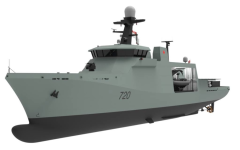
What we’re seeing with the latest unsolicited Vigilance 100 proposal from VARD isn’t a problem of ship quality but of category honesty: with 24 VLS, NSM, modern sensors, and a 2,000–2,500-tonne displacement, it’s clearly a Halifax class lite or compact frigate, not a corvette in the traditional or Canadian sense, and certainly not a Kingston class replacement as what is being portrayed in the media. The original Kingston replacement concept was deliberately modest, slightly larger hull, better seakeeping, a small gun, UAV flight deck, dynamic positioning, 25 plus knots and hangar for UAV's, and modular payloads (especially MCM), designed to be affordable, numerous, and focused on sovereignty, training, and niche tasks while leaving high end combat to frigates and destroyers. Instead, requirements creep transformed the CDC concept into a heavily armed warship, and industry simply followed that logic. There’s nothing wrong with Vigilance 100 as a ship, but calling a 2,500-tonne vessel with VLS and anti-ship missiles a Kingston successor stretches credibility; either Canada wants a true Kingston replacement, or it wants a smaller escort below the River class destroyers but those are two very different problems, and pretending they’re the same only muddies the decision.
View attachment 97563
 swiftships.com

I saw that on that facebook page. Not long after the director of the project chimed in. I know the guy, he was my CO at one point. Great CO.Not a frigate, nor a corvette…
What we’re seeing with the latest unsolicited Vigilance 100 proposal from VARD isn’t a problem of ship quality but of category honesty: with 24 VLS, NSM, modern sensors, and a 2,000–2,500-tonne displacement, it’s clearly a Halifax class lite or compact frigate, not a corvette in the traditional or Canadian sense, and certainly not a Kingston class replacement as what is being portrayed in the media. The original Kingston replacement concept was deliberately modest, slightly larger hull, better seakeeping, a small gun, UAV flight deck, dynamic positioning, 25 plus knots and hangar for UAV's, and modular payloads (especially MCM), designed to be affordable, numerous, and focused on sovereignty, training, and niche tasks while leaving high end combat to frigates and destroyers. Instead, requirements creep transformed the CDC concept into a heavily armed warship, and industry simply followed that logic. There’s nothing wrong with Vigilance 100 as a ship, but calling a 2,500-tonne vessel with VLS and anti-ship missiles a Kingston successor stretches credibility; either Canada wants a true Kingston replacement, or it wants a smaller escort below the River class destroyers but those are two very different problems, and pretending they’re the same only muddies the decision.
View attachment 97563

Really isn't a surprise, the CDC hasn't been a Kingston class replacement for quite sometime. Topshee seems content with replacing the Kingston class's MCM missions with leased civilian vessels if required/CDC/AOPS acting as motherships.Not a frigate, nor a corvette…
What we’re seeing with the latest unsolicited Vigilance 100 proposal from VARD isn’t a problem of ship quality but of category honesty: with 24 VLS, NSM, modern sensors, and a 2,000–2,500-tonne displacement, it’s clearly a Halifax class lite or compact frigate, not a corvette in the traditional or Canadian sense, and certainly not a Kingston class replacement as what is being portrayed in the media. The original Kingston replacement concept was deliberately modest, slightly larger hull, better seakeeping, a small gun, UAV flight deck, dynamic positioning, 25 plus knots and hangar for UAV's, and modular payloads (especially MCM), designed to be affordable, numerous, and focused on sovereignty, training, and niche tasks while leaving high end combat to frigates and destroyers. Instead, requirements creep transformed the CDC concept into a heavily armed warship, and industry simply followed that logic. There’s nothing wrong with Vigilance 100 as a ship, but calling a 2,500-tonne vessel with VLS and anti-ship missiles a Kingston successor stretches credibility; either Canada wants a true Kingston replacement, or it wants a smaller escort below the River class destroyers but those are two very different problems, and pretending they’re the same only muddies the decision.
Clearly mines are not a problem the RCN will ever have to contend with.Really isn't a surprise, the CDC hasn't been a Kingston class replacement for quite sometime. Topshee seems content with replacing the Kingston class's MCM missions with leased civilian vessels if required/CDC/AOPS acting as motherships.

HDW can carry more mine removal gear and pers than the MCDV's could. They have already trialed the ship with the decompression chamber, Dive gear and UAV gear all loaded on a single ship (normally that was two or three MCDV's together). The only disadvantage is that its a long way to the water from the ship for the divers. But if they use the ships boats its much easier.Clearly mines are not a problem the RCN will ever have to contend with.
Yes a HDW can do what the KIN Class does for MCM. Eventually a HDW will be used as a flagship for Op Reassurance supporting the remaining KIN Class and I suppose eventually alone. Been looking at what that will look like engineering wise as part of my day job. As said lots of space. A couple of things though, one KIN Class can embark the dive POD, decompression chamber and the REMUS, its been done to give each Kingston Class the same capability. The second point is that HDW doesn't have degaussing, a minor point I suppose these days and how their utilized but a legitimate one. The final thing is do we want to send a 6600 tonne billion dollar ship with a gigantic magnetic signature to do a job where the whole point of MCM is to use small, cheap, disposable ships? I would say the same thing for any other vessel as well at least for now.HDW can carry more mine removal gear and pers than the MCDV's could. They have already trialed the ship with the decompression chamber, Dive gear and UAV gear all loaded on a single ship (normally that was two or three MCDV's together). The only disadvantage is that its a long way to the water from the ship for the divers. But if they use the ships boats its much easier.
But I get your point. I do have some concerns about mine warfare, but from how I've seen the Clearance divers work they don't need very fancy ships to do their jobs


Oriole is non-magnetic.Yes a HDW can do what the KIN Class does for MCM. Eventually a HDW will be used as a flagship for Op Reassurance supporting the remaining KIN Class and I suppose eventually alone. Been looking at what that will look like engineering wise as part of my day job. As said lots of space. A couple of things though, one KIN Class can embark the dive POD, decompression chamber and the REMUS, its been done to give each Kingston Class the same capability. The second point is that HDW doesn't have degaussing, a minor point I suppose these days and how their utilized but a legitimate one. The final thing is do we want to send a 6600 tonne billion dollar ship with a gigantic magnetic signature to do a job where the whole point of MCM is to use small, cheap, disposable ships? I would say the same thing for any other vessel as well at least for now.
Observe for sure. Ours will be more Canadian build.A project to observe or partner with? European Patrol Corvette
I'm not sure "small, cheap and disposable ships" are as relevant in the evolving world of mine countermeasures. Many of the old, smaller fibreglass/metal hulled physical minesweepers are still around however, navies have already moved away or are in the process of moving towards an unmanned, standoff strategy from increasingly larger vessels.The final thing is do we want to send a 6600 tonne billion dollar ship with a gigantic magnetic signature to do a job where the whole point of MCM is to use small, cheap, disposable ships? I would say the same thing for any other vessel as well at least for now.
Besides what could possibly go wrong ....Do we really need an MCM capability?
Are we worried about mines in our waters? Not really, and if there are mines in our waters, they will be few in numbers; send the CLDs.
Are we worried about heavy mining in other peoples waters? Possibly. Either stay outside the mine field and launch Tomahawks and/or long range NSMs, or, tell the country we're there to help it's their responsibility to make the Q-routes and/or clear the harbour entrance.
I just can't envision a scenario where we really need a highly capable MCM capability. Right now, IMO, our MCM capability serves nothing more than a diplomatic purpose. We send MCM units to our NATO partners to show we are "helping, friendly, and committed". But if a war actually broke out and the "enemy" established a significant threat, we're not sending an AOPS to clear the mines; it would just get blown up by a long range ASCMs the second it showed up near the minefield.
Sure, ask industry to develop a mine clearing capability that can be strapped onto the CDC; BUT, do not sacrifice a single ounce of core warfighting capability to "make it work".
End rant.
As one of the few around here that's been on MCM missions as part of the NATO group yes what your saying is probably correct and very well may go that way. For the time being and in the immediate future no.I'm not sure "small, cheap and disposable ships" are as relevant in the evolving world of mine countermeasures. Many of the old, smaller fibreglass/metal hulled physical minesweepers are still around however, navies have already moved away or are in the process of moving towards an unmanned, standoff strategy from increasingly larger vessels.


