- Reaction score
- 5,808
- Points
- 1,160
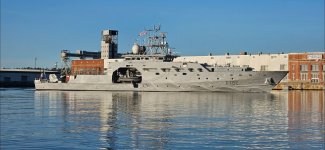
I believe one of the Admirals in a very recent interview stated the CMMC has now evolved to a light frigate?


I believe one of the Admirals in a very recent interview stated the CMMC has now evolved to a light frigate?
Regarding the CDC, RAdm Jason Armstrong explained that as compared to the original concept of a multi-mission corvette, CDC will be more of a light frigate with a focus on range, ice capability, and lethality, built in Canada with Canadian content. The Navy is defining the CDC's requirements, with an industry day planned for early next year.

I believe one of the Admirals in a very recent interview stated the CMMC has now evolved to a light frigate?
Leave it to Canada to have an identity fluid class of ships. Frankly boxing ships into predefined classes to meet asymmetric mission sets doesn’t make sense anymore for Canada.Given the flexibility of the vocabulary can anybody be sure what those words mean?

Canada is probably the only country in NATO that actually follows the NATO designations exactly for ship classification. Evidence the DDGH River Class.Leave it to Canada to have an identity fluid class of ships. Frankly boxing ships into predefined classes to meet asymmetric mission sets doesn’t make sense anymore for Canada.
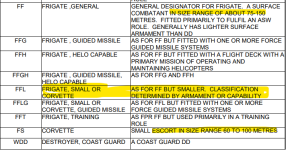

But we are boxed in by likley infrastructure limitations and likley manning challenges in the future.Leave it to Canada to have an identity fluid class of ships. Frankly boxing ships into predefined classes to meet asymmetric mission sets doesn’t make sense anymore for Canada.

Should make a Canadian only CV classification.As you can see here FFL is both a Light Frigate and a Corvette
The article after that on page 36 is interesting as well.
Yep. I follow him in the former bird app. He’s written some decent stuff this year.The article after that on page 36 is interesting as well.
A River Runs Through It
Jonathan Cassels-"CDNPolicyHawk"
a proposal for the USN to build the River Class
 ukdefencejournal.org.uk

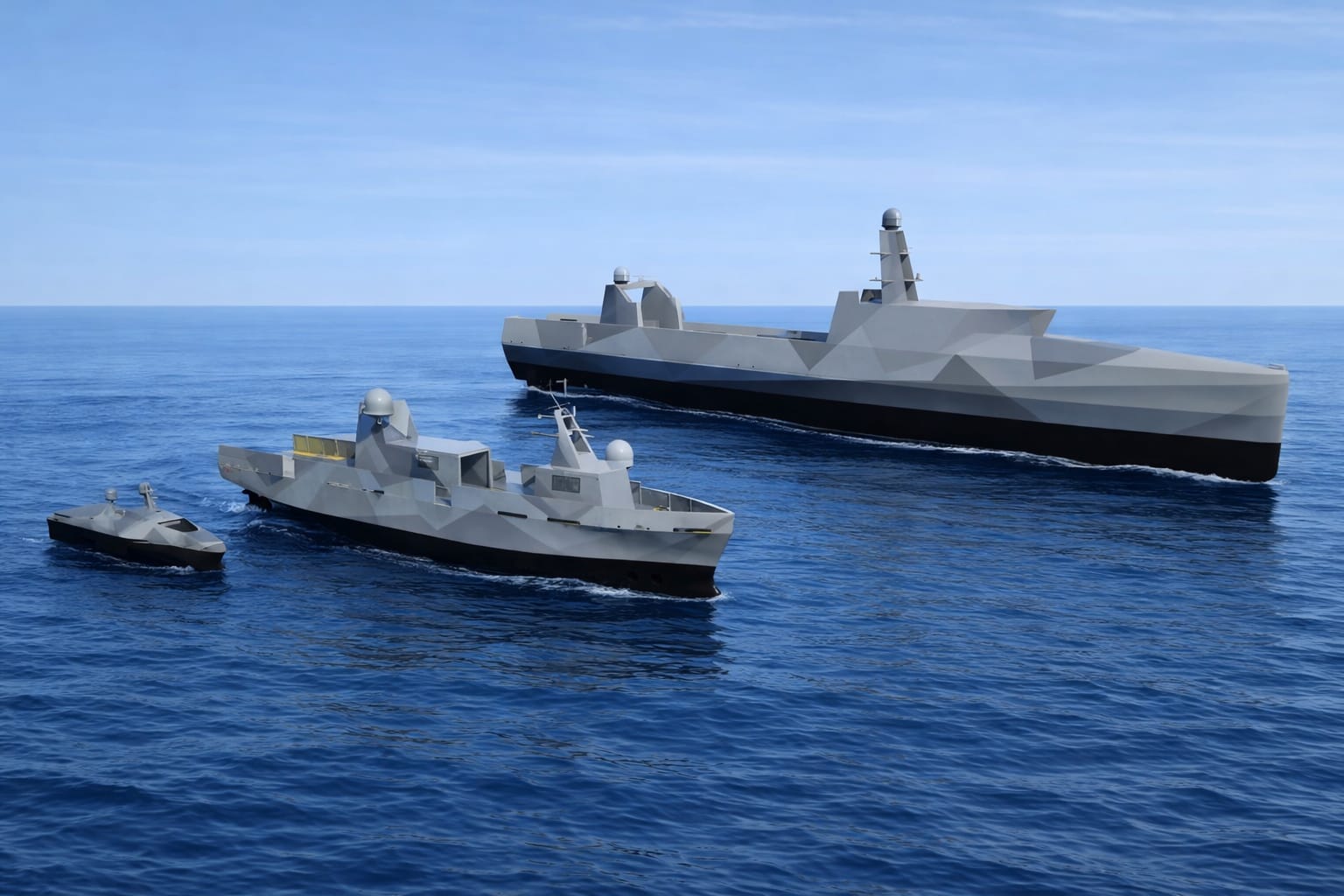
Is it possible taking automation too far could have the perverse result of leaving you with too few sailors? If the bulk of your platforms are uncrewed and you use automation to reduce the crew size of the remaining platforms that are crewed then your pool of trained humans becomes smaller."BMT, described MODUS as “a family of uncrewed vessels” rather than a single platform, spanning designs from around 20 metres up to 70–80 metres,..."
"...structural pressures facing Western navies. “As equipment gets more and more complex, but budgets remain broadly the same… we have a limited number of hulls,” Rigby said, adding that crewing constraints are also becoming a limiting factor. Autonomy, he said, forms part of a wider “hybrid navy” approach rather than a standalone answer."
BMT shares more detail on MODUS uncrewed ship concept
BMT outlines thinking behind MODUS uncrewed vessel concept for ASW and seabed roles, focused on modular design and long-endurance ops. #UDT2026
“We’ve ripped up the rule book on how we traditionally design these vessels,” said Chloe Yarrien, Maritime Autonomous Systems Engineering Lead at BMT, noting that traditional design tools are built around crewed assumptions.
“We wanted sort of 30 to 60 day missions where this vessel could be out on station, working around the clock,”
Is it possible taking automation too far could have the perverse result of leaving you with too few sailors? If the bulk of your platforms are uncrewed and you use automation to reduce the crew size of the remaining platforms that are crewed then your pool of trained humans becomes smaller.
I'm definitely a fan of getting as many automated sensor nodes as we can out there. Single purpose, cheap and plentiful. But perhaps as things get more complex, like the mother ship that deploys, recovers and monitors the sensors and has to operate in shipping lanes, etc. you avoid the added complexity (and cost) of designing an autonomous system that can handle these more complex tasks and instead go to a minimally manned vessel. Ideally something that can be crewed by Reservists.
That way you get the benefit of the automated sensor net and at the same time create an expanded pool of trained sailors that you can draw on when required.
The maintenance workload does not go away, regardless if the ships are manned or not. Now for one way attack drone boats, they just need to do their job once, maybe twice if there was no access to target the first go around. But for persistent monitoring vessels, unmanned missile attack craft, then they are going to require a lot of work everytime they return.

 www.ft.com


Always surprises me how behind the news cycle a lot of legacy media figures really are, all of this info has been known by other sources in the open source community like Noah for sometime now.Article from Voldemort yesterday.
Basically stated that the RCN is going to industry this year for CDC information (RFI). Expectation is that contract would be signed 2030 with IOC 2039. There is potential the project could be moved up if industry can move faster. Bunch of information on Vigilance and the Ontario yards being extremely interested in the project.
View attachment 100007
Here's a fancy image the RCN provided. I would take nothing from this image as its probably AI generated placeholder to look cool in any publications the RCN is using right now.
Nothing new otherwise. Still looking to "have the fight of a frigate", be ice resistant and a range of 7000nm.
They are probably constrained by two thi gs. Their own journalistic training with sources l, contacts and so on being known as having access to the info, as well as perhaps finding corroborating evidence in some cases. Noah can take more risk with sources. He's a blogger and has no professional of frankly legal obligations. (Not saying he isn't professional just he doesn't have to be)Always surprises me how behind the news cycle a lot of legacy media figures really are, all of this info has been known by other sources in the open source community like Noah for sometime now.
Floating navaids require far more upkeep, than fixed, the sea is a harsh mistress. A buoy has around 8 light bulbs in it in a rotating carousal to maintain the light. Some buoy only need work occasional, others very frequently, exposure to wind and waves determines that.