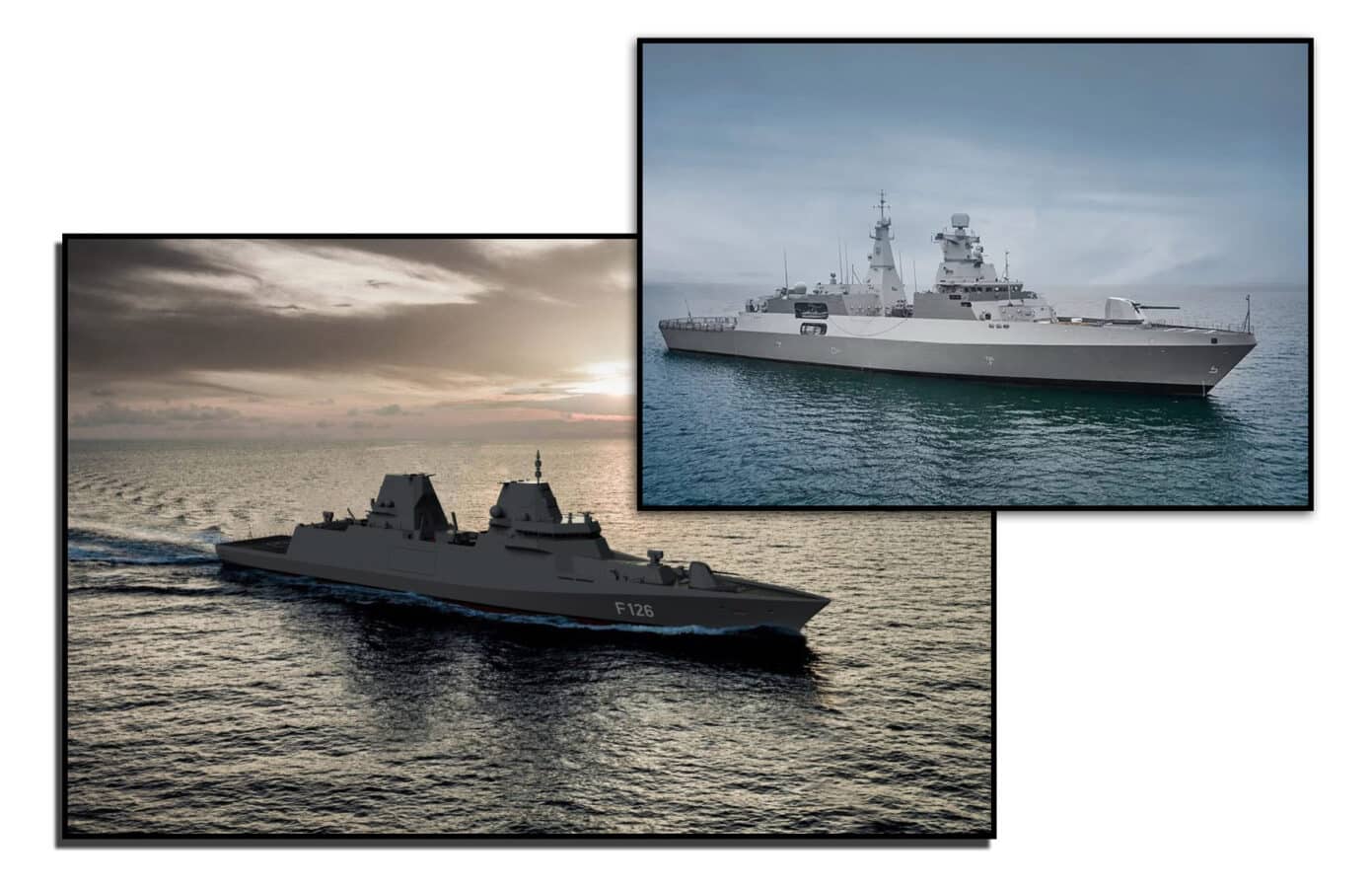
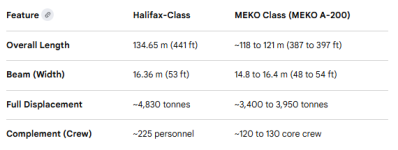
Germany swapping theF128 programme for 8 MEKOs.
The German Ministry of Defense has decided to discontinue the construction of six F126-class frigates, as the ministry announced in a recent statement.

www.navalnews.com
Apparently (AI sourced)
There are approximately 33 MEKO 200 frigates and 6 MEKO 140 frigates currently active across eight different navies worldwide.
Developed by the German shipbuilder Blohm + Voss (now ThyssenKrupp Marine Systems), the modular MEKO family of warships is highly exported.
The active MEKO 200 and MEKO 140 fleets are distributed across the globe:
MEKO 200 Operators
Turkey: 8 ships (4 Yavuz-class and 4 Barbaros-class)
Australia: 7 ships (Anzac-class)
Greece: 4 ships (Hydra-class)
South Africa: 4 ships (Valour-class)
Portugal: 3 ships (Vasco da Gama-class)
Algeria: 2 ships (Erradii-class / MEKO A-200AN)
New Zealand: 2 ships (Anzac-class)
Egypt: 3 ships (Al-Aziz-class)

en.wikipedia.org
...
how quickly can meko modules be replaced and is the engine and gearing considered as a replaceable module +9
In naval shipbuilding, the MEKO modular concept is a design philosophy allowing shipyards to construct vessels while leaving standardized slots for weapons and electronics. The time it takes to replace these modules ranges from a few hours to several weeks, depending on whether you are doing a rapid mission payload swap or an in-depth shipyard repair.
Are Engines and Gearing Considered Replaceable Modules?Yes, but with critical distinctions in how they are serviced:
In-situ module exchanges:
Major propulsion elements (like specific turbines or generator sub-assemblies) are designed as replaceable hardware modules. In modern MEKO platforms (such as the MEKO A-200), large gas turbines are assembled in a way that allows the gas generator and power turbine to be separated. This enables crews or technicians to swap out the broken part of the engine in a matter of days rather than weeks.
Gearing and alignment: While main reduction gearing units are mechanically designed for removal and overhaul, replacing an entire gearbox is a major industrial undertaking. It requires the physical lifting of massive machinery, intricate shaft realignments, and heavy structural hull work.
The "Built-in" Caveat: Unlike the plug-and-play weapons or combat system modules, engines and gearing are tightly integrated with the ship's foundation. You cannot simply slide a main engine or gearbox out of an upright wall slot; it requires opening large structural hatches or removing hull plating, making it a deep-maintenance shipyard task rather than a quick dockside swap.
....
I asked the questions in light of an article posted on this site recently where the French were targetting 80% availability rates on their fleets. It was suggested that this was in large part due to modular construction.