
• Thanks for stopping by. Logging in to a registered account will remove all generic ads. Please reach out with any questions or concerns.

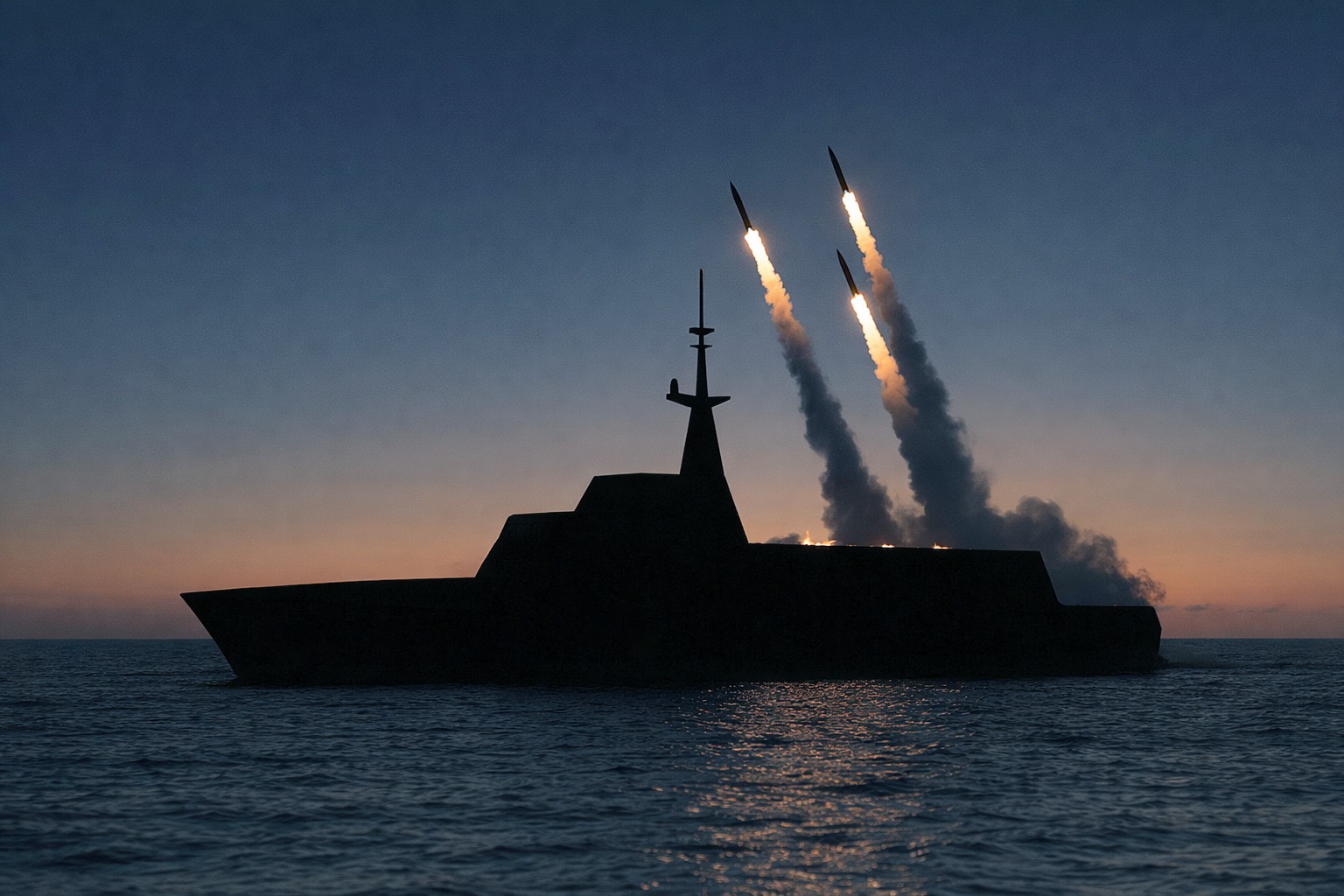
Continental Defence Corvette

I seem to have company in betting on containers.
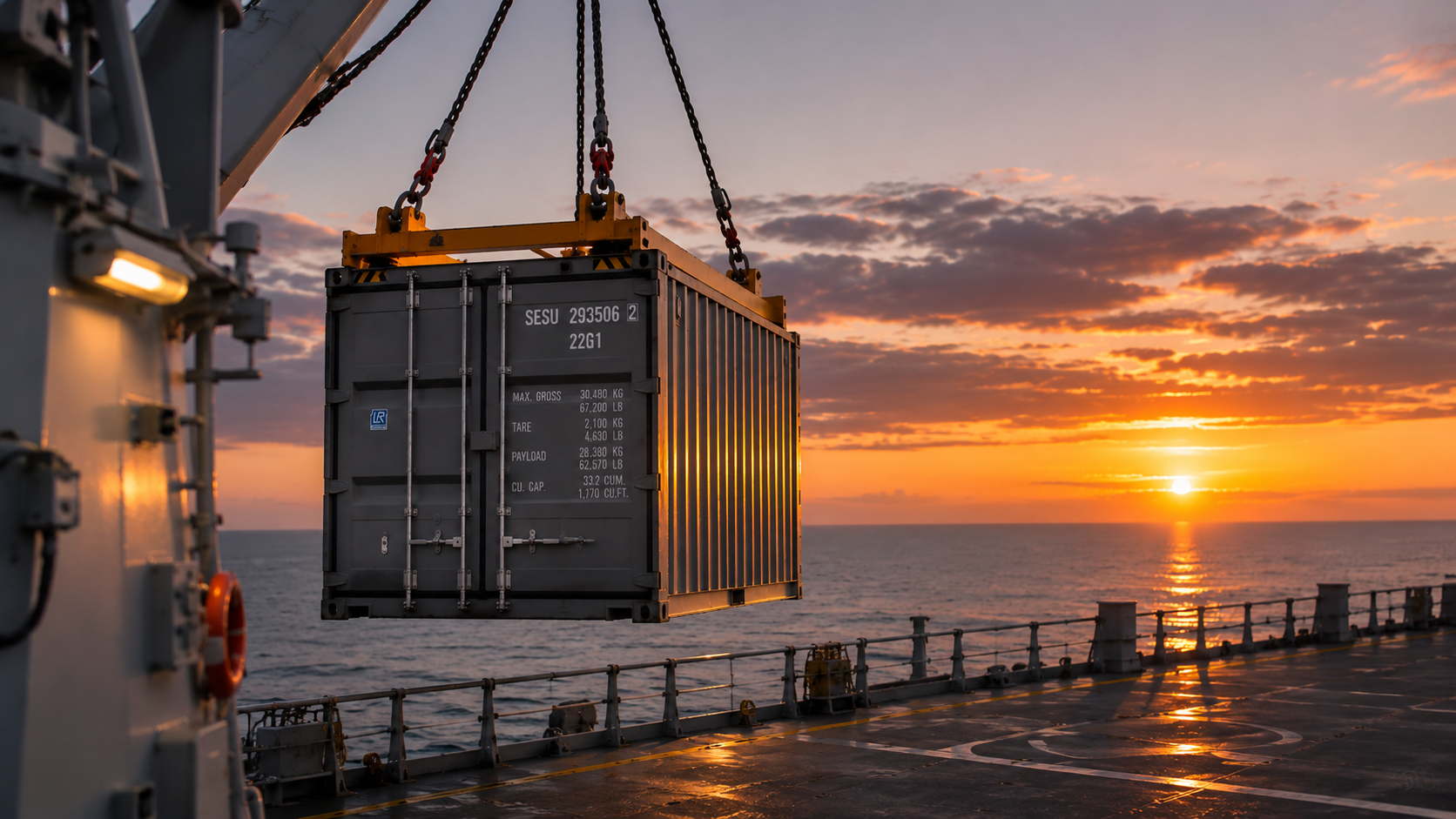


As to the issue of not having the right container on board..... is that any worse than having a bunch of weapons on board but no ammunition?

....

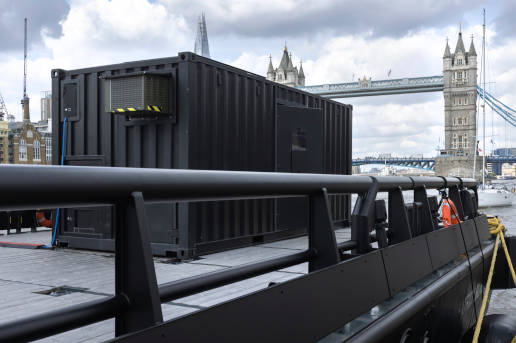
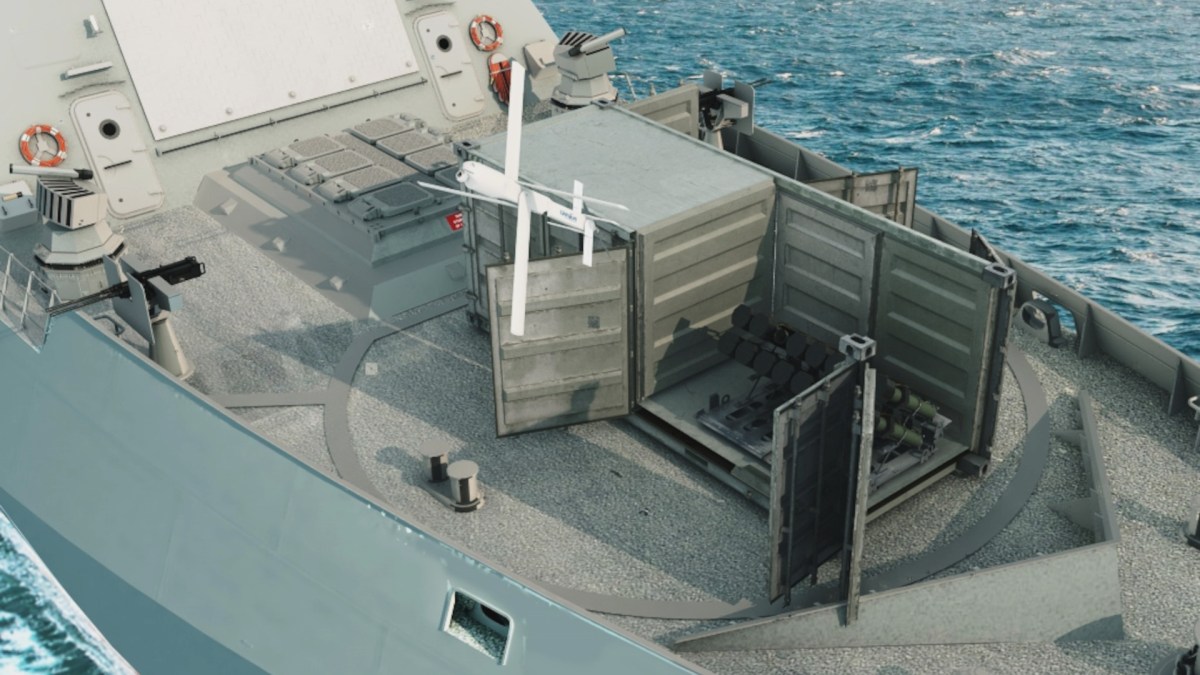
Project METIS, for Modular Effects, Tactical Interchangeable System. It is specifically about contrast of drones both on the surface and in the air (UXS, Uncrewed Systems) and will “packaged” as a NavyPODS (Persistent Operational Deployment Systems), aka a self-contained system with “container” footprints (both 10 and 20 feet PODS variants exist, but METIS specifically points to 20 feet C1 type TEU footprint).

"It is assumed that the METIS solution will take an initial cue from “another system” (either existing C-UAS sensors or main sensors existing on the warships” but it is also noted that “high levels of autonomy are desirable to reduce operator loading once an engagement starts and maximise utility across platforms and domains”"


Project TALON requires, with urgency, an “installable” CounterUAS capability suitable for maritime platforms to detect, track, identify, and defeat airborne threats. Solutions must provide “scalable kinetic and/or non-kinetic effects”, require minimal to no ship integration, operate with high autonomy, and are specifically required “be deployable on crewed vessels”.
I don't think any of those examples challenge the argument being made. These are largely supplementary capabilities intended to enhance the operational effectiveness of existing platforms, not to generate major surface combatants from lightly armed hulls. With perhaps the exception of C-UAS, which is rapidly becoming a core warfare function in its own right, none of these examples demonstrate an alternative to permanently embarked and integrated primary warfare systems. The distinction is that in the former case, you're augmenting the capabilities of an already trained, worked-up and operationally validated fighting unit; in the latter, you're expecting to generate that fighting unit in a crisis simply by embarking weapons, sensors and personnel. Those are two fundamentally different propositions, and evidence that the former is viable does little to establish the viability of the latter.
 
I think that containerized systems on existing crewed warships are essentially a response to a level of UAV/USV threat that wasn't envisioned at the time that the ships were constructed. I'd like to hope that new ships will have the required systems integrated into their design instead of being bolted on afterward through a less efficient containerized system.
 
What happens if we stop thinking in terms of an individual hull and its crew and instead start considering multiple hulls in a task force or flotilla with some being minimally crewed and others uncrewed?

Also consider the possibility of a conveyor of exhausted uncrewed hulls returning to a FARP for replenishment and returning to the flotilla.

The entire effort is one of trying to figure out how to increase magazine depth and get more missiles into the fight.

No matter how big you make the ship you will always run out of supplies and find yourself vulnerable. And bigger ships require bigger crews and more money which take awaw from the number of missiles you can acquire.

Bigger ships also mean fewer ships and fewer areas under their influence.

Bigger ships also take longer to build.

The UK has explicitly stated a need for an effective defence within 1000 days as of October 24, 2026.
Friday July 20 2029.

What can you get in the water by that date?

The first RCD is due circa 2031 and the last circa 2050.
The first TKMS sub isn't due until 2035 or so.


Norway has proposed a militarizable 58m trawler that could be available from 2030.
The USN is procuring 10 to 15 USVs a year at 56m length with the first due by the end of 2027.
Converting an existing OSV to a USV takes about 6 months.
 
@Furniture has it right. Danes are walking away from STANFLEX. CUBE and some containerized systems are excellent options... we've been doing that on the MCDV's since 1998. The dive containers, the habitation pods, storage containers, mine payload containers, sidescan towed arrays. This is going to get bigger with PRO as they are working on a HADR container/containerized system.


AOPS is a much better platform for testing. They have the space, power and accommodations to do it, whereas the MCDV's were very limited. Look at the recent MAX sail when they tested OTH drones, UUV's and sensors in the Arctic on a nice long trip. MCDV could never have done that.

And as far as training, the ORCA replacement will be larger and better training options (with more vessels as well, at least that's the plan). Mine clearance isn't done with ships really anymore. Remote minehunting is the way, and you can pretty much do that from any platform with a big crane and work deck.
The Orca replacement will likely be a bit bigger, but it's a hell of a leap for command and navigation training from an Orca to a Frigate or other 4,000DWT+ vessel. It would be good to have a stepping stone vessel in the 2,000 tonne range for that level of training and be able to use smaller infrastructure.
 
The Orca replacement will likely be a bit bigger, but it's a hell of a leap for command and navigation training from an Orca to a Frigate or other 4,000DWT+ vessel. It would be good to have a stepping stone vessel in the 2,000 tonne range for that level of training and be able to use smaller infrastructure.
There has to be some care taken with how much FASST-V grows compared to Orca, there is the serious risk where the vessels are large and capable enough that politicians/upper echelons of the force view them as "too useful to just be training" and send them off on other missions. The Orca's escaped this by being so small that they physically can't really leave their region safely, but that has also let them do their job unimpeded by higher powers.

A training vessel that is too busy scheduled on other duties isn't doing the training we need it to do.
 
What happens if we stop thinking in terms of an individual hull and its crew and instead start considering multiple hulls in a task force or flotilla with some being minimally crewed and others uncrewed?

Also consider the possibility of a conveyor of exhausted uncrewed hulls returning to a FARP for replenishment and returning to the flotilla.

The entire effort is one of trying to figure out how to increase magazine depth and get more missiles into the fight.

No matter how big you make the ship you will always run out of supplies and find yourself vulnerable. And bigger ships require bigger crews and more money which take awaw from the number of missiles you can acquire.

Bigger ships also mean fewer ships and fewer areas under their influence.

Bigger ships also take longer to build.

The UK has explicitly stated a need for an effective defence within 1000 days as of October 24, 2026.
Friday July 20 2029.

What can you get in the water by that date?

The first RCD is due circa 2031 and the last circa 2050.
The first TKMS sub isn't due until 2035 or so.


Norway has proposed a militarizable 58m trawler that could be available from 2030.
The USN is procuring 10 to 15 USVs a year at 56m length with the first due by the end of 2027.
Converting an existing OSV to a USV takes about 6 months.
One thing I will concede with regard to containerized systems is the relative ease of reloading. A top priority to me should be to design a reliable system to more quickly/easily reload VLS (and other) missile systems.

I believe a reloadable multi-munition fixed system would be better a better option than a containerized system. It requires a full 40' container for the Mk70 system to provide an extra 4 x launch cells. Integrated systems would take up less space.

I think the Mk70 system may be on the way out precisely because of the difficulty of transportong 40 ft containers in austere conditions.


Etc

 
The Orca replacement will likely be a bit bigger, but it's a hell of a leap for command and navigation training from an Orca to a Frigate or other 4,000DWT+ vessel. It would be good to have a stepping stone vessel in the 2,000 tonne range for that level of training and be able to use smaller infrastructure.
Ahem!
1795891619363.png
 
I think the Mk70 system may be on the way out precisely because of the difficulty of transportong 40 ft containers in austere conditions.


Etc


You see, Kirkhill, this is where I think we are not connecting.

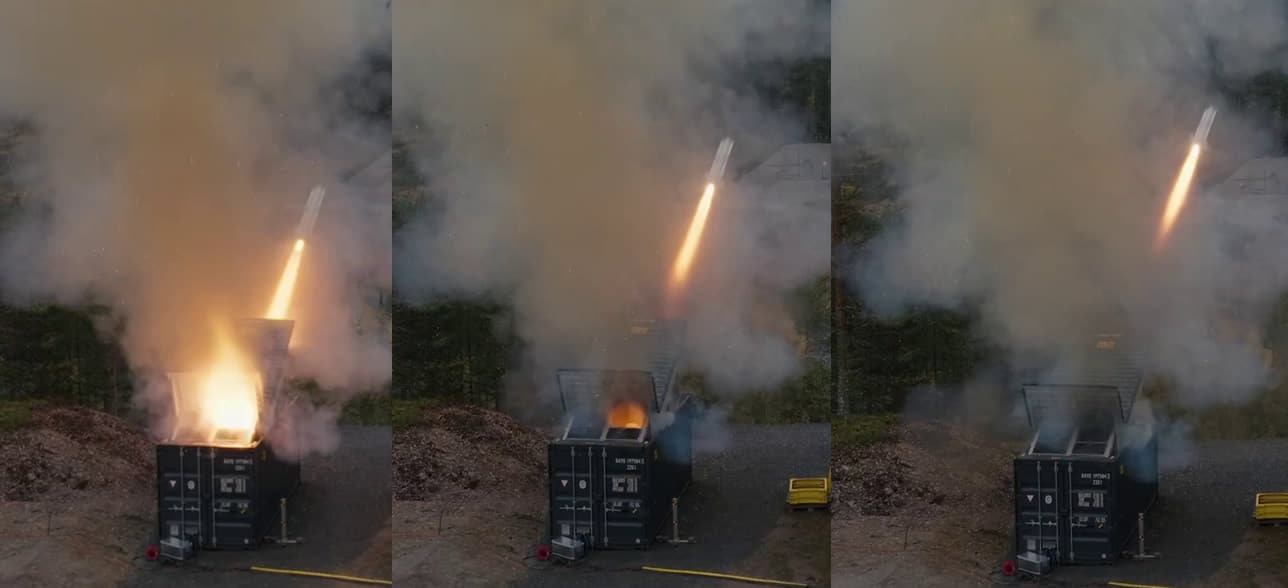
You show land based containerized missile launchers. What you don't show is (1) how they got in position, (2) how they are controlled and, (3) how the enemy is detected so that you know when to launch at and at what.

In naval warfare, there are no low ground, no high ground, no Forward Edge of Battle, no front, no rear area, etc. It's a flat, open sea with nowhere to hide. The battle goes to the one who detects the other first, figure out first what the other is up to and maneuvers out of the opponent's detection range to get the modern version of the weather gauge. That is done with big mother radars, electronic warfare systems, communication systems to network and the use of integrated sensor (including from shore and space). Your land version doesn't have that nor need it. Those land based missile have a small control console connected to one reasonably small local radar dedicated to it.

You want to put one or two containers on my ship, each with, say, 12 tactical length tubes with missiles in them? That's fine with me - and in proportion to the cost of a front line warship, it is not a big expense. But it needs all these other things I mentioned above to be useful at sea, so I want those container to come with a great big plug that both powers the container and integrates instantly into the ship's combat system. There is no other way.

The same goes for a self-driving "small" wingman type vessel with such missiles. It needs to integrate with a full front line combat ship or else it is useless (no, they can't be controlled from shore like a RPAS because there is no specific and pre-identified location you are working against, so a "mother" ship in charge is required and that mother ship had better be a full front line capable warship itself (BTW, what I am describing here is exactly the Bastion UK you keep referring to: you always bring up the developments in the choices made for the wingmen, but you never discuss the surface warships that will control and integrate all that and the networking and intel needs that will support them.)
 
You want to put one or two containers on my ship, each with, say, 12 tactical length tubes with missiles in them? That's fine with me - and in proportion to the cost of a front line warship, it is not a big expense. But it needs all these other things I mentioned above to be useful at sea, so I want those container to come with a great big plug that both powers the container and integrates instantly into the ship's combat system. There is no other way.
As I suggested earlier I think that containerized systems for warships are best for adding a capability that was not foreseen in the ships original design...like the need for more inexpensive AD systems for use against large volumes of UAVs for example. But to my mind if you're just using them to increase the capacity of something you already have...like the additional 4 x VLS cells in the Mk70 40' container when you already have 16 x VLS cells I'm guessing it would actually be much more efficient in terms of both system integration and space simply to design your ship with 8 more VLS cells. You don't need all that additional space for the bits that make it transportable as well as the powering systems and integration systems.
 
Back
Top