• Thanks for stopping by. Logging in to a registered account will remove all generic ads. Please reach out with any questions or concerns.

GBAD - The return of 'FOBS'

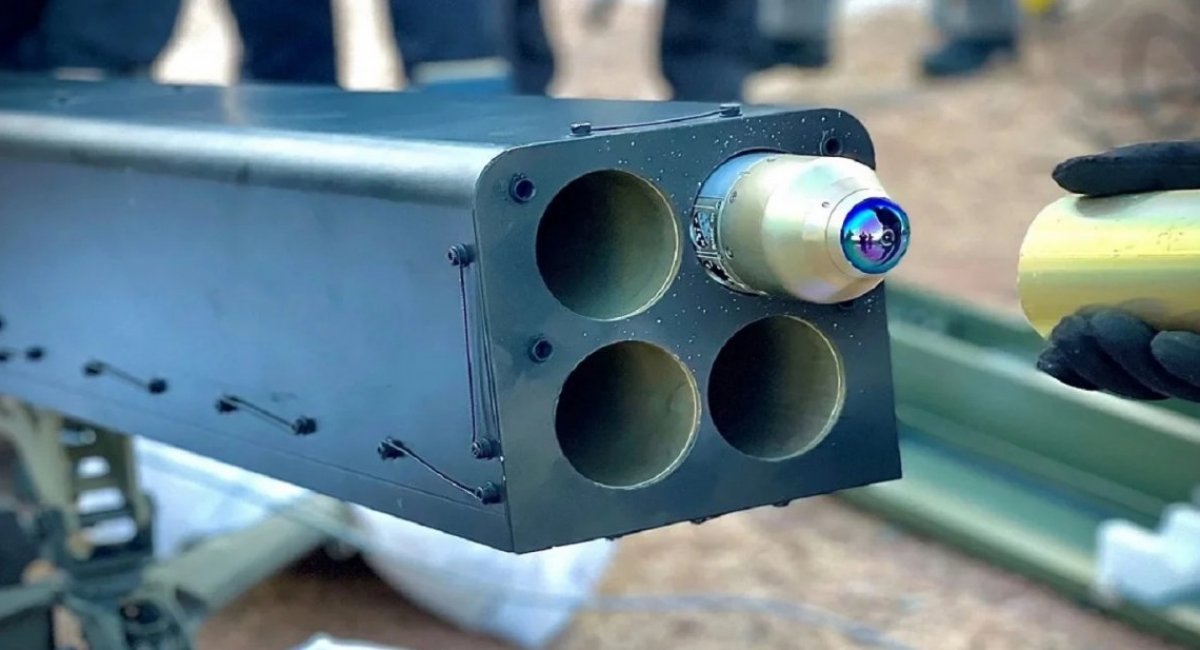
Thales Euro derivations of the APKWS II Hydra 70.

The APKWS II takes the standard 70mm Hydra 70 unguided rocket with a 10 or 17 pounder HE warhead and a proximity fuse and adds the APKWS II laser guidance system to allow the operator to steer the rocket to the general vicinity of the target and let the proximity fuse take over.

The Thales version is the LGR275 Proxy, or FZ 275 LGR.

But Thales has added a new warhead. The FZ123 disperses 6500 tungsten pellets in a cloud.


@FJAG

How should we parse this one?

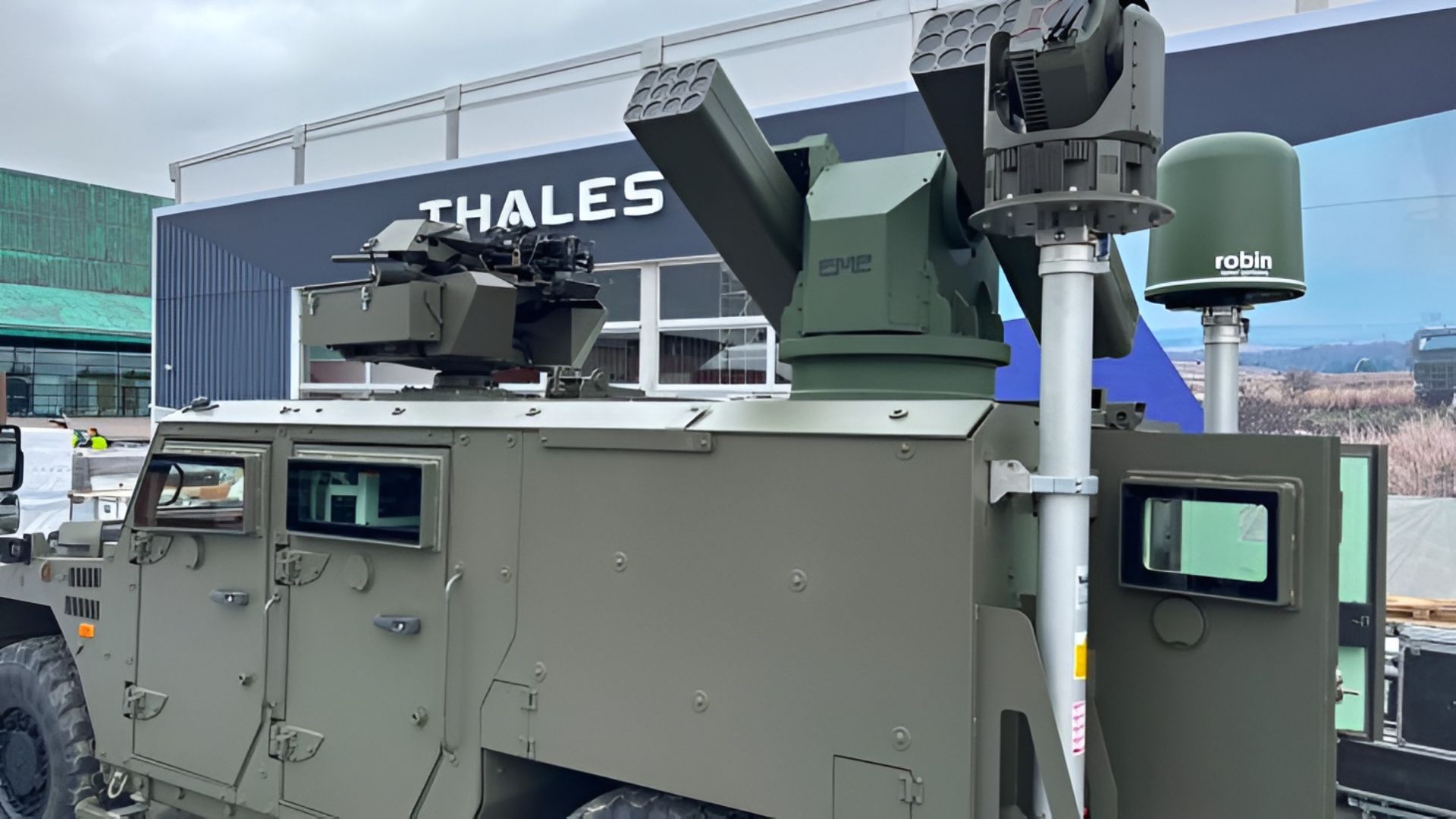
One vevicle, one mission but many sensors and weapons?


"Rather than relying on a single weapon, RapidStriker gives operators several ways to engage a target. The system pairs its sensors with automated fire control before cueing the most suitable effector for the mission.

"Operators can deploy guided or unguided 68 mm and 70 mm rockets. Small-caliber cannons and remotely operated munitions can also be integrated depending on operational needs."
 
@FJAG

How should we parse this one?

One vevicle, one mission but many sensors and weapons?


"Rather than relying on a single weapon, RapidStriker gives operators several ways to engage a target. The system pairs its sensors with automated fire control before cueing the most suitable effector for the mission.

"Operators can deploy guided or unguided 68 mm and 70 mm rockets. Small-caliber cannons and remotely operated munitions can also be integrated depending on operational needs."
You see, that's a system that I could buy into. The ability to deal with lower level drone and helicopter systems with the appropriate sensors and effectors on one vehicle makes sense - especially for point or small area defence in forward areas.

Everything was fine until the last sentence which threw in a gratuitous "Beyond counter-drone missions, they support precision strikes against ground targets and provide saturation fire when troops require broader area effects" - puffery.

🍻
 
You see, that's a system that I could buy into. The ability to deal with lower level drone and helicopter systems with the appropriate sensors and effectors on one vehicle makes sense - especially for point or small area defence in forward areas.

Everything was fine until the last sentence which threw in a gratuitous "Beyond counter-drone missions, they support precision strikes against ground targets and provide saturation fire when troops require broader area effects" - puffery.

🍻

Was the application of the LAA 20mm and 35mm cannons to the ground role at Goose Green, mere puffery?

And yes, I am being tendentious! 😁
 
Jocularity aside. From the stand point of an infantry battalion where everything is likely to be encountered and everything has to be carried on your back, then multi-role solutions have a lot of merit.

One weapon that can defeat three targets is preferable, in my opinion, to three weapons that require specialist crews with specialist training and their own logistics requirement.

The caveat is that the weapon needs to be simple and reliable and not cluttered with byzantine ornamentation.
 
Jocularity aside. From the stand point of an infantry battalion where everything is likely to be encountered and everything has to be carried on your back, then multi-role solutions have a lot of merit.

One weapon that can defeat three targets is preferable, in my opinion, to three weapons that require specialist crews with specialist training and their own logistics requirement.

The caveat is that the weapon needs to be simple and reliable and not cluttered with byzantine ornamentation.
Believe me that a system which has a radar, c2 computer and control components, two different weapon systems (gun and missile) and specialized maintenance requirements then it will need a specialist crew and a specialized care and feeding system behind it, not merely for the operation of the vehicle but also its tactical employment.

I'm not saying that you can't train an infantryman to do the job but it is a specialist's job. Once you get to that state one can argue ad infinitum as to whether it should be an air defenders job or a specialist infantryman's job, but regardless, its a specialist.

One of the simple rules of life is that you do not want to overburden the folks who have the hard job of fighting the infantry battle with having to have too many assets to divert their attention. Where you want them is to be secure in the fact that someone else is looking after that issue so they can get on with the job. That's the difference between the application of direct fire in the two-dimensional ground battle and the application of weapons in the third dimension air space and the over the horizon indirect fire role.

It's just stuff that magically happens. Yup. There are places where it interfaces closely and the question of who manages that particular effect can be legitimately debated, but at the end of the day you want to make the company or platoon commander's job as easy as possible.

🍻
 
Believe me that a system which has a radar, c2 computer and control components, two different weapon systems (gun and missile) and specialized maintenance requirements then it will need a specialist crew and a specialized care and feeding system behind it, not merely for the operation of the vehicle but also its tactical employment.

I'm not saying that you can't train an infantryman to do the job but it is a specialist's job. Once you get to that state one can argue ad infinitum as to whether it should be an air defenders job or a specialist infantryman's job, but regardless, its a specialist.

One of the simple rules of life is that you do not want to overburden the folks who have the hard job of fighting the infantry battle with having to have too many assets to divert their attention. Where you want them is to be secure in the fact that someone else is looking after that issue so they can get on with the job. That's the difference between the application of direct fire in the two-dimensional ground battle and the application of weapons in the third dimension air space and the over the horizon indirect fire role.

It's just stuff that magically happens. Yup. There are places where it interfaces closely and the question of who manages that particular effect can be legitimately debated, but at the end of the day you want to make the company or platoon commander's job as easy as possible.

🍻

I agree with you. It is not an infanteers job.
I would also tend to thinking that any vehicle of that size should not be on the battalion's kit list but should be attached when and as.

My point wrt the infantry is that the Support Coy, Heavy Weapons Coy, Coy Wpns Plts should be as broad spectrum as possible.

EG - rather than an DFS platoon, an MG platoon and an Anti-Air platoon, a couple of platoons that can address all three tasks with the same weapons system would, in my opinion, be better.
 
The role of sensors in the GBAD system


....

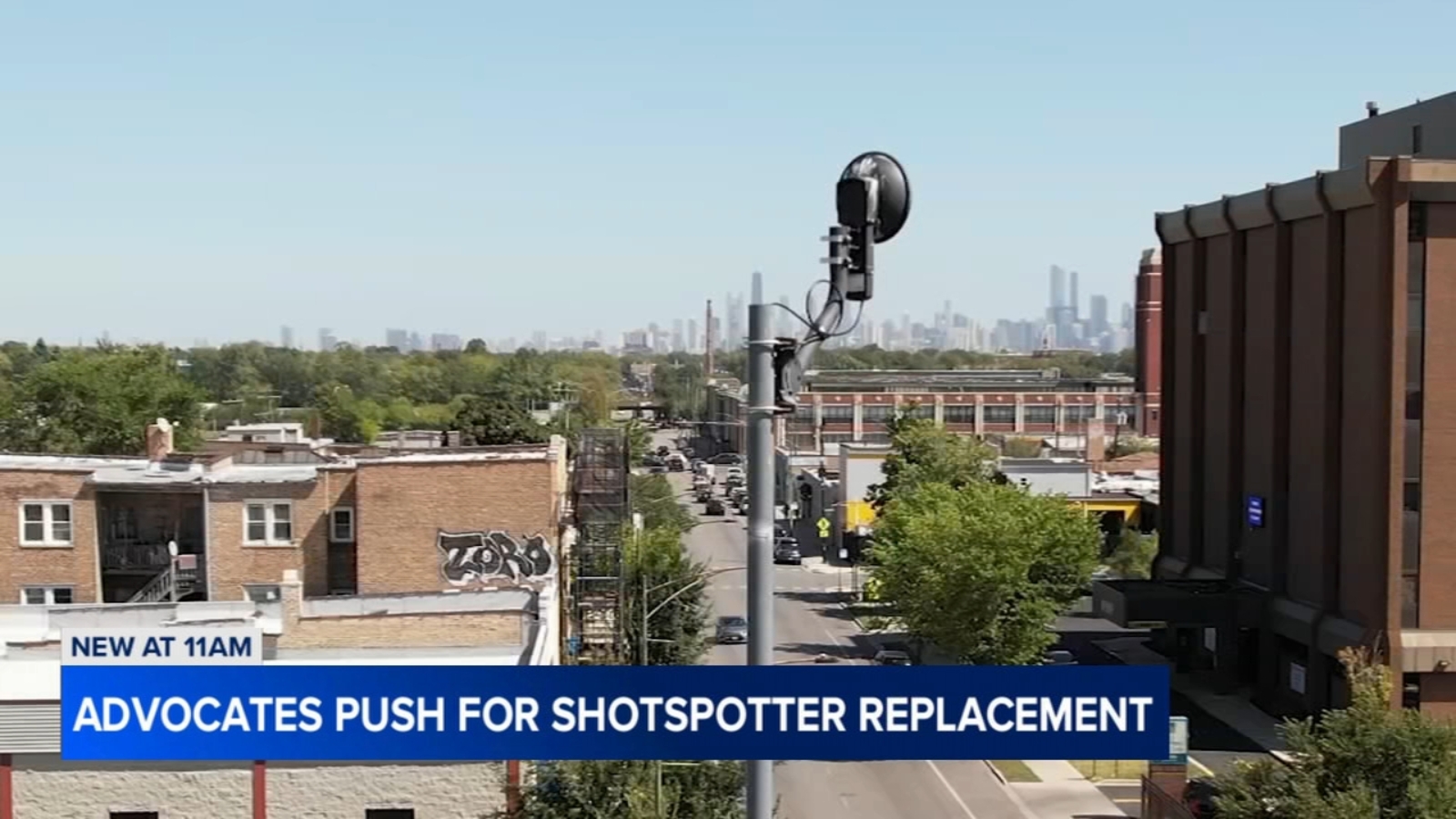
On the acoustic front I am reminded of the Chicago experiment


The role of sensors in the GBAD system


Being shown "why cheap sensors could be the key" is unnecessary. What we need a re actual examples of cheap, viable sensors built into a layered system coupled to a viable warning/fire control system integrated with masses of cheap layered air defence effectors. So far we're a little short on what industry is delivering.
On the acoustic front I am reminded of the Chicago experiment


The content of that article was a bit confusing. My takeaway was that it was too expensive, that officials thought the benefits weren't worth the cost, but there were folks in the neighbourhood who thought they generated faster responses.

What I found of interest was the density of ShotSpotter sensors - at 20-25 sensors per square mile. That's impractical for a city and much more so for a tactical role. Our HALO acoustic sensors can cover a 2,000 square kilometre area and pinpoint close in shots or distant gunfire or explosions to within 50-100 metres. I doubt a HALO array could pick up smaller drones at a distance albeit some of the larger ones would probably register. Besides, there are other acoustic military sensors more suited to work plus there are radars which work well on picking up movement.

I'm not aware of any practical in-service solution at this point. It's an interesting issue, however, for both expeditionary and homeland forces.

🍻
 
Being shown "why cheap sensors could be the key" is unnecessary. What we need a re actual examples of cheap, viable sensors built into a layered system coupled to a viable warning/fire control system integrated with masses of cheap layered air defence effectors. So far we're a little short on what industry is delivering.

The content of that article was a bit confusing. My takeaway was that it was too expensive, that officials thought the benefits weren't worth the cost, but there were folks in the neighbourhood who thought they generated faster responses.

What I found of interest was the density of ShotSpotter sensors - at 20-25 sensors per square mile. That's impractical for a city and much more so for a tactical role. Our HALO acoustic sensors can cover a 2,000 square kilometre area and pinpoint close in shots or distant gunfire or explosions to within 50-100 metres. I doubt a HALO array could pick up smaller drones at a distance albeit some of the larger ones would probably register. Besides, there are other acoustic military sensors more suited to work plus there are radars which work well on picking up movement.

I'm not aware of any practical in-service solution at this point. It's an interesting issue, however, for both expeditionary and homeland forces.

🍻

I intentionally selected an inconclusive article.

Apparently the project suffered from technical fans and political detractors. Hard to find quality info.

The Ukrainians started with cell phones as the primary sensors.

 
I intentionally selected an inconclusive article.

Apparently the project suffered from technical fans and political detractors. Hard to find quality info.

The Ukrainians started with cell phones as the primary sensors.

Old article which makes me want to see where they are two years latter.

:unsure:
 
Rafael's latest offering:

A low cost C-UAS UAS that can be launched from a vehicle on the move


...

This particular development of the UAS has me particularly intrigued. It functions not only as an effective lethal interceptor with an explosive warhead but also it is still effective with an inert warhead. That suggests to me that it would function well in a non-lethal / less-than-lethal environment associated with peace time security.

It seems to me it would be just as adept pursuing people on foot, in cars and even helicopters in urban and rural environments.
 
One German Start Up

3000 C-UAS Interceptors a month.

At an estimated cost of $3000 apiece - $9,000,000 a month.

From one of many factories.


GDOTS Canada produced 3000 to 5000 M107s at a unit cost comparable to the C-UAS interceptors prior to 2022 and recent investments.
 

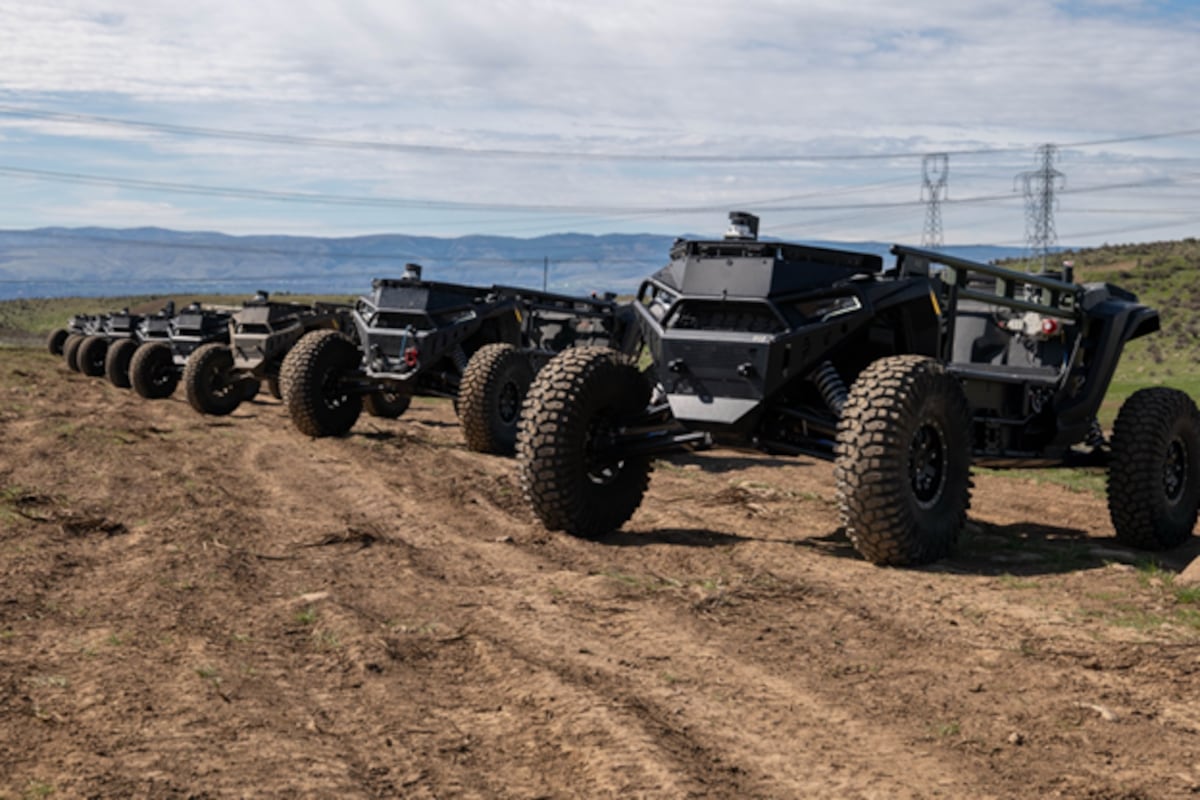
"$20 million production contract for fully autonomous ground vehicles that can transport air defense systems deeper into the fight, with less human oversight."

...


"In a round table meeting with reporters on Monday, Overland co-founder and CEO Byron Boots said the Other Transaction Authority production agreement, awarded through the office of the Under Secretary of Defense for Research and Engineering, made the company the first ground autonomy provider to prime a production agreement with the U.S. military.

"“Ground autonomy matters now more than ever,” Boots said. “We’re seeing the proliferation of uncrewed ground vehicles in conflicts like the one in Ukraine, and tech maturity is really there.”

"Adding, “We’re registering extremely high demand from U.S. operational units who want to incorporate this technology into their concepts of operation, so in the last six months or so we’ve really seen the U.S. Army and Marine Corps lean forward into autonomy.”"
 

Taiwanese version of the VAMPIRE on a pickup truck - but with 6x7 70mm APKWS II. Intended to thicken coastal defences.
Laser director can also direct third party rounds to target.
 

Taiwanese version of the VAMPIRE on a pickup truck - but with 6x7 70mm APKWS II. Intended to thicken coastal defences.
Laser director can also direct third party rounds to target.
An interesting application. The truck seems to lack any capability for tactical manoeuverability with that low slung body. I know it says its aimed for coast guard work but in any warfighting situation you have to be prepared to go off road or deal with rubble and other obstacles.

I expect that we'll continue to have to deal with better and better drones that get through the EW shields in seeking to strike the deep headquarters, fire support and logistics installations at the tactical level (in a 1 Div scenario) and at vital infrastructure in 1 2 Div scenario)

If I had my druthers, at least half of the TAPV fleet would be converted to carry these types of systems (with an added .50 - I think viable 30mm need their own truck)) for the headquarters and logistics support role in 1 Div and for 2 Div we would load the same system on the back of armoured Senator Pickups.

We need a lot more air defence (not to mention IMAD) than we're planning for.

🍻
 
An interesting application. The truck seems to lack any capability for tactical manoeuverability with that low slung body. I know it says its aimed for coast guard work but in any warfighting situation you have to be prepared to go off road or deal with rubble and other obstacles.

I expect that we'll continue to have to deal with better and better drones that get through the EW shields in seeking to strike the deep headquarters, fire support and logistics installations at the tactical level (in a 1 Div scenario) and at vital infrastructure in 1 2 Div scenario)

If I had my druthers, at least half of the TAPV fleet would be converted to carry these types of systems (with an added .50 - I think viable 30mm need their own truck)) for the headquarters and logistics support role in 1 Div and for 2 Div we would load the same system on the back of armoured Senator Pickups.

We need a lot more air defence (not to mention IMAD) than we're planning for.

🍻

Re the "viable" 30.

I get what you are saying but I think the 30x113 family is a better solution than the 50. It splits the difference between the 50 and the 40mm GMG, mounts on the same mount and gives you a bursting shell with a prox fuse as well as HEI options.

The M230 LF as used on the Apache and the MSHORAD is becoming very popular as a last ditch weapon. (1000 m)

The layer behind the Skyrangers and the VAMPIRES. (4000 m)
 
Re the "viable" 30.

I get what you are saying but I think the 30x113 family is a better solution than the 50. It splits the difference between the 50 and the 40mm GMG, mounts on the same mount and gives you a bursting shell with a prox fuse as well as HEI options.

The M230 LF as used on the Apache and the MSHORAD is becoming very popular as a last ditch weapon. (1000 m)

The layer behind the Skyrangers and the VAMPIRES. (4000 m)
Perhaps I wasn't clear enough.

With an example of a light truck system like this where there are light missiles/rockets on board I think that the addition of a gun would be a good idea. I think the .50 is the better solution as it isn't too heavy for the vehicle. A 30mm would be. IMHO one needs to pair a small rocket/gun vehicle with a vehicle robust enough to carry the 30mm. Effectively you have a team that has the necessary sensor/targeting system for CUAS and light aircraft work which can select from a .50, a 30mm or a rocket to engage as appropriate. When I mentioned the TAPV I wasn't sure whether it was robust enough (and maybe too tall) to be able to mount a 30mm and rocket pods as well and fire sideways off of it.

These would work well in rear areas. In forward areas I think a heavier chassied (and lowered hull) armoured vehicle based on a 30/35mm gun and rockets/missiles would probably be technically feasible and desireable.

🍻
 
Back
Top