• Thanks for stopping by. Logging in to a registered account will remove all generic ads. Please reach out with any questions or concerns.

Get the basics right - like ERs staying open & ambulances arriving on time

Why we are asking​

Asking patients to self-identify as Indigenous is an important step toward helping improve cultural safety in emergency care and addressing health inequalities experienced by Indigenous Peoples.

lol what.
 
Unimaginative solution to reports of indigenous people subjected to adverse discriminatory treatment in the health care system. If a patient ticks "Yes", there's no excuse for not knowing and everyone in the chain will be encouraged to use kid gloves. The preferred bureaucratic solution to a problem is often enough another form, which is the evidence that something was done.

"That which gets measured gets done."
 
Okay, somebody's going to have to fill in the 'next steps' for me. What happens that is different depending on the yes/no answer?
 
So we are making health care racialized....?

Oh? It wasn't already?


Okay, somebody's going to have to fill in the 'next steps' for me. What happens that is different depending on the yes/no answer?

How you answer the question will not affect your level of care. Patients may decline to answer at any time, regardless of how they identify.

Why we are asking​

Asking patients to self-identify as Indigenous is an important step toward helping improve cultural safety in emergency care and addressing health inequalities experienced by Indigenous Peoples.
  1. Equity in care
    Indigenous Peoples in BC have and continue to experience inequities and racism in the healthcare system, as highlighted in the In Plain Sight report. Asking this question helps recognize and address these inequities and may connect patients with cultural and wellness resources.
  2. Data-Informed change
    Collecting consistent and accurate data helps BCEHS measure equity in emergency services and identify areas for improvement.
  3. Respect and choice
    Patients are asked in a respectful and consistent way, with no assumptions made about their identity.
  4. Commitment to reconciliation
    This initiative reflects BCEHS’ and the provincial commitment to advance reconciliation, cultural safety, and anti-racism in healthcare.
 
Last edited:
Okay, somebody's going to have to fill in the 'next steps' for me. What happens that is different depending on the yes/no answer?

Not familiar with ambulance billing in B.C., but read this,

The First Nations Health Authority (FNHA) Health Benefits program covers ambulance bills for eligible First Nations individuals with Indian status who reside in British Columbia.
 
Not familiar with ambulance billing in B.C., but read this,

More specifically

About this Coverage​

The Health Benefits Program covers the cost of ambulance transport services in the following situations:
• transport to a hospital in an emergency situation
• transport from a lower level care facility to a higher level care facility (e.g., a long term care home to a hospital)

If You Receive an Ambulance Bill​

If you receive an ambulance bill, please send it to Health Benefits by email, fax or mail. Please be aware that ambulance bills as a result of a motor vehicle accident or a workplace incident will not be covered by the Health Benefits Program, and should be forwarded to ICBC or WorkSafe BC, respectively.

Coverage for ambulance transport services in BC is based on the rules and rates set out by BC Emergency Health Services. Most ambulance bills will be sent to Health Benefits directly, if you provide BC Emergency Health Services with your status number.

If you have any questions, please call Health Benefits at 1-855-550-5454.
 
So I'm still struggling with how the answer would impact the care of that patient and that time. It sounds like some effort at data tracking, so they can aggregate and report that they dealt with x indigenous patients and less-than-x complaints of insensitive care.

Is there no box for non-indigenous receiving crappy care?

If I'm not indigenous but say yes, is my ride free?

The best way to dea with insensitive or substandard care is dealing with the particular people connected to a particular event.
 
Keep in mind with our ‘amazing’ healthcare system which is basically just a bunch of different insurance providers (the provinces, federal government, etc.) we run into all sorts of negative issues as people argue over who should pay for what.

People have died over the argument as to who is responsible for paying the bill. This might all be part of that bun fight.

 
Is there no box for non-indigenous receiving crappy care?

The same complaint process for all clients.


If I'm not indigenous but say yes, is my ride free?

The fee is the same for all MSP beneficiaries
When a BC ambulance is requested and a ‎patient is transported.
$80 flat fee (ground or air)
 
If I'm not indigenous but say yes, is my ride free?

Now everything is electronic.

But, in Ontario, when the AS5A was pencil and paper , the Golden Rod Billing carbon copy might detach somehow and get mislaid.

Accidentally, of course.


The best way to dea with insensitive or substandard care is dealing with the particular people connected to a particular event.

That's where your Customer Service skills came in. Smile and a shoeshine. You're in people's homes.

They'd send you on remedial training for a technical error.

But, you didn't ever want your attitude to be questioned.

On the other hand, I wish I had nickel for every time someone - some of whom were professionals who should have known better - said, "Go with these guys. It's FREE."

Just to get someone moved.

It wasn't. But, the person who said it was didn't have to pay the bill.
 
Now everything is electronic.
I remember when I was in my collision a few years ago the paramedic wanted to assess me before I left (I was fine, but he was a great guy with a lot of caring so I didn't want to be dismissive). It was Feb and his cab was cold - the doors had been open for other patient activity. The wireless pulse oximeter didn't work and the pad to sign off that I didn't want transport didn't work. He grumbled something about a pen and paper form never froze up.
 
Really pleasant to hear. Good to know you allowed the assessment.
 
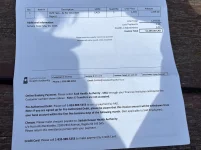
Check out this Ambulance bill in Saskatchewan.

I believe the bill would have been $45 in Ontario.

default.webp
 
Check out this Ambulance bill in Saskatchewan.

I believe the bill would have been $45 in Ontario.

View attachment 101773
I wonder how much of that is mileage due to long transport times from rural to urban areas or if air ambulance was involved, as well as level of care provided? This is why I have an ambulance premium on my Blue Cross...
 
As far as I understand it, if you live in Kenora, ON ( for example), and the ambulance take you to Lake of the Woods Hospital, as an Ontario resident, you get a bill for $45. That's all.

If they cant help you there, OHIP pays for the rest of the trip. Even if they fly you to Toronto.

Not positive. But, that's my understanding.

We used to get asked about that a lot. But, it was actually the hospital did the billing.

 
Alberta is in the process of charging for fire trucks and ambulances against your private insurance for attendence to accidents etc. so there is a push to release the trucks and buses as soon as possible.
 
This is why I have an ambulance premium on my Blue Cross...

That's a good idea. Ambulance billing varies considerably from province to province.

Especially when outside your home province.

In the USA? Fuhgeddaboudit I've seen some of the bills.
 
Back
Top