Chris Pook said:2 for 2 Lightguns. Thanks
Yeah, I am on a non-angry roll today, must be the new meds.........


Chris Pook said:2 for 2 Lightguns. Thanks

daftandbarmy said:Many of my clients are scientists of the 'earth' variety.
Talking to them about this is amusing and results in a variety of comments indicating we're not smart enough, as a species, to really know what's going on yet, and don't spend much money trying to figure it out (compared with, for example, global botox expenditures).
If anyone claims they know exact causes and effects related to environmental changes is probably a liar, or a politician (Same thing, of course).
Meanwhile enjoy this balmy interglacial period, which we can't adequately explain, while you can:
"No completely satisfactory theory has been proposed to account for Earth's history of glaciation. The cause of glaciation may be related to several simultaneous factors, such as astronomical cycles, atmospheric composition, plate tectonics, and ocean currents."
https://en.wikipedia.org/wiki/Quaternary_glaciation


Last year, 6m tonnes of “wood pellets” harvested from forests in Louisiana, Georgia, Florida, Alabama and Virginia were shipped across the Atlantic, to be burnt in renewable “biomass” power plants. This was almost double the 2013 figure – the US “wood pellet” industry is booming.
Demand is largely driven by European countries wanting to meet targets set out in the EU’s Renewable Energy Directive. Half of the pellets exported from the US were used to generate electricity in Britain’s massive Drax power station, which is slowly converting from coal to biomass in order to reduce carbon emissions and claim valuable “Renewable Obligation certificates” for green electricity. So can it really be sustainable to transport wood halfway round the world to burn in a power station?


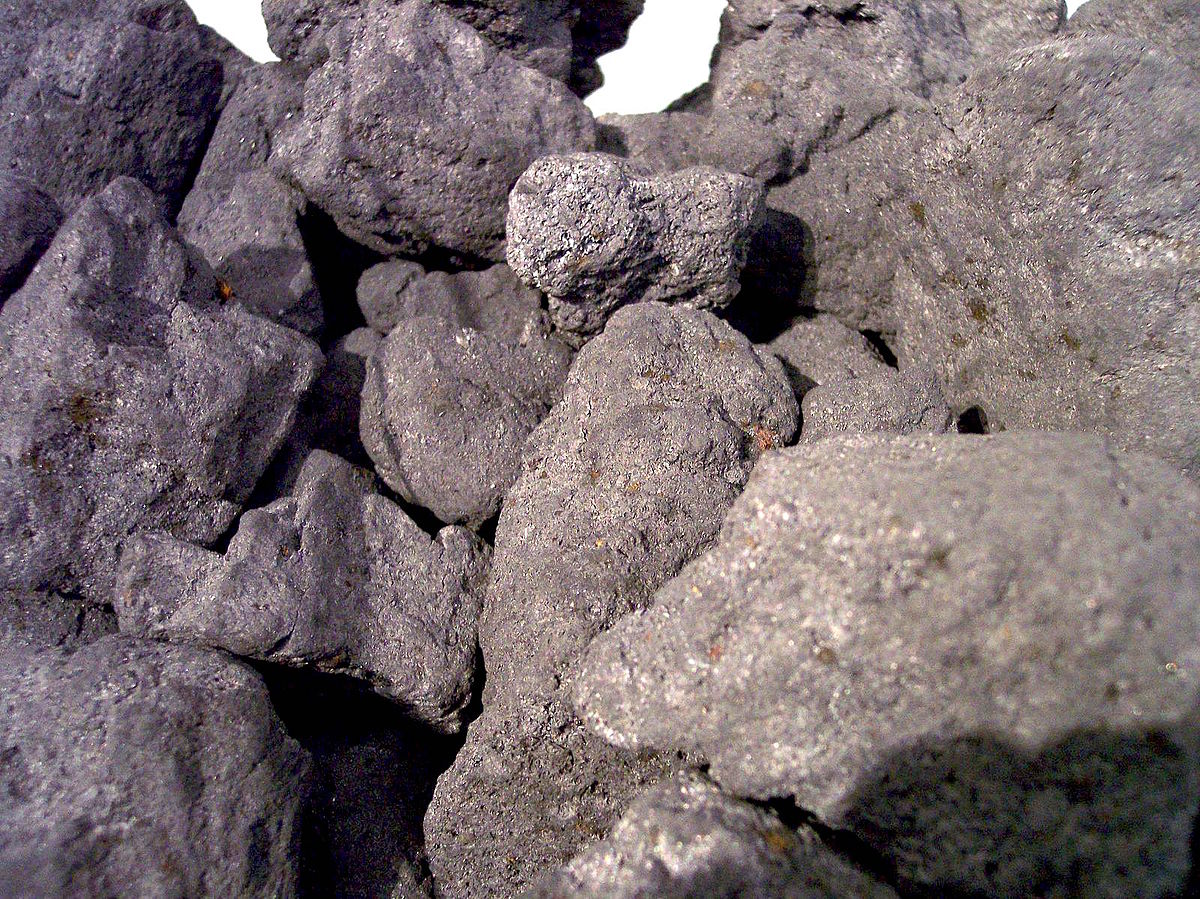



daftandbarmy said:'Clean Coal' technological advances are likely our best hope to break the cycle of global dependence on cheap Middle Eastern based sources of fossil fuel energy, while reducing carbon emmissions. Go Science!
Coal is an extremely important fuel and will remain so. Some 23% of primary energy needs are met by coal and 39% of electricity is generated from coal. About 70% of world steel production depends on coal feedstock. Coal is the world's most abundant and widely distributed fossil fuel source. The International Energy Agency (IEA) expects a 43% increase in its use from 2000 to 2020.
http://www.world-nuclear.org/information-library/energy-and-the-environment/clean-coal-technologies.aspx


Brad Sallows said:Never miss a chance to remind virtuous people that their "electric vehicle" is, in Canada, primarily powered by natural gas, coal, uranium, and large flooded areas

Dadaist Science
Look under the hood on climate change "science" and what you see isn't pretty.
6:45 AM, JUL 13, 2017 | By NATHAN COFNAS
Earlier this month Stephen Hawking declared: “We are close to the tipping point where global warming becomes irreversible. Trump’s action [withdrawing from the Paris climate accord] could push the Earth over the brink, to become like Venus, with a temperature of two hundred and fifty degrees [Celsius], and raining sulphuric acid.”
Let’s unpack this a bit, using actual science. The proportion of carbon dioxide in the earth’s atmosphere is currently about 400 parts per million (ppm). The Cambrian explosion—when most animal lineages first appeared—occurred a little more than 500 million years ago when, according to all estimates, carbon dioxide levels were several times higher than today. The atmosphere of Venus is 965,000 ppm carbon dioxide, enveloped in clouds of sulfuric acid. And Venus itself is almost 26 million miles closer to the sun than Earth.
So Hawking’s claim that the earth is on the “brink” of becoming like Venus is preposterous. Even the Intergovernmental Panel on Climate Change explicitly notes that the Earth will not experience a runaway greenhouse effect such as might have occurred on Venus.
What is really disturbing, though, is that Hawking has flagrantly given up on even the pretense of engaging with actual science. He speaks entirely from authority: I am a scientist. Adopt this political policy that I favor or suffer fire and sulfuric acid. The threatened punishment for noncompliance substitutes sulfuric acid for the regular sulfur (brimstone) that features in old-fashioned religion. As far as the justification for the claim, there is no important difference between this and a religious statement that is supposed to be believed simply because it issues forth from a high priest.
***
The philosophy of Dadaism was that something is art if an artist says it is. In 1917 the Dadaist Marcel Duchamp famously proclaimed a urinal to be art. The original urinal was thrown in the trash after being exhibited, but Duchamp later commissioned several replicas, one of which sold for $1,185,000 in 2002. We can leave the merits of Dadaist art to the art critics. It is clear, however, that applying the Dadaist philosophy to science is a big mistake because it means rejecting the commitments that made science successful in the first place.
Something is science because it emerges from an investigation adhering to certain methodological principles. A scientist is someone who faithfully carries out such an investigation. The ability to speak as a scientist is entirely contingent upon one’s ongoing commitment to scientific methods. Yet public discourse about controversial issues in the past few years has promoted a misguided, Dadaist view of what science is.
Consider the physicist and aggressive science promoter Lawrence Krauss. Krauss has received a great deal of funding from the billionaire, and now registered sex offender, Jeffrey Epstein. This last detail is important.
Epstein pled guilty to paying girls as young as 14 for sex, and was suspected of even worse crimes involving underage girls. After he went to prison, Krauss offered the following analysis of his patron: “As a scientist I always judge things on empirical evidence and he always has women ages 19 to 23 around him, but I’ve never seen anything else, so as a scientist, my presumption is that whatever the problems were I would believe him over other people.”
Got that? “As a scientist,” Krauss did not personally witness the crimes, ergo they didn’t happen. After all, if Epstein really was a sex offender, he would walk around in public surrounded by 14-year-old girls, right? Obviously, this is insane. But what’s interesting is that Krauss defended Epstein by invoking his status as a “scientist,” and his commitment to “empirical evidence.” It’s more Dadaist science: I am a “scientist,” therefore whatever I say, no matter how transparently self-serving and nonsensical, is “science.”
But let’s jump back to global warming. The intense debate about the exact percentage of climate scientists who believe in catastrophic climate change is predicated on Dadaist science. Peter T. Doran and Maggie Kendall Zimmerman introduced the famous “consensus-of-97 percent” figure in 2009. They contacted 10,257 earth scientists from a database listing faculty and researchers at academic institutions and U.S. federal facilities; 3,146 people responded, giving their answers to two questions: (1) Compared to the pre-1800s, have mean global temperatures “risen, fallen, or remained relatively constant?” and “Do you think human activity is a significant contributing factor in changing mean global temperatures?”
Ninety percent of respondents answered “risen” to the first question and 82 percent answered “yes” to the second. (Note that the survey didn’t ask whether the warming was a bad thing, which is actually the most important question. But that’s a separate issue.) Doran and Zimmerman then looked at only those respondents who indicated that climate science was their area of expertise and said that more than 50 percent of their peer-reviewed papers in the previous five years were about climate change. This subgroup contained just 79 people. Of these 79, 76 (96.2 percent) said the earth’s temperature had “risen” since the pre-1800s and 75 (97.4 percent of the 77 who answered this question) said “yes,” human activity is a significant contributing factor.
Which led Doran and Zimmerman to conclude: “It seems that the debate on the authenticity of global warming and the role played by human activity is largely nonexistent among those who understand the nuances and scientific basis of long-term climate processes. The challenge, rather, appears to be how to effectively communicate this fact to policy makers and to [the] public....”
In this survey, there was no pretense of engaging with reasons and argument. Doran and Zimmerman note that only 64 percent (23 of 36) of their respondents who listed “meteorology” as their area of expertise answered yes to the second question. Meteorology is, of course, the science devoted to studying the atmosphere and weather. You might say that weather is not the same thing as climate. Fair enough. But still, do the skeptical meteorologists have reasons for their opinion? What about the nearly one-fifth of earth scientists in the survey who were skeptical? To the Dadaist scientist, none of that matters. As long as the right authorities make the correct pronouncement, there is no need for investigation.
***
From 2004 to 2009, the U.S. government spent between $7 billion and $8 billion per year on climate-change research. Out of the 79 scientists in Doran and Zimmerman’s survey who said that more than 50 percent of their peer-reviewed publications in the previous five years concerned climate change, how many were receiving a share of this money? The survey was anonymous so we can’t check, but it’s reasonable to suspect that it might have been quite a few of them. At least.
And consider how multiple scientists (not only Krauss) who received cash from Jeffrey Epstein were willing to defend him even after he went to prison. (The eminent evolutionary biologist Robert Trivers, who received around $40,000 from Epstein, didn’t go Krauss’s route of denying the charges. He rationalized the crimes, saying, “By the time [girls are] 14 or 15, they’re like grown women were 60 years ago, so I don’t see these acts as so heinous.”) If anything, maybe earth scientists who don’t receive funding that allows them to publish on climate change should be surveyed about their views, for the same reason we wouldn’t ask Krauss to serve on Epstein’s jury.
***
The idea that the opinion of experts in a narrow academic subfield reliably tracks the truth flies in the face of historical experience.
Consider, for example, the history of psychology. For three or four decades in the middle of the twentieth century, American psychology was dominated by behaviorism. According to behaviorism, animals are born without any behavioral predispositions except a tendency to find certain stimuli reinforcing or punishing. Konrad Lorenz noted that ethologists who observe animals in their natural habitat always knew that behaviorism was untenable. You have merely to witness an animal being born and commencing a suite of complex, unlearned behaviors to see that not all behavior is conditioned.
But behaviorists never bothered to look at animals in the wild. They conducted laboratory experiments, very often involving rats or pigeons pushing levers for food rewards, that simply didn’t trigger the innate responses that manifest under natural conditions. For two generations behaviorists controlled the grants, the journals, the textbooks, and the jobs. Just about everyone who didn’t get on board with them was excluded from the field of psychology. Finally, in the mid-1950s, after many lost years, cognitive scientists managed to gain a foothold in the academy and they eventually overturned the behaviorist consensus.
The history of psychology undermines the philosophy of Dadaist science because it shows how a group of experts can band together on one side of a controversy and end up being wrong. It shows that an apparent consensus in a scientific field does not always arise from the independent judgment of those acquainted with the evidence. Sometimes “consensus” is maintained by the enforcement of orthodoxy by those doling out the jobs, perks, and money.
The debate about catastrophic global warming will ultimately be settled by experts, but it will be by means of argument, not by votes or assertions of authority.
Thucydides said:As a side note, Michael Mann (the climatologist, not the movie director) is in contempt of court in BC in his SLAPP suit, for refusing to deliver the raw data or algorithms used in the "Hocky Stick" graph
Humans have been altering tropical forests for at least 45,000 years
Tens of thousands of years of controlled burns, forest management and clear-cutting have implications for modern conservation efforts – and shatter the image of the “untouched” tropical forest.
August 03, 2017
The first review of the global impact of humans on tropical forests in the ancient past shows that humans have been altering these environments for at least 45,000 years. This counters the view that tropical forests were pristine natural environments prior to modern agriculture and industrialization. The study, published today in Nature Plants, found that humans have in fact been having a dramatic impact on such forest ecologies for tens of thousands of years, through techniques ranging from controlled burning of sections of forest to plant and animal management to clear-cutting. Although previous studies had looked at human impacts on specific tropical forest locations and ecosystems, this is the first to synthesize data from all over the world.
The paper, by scientists from the Max Planck Institute for the Science of Human History, Liverpool John Moores University, University College London, and École française d’Extrême-Orient, covered three distinct phases of human impact on tropical forests, roughly correlating to hunting and gathering activities, small-scale agricultural activities, and large-scale urban settlements.
Big impacts of small hunter-gatherer groups
In the deep past, groups of hunter-gatherers appear to have burned areas of tropical forests, in particular in Southeast Asia as early as 45,000 years ago, when modern humans first arrived there. There is evidence of similar forest burning activities in Australia and New Guinea. By clearing parts of the forest, humans were able to create more of the “forest-edge” environments that encouraged the presence of animals and plants that they liked to eat.
There is also evidence, though still debated, that these human activities contributed to the extinction of forest megafauna in the Late Pleistocene (approximately 125,000 to 12,000 years ago), such as the giant ground sloth, forest mastodons, and now-extinct large marsupials. These extinctions had significant impacts on forest density, plant species distributions, plant reproductive mechanisms, and life-cycles of forest stand, that have persisted to the present day.
Farming the forest
The earliest evidence for farming in tropical forests is found in New Guinea, where humans were tending yam, banana and taro by the Early-Mid Holocene (10,000 years ago). Early farming efforts in tropical forests, supplemented by hunting and gathering, had significant consequences. Humans domesticated forest plants and animals, including sweet potato, chili pepper, black pepper, mango, banana and chickens, altering the forest ecologies and contributing significantly to global cuisine today.
In general, when groups employed indigenous tropical forest agricultural strategies based on local plants and animals, these did not result in significant or lasting damage to the environment. “Indeed, most communities entering these habitats were initially at low population densities and appear to have developed subsistence systems that were tuned to their particular environments,” states Dr. Chris Hunt of Liverpool John Moores University, a co-author of the study.
However, as agricultural intensity increased, particularly when external farming practices were introduced into tropical forests and island environments, the effects became less benign. When agriculturalists bringing pearl millet and cattle moved to the area of tropical forests in western and central Africa about 2,400 years ago, significant soil erosion and forest burning occurred. Similarly, in Southeast Asia, large areas of the tropical forests were burned and cleared from c. 4,000 years ago following the arrival of rice and millet farming. For example, the increase in demand for palm oil has led to clear-cutting of tropical forests to make room for palm plantations. “These practices, which induce rampant clearance, reduce biodiversity, provoke soil erosion, and render landscapes more susceptible to the outbreak of wild fires, represent some of the greatest dangers facing tropical forests,” notes Hunt.
Sprawling cities in the jungle
Despite previous notions of tropical forests as “green deserts” not suitable for human habitation, recent discoveries using new technologies have shown that ancient populations created vast urban settlements in these habitats. New data, including surveys made with canopy-penetrating Light Detection and Ranging (LiDAR) mapping, have revealed human settlement in the Americas and Southeast Asia on a scale that was previously unimagined. "Indeed, extensive settlement networks in the tropical forests of Amazonia, Southeast Asia, and Mesoamerica clearly persisted many times longer than more recent industrial and urban settlements of the modern world have so far been present in these environments," notes Dr. Patrick Roberts of the Max Planck Institute for the Science of Human History, lead author of the paper.
Lessons can be learned from how these ancient urban centers dealt with environmental challenges that are still faced by modern cities in these areas today. Soil erosion and the failure of agricultural systems necessary to feed a large population are problems encountered by large urban centers, past and present. In some Mayan areas, urban populations “gardened” the forest, by planting a variety of complementary food crops in and around the existing forest rather than clearing it. On the other hand, other groups appear to have over-stressed their local environments through forest clearing and monoculture planting of corn, which, in combination with climate change, resulted in dramatic population declines.
Another interesting finding is that ancient forest cities showed the same tendency towards sprawl as is now being recommended by the architects of modern cities in these zones. In some cases these extensive urban fringes appear to have provided a sort of buffer-zone, helping to protect the urban centers from the effects of climate change and providing food security and accessibility. "Diversification, decentralization and ‘agrarian urbanism’ appear to have contributed to overall resilience," states Dr. Damian Evans, a co-author of the paper. These ancient forest suburbs are now being studied as potential models of sustainability for modern cities.
Lessons for the future
The global data compiled for this paper shows that a pristine, untouched tropical forest ecosystem does not exist – and has not existed for tens of thousands of years. There is no ideal forest environment that modern conservationists can look to when setting goals and developing a strategy for forest conservation efforts. Rather, an understanding of the archaeological history of tropical forests and their past manipulation by humans is crucial in informing modern conservation efforts. The researchers recommend an approach that values the knowledge and cooperation of the native populations that live in tropical forests. "Indigenous and traditional peoples – whose ancestors’ systems of production and knowledge are slowly being decoded by archaeologists – should be seen as part of the solution and not one of the problems of sustainable tropical forest development," states Roberts. The researchers also emphasize the importance of disseminating the information learned from archaeology to other disciplines. By working together, these groups can help to establish a better understanding of the tropical forest environments and how best to protect them.
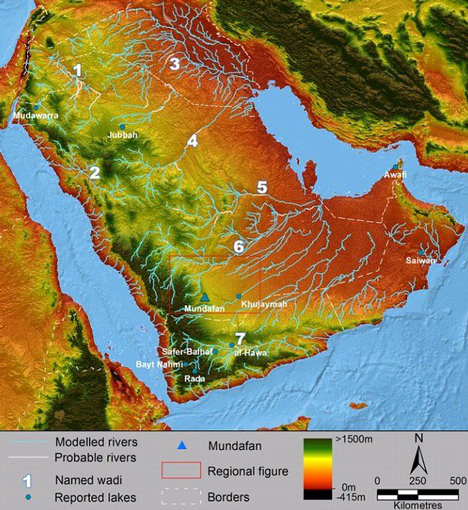
46 Prehistoric Sites with Paleolakes Discovered in 'Green Arabia'
Forty-six sites containing artifacts, mainly stone tools, have been discovered beside the remains of ancient lakes in the western Nefud desert in Saudi Arabia.
Some of the tools, left by early humans, date to the Lower Paleolithic period, from 1.8 million to 250,000 years ago, the researchers said in a new study describing the findings. Animal fossils, including fossils from now-extinct forms of jaguar and elephant, were also discovered at some of the sites.
The discoveries shed light on so-called Green Arabia, periods when the climate in Arabia — the area spanning modern-day Saudi Arabia, Yemen, Oman and other Gulf States — was wetter and supported more vegetation and wildlife than it does today. Green Arabia was also home to early humans. [See Photos of the Paleolakes in 'Green Arabia']
"These repeated wet phases, called 'Green Arabia' events, affected much of Arabia and were driven by periodic variations in the Earth's orbit and axis, causing the monsoons to move north into Arabia — and into the Sahara," said Paul Breeze, a landscape archaeologist and research associate at King's College London. "Between these times, Arabia was as arid as it is today."
Breeze is part of the Palaeodeserts Project, which aims to better understand Saudi Arabia's environmental and human history. The project brings together researchers from the Saudi Commission for Tourism and National Heritage, the Saudi Geological Survey, Saudi Aramco and scientists from all over the world.
In their research Breeze and his colleagues searched for lakes that may have existed in ancient times by examining high-resolution satellite and aerial imagery, as well as geological maps. They found that many of these so-called paleolakes might have been located in basins between sand dunes.
The researchers traveled to as many possible paleolakes as they could, using 4 x 4 vehicles or helicopters to reach these locations. They focused on a section of the western Nefud desert.
Once the team reached a site, they examined paleolake sediments, confirming the existence of the ancient lake. Then, they excavated any human artifacts and animal fossils they could find.
From early humans to the future
The discoveries revealed how life changed in the western Nefud desert.
"Lower Palaeolithic hominins in particular could, at times, have experienced widespread favorable environmental conditions," the team wrote in their study, published online in the June 2017 issue of the journal Archaeological Research in Asia. Early human sites that date to the Lower Paleolithic "appear concentrated close to raw material sources near the Nefud fringe, despite the presence of freshwater and fauna deeper in the dune field," the team wrote.
Previously reported research suggested that around 200,000 years ago, after the Lower Paleolithic, modern humans(Homo sapiens) might have used Arabia as a corridor to migrate out of Africa. The new findings suggest that, at that time, humans (whether Homo sapiens or other human species) appear to have been venturing deeper into the western Nefud desert and were no longer sticking to the fringes. [In Photos: Oldest Homo Sapiens Fossils Ever Found]
The researchers did not find any archaeological sites that dated to the Upper Paleolithic or Epipaleolithic time periods, between roughly 40,000 and 10,000 years ago. This may be a sign that the western Nefud had become more arid and less capable of supporting life by that time, the researchers said.
The last "wet period" seems to have occurred between roughly 10,000 and 6,000 years ago,the team wrote in their journal article. After this wet period ended, the climate became increasingly arid, but humans were able to venture deep into the western Nefud desert because they had domesticated the camel, the researchers found.
Today, the Nefud desert receives 1.2 to 3.5 inches (30 to 90 millimeters) of rainfall a year, the researchers wrote, noting that Bedouin groups tend to live on the fringe of the desert and bring animals into the desert for grazing when there is plant growth.
It's uncertain how, exactly, the climate of Saudi Arabia will change in the future.
"The particular combination of Earth's orbital and axial variations that created Green Arabia events are cyclical and will occur again," Breeze told Live Science. "Based on the geological record, we would expect some level of greening of Arabia to happen once more in the future, although likely not in the near future, and it is unclear how human influence on the climate might affect this."
Original article on Live Science.
Dilbert Cartoon on Climate Change Prompts Rebuttal from Yale
A Dilbert cartoon on climate change appears to have irked climatologists and a communications group at Yale University.
Ross McKitrick | May 31, 2017
A communications group at Yale University has put out a video (see below) that seems to be a rebuttal to a Dilbert cartoon by Scott Adams poking fun at climate scientists and their misplaced confidence in models. The video is full of impressive-looking scientists talking about charts and data and whatnot. It probably cost a lot to make and certainly involved a lot of time and effort. The most amazing thing, however, is that it actually proves the points being made in the Dilbert cartoon. Rather than debunking the cartoon, the scientists acted it out in slow motion.
The Dilbert cartoon begins with a climate scientist saying “human activity is warming the earth and will lead to a global catastrophe.” When challenged to explain how he knows that, he says they start with basic physical principles plus observations about the climate, which they then feed into models, pick and choose some of the outputs, then feed those into economic models, and voila. When asked, what if I don’t trust the economic models, the scientist retreats to an accusation of denialism.
The Yale video ends in exactly the same way. After a few minutes of what I will, for the moment, call “scientific information,” we see climatologist Andrew Dessler appear at the 4:28 mark to say “It’s inarguable, although some people still argue it – heh, heh.” As in, ah those science deniers.
What exactly is “inarguable”? By selective editing we are led to believe that everything said in the video is based on multiple independent lines of evidence carrying such overwhelming force that no rational observer could dispute it. Fine, let’s go to the 2:38 mark and watch someone named Sarah Myhre tell us what this inarguable science says.
“It’s irrefutable evidence that there are major consequences that come with climate warming, and that we take these Earth systems to be very stable, we take them for granted, and they’re not stable, they’re deeply unstable when you perturb the carbon system in the atmosphere.”
How does she know this? From models of course. These claims are not rooted in observations but in examining the entrails of model projections. But she has to pick and choose her models because they don’t all say what she claims they say. Some models show very little sensitivity to greenhouse gases. If we put the low-sensitivity results into economic models the results show that the economic impacts of warming are very low and possible even negative (i.e. a net benefit). And the section of the IPCC report that talks about the consequences of warming says:
For most economic sectors, the impact of climate change will be small relative to the impacts of other drivers (medium evidence, high agreement). Changes in population, age, income, technology, relative prices, lifestyle, regulation, governance, and many other aspects of socioeconomic development will have an impact on the supply and demand of economic goods and services that is large relative to the impact of climate change.
It goes on to show (Figure 10-1) that at low levels of warming the net economic effects are zero or positive. As to the climate being “deeply unstable” there’s hardly any point trying to debate that since these are not well-defined scientific words, but simple reflection on human experience will tell you that the climate system is pretty stable, at least on decadal and century time scales. The main thing to note is that she is claiming that changes to atmospheric CO2 levels have big warming effects on the climate and will cause a global catastrophe. And the only way she knows this is from looking at the outputs of models and ignoring the ones that look wrong to her. Granted she isn’t bald and doesn’t have a little beard, but otherwise she is almost verbatim the scientist in the cartoon.
Much of what she says in the video is unsubstantiated and sloppy. For instance she talks (2:14) about paleoclimatic indicators like tree rings, ice cores and sediment cores as if they are handy records of past climate conditions without acknowledging any of the known problems extracting climate information from such noisy sources.
Her most telling comment was the Freudian slip at 1:06 when she says “There is incredible agreement about the drivers of climate science.” What she meant (and quickly corrected herself to say) was “climate change.” But her comment is revealing as regards the incredible agreement—i.e. groupthink –that drives climate science, and the individuals who do the driving. Myhre’s Freudian slip comes right after a clip in which Michael Mann emphatically declares that there are dozens of lines of evidence that all come together, “telling us the same thing,” adding “that’s how science works.” Really? The lines of evidence regarding climate do not all lead to one uniform point of view, nor is that how science works. If that’s how science worked there would be no need for research. But that’s how activists see it, and that’s the view they impose to drive climate science along in service of the activist agenda. As Dr. Myhre herself wrote in a recent op-ed:
Our job is not to objectively document the decline of Earth’s biodiversity and humanity, so what does scientific leadership look like in this hot, dangerous world? We don’t need to all agree with each other – dissent is a healthy component of the scientific community. But, we do need to summon our voices and start shouting from rooftops: “We have options”, “We don’t have to settle for cataclysm”.
Got that? The job of scientists is not objectively to gather and present evidence, but to impose an alarmist view and yell it from the rooftops. At least according to Sarah Myhre, Ph.D..
The video opens with a straw man argument: climate science is all just made up in computer models about the future, and it’s all just based on simulations. This is then refuted, rather easily, with clips of scientists listing some of the many observational data sets that exist. Whoopee. That wasn’t even the point of the Dilbert cartoon, it was just a straw man made up by the interviewer. Then, in the process of presenting responses, the video flits back and forth between lists of observational evidence and statements that are based on the outputs of models, as if the former prove the latter. For instance, when Myhre says (2:45—2:55) that the climate systems is “deeply unstable” to perturbations in the carbon “system” (I assume she meant cycle) the video then cuts to Andrew Dessler (2:55) talking about satellite measurements, back to Myhre on paleo indicators, then to Carl Mears and Dessler (3:11) talking about sea ice trends. None of those citations support Myhre’s claims about instability, but the selective editing creates the impression that they do.
Another example is a sequence starting at 1:14 and going to about 2:06, in which various speakers lists different data sets, glossing over different spatial and time scales, measurement systems, etc. Then an assertion is slipped in at 2:07 by Ben Santer to the effect that the observed warming can’t be explained by natural causes. Then back to Myhre listing paleoclimate indicators and Mann describing boreholes. The impression created is that all these data types prove the attribution claim made by Santer. But they do no such thing. The data sets only record changes: claims about the mechanism behind them are based on modeling work, namely when climate models can’t simulate 20th century warming without incorporating greenhouse gas forcing.
So in a sense, the video doesn’t even refute the straw man it set up. It’s not that climate science consists only of models: obviously there are observations too. But all the attribution claims about the climatic effects of greenhouse gases are based on models. If the scientists being interviewed had any evidence otherwise, they didn’t present any.
Now suppose that they are correct in their assertion that all the lines of evidence agree. All the data sets, in Mann’s words, are telling us the same thing. In that case, looking at one is as good as looking at any of the others.
Ignore for a moment the selective focus on declining Arctic sea ice data while ignoring the expansion of Antarctic sea ice. And ignore the strange quotation from Henry Pollock (3:23—3:41) about how ice doesn’t ask any questions or read the newspaper: it just melts. Overlaid on his words is a satellite video showing the summer 2016 Arctic sea ice melt. Needless to say, had the filmmaker kept the video running a few seconds more, into the fall, we’d have seen it re-freeze. Presumably the ice doesn’t read or ask questions in the fall either, it just freezes. This proves what exactly?
Anyway, back to our assumption that all the data sets agree and say the same thing. And what is it they tell us? Many key data sets indicate that climate models are wrong, and in particular that they overstate the rate of warming, (see here, here, here, here, here, here, here, here, etc.). So according to the uniformity principle so strongly enunciated in the video, all the evidence points in the same direction: the models aren’t very good. And by implication, statements made based on the models aren’t very reliable.
There’s another irony in the video’s assertions of uniformity in climate science. At the 3:55 mark Michael Mann announces that there’s a consensus because independent teams of scientists all come at the problem from different angles and come up with the same answers. He’s clearly referring to the model-based inferences about the drivers of climate change. And the models are, indeed, converging to become more and more similar. The problem is that in the process they are becoming less like the actual climate. Oops.
So how did the video do refuting Scott Adams’ cartoon? He joked that scientists warning of catastrophe invoke the authority of observational data when they are really making claims based on models. Check. He joked that they ignore on a post hoc basis the models that don’t look right to them. Check. He joked that their views presuppose the validity of models that reasonable people could doubt. Check. And he joked that to question any of this will lead to derision and the accusation of being a science denier. Check. In other words, the Yale video sought to rebut Adams’ cartoon and ended up being a documentary version of it.


