When the catastrophe isn’t as catastrophically catastrophic as those catastrophizing the climate change wish it to be.
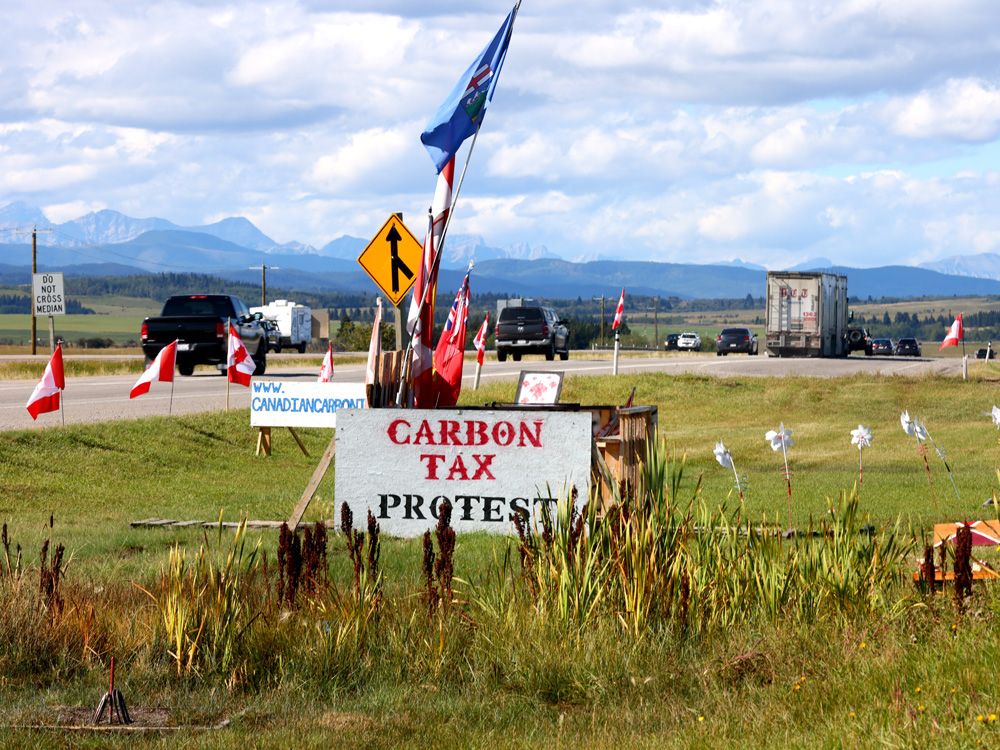
Voters are increasingly skeptical of climate alarmism and worried about the high cost of net-zero policies. Read more.

financialpost.com
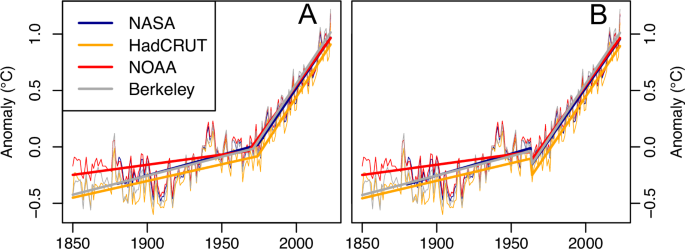
Despite 2023’s record temperatures, there is no significant warming surge beyond the 1970s, and an increase of at least 55% across all datasets is required for a detectable warming surge at the present time, according to an analysis of four global mean temperature records from 1850–2023 using...

www.nature.com
Caution around 'crying climate wolf'....
Science integrity, (mis)communication and risks of crying climate wolf
As interest in global warming becomes embedded in almost all sectors of society, the nature of publications relevant to global warming has diversified.
As interest in global warming becomes embedded in almost all sectors of society, the nature of publications relevant to global warming has diversified. The foundations of our understanding of global warming exist in high quality international journal publications with rigorous peer review and independent advisory boards. However, now that global warming pervades almost all sectors of society, and because the peer reviewed science literature is not readily accessible to business, policy makers and the public, there has been a rapid expansion of more public-facing publications. These range from high quality technical whitepapers associated with reputable organizations through to advocacy documents that are understandably unbalanced in a strict scientific sense.
These reports are often written in far more accessible language than scientific papers, and their accessibility leads to their reporting by the mass media, sometimes with findings around climate risk projections that are not scientifically rigorous.
Recent examples include suggestions that Australia will “lose its AAA rating as soon as 2030” due to climate change1, or “suburbs where more than half of properties will be uninsurable by 2030” 2.
This raises two major issues. The first is around the presence, absence and rigor of the peer review process. The second is a separate issue, but one that often compounds the first, concerning the balance, and sometimes misreporting by mainstream media and indeed commenters on social media platforms. These issues, while distinct, result in the general public not being presented with a fair, balanced and reasonable grasp of climate risk. In particular, given the gravity of consequences within the context of climate science, this commentary aims to shed further light on the issue by addressing the following: the academic peer review process; challenges with science communication; unintended consequences when scientific findings lack robustness or are misrepresented, and suggestions for improvements.

www.unsw.edu.au






communication-NewsImage.cropimg.width=700.crop=landscape.png)