• Thanks for stopping by. Logging in to a registered account will remove all generic ads. Please reach out with any questions or concerns.

Has the United States Lost the Ability to Fight a Major War?

Humphrey Bogart said:
I would personally like to see us shift a significant amount of manpower away from the Army and reinvest in the Navy, Air Force and Special Operations Forces. 

I'd also like a massive reduction in the size of our C2 and administrative overhead. 

We are for all intents and purposes, on an island.  Our defence policy should follow the British model of the 18th and 19th centuries.  Small but highly professional army that can be used to fight brush fire wars in the Colonies, with a powerful Navy and Air Force to protect our shores and also project our power.


Agreed, no matter what shape our strategy eventually takes (if we ever have one) but when I say cut the C2 and admin fat I'm really talking about useless, bloated HQs, not Signals and Logistics units in the field. We need good, efficient dockyards and air bases and a materiel support chain that runs, seamlessly, from factory floor to the CQMS' truck floor, and we need efficient and effective C3 systems to control and manage the whole shebang.
 
Humphrey Bogart said:
I'd also like a massive reduction in the size of our C2 and administrative overhead.
E.R. Campbell said:
.... when I say cut the C2 and admin fat I'm really talking about useless, bloated HQs, not Signals and Logistics units in the field ....
A timely quote from an American source about American woes (also applicable north of 49) ....
Everybody agrees that the Pentagon is bloated beyond reason. But can you trust a pig to slaughter itself?
 
tomahawk6 said:
I assume you are talking about the Canadian Forces,because the services you mentioned receive the lions share of the defense budget because lets face it ships and air planes are expensive compared to tanks,infantry ect.The link below are the personnel targets for the US military.Defense spending is $496b.

DoDbudget-table3.png


2015 budget:

DoDbudget-fig3.png

You could shave the Regular US Army/Marine Corps in half and still be able to meet your global commitments.  Tanks and Infantry cost less than Ships and Planes but lower cost doesn't equal more importance.  Naval/Air Power is far more important in any peer vs peer conventional fight.

Nobody else has the power to even reach the continental United States and as long as that trend continues a Navy and Air Force are all you need for the big conventional war.  You can build up an Army slowly if war with China or the Russia or whoever else you end up fighting is ever required.  Of course, there is always the risk that things go Nuclear before that is even required.

Warfare in the future is going to be fought using unconventional means.  Russia's "Gerasimov Doctrine" points the way and the CIA/NSA are going to become far more important than the Pentagon. 

E.R. Campbell said:
Agreed, no matter what shape our strategy eventually takes (if we ever have one) but when I say cut the C2 and admin fat I'm really talking about useless, bloated HQs, not Signals and Logistics units in the field. We need good, efficient dockyards and air bases and a materiel support chain that runs, seamlessly, from factory floor to the CQMS' truck floor, and we need efficient and effective C3 systems to control and manage the whole shebang.

Agree completely, the model we have now is completely broken.  I haven't been able to get a decent pair of boots in seven years, last year when I was going to the Arctic and needed to draw kit, they had none.  Our whole Logistics and Supply system is busted and needs to be burned down and redesigned.  Too many depots, supplying too many different units, with a wacky chain of command consisting of too many chiefs and not enough Indians.

Burn it all down and start over.
 
What is your military background Mr Bogart ? I think you lack the background for me to take your post seriously.
 
T6,

I can vouch for his background. He is intimately familiar with the inner workings of (at least) the Canadian Army. He is not straight off the street or an armchair general.

Obviously, feel free to disagree with his opinion!  :)
 
SeaKingTacco said:
I can vouch for his background.

Although not mandatory, I find it helpful when reading discussions if users fill out their profiles.

Although not mandatory either, I also find it helpful when users announce their name changes: "Please announce all name changes here."
http://milnet.ca/forums/index.php/board,86.0.html

( I do understand that for PERSEC reasons, some users may not wish to do so. )

 
tomahawk6 said:
What is your military background Mr Bogart ? I think you lack the background for me to take your post seriously.

I'll be the first to say that the US Army is an impressive military machine!  Well actually, the whole US Military is impressive.  As a soldier, I would serve in the US Army just so I could get my hands on some of your nice kit! 

However, is this impressive military machine necessary and more importantly, do they have the right kit for the job?  These are the questions I'm interested in, namely because I am more and more convinced that it isn't necessary and that we are being led down a wormhole with some of our investments.
 
The US military by the nature of our global relationships,have to be ready to fight anywhere in the world.As a result this dictates the force structure that we have had since WW2.After the Cold War ended we scaled back our forces in Europe and did so again after OIF.The stated goal is for the Army and the USMC to see a drop in end strength.I dont agree with an Army under 500,000,but the goal is a drop to 420,000 or so.Apart from the tools of the trade manpower costs are what is driving this.Frankly I think with a regime change in Washington,these cuts will be stopped.Leading up to WW2 the Army had 175,000 with 400,000 in the National Guard.The war changed all that with the draft and full mobilization.We havent had that luxery since.The military is now a come as you are force and the reserve components play a crucial role as we have seen in both Gulf wars and Afghanistan.
 
Let's be clear: without the gigantic US investment in its military, the Cold War would have gone hot pretty fast, and we'd see a victorious USSR controlling most of mainland Europe right now. At least.
 
Humphrey Bogart said:
Agree completely, the model we have now is completely broken.  I haven't been able to get a decent pair of boots in seven years, last year when I was going to the Arctic and needed to draw kit, theyhad none.  Our whole Logistics and Supply system is busted and needs to be burned down and redesigned.  Too many depots, supplying too many different units, with a wacky c ha in of command consisting of too many chiefs and not enough Indians

We have 2 true supply depots. 1 in Montreal the other in Edmonton.  We should go down to one ?

Do you have background in supply chain management, procurement or warehousing ?

I fully disagree with you by the way.  The organization is not the issue, the management and procurement of stores and spares is the issue.  If we had lots of stock the CFSS would work fine.  Case in point, right now my ship has an outstanding High Priority Req (HPR) that will be at least 2 years until it is rectified.  Process is fine, the people working within the system is fine but our ability to keep stock on hand (SOH) is in a sorry state.  This has more to do with trade agreements, PWGSC and a cumbersome rules regarding purchasing.

Sorry for the off topic tangent.
 
I'm going to send a CHARLIE CHARLIE across the airwaves here.  I never said to stop investing in the US Military, or the Canadian Military for that matter.  I'm not disputing that from 1945 until around 1965, that there was a legitimate case for keeping large land forces in Europe because there quite clearly was.  The widespread proliferation of Nuclear Weapons ended that requirement because if anybody attacked anybody, they were getting an ICBM right up the rear-end!  The madness continued on both sides because the military as a profession is one big self-licking ice cream cone and politicians were too scared to do anything about it for a couple of decades.

My point is that we aren't investing in the right sort of gear or capabilities.  The US Army hasn't won a war since 1945 (Not entirely true I know you defeated Grenada and Panama) and we in Canada have taken all the bad habits as have others.  If your calling Afghanistan and Iraq victories, I wouldn't want to see what defeat looks like.  If all we are doing is going in to a foreign country to punch people who piss us off in the mouth, than big bulky Brigades, Divisions and Corps are not what we need.

The US Army is too big and cumbersome and the only thing it's good at is spending boat loads of money.  In other words: too much logistics, not enough actual combat.  The real guarantor of American security is the US Navy and the US Air Force.  These two forces can obliterate just about anything or anyone on this planet.  I know only an Army can hold ground but is holding ground really that important?  If so, why?

In my conceptualization of how we should be fighting

We should use these guys:

220527-aussie-special-forces-troops.jpg


Along with a few of these guys:

Royal-Marines-and-LCVP.jpg


2e5318929620b34fb5c9f39900b752e748h-pour-reprendre-le-controle-de-la-boucle-du-niger-7.jpg


And a few more of these guys:

ob_f4b157_13dble-pose-devant-les-vbci.jpg


They should be supported by these guys:

predator-firing-missile4.jpg


v31882_f35-joint-strike-fighter.jpg
 

Apache-Gunship.jpg


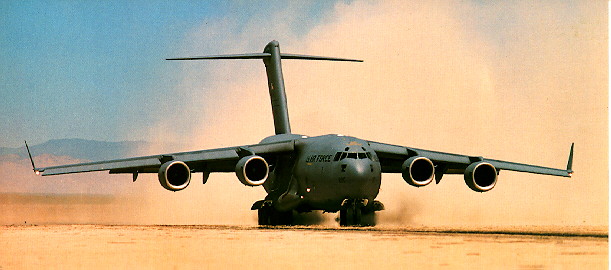
AETC-17dust.jpg


article-0-1902A13C00000578-93_634x480.jpg


image.jpg


Who are backed up by these guys:

carrier-group.jpg


b200.jpg


With money and business deals from these guys:

slide1.jpg


Halifax Tar said:
We have 2 true supply depots. 1 in Montreal the other in Edmonton.  We should go down to one ?

Do you have background in supply chain management, procurement or warehousing ?

I fully disagree with you by the way.  The organization is not the issue, the management and procurement of stores and spares is the issue.  If we had lots of stock the CFSS would work fine.  Case in point, right now my ship has an outstanding High Priority Req (HPR) that will be at least 2 years until it is rectified.  Process is fine, the people working within the system is fine but our ability to keep stock on hand (SOH) is in a sorry state.  This has more to do with trade agreements, PWGSC and a cumbersome rules regarding purchasing.

Sorry for the off topic tangent.

Ok I'm not a logistics guy so forgive me for misuse of the term "depot".  You're right the people are fine, never said any differently but the system is flawed and because it's flawed, so is the process.

What I was trying to convey is that our stream is all FUBAR'ed.  I can't speak to the Navy but the Army is a royal cluster with all different detachments, units, etc... Lets not even mention all the ridiculous CDSB's supporting our make believe Division's or the fact that we have the Regular Force, aka our Ready and Available Force, operating off the exact same supply stream our Reserves operate off of. 

The whole Army Organization, not just the Logistics side of the house, needs a redesign and I stand by that statement.     

Back on topic now.

 
daftandbarmy said:
Let's be clear: without the gigantic US investment in its military, the Cold War would have gone hot pretty fast, and we'd see a victorious USSR controlling most of mainland Europe right now. At least.

Was it because of the US’s investment on its military win the cold war? Even though some would say that the Soviet Union lost the Cold War due to its inability to control the markets and organize their economy, I believe the Soviet Union lost because of the microeconomics relationship between the United States and the Soviet Union during the cold war. More specifically, this can be better explained through the strategy of  “Production Possibilities Frontier”  between military goods and civilian goods production and competition amongst the two major powers that fought the Cold War. 

 
Reagan outspent the Russians causing their collapse as they just couldnt sustain the expenditure.The US did win militarily in Kuwait in the first Gulf War and we invaded Iraq and ousted Saddam.In todays parlance those were wins using legacy equipment.The chrystal ball is a bit cloudy and we dont know if the North Koreans will want to invade the ROK,or a crisis over Taiwan but the US at present can handle both scenarios.Throw in a middle east crisis and we might be hard pressed to meet our commitments with a smaller force.
 
US President Lyndon B. Johnson's Great Society programs in the 1960s are examples of the guns versus butter model, which is an example of production possibilities frontier. While Johnson wanted to continue New Deal programs and expand welfare with his own Great Society programs, he also was in the arms race of the Cold War, and Vietnam War. These wars put strains on the economy and hampered his Great Society programs.

This is in stark contrast to Dwight D Eisenhower's own objections to the expansion and endless warfare of the military industrial complex. In his Chance for Peace speech, he referred to this very trade-off, giving specific examples:

Every gun that is made, every warship launched, every rocket fired signifies, in the final sense, a theft from those who hunger and are not fed, those who are cold and are not clothed. This world in arms is not spending money alone. It is spending the sweat of its laborers, the genius of its scientists, the hopes of its children.

The cost of one modern heavy bomber is this: a modern brick school in more than 30 cities. It is two electric power plants, each serving a town of 60,000 population. It is two fine, fully equipped hospitals. It is some fifty miles of concrete pavement. We pay for a single fighter plane with a half million bushels of wheat. We pay for a single destroyer with new homes that could have housed more than 8,000 people.

This is, I repeat, the best way of life to be found on the road the world has been taking. This is not a way of life at all, in any true sense. Under the cloud of threatening war, it is humanity hanging from a cross of iron. ... Is there no other way the world may live?

— Speech to the American Society of Newspaper Editors "The Chance for Peace" (16 April 1953)
 
Back
Top