
In what way do the Houthi's differ from Trump? Which is not saying I disagree with your point. Israel has been fighting against bleeding hearts in the west for ever.I hope the mail arrives in Houthiland via cruise missile. This pussyfooting around with bad guys got the West in this situation.

You are using an out of date browser. It may not display this or other websites correctly.
You should upgrade or use an alternative browser.
You should upgrade or use an alternative browser.
Houthi Red Sea Blockade
- Thread starter brihard
- Start date

- Reaction score
- 19,243
- Points
- 1,160
The idea is to bleed the Houthi dry of technology and force them back into their hill forts. The Houthi don't have significant stockpiles, which is why the Iranians are trying to resupply them by air. Frankly I would have KSA on the behalf of the Yemen government, shoot down any aircraft from Iraq or Iran that attempts to land in Yemen. Advise them and the world in advance that is the intent, once they lose one aircraft, they won't risk another.Their lives are already miserable. Which side is more politically able to withstand the specific types of misery they’re likely to be subjected to? Can the Houthis withstand ongoing bombing more than the developed world can withstand the impact on oil and other trade flows?
- Reaction score
- 43,659
- Points
- 1,210
KSA are the state who supported the 9/11 terrorists. They are not a reliable partner.

daftandbarmy
Army.ca Fossil
- Reaction score
- 48,804
- Points
- 1,160
KSA are the state who supported the 9/11 terrorists. They are not a reliable partner.
There's the whole sending hit squads to Toronto thing too, from a few years ago, of course.
Our doemstic hit squads don't need the competition

Saudi crown prince accused of sending hit squad to Canada
Mohammed bin Salman has been accused of sending a hit-squad to kill a former Saudi official.
 www.bbc.com
- Reaction score
- 43,659
- Points
- 1,210
There's the whole sending hit squads to Toronto thing too, from a few years ago, of course.
Our doemstic hit squads don't need the competition
Saudi crown prince accused of sending hit squad to Canada
Mohammed bin Salman has been accused of sending a hit-squad to kill a former Saudi official.
There's also the whole Khashoggi thing. But 9/11 terrorism and murder of dissidents apparently means you get nuclear reactors.
- Reaction score
- 19,243
- Points
- 1,160
Well that would be about 50% of the current holders of nuclear weaponsThere's also the whole Khashoggi thing. But 9/11 terrorism and murder of dissidents apparently means you get nuclear reactors.

OldSolduer
Army.ca Relic
- Reaction score
- 23,370
- Points
- 1,260
And we look on some of them as “allies”….Well that would be about 50% of the current holders of nuclear weapons
- Reaction score
- 19,243
- Points
- 1,160
Taking everything that comes out of that region with a pinch of salt, the Houthi's seem to be getting a bit more desperate for funding and putting the squeeze on locals.
Houthis Launch Sweeping Extortion Campaign Against Farmers in Yemen's Hodeidah - Yemen Online |
Houthis Launch Sweeping Extortion Campaign Against Farmers in Yemen's Hodeidah - Yemen Online |

- Reaction score
- 31,533
- Points
- 1,260
Power corrupts, absolute power corrupts absolutely.KSA are the state who supported the 9/11 terrorists. They are not a reliable partner.
One thing the KSA can be relied upon is to act in whatever interest they think benefits them.
Iran may call the US Great Satan, and (at least used to) call the Russians Lesser Satan (making deals with the devil and all), but enemy #1 of Iran is Israel, and not to far under that is the KSA.

- Reaction score
- 13,187
- Points
- 1,360

Why Somali Piracy Has Returned and May be Here to Stay - Center for Maritime Strategy
Over a decade after fading from public consciousness, Somali piracy is making a comeback. Once the scourge of the maritime community, Somali mariners are responsible for at least 17 piracy-related incidents in either Somali waters or the Gulf of Aden between January-May of this year. Pirates...
 centerformaritimestrategy.org
Unintended consequences of the security vacuum created by the ongoing conflict with Iran and its proxies is the return of piracy. Naval resources have been stretched thin and many partners, including Canada, have pulled their forces from the region.
The inevitable security vacuum created will inevitably result in a resurgence of piracy in this area with opportunistic non-state actors taking advantage of the situation.
OldSolduer
Army.ca Relic
- Reaction score
- 23,370
- Points
- 1,260
The enemy of my enemy is my friend,Power corrupts, absolute power corrupts absolutely.
One thing the KSA can be relied upon is to act in whatever interest they think benefits them.
Iran may call the US Great Satan, and (at least used to) call the Russians Lesser Satan (making deals with the devil and all), but enemy #1 of Iran is Israel, and not to far under that is the KSA.
- Reaction score
- 19,243
- Points
- 1,160
Yemen forces giving the Houthi's some drone love

Halifax Tar
Army.ca Legend
- Reaction score
- 20,832
- Points
- 1,260
Things are getting sporting over in Yemen

 www.nytimes.com

 www.france24.com
 www.cbsnews.com
Houthis Seize Strategic Red Sea Port, a Major Victory for Iranian Ally
The Iran-backed militia routed Yemeni government forces in Mokha, putting the group in a stronger position to attack ships in a crucial waterway for global trade.
www.nytimes.com
Yemen's Houthis take over strait vital to global shipping
Yemen's Iran-backed Houthis seized a strategic Red Sea island on Friday after capturing territory along the coast, sealing their takeover of a vital shipping corridor linking Europe and Asia.
www.france24.com
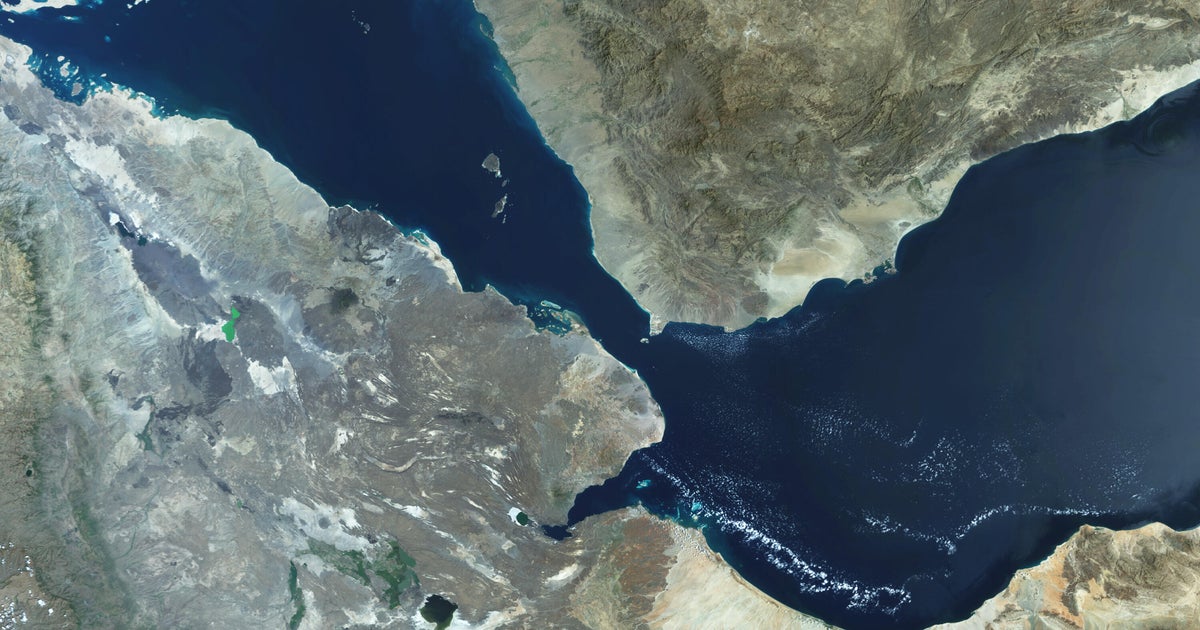
Iranian vessel struck on Strait of Hormuz, as Houthis expand control of oil shipping lane
The Iran-backed Houthis expanded their control over the strategy Bab-el-Mandeb strait, as strikes continued in the Strait of Hormuz.
www.cbsnews.com
- Reaction score
- 13,187
- Points
- 1,360
Things are getting sporting over in Yemen
Houthis Seize Strategic Red Sea Port, a Major Victory for Iranian Ally
The Iran-backed militia routed Yemeni government forces in Mokha, putting the group in a stronger position to attack ships in a crucial waterway for global trade.
Yemen's Houthis take over strait vital to global shipping
Yemen's Iran-backed Houthis seized a strategic Red Sea island on Friday after capturing territory along the coast, sealing their takeover of a vital shipping corridor linking Europe and Asia.
Iranian vessel struck on Strait of Hormuz, as Houthis expand control of oil shipping lane
The Iran-backed Houthis expanded their control over the strategy Bab-el-Mandeb strait, as strikes continued in the Strait of Hormuz.
6 months ago, I wrote a paper about A2AD , supply chains and cost asymmetry when the current Iran War broke out. I am considering publishing an update and submitting it publicly.
Recent events provide substantial empirical support for the hypothesis I advanced earlier:
That a technologically inferior adversary can use favourable geography and comparatively inexpensive anti-access/area-denial capabilities to impose disproportionate costs on a conventionally superior Western military.
The disruption of commercial navigation through the Strait of Hormuz, followed by the expansion of Iranian-aligned Houthi forces around the Bab el-Mandeb, constitutes a real-world test of this proposition. The United States retains overwhelming military and technological superiority, yet that superiority has not been sufficient to guarantee routine, low-risk commercial access through these strategic chokepoints.
This does not conclusively prove my hypothesis, but it provides strong empirical evidence for its central mechanism that an inferior adversary does not need to achieve sea control or defeat a superior navy outright; it needs only to maintain sufficient sea-denial capability to make freedom of manoeuvre uncertain, expensive and strategically consequential.
The United States is overwhelmingly more successful militarily and its economic war is having real effects on Iran, but Iran may ultimately prove more successful strategically because its threshold for victory is much lower. Washington must convert battlefield dominance into restored freedom of navigation, regional stability and meaningful Iranian concessions.
Tehran merely has to survive, preserve enough asymmetric capability to keep Hormuz and Bab el-Mandeb contested, and impose sufficient economic and political costs to erode American willingness to continue. In that sense, the United States is winning the war of destruction, while Iran may be winning the war of strategic cost imposition.
- Reaction score
- 43,659
- Points
- 1,210
That a technologically inferior adversary can use favourable geography and comparatively inexpensive anti-access/area-denial capabilities to impose disproportionate costs on a conventionally superior Western military.
Are we talking Hormuz or Afghanistan?
- Reaction score
- 13,187
- Points
- 1,360
It's not really a good comparison:Are we talking Hormuz or Afghanistan?
The Taliban demonstrated how a weaker actor can win through endurance, that's where the comparison ends.
Iran is demonstrating how a weaker actor can win through endurance combined with actual anti-access/area-denial capabilities.
The Taliban strategy was primarily insurgency, attrition, sanctuary, political endurance, and erosion of coalition will. They used IEDs, ambushes, intimidation, infiltration, and control of rural terrain to raise the cost of occupation, but they did not meaningfully deny U.S./NATO access to the theatre or prevent Western forces from operating in Afghan airspace or severing lines of communication.
Iran is different. Its strategy can combine strategic chokepoints, anti-ship missiles, drones, mines, dispersed launch systems, and aligned regional forces to contest access itself. That makes the current Hormuz/Bab el-Mandeb case much closer to a genuine A2/AD problem than Afghanistan ever was.
It's clear the US is suffering from military/political fatigue, which is now turning in to a major strategic vulnerability. Military/political fatigue is even more pronounced in other Western Countries, the Europeans and Canada have basically withdrawn for all intents and purposes.
Halifax Tar
Army.ca Legend
- Reaction score
- 20,832
- Points
- 1,260
6 months ago, I wrote a paper about A2AD , supply chains and cost asymmetry when the current Iran War broke out. I am considering publishing an update and submitting it publicly.
Recent events provide substantial empirical support for the hypothesis I advanced earlier:
That a technologically inferior adversary can use favourable geography and comparatively inexpensive anti-access/area-denial capabilities to impose disproportionate costs on a conventionally superior Western military.
The disruption of commercial navigation through the Strait of Hormuz, followed by the expansion of Iranian-aligned Houthi forces around the Bab el-Mandeb, constitutes a real-world test of this proposition. The United States retains overwhelming military and technological superiority, yet that superiority has not been sufficient to guarantee routine, low-risk commercial access through these strategic chokepoints.
This does not conclusively prove my hypothesis, but it provides strong empirical evidence for its central mechanism that an inferior adversary does not need to achieve sea control or defeat a superior navy outright; it needs only to maintain sufficient sea-denial capability to make freedom of manoeuvre uncertain, expensive and strategically consequential.
The United States is overwhelmingly more successful militarily and its economic war is having real effects on Iran, but Iran may ultimately prove more successful strategically because its threshold for victory is much lower. Washington must convert battlefield dominance into restored freedom of navigation, regional stability and meaningful Iranian concessions.
Tehran merely has to survive, preserve enough asymmetric capability to keep Hormuz and Bab el-Mandeb contested, and impose sufficient economic and political costs to erode American willingness to continue. In that sense, the United States is winning the war of destruction, while Iran may be winning the war of strategic cost imposition.
Your paper was/is very good. And addendum would be fantastic!
This isn't the first time the world has faced challenges on the sea lanes. Both ashore and at sea. Control of choke points is just as vital as freedom of navigation.
What is interesting to me will be the measure of the response. How much carnage are we willing inflict ?
- Reaction score
- 19,243
- Points
- 1,160
None of this helped by the proxy spate that KSA and UAE had some 6 months ago, where UAE proxies tried to impose their will onto KSA proxies and KSA bombing newly supplied AFV destined for UAE proxies on the docks. The anti-Houthi forces are likley bigger and better armed than the Houthi's, but refuse to work together and support each other, so the Houthi can deal with them one at a time.6 months ago, I wrote a paper about A2AD , supply chains and cost asymmetry when the current Iran War broke out. I am considering publishing an update and submitting it publicly.
Recent events provide substantial empirical support for the hypothesis I advanced earlier:
That a technologically inferior adversary can use favourable geography and comparatively inexpensive anti-access/area-denial capabilities to impose disproportionate costs on a conventionally superior Western military.
The disruption of commercial navigation through the Strait of Hormuz, followed by the expansion of Iranian-aligned Houthi forces around the Bab el-Mandeb, constitutes a real-world test of this proposition. The United States retains overwhelming military and technological superiority, yet that superiority has not been sufficient to guarantee routine, low-risk commercial access through these strategic chokepoints.
This does not conclusively prove my hypothesis, but it provides strong empirical evidence for its central mechanism that an inferior adversary does not need to achieve sea control or defeat a superior navy outright; it needs only to maintain sufficient sea-denial capability to make freedom of manoeuvre uncertain, expensive and strategically consequential.
The United States is overwhelmingly more successful militarily and its economic war is having real effects on Iran, but Iran may ultimately prove more successful strategically because its threshold for victory is much lower. Washington must convert battlefield dominance into restored freedom of navigation, regional stability and meaningful Iranian concessions.
Tehran merely has to survive, preserve enough asymmetric capability to keep Hormuz and Bab el-Mandeb contested, and impose sufficient economic and political costs to erode American willingness to continue. In that sense, the United States is winning the war of destruction, while Iran may be winning the war of strategic cost imposition.
- Reaction score
- 13,187
- Points
- 1,360
What's old is new:Your paper was/is very good. And addendum would be fantastic!
This isn't the first time the world has faced challenges on the sea lanes. Both ashore and at sea. Control of choke points is just as vital as freedom of navigation.
What is interesting to me will be the measure of the response. How much carnage are we willing inflict ?

Persian Gulf campaign of 1809 - Wikipedia

Persian Gulf campaign of 1819 - Wikipedia

Closure of the Suez Canal (1967–1975) - Wikipedia

Operation Praying Mantis - Wikipedia
This has been an area of contest for 100s of years. It will continue to be an area of contest that is absolutely vital for global trade and commerce to function.
Do it. I’d definitely be interested to and would carve out the time to read it.6 months ago, I wrote a paper about A2AD , supply chains and cost asymmetry when the current Iran War broke out. I am considering publishing an update and submitting it publicly.


