- Reaction score
- 43,508
- Points
- 1,210
Cost per volley is a consideration.Pushing a gun to shoot very long distances, when you have HIMAR seems to be a waste.


Cost per volley is a consideration.Pushing a gun to shoot very long distances, when you have HIMAR seems to be a waste.

Not in for the 127mm The round is semi fixed where all the components are assembled mechanically on a tray just before loading.The first thing to remember is that on a ship, the round usually comes as a complete package

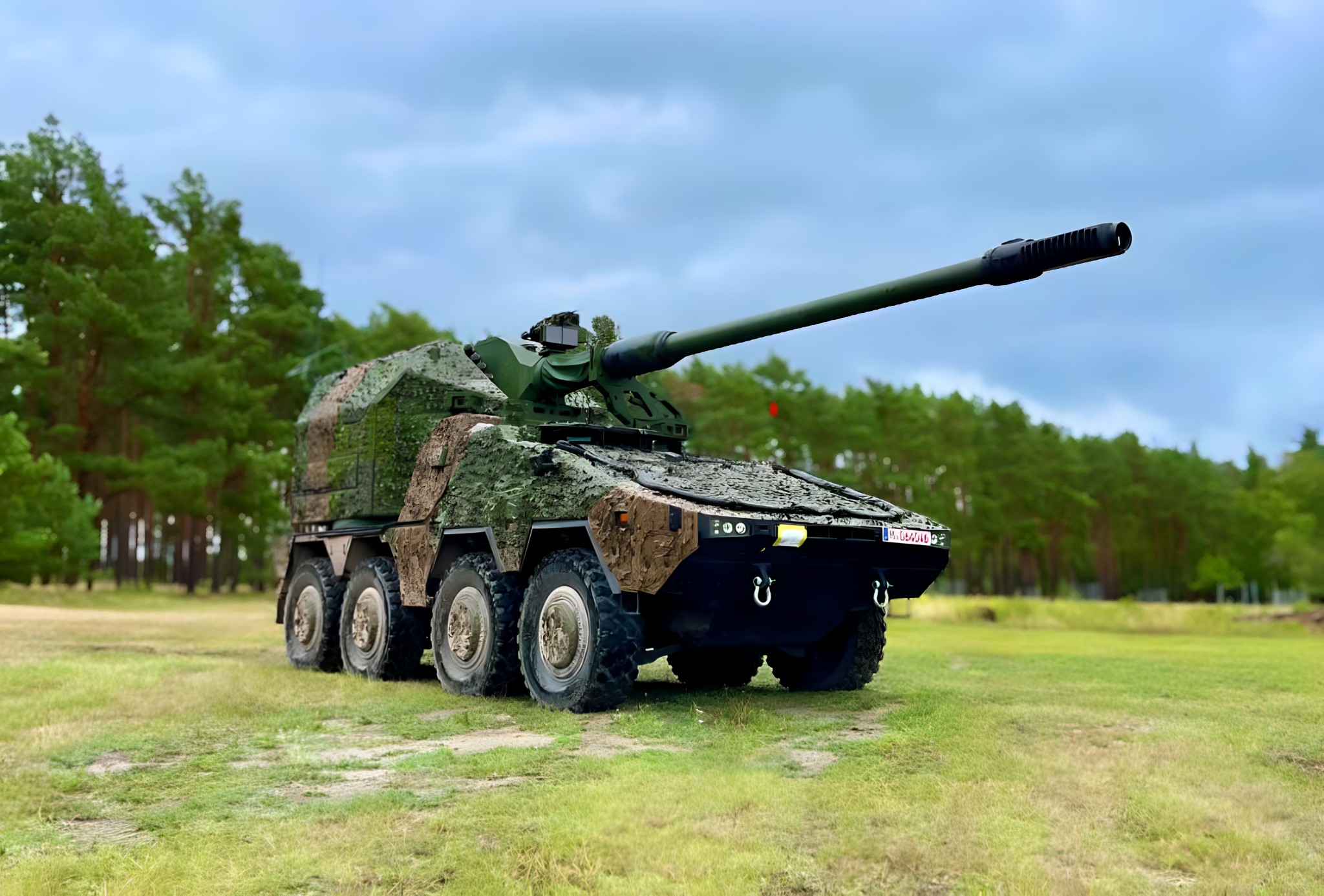
There is a kit offered by South Korea for the C2 version of the gunHas mounting the reserves C3/LG1 to a truck(probably a fair amount of engineering required to do so and by no means cheap) ever been considered as an option to create a light self propelled platform? I think there's a few examples of this in Ukraine at the moment and it could be a scrappy way to make the guns potentially more useful.
In the case of long range fires, seems there is a less shooting and initial cost of the gun and the shorter barrel life are also factors. If you want to get guided munitions to achieve the effect with less rounds, then the cost differential seems to narrow quite a bit?Cost per volley is a consideration.

In the case of long range fires, seems there is a less shooting and initial cost of the gun and the shorter barrel life are also factors. If you want to get guided munitions to achieve the effect with less rounds, then the cost differential seems to narrow quite a bit?
 www.twz.com

 ukdefencejournal.org.uk
Artillery delivers an area effect.In the case of long range fires, seems there is a less shooting and initial cost of the gun and the shorter barrel life are also factors. If you want to get guided munitions to achieve the effect with less rounds, then the cost differential seems to narrow quite a bit?

There are several. The S Korea model is the best. A recommendation for that type of project was very much part of the considerations of DLR2 (the artillery folks) and made its way to the desk of the VCDS in the early 2000s. It was rejected because of issues within the army unrelated to the artillery itself. Internal politics.Has mounting the reserves C3/LG1 to a truck(probably a fair amount of engineering required to do so and by no means cheap) ever been considered as an option to create a light self propelled platform? I think there's a few examples of this in Ukraine at the moment and it could be a scrappy way to make the guns potentially more useful.

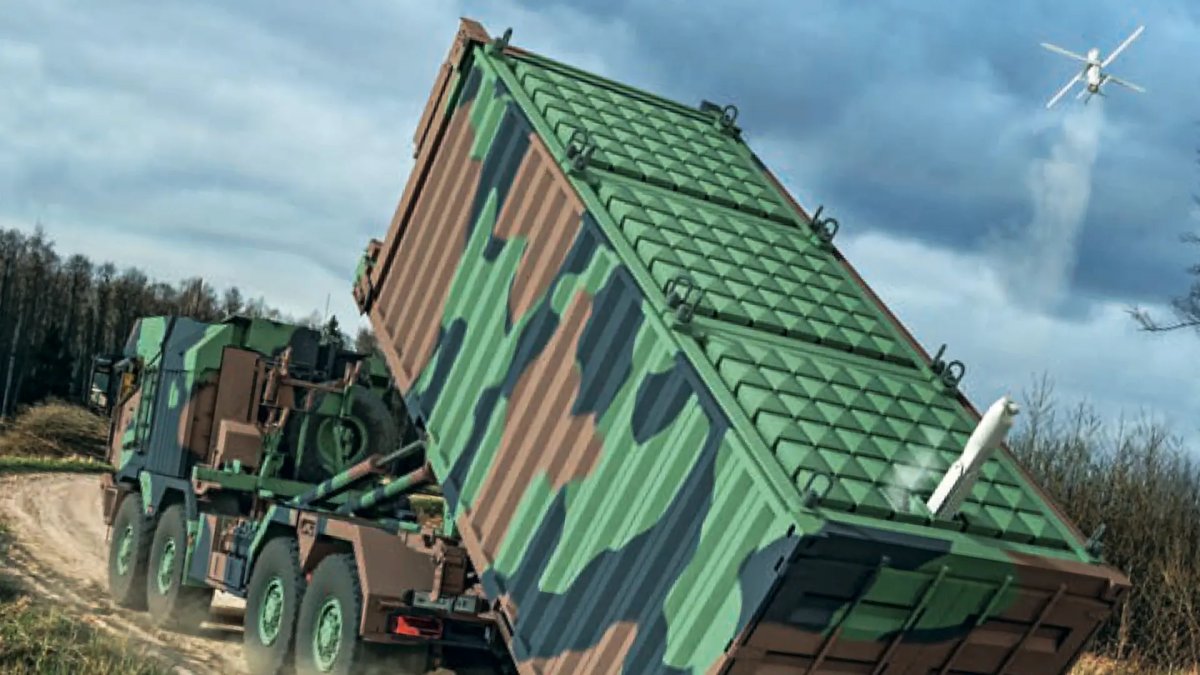
That's my point exactly. A cannon launched Hero is a waste of launcher. They can be launched from a 120mm tube or container of any type. In my model army every CS regiment has an LM launcher battery - I'm actually toying with the idea of an STA battery that has a troop consisting of all of the regiment's FOOs and JTACs (basically downsizing the current OP Bty to a troop - not in numbers just in status), a troop of sensors including radars and MUAVs and their controllers, and a troop of medium-range LM launchers.Suppose something like the Hero-120 could be fitted into a 155mm breech and launched with a low charge.
But
It may just be easier to do this
Yes, but these days they are also the most practical element on the battlefield to offer over the horizon precision effects. IMHO any artillery unit needs to be structured to be able to provide both (not to mention some specific EW-based non-kinetics effects.)Artillery delivers an area effect.
I believe we are in violent agreement. The proper tool for the engagement. Too many have forgotten about artillery as an area weapon and confuse it with a tool to only deliver precision effect.Yes, but these days they are also the most practical element on the battlefield to offer over the horizon precision effects. IMHO any artillery unit needs to be structured to be able to provide both (not to mention some specific EW-based non-kinetics effects.)
It's kind of funny. In large part Advancing with Purpose and Afghanistan are to blame for that. Very many of the fire missions used single or two gun troops which delivered dumb HE rounds with sufficient accuracy to neutralize a position for sufficient time for manoeuvre to take place. The preferred weapon for real close precision strikes were Predator delivered Hellfires. There were other, more complex, operations too.I believe we are in violent agreement. The proper tool for the engagement. Too many have forgotten about artillery as an area weapon and confuse it with a tool to only deliver precision effect.

Not just space (area); also time (duration). Shells are a cost-effective way to achieve and maintain suppression as long as needed.I believe we are in violent agreement. The proper tool for the engagement. Too many have forgotten about artillery as an area weapon and confuse it with a tool to only deliver precision effect.
I agree with that for the regular batteries. It seems the call for tube artillery capable of long range fires is to hit more precise and important targets and with less volume of fire. To me it is like the difference we used to have between field artillery, heavy artillery and siege artillery. Each played a different role.Artillery delivers an area effect.

Is this something that might even be relevant today, in your opinion, given that the guns are 20 years older? The points supporting could be a renewed political appetite in military spending, and that self propelled artillery seems to be increasingly important in a drone filled landscape and reserves/regular force do not have any equipment in service today.There are several. The S Korea model is the best. A recommendation for that type of project was very much part of the considerations of DLR2 (the artillery folks) and made its way to the desk of the VCDS in the early 2000s. It was rejected because of issues within the army unrelated to the artillery itself. Internal politics.
Not just space (area); also time (duration). Shells are a cost-effective way to achieve and maintain suppression as long as needed.
The problem currently is that the 105mm we have are of no value except training people in the fundamentals of battery deployment and operating. They have zero operational value for the types of operations Canada is doing. Self propelled 155mm for the artillery and self propelled 120mm mortars for the infantry/armour is a sound solution. The number of guns and mortars we are ordering (together with HIMARS) are adequate for equipping one division.Is this something that might even be relevant today, in your opinion, given that the guns are 20 years older? The points supporting could be a renewed political appetite in military spending, and that self propelled artillery seems to be increasingly important in a drone filled landscape and reserves/regular force do not have any equipment in service today.
I'm not a fan of interim solutions unless there is a clear and immediate operational requirement. We have an "unforecasted operational requirement" (UOR) process for that and use it all too frequently. They're usually money that could be spent on other things. More importantly than what I think, if there isn't already a project underway for an interim solution then it will never be spun up in time to be of value. The 105s may be clapped out but they remain adequate - barely - to fulfill the training role.With deliveries for new 155 sp artillery slated to be delivered in 2029 and beyond, I just wonder if there's any value. And if a kit already exists out there... In theory that would be quicker to deploy, right? Or would something like this probably not be ready before 2029 if it was of interest(I often read about procurement delays, lol)
Happy to help.P.S. As an outsider looking in(and trying to join!), I'm really enjoying all the great content and discussion here. I don't understand it all, but I have questions are you folks always have answers! Thanks!
That's not assumed, and there's more to it than that. If rocket artillery can have exactly the same characteristics as gun artillery, great - but I'd have to see the proof.Everybody seems to assume that all rockets in a launcher all have to be launched at the same time. Why couldn't a rocket battery maintain the same pace of delivery as a gun battery? Complete with occasional relocations.
No assuming at all. But hey. If rockets can do it all then why is everyone still producing hundreds of guns and millions of shells every year?Everybody seems to assume that all rockets in a launcher all have to be launched at the same time. Why couldn't a rocket battery maintain the same pace of delivery as a gun battery? Complete with occasional relocations.

just get lots of everything?No assuming at all. But hey. If rockets can do it all then why is everyone still producing hundreds of guns and millions of shells every year?
They should be told that they don't need them anymore.
That's not assumed, and there's more to it than that. If rocket artillery can have exactly the same characteristics as gun artillery, great - but I'd have to see the proof.