• Thanks for stopping by. Logging in to a registered account will remove all generic ads. Please reach out with any questions or concerns.

Indirect Fires Modernization Project - C3/M777 Replacement


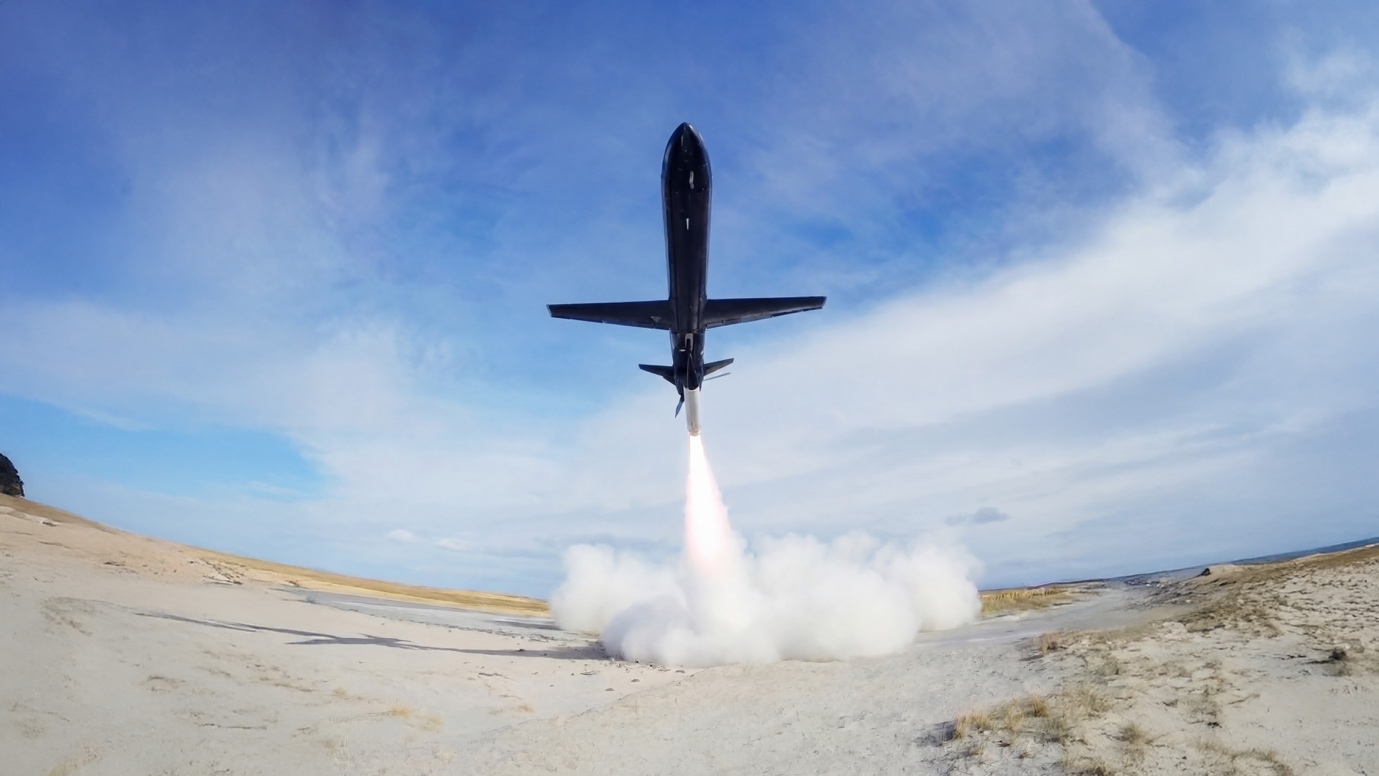
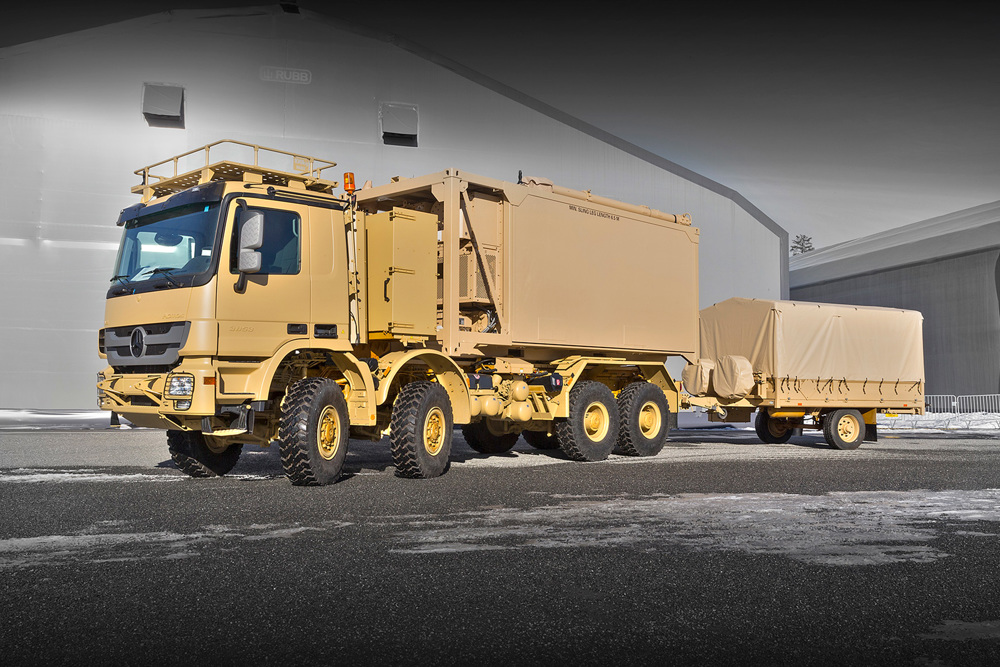
Here's British competitor in the Low Cost Market

300 kg, 1200 km, 600 km/h, GPS denied onboard navigation, AI autonomous seeker

Price as yet undisclosed

1200 km could also mean loitering over a target 100 km away for 3 or 4 hours
 
Not quite - ATACAMS have complex warheads with hundreds of bomblets or 500 lbs of explosives. I just want the roughly 50-100 lbs of the Barracuda. A good sized blast to take out smaller installations or complexes that can be taken out by a small ripple of rockets. Something smaller and lighter but guided that can operate within the range a division is concerned about. I'd leave the heavier, deeper, more strategic stuff to corps.

🍻
There are a bunch of trade-offs that don't always result in a cheap solution. ATACMS is a ballistic missile which is more difficult to intercept by enemy AD than a cruise missile but the trade-off is that the guidance systems are more complex. A cruise missile can be cheaper but it is easier to intercept.

What isn't in question is that for striking targets at 300km range you need precision. The question is what type of platform is best to launch what type of munition. A ballistic missile needs more motor to warhead ratio vs a cruise missile. Cruise missiles are more effective when launched from the air because they don't have to waste energy getting airborne.

Personally I'd focus the HIMARS on ballistic missiles for long range precision strike and focus on airborne platforms for launching cruise missiles. Both are important and complement each other but use the platforms that make the most sense for each.
 
So on the C3 howitzers are dead front... heres the proposed reorg of ARes units that will be learning the Reg F equipment. Courtesy True North Strategic Review (Noah).


View attachment 100326
Does it still make sense to have some of the Arty units where they are, or should they reroll units closer to the main bases to ‘arty’ and farther away units to something which is easier to do stand alone training?
 
Does it still make sense to have some of the Arty units where they are, or should they reroll units closer to the main bases to ‘arty’ and farther away units to something which is easier to do stand alone training?

Does the existing ratio of infantry to artillery still make sense or should a greater number, or even all, infantry units have an artillery component within their formal structure?

3:1?

3 infantry platoons and an artillery troop? Or 3 cavalry troops and an artillery troop?

It seems to me that there are an awful lot of gunnerish type jobs opening up due to the blurrinng of lines with rockets, missiles, cruise missiles, one way attack drones and UAVs, as well as in the counter battles from C-RAM/CUAS to IAMD.
 
Does it still make sense to have some of the Arty units where they are, or should they reroll units closer to the main bases to ‘arty’ and farther away units to something which is easier to do stand alone training?
It never makes sense to move reserve units closer to the main RegF bases. Arty doesn't need access to ranges full-time. 3 or 4 times per year is sufficient.

42 Field is in Pembroke and is a weak unit. So is 10 Fd in Regina and now 26 Fd in Brandon. There are a number of units within easy driving range of the RegF bases that have difficulty in bringing a battery out to the ranges.

ARes units need to be where the mass of the ARes recruits are - which is big cities by far. What is needed is to place full-time arty personnel in the big cities in order to form solid hybrid units. That may need a change in how armouries are structured in order to hold the equipment locally. Moving guns - especially wheeled SPs - to where the ranges are is merely a road or train move which is just another part of the training. The big issue is to retune the ARes system - structure, facilities, equipment, support - so that viable units can be created and sustained where the population is.

🍻
 
Does the existing ratio of infantry to artillery still make sense or should a greater number, or even all, infantry units have an artillery component within their formal structure?

3:1?

3 infantry platoons and an artillery troop? Or 3 cavalry troops and an artillery troop?

It seems to me that there are an awful lot of gunnerish type jobs opening up due to the blurrinng of lines with rockets, missiles, cruise missiles, one way attack drones and UAVs, as well as in the counter battles from C-RAM/CUAS to IAMD.
The basic 3:1 ratio is a start when you figure in 1 close support regiment per 3 manoeuvre battalion/regiment brigade. (Please, please, stop thinking in platoons and troops.) In my opinion that needs to be upped for a divisional concept with a rocket regiment, a TA/LM strike regiment and probably two air defence regiments. That brings the arty to manoeuvre ratio closer to 2:1.

🍻
 
It never makes sense to move reserve units closer to the main RegF bases. Arty doesn't need access to ranges full-time. 3 or 4 times per year is sufficient.

42 Field is in Pembroke and is a weak unit. So is 10 Fd in Regina and now 26 Fd in Brandon. There are a number of units within easy driving range of the RegF bases that have difficulty in bringing a battery out to the ranges.

ARes units need to be where the mass of the ARes recruits are - which is big cities by far. What is needed is to place full-time arty personnel in the big cities in order to form solid hybrid units. That may need a change in how armouries are structured in order to hold the equipment locally. Moving guns - especially wheeled SPs - to where the ranges are is merely a road or train move which is just another part of the training. The big issue is to retune the ARes system - structure, facilities, equipment, support - so that viable units can be created and sustained where the population is.

🍻
I am thinking of where kit is stored and access to said equipment as well as the travelling to train part.

Take 49th field. Makes sense currently because of Grayling, if they had to drive to Pet for every gun ex I doubt the unit would be remotely viable (7+hour drive one way, which for a weekend ex kills participation). With these reforms will the equipment needed to be used be within easy access for them or will it be drive to Pet to use it?
 
It never makes sense to move reserve units closer to the main RegF bases. Arty doesn't need access to ranges full-time. 3 or 4 times per year is sufficient.

42 Field is in Pembroke and is a weak unit. So is 10 Fd in Regina and now 26 Fd in Brandon. There are a number of units within easy driving range of the RegF bases that have difficulty in bringing a battery out to the ranges.

ARes units need to be where the mass of the ARes recruits are - which is big cities by far. What is needed is to place full-time arty personnel in the big cities in order to form solid hybrid units. That may need a change in how armouries are structured in order to hold the equipment locally. Moving guns - especially wheeled SPs - to where the ranges are is merely a road or train move which is just another part of the training. The big issue is to retune the ARes system - structure, facilities, equipment, support - so that viable units can be created and sustained where the population is.

🍻

The entire issue of fretting over moving people to tasks in Canada is ridiculous from the get go.

This is Canada. This is what you bought. A massive chunk of real estate for a very small population. (And if that goes for us "settlers" it goes manifold for the "natives").

The cost of moving people and goods is the cost of living in Canada and enjoying its advantages.

A transportation plan needs to be written into every Canadian plan.

...

Here's a thought.

Mandate the 4 day work week. There is enough support for it.
Three day weekends would get a lot of popular support.

It would also open up second job opportunities, including 300,000 reserve positions and effective remote training.
 
The basic 3:1 ratio is a start when you figure in 1 close support regiment per 3 manoeuvre battalion/regiment brigade. (Please, please, stop thinking in platoons and troops.) In my opinion that needs to be upped for a divisional concept with a rocket regiment, a TA/LM strike regiment and probably two air defence regiments. That brings the arty to manoeuvre ratio closer to 2:1.

🍻

I will be happy to stop thinking in platoons and troops if armouries start getting filled with battalions and regiments.

I like the idea of a mixed unit under one roof because it breeds familiarity and opportunity.

There is no difference between a trainee gunner standing security at a VP and a trainee infanteer.

One of the three non-firing troops or platoons could be your new entries and two your active on-call troops. The firing troop or platoon, Guns, Rockets, UAVs, Mortars, DFS, Infantillery, CUAS, LAA, VSHORAD, SHORAD, MRAD, IAMD, sensors or whatever, would be the aspirational focus of the members of the Company.

I just referenced the old British Home Guard structure.

60 per platoon
300 per company in 5 platoons
1200 per battalion in 4 companies.

Garrison does not have to reflect field.

Field can be drawn from garrison.
 
Last edited:
I am thinking of where kit is stored and access to said equipment as well as the travelling to train part.
All of those are factors which ought to be considered. If equipment is kept close to train with then maintenance for that kit must be guaranteed by way of full-time staff. But again, population is key.
Take 49th field. Makes sense currently because of Grayling, if they had to drive to Pet for every gun ex I doubt the unit would be remotely viable (7+hour drive one way, which for a weekend ex kills participation). With these reforms will the equipment needed to be used be within easy access for them or will it be drive to Pet to use it?
49th Fd is currently not viable, regardless. The last count I've seen (Dec 2024) had 43 all ranks on strength including 1 LCol, 1 Maj, 3 other officers, 1 CWO, 3 WOs, 8 Sgts 7 MBR/Cpls, 17 Bdrs and 1 Gnr. The regiment is, in effect, a highly over ranked troop.

@KevinB and I keep saying that it is necessary for the army to know what it wants to be when it grows up. IMHO, Inflection Point 2025 isn't a growth model, its a rearranging of deckchairs model which does have some positive points to it. Unfortunately the army's inability to address the ARes's weaknesses and instead just work with them cascades down to the artillery. Aimpoint 1 has some good points (including making 49 Fd a TA unit [perhaps with LMs]) . . . some very good points, but unfortunately it falls far short in utilizing the ARes because the ARes, as currently structured and supported will continue to be inadequate regardless of where located.

Sorry. My cynicism is showing again.

🍻
 
Here's the whole arty way forward - Aimpoint 1.

🍻
Something like that would be so refreshing from our end. The RCAC has been lacking good communicators at the high levels for a long time, I daresay since Uncle Walt. In fact, that might be one of the reasons we're in the state we are now, the alarms were never adequately communicated.
 
I am bemused / concerned that any arm is publishing its own plan.

There needs to be an Army plan. That's all. Informed by experts around the table, but no RCA plan, No RCE plan. No Airdrop Systems Technician plan Just an Army plan. Perhaps with annexes for the RCA, RCE, RCCS etc etc.
 
I am bemused / concerned that any arm is publishing its own plan.

There needs to be an Army plan. That's all. Informed by experts around the table, but no RCA plan, No RCE plan. No Airdrop Systems Technician plan Just an Army plan. Perhaps with annexes for the RCA, RCE, RCCS etc etc.


Back in the 80s, when the Infantry lusted after Marders, they were concerned about their place on the battlefield. The future was Armoured and they wanted to be in that fight.

I sense that, today, neither the Infantry, nor the Armoured, have a good grip on what their next fight is going to look like.

An Arty led plan isn't the worst idea for the present era given, what I perceive, as the relative absence of traditional close-combat in current conflicts. The Ordnance (Arty, Eng and Survey) seems to be the dominant force currently.

....

I do think the Arty plan needs to be more adventuresome and incorporate more explicit plans for Long Range Precision Fires (including Long Range UAVs regardless of means of propulsion) and for CUAS and IAMD.
 
[snip] Please, please, stop thinking in platoons and troops.

🍻
I think @Kirkhill might actually have a point in thinking in terms of platoons and troops if you loosen your definition of what used to be primarily artillery functions like AD and TA.

With the proliferation of UAVs I think it makes sense to have VSHORAD/C-UAS capabilities integral to all maneuver units. Gun-based as well as other short-range missile/rocket/UAV-based C-UAS systems. Leave SHORAD and up to dedicated AD Artillery units.

Similarly with TA and LM type systems. Javelin missiles have a range up to 4km. Tanks can fire at ranges up to 5km (further with guided munitions). Infantry will be equipped with drones with ranges up to the 10's of km. It makes sense then that these units would have integral TA UAVs to make the most effective use of those systems and their own LM's to augment their already integral IDF mortars.

In this sense you are devolving artillery down to the platoon/troop level.
 
Man I wish the Armoured Corps would release something like that. The uncertainty is killing us.

Coincidental timing?

"The MoD’s judgment that future lethality will come roughly 80 per cent from drones and autonomous systems, and only 20 per cent from traditional armoured platforms and artillery, is both bold and correct.

"Some traditionalists may recoil at this, but the evidence from Ukraine is overwhelming. The side that can find, identify and destroy targets fastest is the side that survives. The Ukrainians, despite chronic shortages in ammunition and equipment, have become masters of this new form of warfare and remain streets ahead of most Nato armies in understanding its practical application."

.....


Hamish de Bretton-Gordon
Recce Strike: The British Army’s new way of warfare
It is deceptively simple in concept but revolutionary in execution

Hamish de Bretton-Gordon was an army officer for 23 years, reaching the rank of colonel, and was commanding officer of the UK's Joint Chemical, Biological, Radiological and Nuclear Regiment and Nato's Rapid Reaction CBRN Battalion.

Published 18 May 2026 1:33pm BST


The British Army has finally planted its flag firmly in the ground over the future of land warfare, embracing the Recce-Strike doctrine laid out in the Ministry of Defence’s 2025 Strategic Defence Review.

In many respects, this is one of the most important conceptual shifts in British military thinking since the end of the Cold War. Crucially, it recognises the brutal realities of modern combat witnessed daily on the battlefields of Ukraine, where drones, sensors and rapid precision strike have fundamentally changed warfare.

The MoD’s judgment that future lethality will come roughly 80 per cent from drones and autonomous systems, and only 20 per cent from traditional armoured platforms and artillery, is both bold and correct.

Some traditionalists may recoil at this, but the evidence from Ukraine is overwhelming. The side that can find, identify and destroy targets fastest is the side that survives. The Ukrainians, despite chronic shortages in ammunition and equipment, have become masters of this new form of warfare and remain streets ahead of most Nato armies in understanding its practical application.

Had Ukraine received the military support it requested earlier and in greater quantity, there is little doubt that Putin would now be in a far weaker position and considerably more enthusiastic about genuine peace negotiations. That lesson should not be lost on Britain. Defence cannot once again become the sacrificial lamb of domestic political turmoil. At a time when global instability is increasing, any government distracted by internal political warfare risks placing the defence of the realm in genuine jeopardy.

Recce-Strike itself is deceptively simple in concept but revolutionary in execution. It integrates surveillance, reconnaissance and strike assets into a single digital ecosystem capable of identifying and destroying enemy targets within minutes, sometimes within seconds. The aim is to collapse the traditional “kill chain” through the use of AI-assisted targeting, drones, sensors, electronic warfare and long-range precision fires.

There are three principal components. First, rapid targeting, drastically reducing the time between detection and destruction through AI-enabled decision making. Second, persistent battlefield surveillance using drones, sensors and electronic warfare to create a comprehensive picture of the battlespace. This is precisely where the much-maligned Ajax reconnaissance vehicle becomes absolutely critical. Critics have spent years deriding Ajax, but they fundamentally misunderstand its role. It is not merely a reconnaissance platform; it is the digital nerve centre of the future battlefield. Third comes long-range fires, combining intelligence and precision strike through artillery, missiles and loitering munitions to hit enemy formations deep behind the front line.

That is why this week’s announcement regarding the acquisition of 72 new self-propelled 155mm howitzers is so significant. Mounted on the Boxer chassis, the RCH 155 represents exactly the sort of long-range precision capability Britain desperately needs. Under the near-£1bn contract, the systems will also be manufactured in the United Kingdom, strategically vital in itself at a time when sovereign industrial resilience matters more than ever. The remotely or manually operated howitzer can fire eight rounds per minute at targets up to 70 kilometres away and can even operate unmanned when required.

Together with Ajax and Challenger 3, Britain is beginning to assemble the foundations of a genuinely modern, digitally integrated land force. Challenger 3, in particular, will be the Army’s first truly digital main battle tank and a formidable capability if fielded correctly. Together, these systems could provide the British Army with a highly credible Recce-Strike capability capable of surviving and winning on tomorrow’s battlefield.

However, time is not on our side. The current ambition to have these capabilities fully operational by the end of the decade may simply be too slow given the pace of global instability and military innovation. Integrating Ajax, RCH 155 and Challenger 3 into a coherent fighting force presents enormous challenges in training, logistics and doctrine. Nonetheless, these are solvable problems, provided the Treasury delivers sustained funding and political leaders maintain strategic focus.

That, ultimately, is the key issue. Defence requires long-term national resolve, not short-term political calculation. The danger is that political chaos in Westminster, and particularly any lurch further to the Left should Sir Keir Starmer lose his grip on Labour, could once again see defence spending sacrificed in favour of ever-expanding welfare commitments. Britain has made this mistake before. Following the Cold War, the so-called “peace dividend” hollowed out much of our military capability at precisely the moment when history should have taught us that peace is never permanent.

Today, the world looks considerably more dangerous than it did then. Russia remains aggressive, China increasingly assertive, and conflict in the Middle East continues to destabilise the international order. Against such a backdrop, weakening defence spending would not simply be irresponsible. It would be reckless.

Ultimately, without national security, every other area of public spending becomes meaningless. If Britain cannot defend itself, debates over welfare and healthcare budgets rapidly become academic. History repeatedly teaches us that freedom, prosperity and stability are only preserved when nations possess both the will and the capability to defend them.

 

This is about Air Battle Management training in Australia and AI.
It could just as easily apply to Battle Management and training generally in Canada and elsewhere.


It seems to me that this is the real Indirect Fires Modernization. And Long Range Precision Fires, Coastal Defence, UAVs and IAMD. And Training.

In an interwebbed environment, where someone at an FDC in Regina can be commanding a UAV over Estonia or managing a the CUAS fight over a USV in the Pacific, or training for local air defence or providing air observation to the local constabulary, shouldn't we be focusing more on these and the employment of these, than the bangsticks?
 
Back
Top