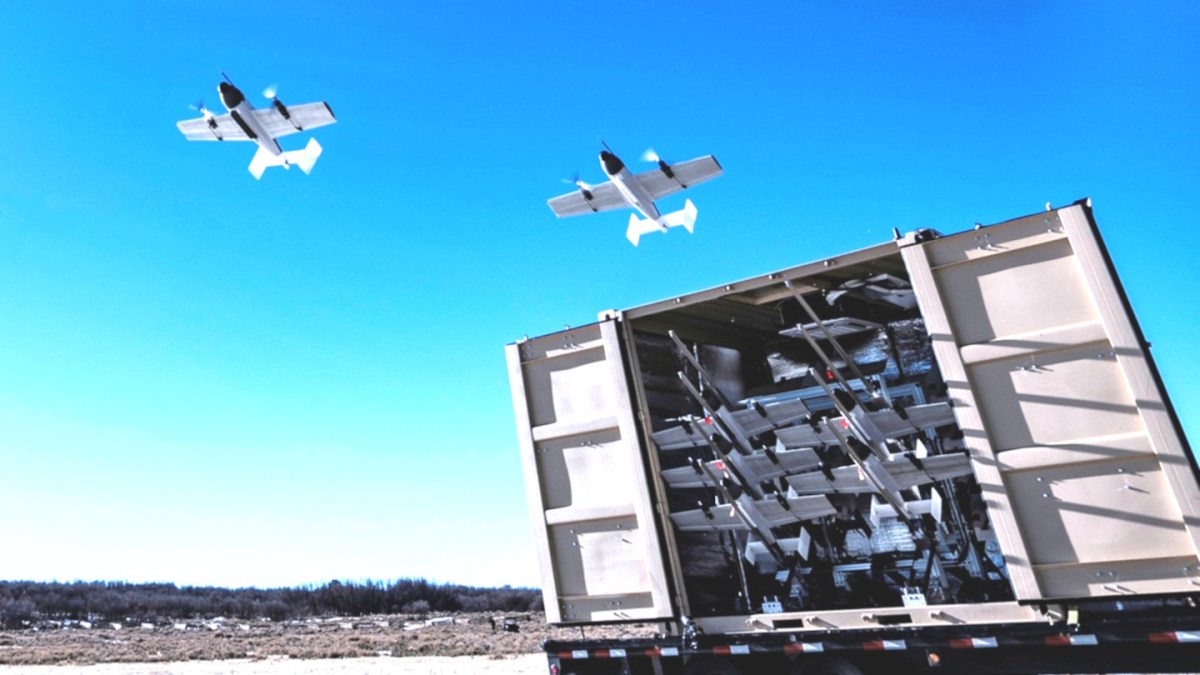
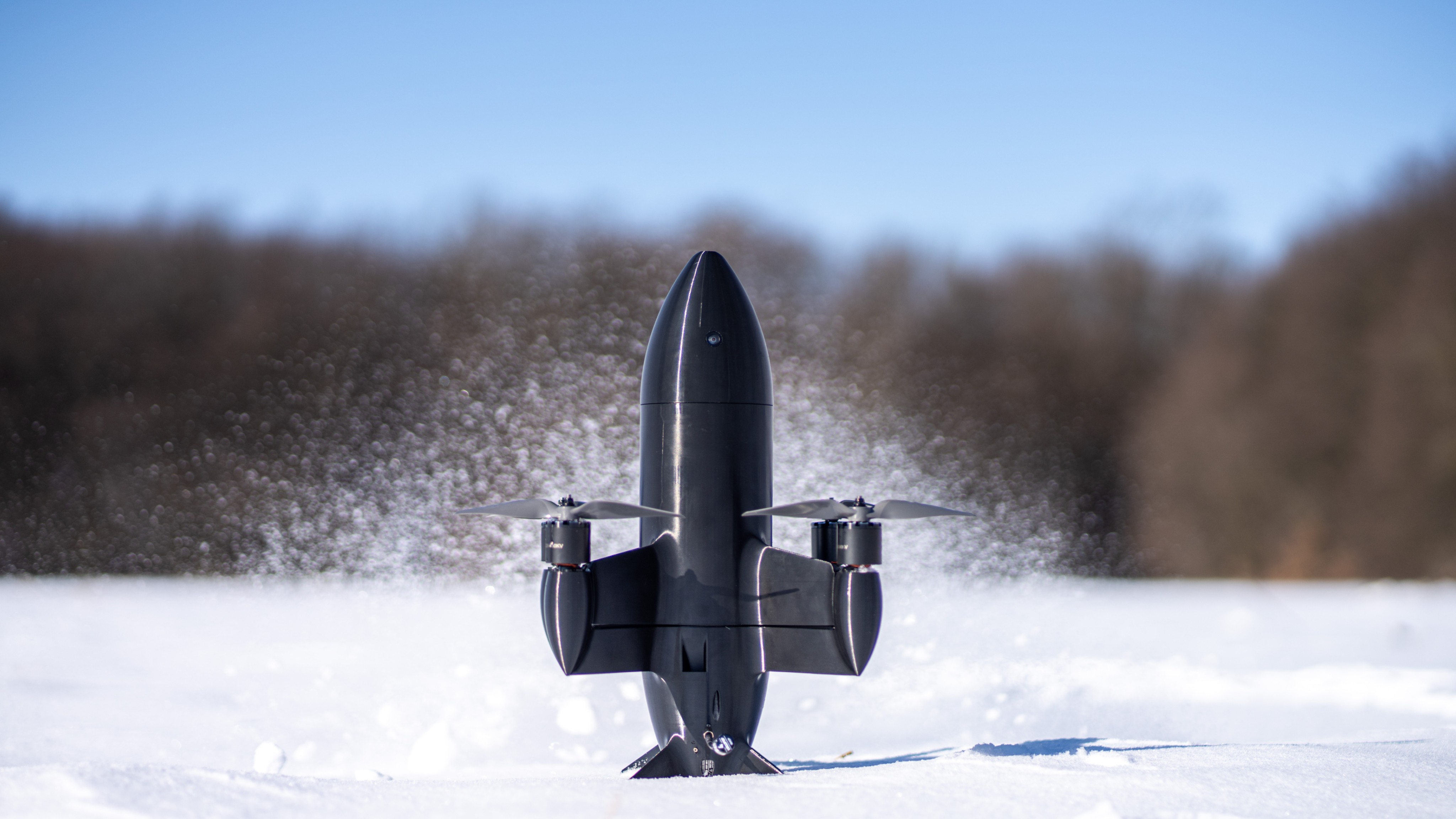
DZYNE's BlitzBox is the kind of containerized drone launcher the U.S. military is now very actively pursuing.

www.twz.com
Blitz Expendable Swarm by DZYNE Technologies is a drone swarm system designed for scalable, expendable deployment, enabling distributed operations in contested and high-risk environments.

dzyne.com
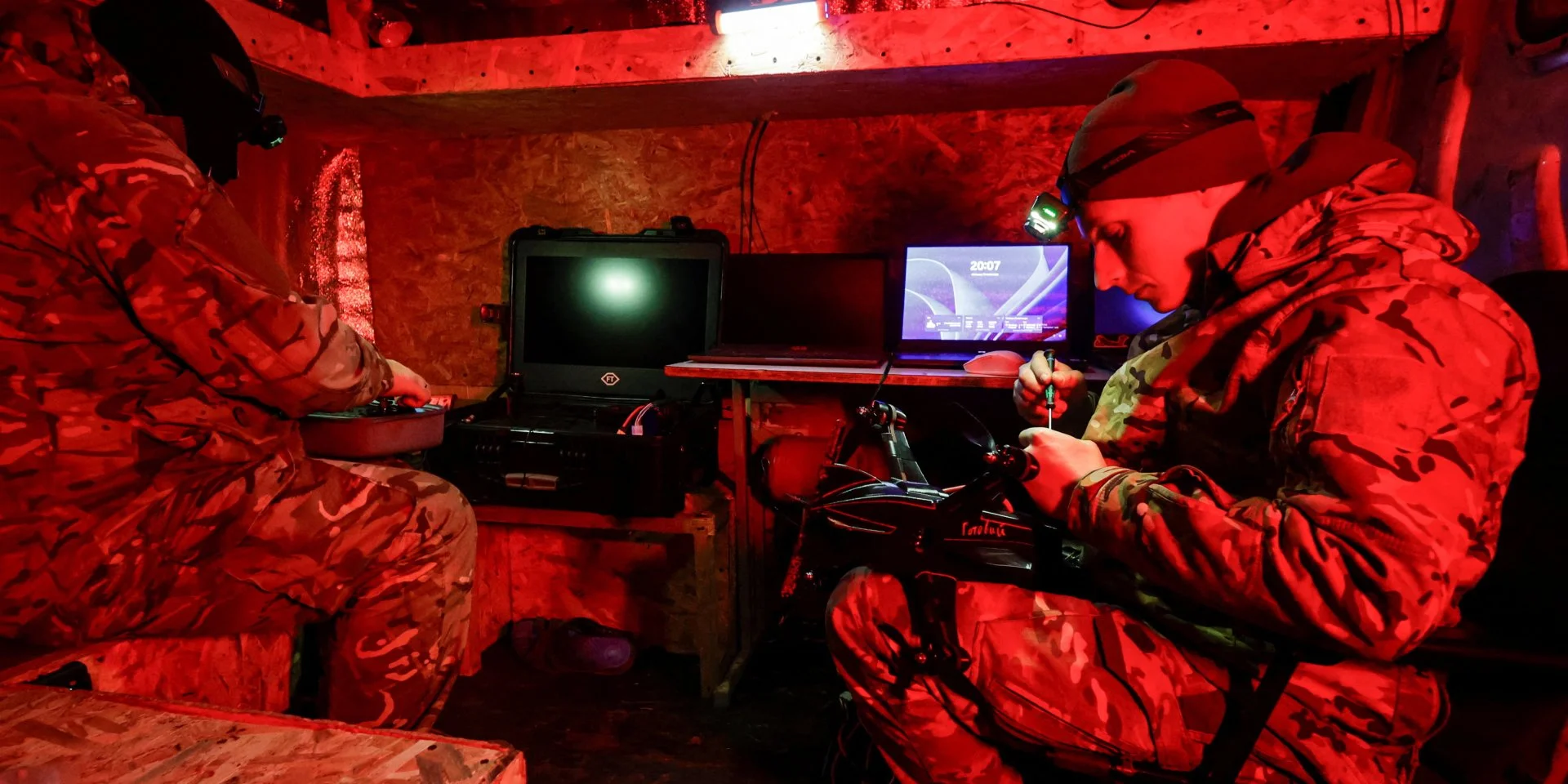
Ukraine spent years perfecting cheap drone killers. After burning through billions in missiles in three days, the U.S. and its allies are asking for help.

www.militarytimes.com
Detailed specifications of the STING high-speed interceptor drone. Designed for countering Shahed UAVs in Ukraine, with a 40 km range and Hornet Vision system providing 360° signal coverage.

wildhornets.com
....
"Ukraine is rapidly deploying AI-guided systems to control FPV (First-Person View) interceptor drones, specifically to counter enemy kamikaze drones like the Russian Shahed and fiber-optic UAVs. These systems use onboard machine vision to autonomously lock onto and track targets, bypassing heavy electronic warfare (EW) jamming.
How the AI Interceptor System Works
Terminal Guidance: Once the operator designates an enemy target, the onboard AI's computer vision takes over. The drone uses stored visual data to match the target and compute an optimal intercept path, flying autonomously even if the pilot's connection is severed by EW.
Speed and Maneuverability: FPV interceptor drones (such as the Zerov-8 by The Fourth Law and the Shvidun) use speed and net-capture or kinetic impacts to neutralize targets mid-flight. Some platforms can reach speeds of up to 450 km/h to catch fast-moving targets.
Acoustic and Visual Tracking: Interceptor programs utilize mounted arrays and beamforming to separate a target's motor noise from ambient wind. These systems can also map out 3D terrain to operate independent of GPS.
Key Platforms and InnovatorsThe Fourth Law: Provides scalable, autonomous terminal guidance modules (e.g., the TFL-1 module) integrated into modular FPVs to boost strike efficiency."
....
"The TFL-1 autonomous terminal guidance module (developed by The Fourth Law) costs between $50 and $150 USD standalone, with a required software license typically adding another $50 USD.
Pricing variations generally depend on the hardware configurations:
Standalone TFL-1 Module: ~$150 USD
Module with Camera: Complete camera and module kits range from $300 to $800 USD, depending on optical or thermal imaging specs.
Complete AI-Guided Drones: Pre-built, autonomous FPV drones (such as the Vyriy-10-TFL-1) cost approximately $440 to $450 USD complete.
The system—which allows a drone to automatically lock onto and strike targets during the "last mile" to defeat electronic warfare—increases the cost of a standard FPV drone by only 10%. It is officially codified by the Ukrainian Ministry of Defense and has received NATO codification."
Ukrainian forces have deployed a new terminal guidance system, the TFL-1, significantly boosting the accuracy of strike FPV drones and enabling precise hits even when operators lose control, Le Monde reported on Nov. 14.

english.nv.ua
The Fourth Law, Inc. is a global leader in autonomous small drones, autonomy modules, and autonomy simulations for defense.

thefourthlaw.ai
....
A proximity (or airburst) fuse for a Ukrainian First-Person View (FPV) drone costs less than \(\$40\).
Developed through Ukraine’s Brave1 defense accelerator, these hand-assembled devices allow drone bombs to detonate just above the ground or a target to maximize shrapnel damage.
Cost & Technology Details
The Device: The inexpensive airburst fuzes are assembled in small workshops using imported commercial components.
Impact & Warheads: These fuzes are designed to be compatible with a wide array of munitions—like standard RPG grenades—and trigger explosions at about 6 to 10 feet above the ground.
Total FPV Cost: The proximity fuze is a massive force multiplier for a weapon system that already boasts extreme cost asymmetry; basic FPVs typically cost between \(\$350\) and \(\$800\) to produce, while taking out multimillion-dollar armored vehicles or air defense systems.
....
Quite the feat...

www.tomshardware.com
....
The Anarchist's Cookbook just gained a companion volume.
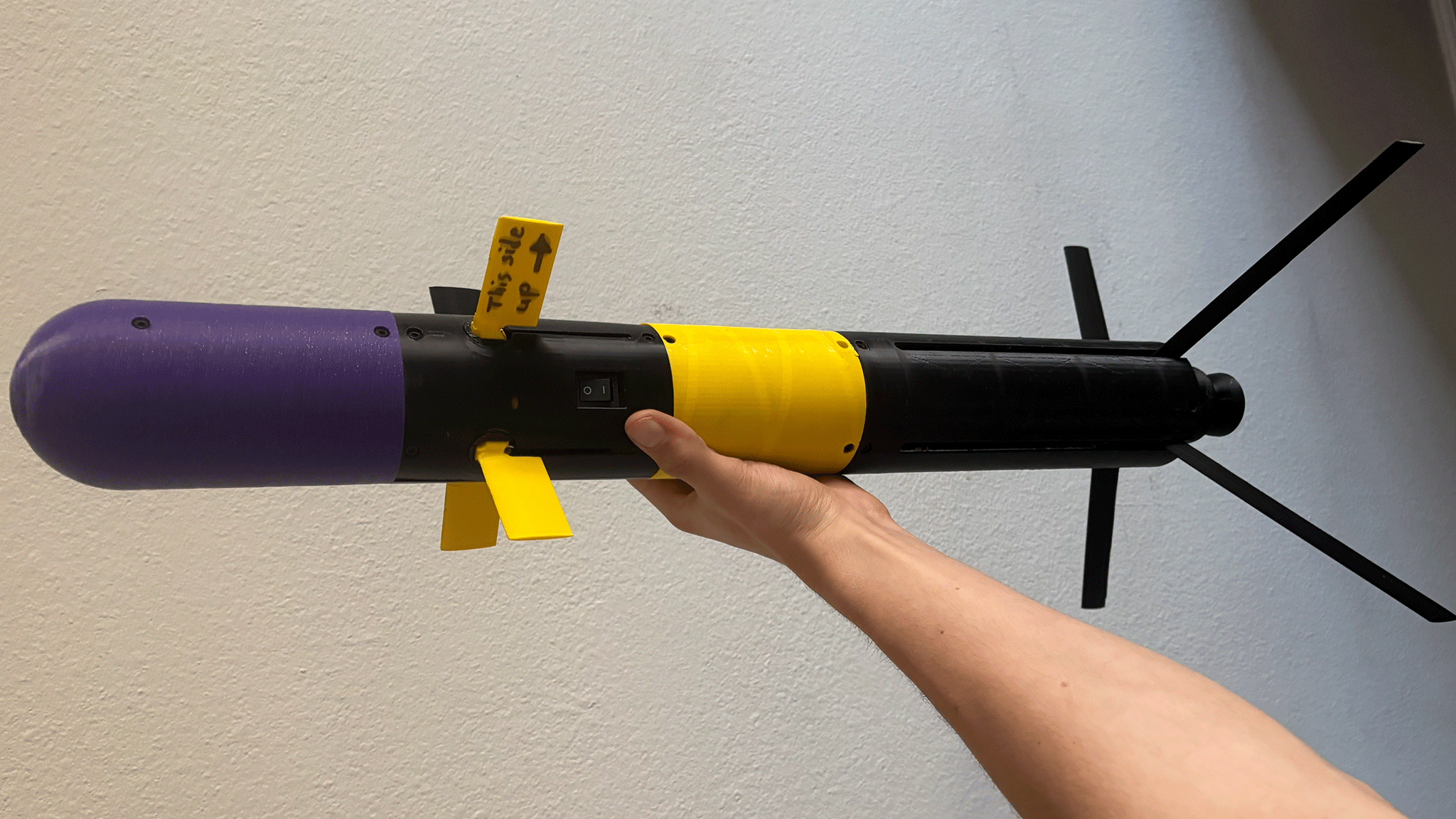
$96 DIY guided missiles
$40 proximity fuses
$150 AI seekers
$150 cameras and microphones
$500 TI imagers
$1000-2500 for a Fourth Law Zerov-8 or Wild Hornets Sting CUAS Interceptor
Zerov-8
Weight
Payload 0.5 kg
Combat Radius 20 km
Time to Altiitude 30 secs
Loiter Time 20 minutes
Sprint Speed 326 kmh
Ukrainian defense company The Fourth Law has officially introduced the Zerov-8, an autonomous interceptor designed to effectively counter enemy unmanned aerial vehicles (UAVs).
thefourthlaw.ai
Wild Hornets Sting
Weight 4 kg
Payload 0.5 kg
Combat Radius 20 km
Time to Altiitude 30 secs
Loiter Time 20 minutes
Sprint Speed 315 kmh
Detailed specifications of the STING high-speed interceptor drone. Designed for countering Shahed UAVs in Ukraine, with a 40 km range and Hornet Vision system providing 360° signal coverage.
wildhornets.com
Get the round within 500 m of the target it will do the rest itself, jam resistant.
.....
The M888 HE shell (for the M224 60mm mortar) has 0.79 lb (0.36 kg) of Composition B explosive filler.[3] and weighs 1.76 kg with a unit cost of $100-200.
The M224 Mortar has a cost of $10,000-12,000.
....
How scalable are those prices for larger payloads and longer ranges?