• Thanks for stopping by. Logging in to a registered account will remove all generic ads. Please reach out with any questions or concerns.

Indirect Fires Modernization Project - C3/M777 Replacement

US Army 2030 "Penetration Division"
That term has been buried for some time. The more current term is Armored Division (Reinforced) albeit things are changing as Transformation in Contact 2.0 examines the ABCTs and supporting div structure and doctrine.

🍻
 
That's not really enough. See below.


Grouping guns in troops and batteries had more to do with locate and oreint guns to a common grid so as to be able to concentrate their fire, having a single command post to produce firing data for the troop, resupply and local defence and security.

The ability of guns to be able to self locate and orient and the ability to pass or self produce firing data takes away one of those requirements to group. It doesn't relieve the other ones and the more that you spread around the guns the harder recce, position preparation, local defence, and resupply become. This is why in the past I've cautioned that reduced detachment size of a single gun is a false economy. Manpower needs go up elsewhere especially in a 24/7 environment.

It's technically feasible and even desirable from a counter battery view to deploy as single guns. (That leaves aside the fact that you are now firing from everywhere in the rear area and drawing fire on other folks who you are sharing space with - they don't like guns near them)

Absolutely. Big, big issue even as low as the regimental issue. Ammo dumps. Break bulk tasks. Forward rearming points Stocks on wheels for emergency resupply. Cover, concealment, local defence.

It's an easy to ignore issue by saying the engineers will do it. I've dug in guns from L5s to M109s. It ain't easy. I'm of the view that you don't need engineers with all the skills that they have. You just need dedicated entrenching systems appropriate for the gun in use and folks who are able to operate the gear and then do all the revetting, overhead protection and camouflage etc etc. Much of that is non complex bull work. But it needs to be done often and quickly.

Again, these are folks with far more skills than are needed. Arty recce is quite different from cavalry-type recce. Local defence doesn't need qualified infantry. CUAS does not need a full blown air defender. BUT - it does need people and the proper weapons and equipment and a certain level of training. On top of that you want your ammo teams, local defenders etc etc gunner qualified because, sure as shooting, some of them will be killed or wounded or just plain exhausted and will need to be replaced by folks that can already operate a gun or an LM launcher or bulk break ammo etc. etc.

Too slow.

Some guns must be concealed in firing positions in order to respond quickly when needed. As they start engaging others can shuttle from a hide to a firing position so that the guns that are firing can move. The key is many more hides, rearming points, firing platforms than you have guns with many also set up as decoys and drone ambushes and EW defences all coupled with a robust counter battery system so that the moment someone starts shooting at your guns you can immediately take them out. The overarching problem is that shooting unmasks guns, but so does moving. LMs are a bit better off as the launch can be concealed to an extent, but LMs can't do it all.

In my mind, divisional artillery is much more an orchestra that operates on a continuous 24/7 symphony than anything else. A whole lot of different skills and capabilities coming together in a continuing orchestrated manner. On top of that there has to be a high level of redundancy and self-healing of the system in order to provide that continuous fire support required.

It's way different than anything that I grew up with and, what's worse, its much different from what any of our higher leadership experienced in Afghanistan. In spite of everything, Afghanistan was a very permissive environment as far as fires was concerned. Any restrictions there were self-imposed. Things have changed dramatically.

$0.02 🍻

Further to the article on the French Reorg.

 
I apparently missed this one.

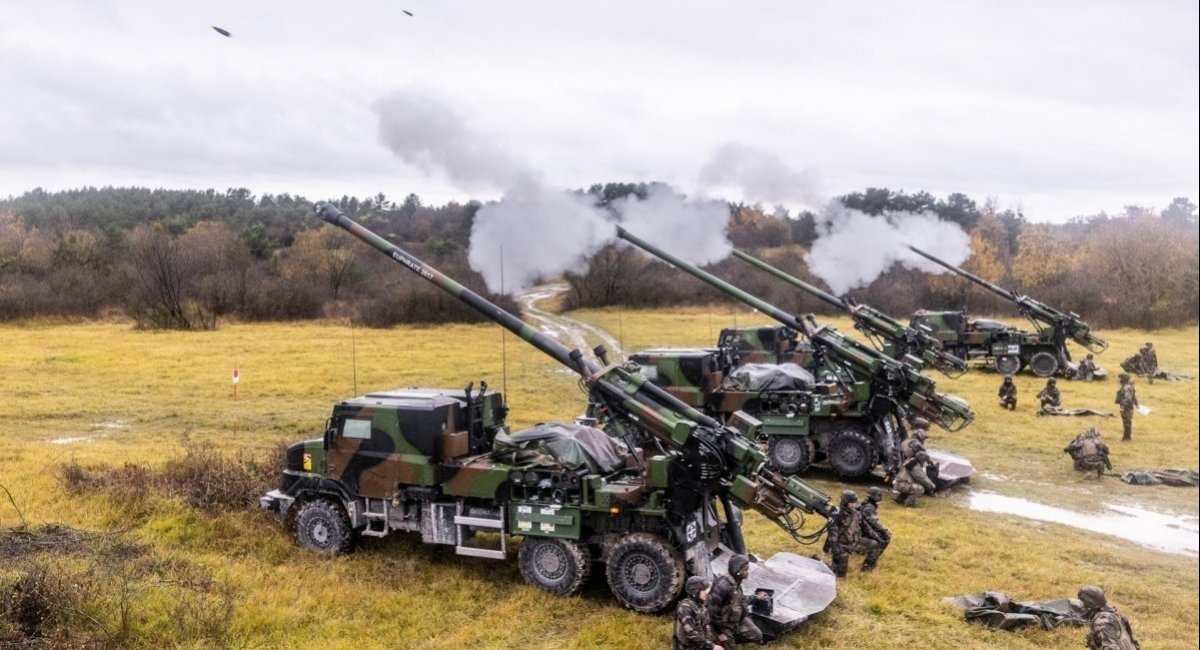
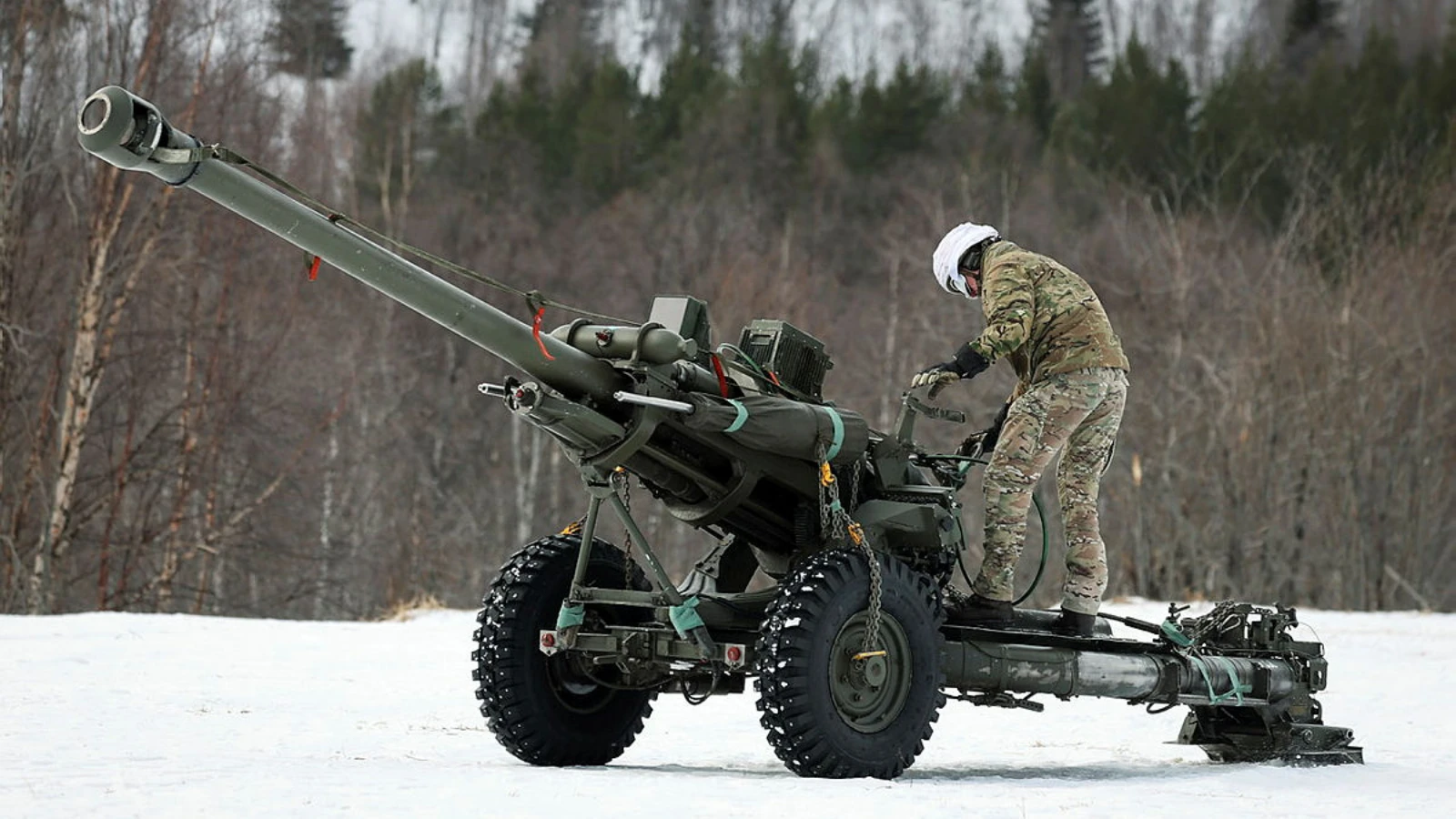
The US Army selected the wheeled Hanwha 155 as a Mobile Tactical Cannon prototype. - 18 on order

It's an interesting program and I'm wondering where it will go. It's original aim was to replace the 18 M777s in each SBCT but with the change in force structure and the conversion of IBCTs to MBCTs, the scope may widen with respect to their M777s (just speculating here).

The SBCT concept is changing as well from the original idea that there would be one SBCT in each armored division alongside two ABCTs, to divisions that are pure SBCTs. There aren't that many SBCTs in the first place.

One big plus is the L52 barrels which don't exist on the M019A7s or 8s.

Interesting they went Korea rather than the short listed European guns.

🍻
 
Germany planning a 500 km Division.

What qualifies as long range now?

I find the German army's structure a bit strange. You'll recall that during the Cold War there were several NATO forces corps and multiple divisions strung out along the Inner-German border arrayed as a forward defence. Since then Germany has reduced its army to four divisions: 1st and 10th Panzer, the Rapid Reaction division and the Home Guard division. Each of 1, 10 and RRD are large for a division - about 20,000+ people each. Each division has four manoeuvre brigades and the brigades themselves are large as well - anywhere from 4 to 6 manoeuvre battalions plus CS and CSS battalions. Four of those brigades are deployed along the eastern border with Poland Czechia and Austria (some 870 kms). The others in some depth behind.

With that strength and layout each of the divisions (especially 1 and 10 Pz) is more like a small corps and each of the brigades more like mini compact divisions. What's missing are what we would call the corps enablers (albeit Germany is involved in three multinational corps headquarters). When you look at it that way then you can see that each of 1 and 10Pz covers a frontage of roughly 400-450 kms while the four forward brigades start a conflict with a frontage of some 200 kms each. Those are a bit illusionary as these days the "New Soviets" will need to fight their way through some other NATO or neutral countries first.

Last April Germany unveiled its first military strategy in 70 years under the title "Responsibility for Europe." It includes a plan to grow the active force from 180,000 to 260,000 by the mid 2030s and includes plans for significant growth and planned employment for reserve forces to around 200,000. The intent is to build their forces into the strongest army in Europe. The strategy can be summed up as a "one theatre approach."

The broad brush changes to the army will have it formed into two corps. The Home Guard division will become a corps and have two Home Guard Divisions of four regiments each. The main army itself will form an army corps of four divisions: -
  1. an armoured division with an armoured recce/strike bde (R/S) three armoured brigades (tank and Lynx), an air defence regiment and a div artillery battalion (note that currently most divs have an arty bn in each bde plus a div arty bn - I expect this will continue);
  2. a mechanized division with an R/S bde, three mechanized brigades (Lynx and tank) an AD regiment and a div artillery battalion,
  3. a light-medium division with an R/S bde, two mech brigades (Boxer), a mountain brigade and and an airmobile brigade with an AD regiment and a div artillery battalion; and
  4. last but not least is a corps troops division with two cavalry brigades, an artillery bde, an AD regiment and an AD battalion and an aviation brigade.
It doubles the size of the active army from todays roughly 63,000 to 151,000 so one can expect the size of the brigades to remain fairly robust. Finally there is a multi-domain long-range task force brigade with a deep strike capability of 2,500 kms. See Loyal Magazine May 2026 at pp 22-23 (Sorry, its in the original German). Note that the R/S brigades are designed for engagement out to 100kms and their symbol is a combo of both recce and arty resources (I expect long-range precision strike).

Long story short, I expect the three German manoeuvre divisions to remain large and their brigades as being fairly strong so more in the nature of a light corps with light divisions respectively.

🍻
 
The companion piece to manage hybrid warfare deep strike risk, little green men with drones, are those Home Guard regiments.

I find the use of "regiments" instead of "brigades" interesting. Is it fair to posit that brigades are all arms structures while regiments, in this case, are aggregates of local defence companies?
 
The companion piece to manage hybrid warfare deep strike risk, little green men with drones, are those Home Guard regiments.

I find the use of "regiments" instead of "brigades" interesting. Is it fair to posit that brigades are all arms structures while regiments, in this case, are aggregates of local defence companies?
Yes. German brigades are generally what we call brigade groups with engineers, artillery and a CSS element. Units are all termed as battalions, so a regiment is something larger than a battalion and without the same level of CS and CSS as a brigade.

Within the home guard as it stands there are no battalions. A home guard defence regiment (there currently are six) has a headquarters, a supply company, a training company and anywhere from 5 to 12 home guard companies of a variable number of folks each. The initial plan is to expand to 60 companies with a total of 6,500 (i.e. companies of roughly 100) but to grow to 10,000 or more by 2035.

There's one thing that I've found very interesting. The training program for the Home guard is roughly 500 hours over 3 months and includes GSK, marksmanship, drone and NBC defence, first aid, military security and guard duties. The program has now become the basic training module for all members of the Bundeswehr - i.e one common basic course for all home guards, reservists and active military. This training is provided at 150 installations throughout Germany. IMHO its a great example of setting up an organization for rapid expansion.

🍻
 
Germany planning a 500 km Division.

What qualifies as long range now?


Further to...


Nyan is a 250 km divisional asset.
 
What qualifies as long range now?
Nyan is a 250 km divisional asset.
The question isn't really "what qualifies as deep strike" based simply on weapon capabilities. What really matters is: who is responsible for the deep strike at x range?

Two points.

1) missiles/rockets are able to make precision strikes at ever increasing ranges but with range comes logistic complications and cost. You don't want to waste a $200,000 dollar OWD with 20 kilos of explosives on a single refurbished T62 sitting at a railway siding 500kms away from the front lines.

2) formations have missions and areas of influence commensurate with their role and mission. Divisions can be small highly manoeuvrable tactical formations of 10-11,000 folks or lumbering behemoths of 20,000. The first is good for mobile warfare, the second for relatively stable defensive warfare. In either case they have areas of influence and there will be a formation behind them - the corps - which is structured to provide support that is impractical for the division to handle by itself.

Compare 3 UK Div with two manoeuvre brigades and a deep recce strike brigade (roughly 15,000 folks to 1st Panzer - 2 panzer brigades 2 Panzergrenadier brigades roughly 20,000 folks and 10th Mountain Div (US) - 3 MBCTs roughly 10-11,000 folks. Each of them has different weapons systems and capabilities. Their roles and their "deep areas" and supporting corps enablers vary greatly.

I think in very general terms divisions should be able to influence the area of 60 to 100 kilometres to their front, after that the corps or some theatre assets are employed. The key is to match the weapon capability to the division's particular needs and the logistic burden it places on the division.

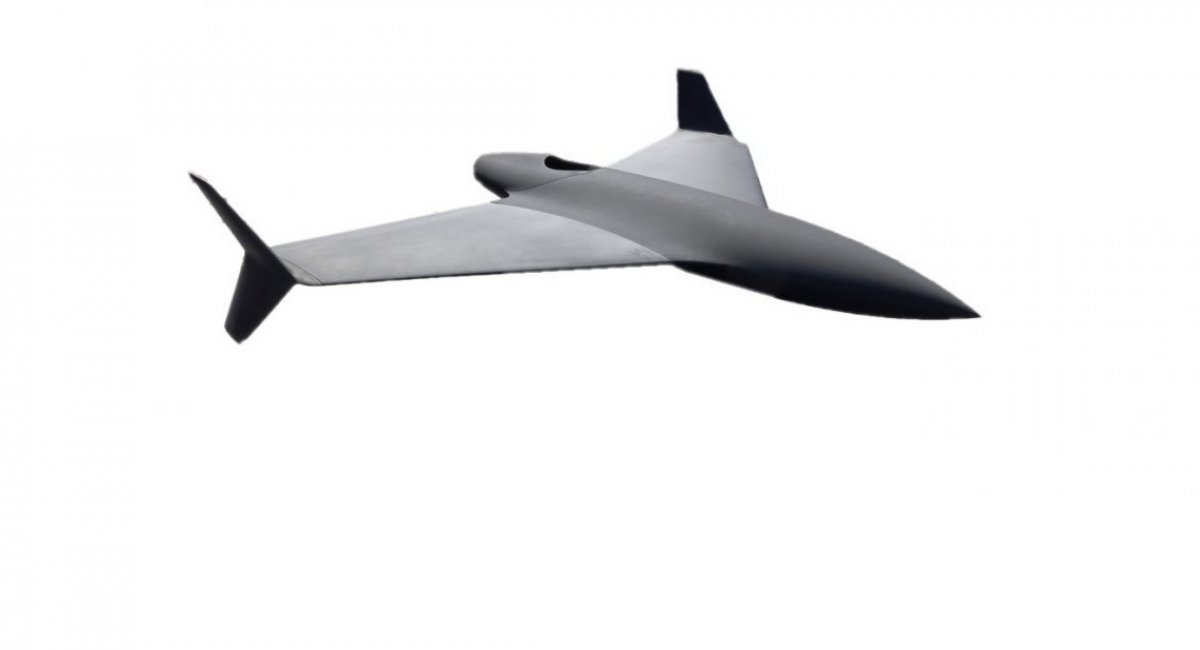
I'd put a 250 km range in the corps or theatre role for striking targets more strategic in nature and leave the division with smaller, cheaper tactical systems that can handle a 100 or so km range. Also, when it comes to cheap, there are corps-level long-range systems that rival the Nyan that are much cheaper. And Russia is producing cheap jet ones in mass. It's actually interesting to compare the look of one of these with that of the Nyan. Russia is back to mass produced, inexpensive, slapped together systems that work just as well as the elegant, slow to produce ones that come out of Western industries. We need to change our attitudes. Lord, with printers we ought to be able to put these out in mass at very low costs.

🍻
 
The question isn't really "what qualifies as deep strike" based simply on weapon capabilities. What really matters is: who is responsible for the deep strike at x range?

Two points.

1) missiles/rockets are able to make precision strikes at ever increasing ranges but with range comes logistic complications and cost. You don't want to waste a $200,000 dollar OWD with 20 kilos of explosives on a single refurbished T62 sitting at a railway siding 500kms away from the front lines.

2) formations have missions and areas of influence commensurate with their role and mission. Divisions can be small highly manoeuvrable tactical formations of 10-11,000 folks or lumbering behemoths of 20,000. The first is good for mobile warfare, the second for relatively stable defensive warfare. In either case they have areas of influence and there will be a formation behind them - the corps - which is structured to provide support that is impractical for the division to handle by itself.

Compare 3 UK Div with two manoeuvre brigades and a deep recce strike brigade (roughly 15,000 folks to 1st Panzer - 2 panzer brigades 2 Panzergrenadier brigades roughly 20,000 folks and 10th Mountain Div (US) - 3 MBCTs roughly 10-11,000 folks. Each of them has different weapons systems and capabilities. Their roles and their "deep areas" and supporting corps enablers vary greatly.

I think in very general terms divisions should be able to influence the area of 60 to 100 kilometres to their front, after that the corps or some theatre assets are employed. The key is to match the weapon capability to the division's particular needs and the logistic burden it places on the division.

I'd put a 250 km range in the corps or theatre role for striking targets more strategic in nature and leave the division with smaller, cheaper tactical systems that can handle a 100 or so km range. Also, when it comes to cheap, there are corps-level long-range systems that rival the Nyan that are much cheaper. And Russia is producing cheap jet ones in mass. It's actually interesting to compare the look of one of these with that of the Nyan. Russia is back to mass produced, inexpensive, slapped together systems that work just as well as the elegant, slow to produce ones that come out of Western industries. We need to change our attitudes. Lord, with printers we ought to be able to put these out in mass at very low costs.

🍻

Part of the answer surely lies in how much time a round spends in flight trading range for time. Some of these rounds could be circling in in a cab rank or building into a group for simultaneous attack.
 
Part of the answer surely lies in how much time a round spends in flight trading range for time. Some of these rounds could be circling in in a cab rank or building into a group for simultaneous attack.
Not in my mind.

It concerns dividing up the battlefield into areas of responsibility so that you can properly tailor the organization, its surveillance capabilities and weapon systems and logistics systems to the threats they need to deal with in their respective areas.

The further forward that you are the more you are tied to the close fight with the appropriate systems that can be sustained and used there. You need surveillance and battlefield management systems to properly identify and service the tactical targets that are the closest to you and which will have the most impact to you in the present or very immediate future. - effectively we're talking the brigade.

The further back that you are the more you have the ability to sit back, properly surveil the deepest areas, properly analyze what is developing and hit the strategic targets effectively manoeuvre forces that will impact the forward areas at a later time or fires and command and control hubs that are having current effects. - effectively the corps which uses their heavier resources to strike beyond the division's area of concern and to support and reinforce divisions in their area of concern when appropriate.

Then there is an in-between crossover area where your purpose is to support and shape the close fight while also looking at deeper targets which will effect the close fight in the very near time frame. - divisions - and their artillery - are organized to support the brigades close fight and to also reach tactical targets beyond the close area - but not very deep

It's the management of time and space that can be effectively handled by any given agency that separates these range bands.

Brigades, divisions and corps each have their roles to play and should be equipped and organized accordingly. This is where it is nice to have a doctrine. A proper doctrine should cover everything from the lone rifleman to the industry producing the weapon systems and all the TO&Es and basic and maintenance loads in between.

And let's stay away from cab ranks and assembling a strike group. All I said was that a div does not need a $200,000 500km jet drone to do its job and that the two main German divisions are more like mini-corps than agile divisions. If by happenstance the div discovers a value target at a range beyond its own systems it can send that up the chain to corps level FSCC with an engagement request and hand it off.

🍻
 
How do you develop a doctrine when capabilities are evolving and operators are constantly experimenting and adjusting and adapting?

Was SS143 doctrine? Or just the next experiment?
 
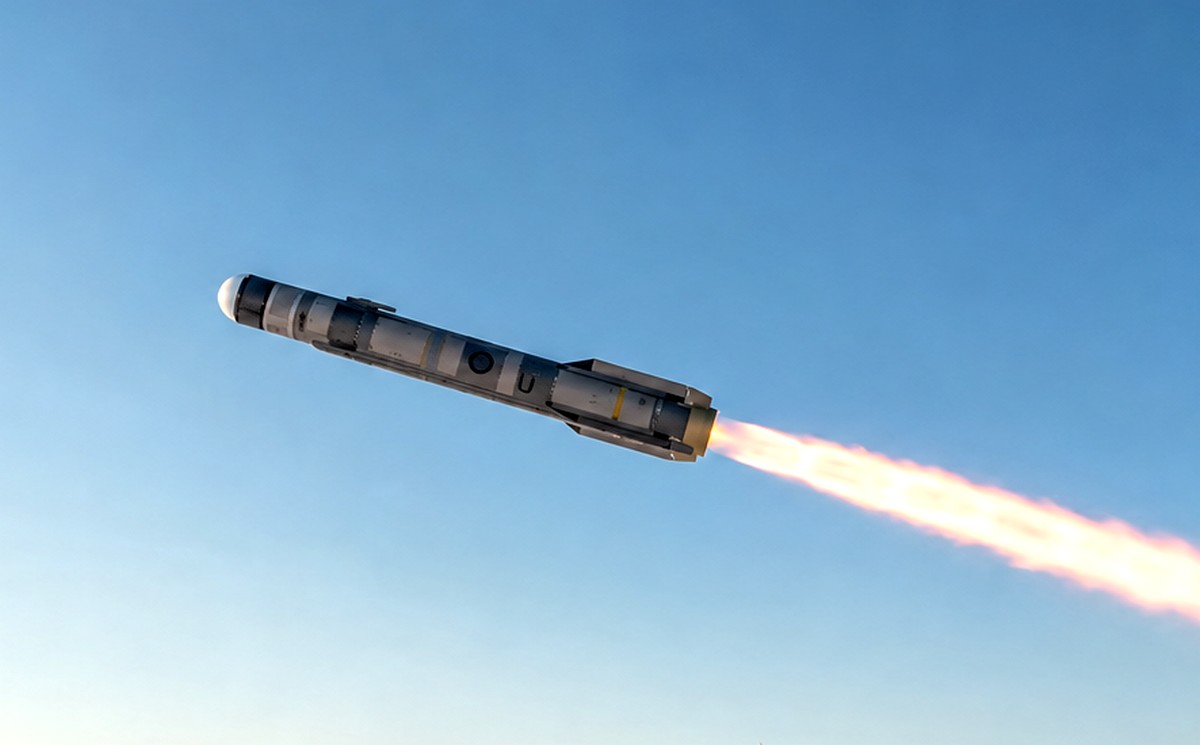
I still don't know where the Brimstone project properly sits so I am designating it an Artillery interest.

It is an expensive Anti-Tank Guided Missile (~300,000 USD) that is useful against structures, boats and UAVs.

It is a rocket powered autonomous missile, derivative of the 50 lb 7" Hellfire class, with a 6.3 kg Tandem HEAT warhead that achieves top-attack kills, with a max speed of Mach 1.5 and surface to surface range of 12 to 20 km. Helicopter/UAV launch increases that range to 40 km. Fighter launch range is up to 60 km.

The weapon can be launched into a designated kill box in a swarm and the swarm will find its own targets from an onboard target list and deconflict target selection amongst themselves after navigating their own way into the kill box by INS or GPS.

It can also be employed in conjunction with a 3rd party laser designator.

Brimstone l and 2 have seen service and are in use.

Brimstone 3 is coming on line.


AI Information

The MBDA Brimstone 3 is an advanced, dual-mode precision strike missile developed by MBDA for the UK and international military forces. [1]

Key Specifications
    • Mass: 50 kg (110 lb) [1]
    • Length: 1.8 m (71 in) [1]
    • Diameter: 180 mm (7.1 in) [1]
    • Range: Over 60 km from fixed-wing aircraft (and 40+ km from helicopters) [1]
    • Guidance: Millimetric-wave active radar homing, inertial navigation system (INS) autopilot, and semi-active laser guidance [1]
    • Warhead: 6.3 kg (14 lb) tandem shaped-charge high-explosive anti-tank (HEAT) [1]

Main Features & Capabilities
    • Dual-Mode Precision: Combines radar and laser guidance to hit stationary and fast-moving targets in all weather conditions ("fire-and-forget" or human-in-the-loop capability). [1, 2]
    • Upgraded Performance: Retains the core airframe of the Brimstone 2 while featuring an improved VULCAN rocket motor, enhanced battery life, an upgraded autopilot, and an AIS MEMS inertial measurement unit (IMU). [1]
    • Initial Operating Capability (IOC): Scheduled to reach initial operating capability with the UK forces in November 2026. [1]

Platforms & Integration
The surface-launched range of the Brimstone 3 missile is generally in the 12 km to 20 km (7.5 to 12.4 miles) class for low-altitude or ground-based deployment profiles, similar to earlier surface-launched configurations, though air-launched variants from high-altitude fixed-wing aircraft can reach up to 60 km (37 miles). [1, 2, 3, 4]

Key Details:
    • Surface-to-Surface / Ground Launch Range: 12 km to 20 km (depending on the launch vehicle, trajectory, and atmospheric conditions).
    • Air-to-Surface Range: Up to 60 km when fired from fast jets like the Eurofighter Typhoon at higher altitudes.
    • Guidance System: Dual-mode Millimetric Wave (mmW) radar and Semi-Active Laser (SAL) with inertial navigation.
    • Platforms: Designed for multi-platform integration, including land vehicles (such as the Boxer, Supacat, and various Unmanned Ground Vehicles), helicopters, UAVs, and fixed-wing aircraft. [1, 2, 3, 4, 5, 6, 7]

The scan area mechanics of the Brimstone 3 missile—the latest variation developed by MBDA UK—rely on a sophisticated 94 GHz Millimetric Wave (mmW) active radar homing seeker. Rather than using a fixed, permanent radar footprint, the scan area functions as a programmable, dynamic "kill box". [1, 2, 3]

Scan Dynamics & Programming
    • Geofenced "Kill Box": Before firing, operators program specific target coordinates into the missile's Inertial Navigation System (INS). This defines a designated search area or geographic window. [1, 2]
    • Delayed Search Activation: For low collateral damage control, the Brimstone 3 can be programmed not to initiate its radar scan until it has flown past a certain point. This allows the weapon to safely overfly friendly forces before searching for threats. [1, 2]
    • Search Boundaries: The missile sweeps the ground directly ahead and to each side of its flight path. Crucially, the seeker can be programmed to cease its target search if it exits the designated boundary line, or to only accept targets within that precise area. If no valid target is identified within the zone, it triggers a programmable self-destruct mechanism. [1, 2, 3, 4]
    • Salvo De-confliction: When multiple Brimstone 3 missiles are launched simultaneously against a massed formation, their onboard computer algorithms cross-communicate and scan the engagement area to ensure they stagger and sort targets, preventing multiple missiles from striking the same vehicle. [1, 2]

Seeker Targeting Modes
The missile's scan capability is utilized across three selectable operational modes: [1]
    • Semi-Active Laser (SAL): The missile bypasses autonomous radar scanning to home in on a precise target painted by a laser designator.
    • SAL + mmW Hybrid: The radar scans for fast-moving targets in cluttered environments while benefiting from laser terminal correction.
    • Fire-and-Forget Mode: The mmW seeker autonomously sweeps the pre-programmed area, processes the radar returns, references a database of Radar Cross-Section (RCS) profiles to identify armor (ignoring civilian infrastructure), and selects the highest-priority target entirely on its own. [1, 2, 3, 4, 5]
 
I still don't know where the Brimstone project properly sits so I am designating it an Artillery interest.
This isn't any official definition, but in the past the dividing line in systems was indirect v direct;/area neutralization v precision destruction. Artillery was not good at precision but great at indirect area neutralization. That has changed. Precision can happen pretty much anywhere now so IMHO the dividing line between infantry/armour and artillery is more concentrated on the direct v indirect/over-the-horizon delivery of effects.

To an extent, the infantry/armour battle is based on individual crews that locate and engage targets while artillery is a system of separate sensors and command and control and a variety effectors from numerous locations across the battlefield.

There are of course crossover points in that even the lonely infantryman can now fly a FPV drone or missile across the horizon to take out a target and there are some weapon systems which are equally valuable in both the direct and indirect roles. One shouldn't hesitate to assign such a system to both categories.

Just to muddy the waters even more, during WW2 the anti-armour fight was divided between mobile guns (tanks) which were armour and direct fire anti-tank guns, which were artillery. During the post war period infantry started to carve out their place for the direct fire anti-armour battle as recoilless rifles and missiles replaced 6 and 17 pounders as viable direct fire weapons.

🍻
 
This isn't any official definition, but in the past the dividing line in systems was indirect v direct;/area neutralization v precision destruction. Artillery was not good at precision but great at indirect area neutralization. That has changed. Precision can happen pretty much anywhere now so IMHO the dividing line between infantry/armour and artillery is more concentrated on the direct v indirect/over-the-horizon delivery of effects.

To an extent, the infantry/armour battle is based on individual crews that locate and engage targets while artillery is a system of separate sensors and command and control and a variety effectors from numerous locations across the battlefield.

There are of course crossover points in that even the lonely infantryman can now fly a FPV drone or missile across the horizon to take out a target and there are some weapon systems which are equally valuable in both the direct and indirect roles. One shouldn't hesitate to assign such a system to both categories.

Just to muddy the waters even more, during WW2 the anti-armour fight was divided between mobile guns (tanks) which were armour and direct fire anti-tank guns, which were artillery. During the post war period infantry started to carve out their place for the direct fire anti-armour battle as recoilless rifles and missiles replaced 6 and 17 pounders as viable direct fire weapons.

🍻

Continuing the stirring action....

The infantry as sensors and commanders of the artillery
The armour as infantry mounted in vehicles and acting as sensors and commanders of the artillery
The artillery flying missiles to the lonely infanteer for her to direct to the final target
The artillery sensing the battlespace by multiple means and directing missiles to their selected targets.
 
Continuing the stirring action....

The infantry as sensors and commanders of the artillery
You aren't getting it.

Command is an inappropriate term. How does infantry, or even armour have a role in "commanding" the counter battery task. The infantry has a part sensor role but its forward artillery observers who are also sensors and more importantly are the link into the effectors net. Why burden the infantry with that. They are already busy in their own fight.
The armour as infantry mounted in vehicles and acting as sensors and commanders of the artillery
Armour are not infantry fighting in vehicles. One can go so far as to say that armour fights mounted and infantry fights dismounted (and accompanying armour in IFVs isn't really so much fighting mounted as being forced to fight mounted on occasion when things go wrong). Neither "commands" artillery - its a cooperative process where the supported arm is the dominant partner.
The artillery flying missiles to the lonely infanteer for her to direct to the final target
That can happen but isn't the model of employment. Again, why burden the "lonely infanteer" when there is a team of experts supporting her in her fight?
The artillery sensing the battlespace by multiple means and directing missiles to their selected targets.
Yeah. That does happen. I must admit we're short of the gold standard in that. While the FSCC at all levels is the hub around which all that ought to happen, it still lacks the necessary automated linkage that should merge all battlefield sensors into a system that automates the appropriate effector response. We're still pretty much operating an analog system in a digital world. Luckily the recognition of that deficiency is there and a project exists (Joint Fires Modernization). Unfortunately I do not know its progress (it ought to be in implementation by now but I don't think it is - FOC was predicted for 29/30). I'll spare everyone my whinging about how the army has shoved the priority on this time and time again but at least now its pretty high to the top.

🍻
 
Back
Top