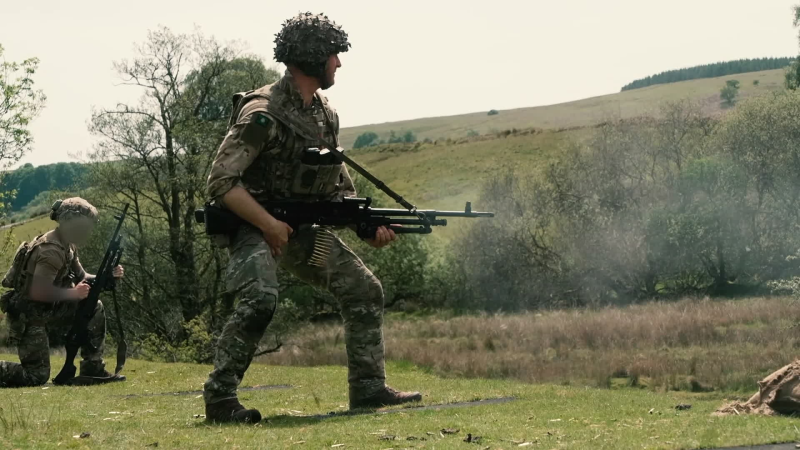
I left this quiet while the focus was rightly on Wainwright but I want to come back to address the issue of lethality.
The 10 fold increase in lethality is as stated British Army goal.
"<iframe src='//players.brightcove.net/2685123856001/Hy7Zehglog_default/index.html?videoId=6374081547112' allowfullscreen frameborder=0></iframe>"
Do or die: why Close Quarter Battle is still an essential skill of the infantry
The intention is to spend 20% of the budget on conventional kit (tanks, artillery and helicopters), 40% on attritable kit that can be lost (RPAS and UGVs etc) and 40% on smart consumables like Quadcopters and Loitering Munitions.
With this kit the Army expects to be 10 time more lethal than it currently is with existing kit while operating with the same manpower.
This is not going to be uniform across the Army; The Army at large will be 10x more lethal, soldier for soldier. The infantry company is expected to be 10x more lethal - hence my company of 100 being as lethal as a battle group of 1000 observation.
At the CQB level the increase in lethality is anticipated to be more modest - only a 30% increase in lethality - largely through hard work and training.
On the other hand the artillery is expected to become considerably more lethal as the large gun crews of relatively short ranged towed field pieces are reallocated to more autonomous systems with longer ranges and greater precision.
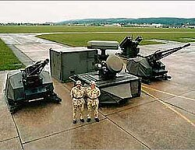
More of the artillery is going to look like this
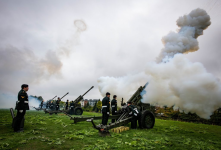
Than this
And just to prevent confusion, I know the picture is of the aging Oerlikon Skyshield GBAD system but the general principle applies, a pair of gunners in a command post netted in to sensors and controlling multiple effectors remotely. Those effectors could be Air Defence guns and missiles, RCH-155 guns, Long Range Missiles, Cruise Missiles or Loitering Munitions. They could be fixed or mobile.
The point is that a small number of gunners will be able to cover, and supply support, more precisely over a much greater area than is possible with legacy systems.
It may even free up more people for the CQB.
At the same time though, if they can regularly take out small targets precisely perhaps they can reduce the number of times that the infantry will have to close that last 150 m against a dug-in enemy.




 www.usmilitariaforum.com