
Jesus. It was a buck forty when I filled up last night. Just checked and yeah, up to $1.52 this morning.Ottawa this morning: $1.579, up about 40c since this started.

You are using an out of date browser. It may not display this or other websites correctly.
You should upgrade or use an alternative browser.
You should upgrade or use an alternative browser.
Iran Super Thread- Merged
- Thread starter JasonH
- Start date

HavokFour
Army.ca Veteran
- Reaction score
- 4,426
- Points
- 1,040
Jesus. It was a buck forty when I filled up last night. Just checked and yeah, up to $1.52 this morning.
If only the LRT was reliable enough to take some of the sting off.
Man, I miss the 95.
Yep. Was at 1.60 when I came home late last night/early morning,Jesus. It was a buck forty when I filled up last night. Just checked and yeah, up to $1.52 this morning.
Why they ditched that route is beyond me,If only the LRT was reliable enough to take some of the sting off.
Man, I miss the 95.
If only the LRT was reliable enough to take some of the sting off.
Man, I miss the 95.
Good ol’ 95. Back when we had a solid 6/10 mass transit system.Why they ditched that route is beyond me,
The last 95 to Orleans out of the Market on a Friday or Saturday night after at close was always an adventure.
As long as you didn’t sit at the back end of the accordion lol.Good ol’ 95. Back when we had a solid 6/10 mass transit system.
The last 95 to Orleans out of the Market on a Friday or Saturday night after at close was always an adventure.
I grew up in Dartmouth and the refinery was a fact of life, smell and all. I've been away for a long time and had no idea the refinery was gone. What's in that area now?I observed a note on F-book yesterday indicating fuel supply (gasoline) shortages in PEI. That seems somewhat - quick - for a down-stream impact from an attack 8 days ago in the ME.
I will observe that Nova Scotia no longer has a fuel refinery - we are reliant on refined product arriving here to go in the fuel tanks for distribution.
I am highly suspicious that this is happenstance, but have passed the recommendation on to my family to keep gas tanks about 50% in all our vehicles, and I'm going to top up my 'personal reserve' tanks that I used to keep filled for my boat. Having a couple hundred liters of fuel on hand at today's price isn't a bad thing....when the price has gone up by $0.15 this week alone.

- Reaction score
- 19,175
- Points
- 1,160
Iran's oil refining capacity was already limited by years of sanctions. Prior to all this, Iran had to import refined product to meet their needs. If the regime falls and new government takes over, my bet is the Chinese will offer to buildup refining capacity partly in exchange for oil at a low price fixed contract for years. China is the only country that could quickly build and move the refining components to Iran.Yes it is. Still a ways away from an Iranian Civil war, mass deportation of migrant Gulf State workers and such, but loss of Iranian oil infrastructure and its revenue may lead to that Iranian Civil war.
I bought gas at 1.33$ last Sunday here in Burlington and today its at 1.58$, so up 25 cents/litre here. That's 19% in a week.
- Reaction score
- 19,175
- Points
- 1,160

- Reaction score
- 13,975
- Points
- 1,160
So a very quick and dirty online search gives me this.
1) In 2024 Canada imported about 1.42$ billion USD in oil from Saudi Arabia. Virtually of all this would have have to the East Coast of Canada.
2) Taking the 1.42 billion USD cost and dividing it by an average of say 62$USD/barrel of 2024 and one gest 23.5million barrels of oil
3) Taking that 23.5million barrels of oil and dividing it by 365 days in the year and that works out to be roughly 64,000 barrels a day
4) Since the Gulf of Hormuz is virtually shut right now - according to reports only approximately 13 ships a day are managing to get through vs the 153 on average a day. Its only a matter of time before the EC of Canada begins to feel the pinch of no oil being delivered
5) The Welland Canal is not set to re-open until 22 March, so there is no chance of any oil/gas being shipped from say Sarnia via the Welland Canal and out to the refinery in Saint John's any time soon.
Canada Imports from Saudi Arabia of Crude Oil - 2026 Data 2027 Forecast 1989-2025 Historical
Canada Imports from Saudi Arabia of Crude Oil was US$1.44 Billion during 2025, according to the United Nations COMTRADE database on international trade. Canada Imports from Saudi Arabia of Crude Oil - data, historical chart and statistics - was last updated on September of 2026.tradingeconomics.com
Shipping through the Strait of Hormuz has slowed to a near standstill, with traffic dropping by approximately 90% in early March 2026 due to regional conflicts. While normally handling 20% of global oil (20+ million barrels/day), daily transits have plunged from over 153 vessels to just 13, according to early March data.
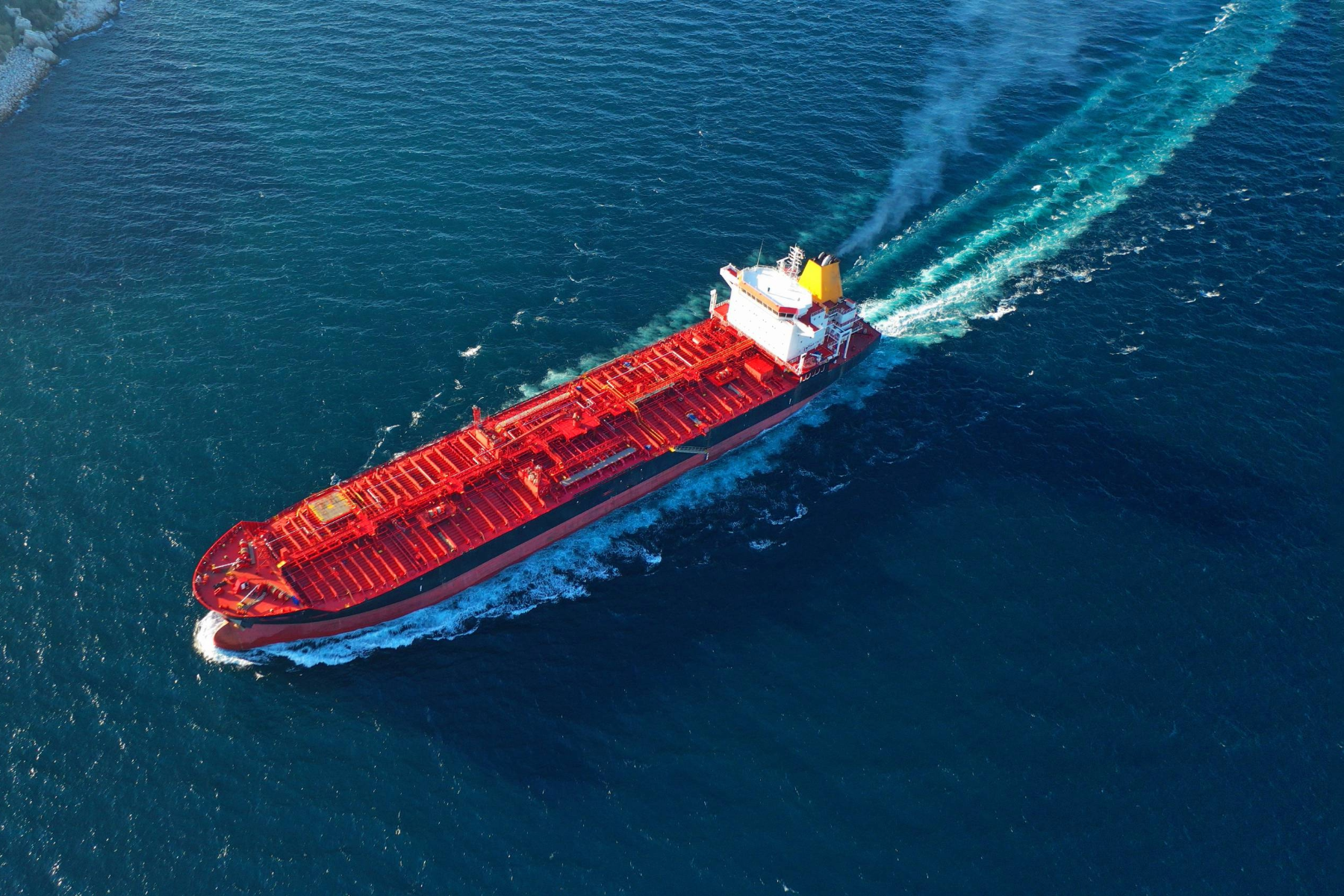
What is the Strait of Hormuz, and why does its closure matter so much to the global economy? | Queen's Gazette
The threatened shutdown of one of the world’s most critical oil chokepoints is disrupting tanker traffic, driving up crude prices and raising concerns about broader economic impacts.www.queensu.ca
The Irving Oil Refinery in Saint John primarily imports crude oil from Saudi Arabia, which is its third-largest foreign supplier. Historically, the refinery has also processed a mix of Saudi-supplied crude oil, with import records indicating a range from a high of 127,630 barrels per day in 2018 to a low of 63,024 barrels per day in 2012. Additionally, the refinery has secured approvals to move Alberta oil from the west coast to its refinery by tankers routing through the Panama Canal, enhancing its access to Canadian crude oil.
64,000 barrels per day
1 km of 48" pipe holds about 7300 barrels
1 km of 16" pipe holds about 815 barrels
That works out to 8.7 km of 48" pipeline or 78 km of 16" pipe.
We have thousands of km of pipe.
Ensbridge's Canadian main line is apparently 2306 km long and the TMX line is 1180 km.
I think it was @foresterab that pointed to the potential holding capacity of the pipelines themselves in the Canadian context of long distances and few customers.
- Reaction score
- 1,013
- Points
- 910
One of the many lessons learned over the years is the value of dual pipelines. While most are dedicated to a specific flow you have to understand most large pipelines work more like naval ships do with floatation compartments (apologies to the navy folks for not having terminology right) and have sealable shut off points.64,000 barrels per day
1 km of 48" pipe holds about 7300 barrels
1 km of 16" pipe holds about 815 barrels
That works out to 8.7 km of 48" pipeline or 78 km of 16" pipe.
We have thousands of km of pipe.
Ensbridge's Canadian main line is apparently 2306 km long and the TMX line is 1180 km.
I think it was @foresterab that pointed to the potential holding capacity of the pipelines themselves in the Canadian context of long distances and few customers.
Each compressor station and many other sites have pressure flow regulators...there is an expectation to have X amount of fluid passing the site and if there is an increase alarms go off...if pressure goes down it can be an indication of a leak. Most pipelines are set below maximum pressure so that each downstream segment can absorb some of the upstream flow if an emergency shut off is involved...sorta like redlining your vehicle engine. A little is within tolerance but max it out and bad things.
Then each pipe is designed for certain pressures (metallurgy) and coated (protection against corrosion). They are also designed in such a way that sensor modules (known as "pigs") can go in and check for coating/corrosion/blockage...these slip into the pipeline flow and are retrieved downstream. And then additional checks are done with things like helicopter sensor booms, visual checks from air and boats, and very rarely exposing a buried pipe. But wear and tear, bad welds, corrosion etc. do happen and then what?
This is the value of the double pipe. In some cases the parallel line is kept for emergency blowout chambers/holding. I've heard of lines being used for storage especially in very low oil prices. But then if needed of repairs they can shunt the primary flow to the secondary line while repairs are established.
Now costs and budget are a different subject. It's tough to justify the cost to lay 2x the pipe the entire route but even segments....like passing lanes on the highways....can make a big difference. Add in storage sites like compressor stations (which actually only store a drop) or upgrader sites (where they might mix multiple product flows together) or storage farms (some of which are huge) and it's like adding highway rest stops vs. gas stations vs. towns to the mix when travelling. Some are good for a quick driver switch...some you need for gas....and others are critical if you're going to go long distances and eat/sleep.
To get back on tangent with Iran and Middle East now the strategic planning is needed to decide what degree of risk is acceptable for each segment? Do I want a large tank farm (i.e. big target to be hit by bombs), under ground transport (tougher to hit from the air but tougher to repair) and what degree of redundancy do I need. How many alternatives am I willing to pay for or do I accept the risk of something like what's happening just north of Iran which has multiple countries concerned.

Azerbaijan says it foils Iranian plots including plan to attack major pipeline
Azerbaijan said it had prevented several acts of "terrorist" sabotage planned by Iran's Islamic Revolutionary Guard Corps (IRGC), including a plot to attack a major oil pipeline running through the South Caucasus to Turkey.
 www.reuters.com
Note this isn't just a pipeline issue....railways, power grids and water treatment systems add to your complexity of engineering vs. threat profile.
- Reaction score
- 19,175
- Points
- 1,160
HDD has been a great thing for pipelines and removes a significant failure point of pipelines which was watercrossings. Traditional the pipe would have two 15-25 degree bends on each side of a waterway. Those bends offer failure points, restricts flows, internal corrosion, limit pigs. HDD has a gentle bend over a large distance on either side of the waterway, which also gives more room for the banks of the waterway to move without endangering the pipe, also puts the pipe lower beneath the riverbed and means no disturbance of the waterway either. The drawback is cost and need for a larger laydown area.
- Reaction score
- 13,975
- Points
- 1,160
64,000 barrels per day
1 km of 48" pipe holds about 7300 barrels
1 km of 16" pipe holds about 815 barrels
That works out to 8.7 km of 48" pipeline or 78 km of 16" pipe.
We have thousands of km of pipe.
Ensbridge's Canadian main line is apparently 2306 km long and the TMX line is 1180 km.
I think it was @foresterab that pointed to the potential holding capacity of the pipelines themselves in the Canadian context of long distances and few customers.
Further to this
Suppose that pipelines were built from Hardisty to BOTH Rupert and Churchill. It is about 1500 km in both directions. That would require laying about 3000 km of pipe.
Now suppose that the pipe is 48" diameter throughout its length.
3000 km of 48" pipe holds 22,000,000 barrels of oil.
Now double it.
And turn it into a constantly circulating ring main 6000 km in total length. You can sip from the system, surge from the system or stop the system. It would all depend on varying the feed rate to the system.
You would have 44,000,000 barrels of WCS on hand, in inventory, ready to ship.
44,000,000 barrels is the same as 55 of those Aframax tankers that are shippung out of Burnaby from the TMX line.
At 100 dollars a barrel you are putting $4,400,000,000 of our inventory on hand and ready to pump. Not in the ground waiting for extraction.
This would be in addition to the 21,000,000 barrels, or $2,100,000,000 of inventory currently in stock at Hardisty.
And it would result in built in redundancy.
A loop from Hardisty to Saint John (Energy East was about 4500 km long resulting in a 9000 km loop line) then you would make another $6,600,000,000 of inventory available for ready use.
All told you would be looking at 15,000 km of laid 48" pipe, holding 110,000,000 barrels of WCS, or 131,000,000 barrels with the Hardisty surge capacity, equalling 164 Aframax Tankers that could collect from Sant John, Churchill or Rupert. Twin TMX's 1200 km in 48" and add another 22 tankers or 8,000,000 barrels of inventory, bringing us up to
140,000,000 barrels
186 Aframax tankers
$14,000,000,000 of export revenue at $100 per barrel or
$7,000,000,000 at $50 per barrel.
And a secure energy supply for Canada.
- Reaction score
- 13,975
- Points
- 1,160
One of the many lessons learned over the years is the value of dual pipelines. While most are dedicated to a specific flow you have to understand most large pipelines work more like naval ships do with floatation compartments (apologies to the navy folks for not having terminology right) and have sealable shut off points.
Each compressor station and many other sites have pressure flow regulators...there is an expectation to have X amount of fluid passing the site and if there is an increase alarms go off...if pressure goes down it can be an indication of a leak. Most pipelines are set below maximum pressure so that each downstream segment can absorb some of the upstream flow if an emergency shut off is involved...sorta like redlining your vehicle engine. A little is within tolerance but max it out and bad things.
Then each pipe is designed for certain pressures (metallurgy) and coated (protection against corrosion). They are also designed in such a way that sensor modules (known as "pigs") can go in and check for coating/corrosion/blockage...these slip into the pipeline flow and are retrieved downstream. And then additional checks are done with things like helicopter sensor booms, visual checks from air and boats, and very rarely exposing a buried pipe. But wear and tear, bad welds, corrosion etc. do happen and then what?
This is the value of the double pipe. In some cases the parallel line is kept for emergency blowout chambers/holding. I've heard of lines being used for storage especially in very low oil prices. But then if needed of repairs they can shunt the primary flow to the secondary line while repairs are established.
Now costs and budget are a different subject. It's tough to justify the cost to lay 2x the pipe the entire route but even segments....like passing lanes on the highways....can make a big difference. Add in storage sites like compressor stations (which actually only store a drop) or upgrader sites (where they might mix multiple product flows together) or storage farms (some of which are huge) and it's like adding highway rest stops vs. gas stations vs. towns to the mix when travelling. Some are good for a quick driver switch...some you need for gas....and others are critical if you're going to go long distances and eat/sleep.
To get back on tangent with Iran and Middle East now the strategic planning is needed to decide what degree of risk is acceptable for each segment? Do I want a large tank farm (i.e. big target to be hit by bombs), under ground transport (tougher to hit from the air but tougher to repair) and what degree of redundancy do I need. How many alternatives am I willing to pay for or do I accept the risk of something like what's happening just north of Iran which has multiple countries concerned.
Azerbaijan says it foils Iranian plots including plan to attack major pipeline
Azerbaijan said it had prevented several acts of "terrorist" sabotage planned by Iran's Islamic Revolutionary Guard Corps (IRGC), including a plot to attack a major oil pipeline running through the South Caucasus to Turkey.
Note this isn't just a pipeline issue....railways, power grids and water treatment systems add to your complexity of engineering vs. threat profile.
I believe pigging also gives you the opportunity to divide the pipeline so that you can pump slugs of different materials and grades through the same pipeline, one after the other.

Oldgateboatdriver
Army.ca Fixture
- Reaction score
- 5,996
- Points
- 1,040
You know, it strikes me as funny that people keep talking about the Shahed as "one-way attack drones". When something flies, is a bomb in and of itself and goes to a target, after a fashion leading to identification of the target, and then blows that target, its a missile. We don't call cruise missiles "one-way attack drones", do we.

- Reaction score
- 12,282
- Points
- 1,040
Are they piloted, or not? That may be the only meaningful distinction.You know, it strikes me as funny that people keep talking about the Shahed as "one-way attack drones". When something flies, is a bomb in and of itself and goes to a target, after a fashion leading to identification of the target, and then blows that target, its a missile. We don't call cruise missiles "one-way attack drones", do we.
- Reaction score
- 13,975
- Points
- 1,160
Are they piloted, or not? That may be the only meaningful distinction.

HESA Shahed 136 - Wikipedia
It appears broadly equivalent to a slow-motion V1, but with better directional control.
It is a missile, as is a bullet, a bomb, a cruise and ballistic missile. A missive : that which is sent.

FJAG
Army.ca Myth
- Reaction score
- 21,086
- Points
- 1,160
Missile is technically a term for anything that is propelled through the air to a target.HESA Shahed 136 - Wikipedia
en.wikipedia.org
It appears broadly equivalent to a slow-motion V1, but with better directional control.
It is a missile, as is a bullet, a bomb, a cruise and ballistic missile. A missive : that which is sent.
The whole "attack drone" field could really do with some terminology standardization across its different variants.


- Reaction score
- 13,975
- Points
- 1,160
Missile is technically a term for anything that is propelled through the air to a target.
The whole "attack drone" field could really do with some terminology standardization across its different variants.
Agreed. But these ruddy engineers keep mixing and matching bits and pieces and building chimeras all over the place...

Similar threads


- Replies
- 22
- Views
- 4K


- Replies
- 0
- Views
- 1K


