
Per Wiki, about 148k people living on that island.Iran is claiming that the US has hit a desalinization plant on one of the Islands at the mouth of the Strait of Hormuz
from CNN:

You are using an out of date browser. It may not display this or other websites correctly.
You should upgrade or use an alternative browser.
You should upgrade or use an alternative browser.
Iran Super Thread- Merged
- Thread starter JasonH
- Start date

- Reaction score
- 8,945
- Points
- 1,260
Among the near certain outcomes of this war is a new Atlantic Alliance without US participation:
Can there be any parallels drawn between this war that the US and Israel started with Iran and the 1956 Suez Canal Crisis?Among the near certain outcomes of this war is a new Atlantic Alliance without US participation:
War with Egypt - 1956
1) The UK/France/Israel went into Egypt to 'secure' the Suez Canal without informing the US (or NATO) beforehand
2) Resulted in Egypt closing the canal for shipping purposes for months on end
3) Which in turn caused an oil crisis, predominately felt throughout Europe (but causing great losses to US based oil companies operating out of the Gulf States).
4) Egypt gained final and absolute control over the Canal at the end of the war
5) Major split between US and the UK/France
War with Iran - 2026
1) US/Israel went to war with Iran to create an environment for Regime change without informing NATO and its Gulf State allies beforehand
2) Resulted in Iran closing the Strait of Hormuz for shipping purpose for a yet to be known time period
3) Which in turned caused an oil crisis, predominately felt around the world, outside of NA (causing great losses to Gulf States allied oil companies)
4) ?? Iran gained final and absolute control over the Strait of Hormuz at the end of the war ?? - Unknown at this time
5) ?? Major split between US and NATO ?? - Unknown at this time
6) ?? Minor/Major split between US and Gulf States ?? - Unknown at this time
7) ?? Further weakening of the USD used in oil/gas based transactions ?? - Unknown at this time
Thoughts?

McG
Army.ca Myth
- Reaction score
- 6,574
- Points
- 1,260
This is a possible but undesirable future. All western democracies will be weakened in the event of this outcome regardless of having not had a voice in the decision to launch the war.War with Iran - 2026
1) US/Israel went to war with Iran to create an environment for Regime change without informing NATO and its Gulf State allies beforehand
2) Resulted in Iran closing the Strait of Hormuz for shipping purpose for a yet to be known time period
3) Which in turned caused an oil crisis, predominately felt around the world, outside of NA (causing great losses to Gulf States allied oil companies)
4) ?? Iran gained final and absolute control over the Strait of Hormuz at the end of the war ?? - Unknown at this time
5) ?? Major split between US and NATO ?? - Unknown at this time
6) ?? Minor/Major split between US and Gulf States ?? - Unknown at this time
7) ?? Further weakening of the USD used in oil/gas based transactions ?? - Unknown at this time
- Reaction score
- 8,945
- Points
- 1,260
Regardless, points 1-3 are given. Point 4 is up for discussion and its an unknown. Points 5 & 6 as well. I'd argued that Point 7 will occur, what is unknown at this time is will it be a steep, quick drop off (from 40% of world trade now to 30% by the end of this year or next) or will the decline continue with no signs of abetting.This is a possible but undesirable future. All western democracies will be weakened in the event of this outcome regardless of having not had a voice in the decision to launch the war.

HavokFour
Army.ca Veteran
- Reaction score
- 4,470
- Points
- 1,040
Iran is claiming that the US has hit a desalinization plant on one of the Islands at the mouth of the Strait of Hormuz
from CNN:
Was this a new strike on the plant that was already knocked out on the 7th, or is Iran drawing attention to it again in light of the Trumps renewed threats to do so?

- Reaction score
- 5,858
- Points
- 1,160
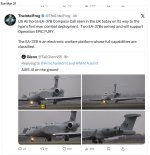
So probably …There are only two working EC130 left as the capability shifted to the Gulfstream version. Both were at PS Airbase. Both claimed as damaged with no proof and we’ll probably never see it confirmed either.
Attachments
- Reaction score
- 8,945
- Points
- 1,260
How about this scenario.Our best outcome is if point 4 is prevented without more nations being drawn into the war.
The US walks away now. Ends the bombing of all Iranian sites. Iran then in turn opens up the strait. Who gains from that? The US or the Iranians. I would argue that the Iranians come out looking like the winners.
Good question.Was this a new strike on the plant that was already knocked out on the 7th, or is Iran drawing attention to it again in light of the Trumps renewed threats to do so?
- Reaction score
- 5,858
- Points
- 1,160
Why would Iran open up the straight if the US stops bombing them. They are winning, let’s be clear eyed about that.
They took control and hold the straights while they are being bombed into dust, there’s not much incentive to open the straights when they are not being bombed.
This is probably the largest geopolitical and strategic mistake on a global level since June, 1941.
They took control and hold the straights while they are being bombed into dust, there’s not much incentive to open the straights when they are not being bombed.
This is probably the largest geopolitical and strategic mistake on a global level since June, 1941.
McG
Army.ca Myth
- Reaction score
- 6,574
- Points
- 1,260
If the US cannot win the war that it started, then perhaps the best global outcome would be a classic blue beret peacekeeping type mission with an unprecedented maritime component. But finding contributing nations that would be acceptable to all sides might be a challenge. Which would be another parallel to the Suez crisis.

- Reaction score
- 12,286
- Points
- 1,040
Probably not on their list of objectives, except as a "stretch" target. But not really relevant to ...War with Iran - 2026
1) US/Israel went to war with Iran to create an environment for Regime change without informing NATO and its Gulf State allies beforehand
... this, which is always a likely response by Iran to any direct attack.2) Resulted in Iran closing the Strait of Hormuz for shipping purpose for a yet to be known time period
Crisis for sure, since it is a problem exceeding usual measures to resolve, but mainly affecting Gulf exporters and their consumers. How bad is it really in SA, Africa, countries in SE Asia other than China, etc? Also, oil gets all the press, but as some people have mentioned, other chemicals and commodities might be more important.3) Which in turned caused an oil crisis, predominately felt around the world, outside of NA (causing great losses to Gulf States allied oil companies)
Anyone close enough to the Strait or with the ability to project enough power over the Strait to threaten shipping can deny it, but not necessarily control it. Too many people are talking about this as if it's a power only of Iran; it isn't.4) ?? Iran gained final and absolute control over the Strait of Hormuz at the end of the war ?? - Unknown at this time
Why? NATO is still primarily an anti-Russian alliance, and Russia is still a threat that much of Europe would prefer to deter with the minimum possible diversion of money from other uses, an objective which is helped by keeping the US in the alliance irrespective of other irritating things the US does.5) ?? Major split between US and NATO ?? - Unknown at this time
Why? Flip the frame to see what happens if Iran is the aggressor. US has just demonstrated that even if it can't entirely prevent Iran from attacking important non-military targets, it can inflict appalling damage on Iran. That is a kind of security for countries in the Gulf, provided they remain on very good terms with the US.6) ?? Minor/Major split between US and Gulf States ?? - Unknown at this time
Depends on what people do about it. Relatively less expensive sources are going to be in higher demand, and prospective consumers will need whatever currency those sources are sold in.7) ?? Further weakening of the USD used in oil/gas based transactions ?? - Unknown at this time
Very real prospect that Iran asserts and attempts to enforce a de facto end to Hormuz being an international strait with free navigation, and treating it as tolled internal waters. And as long as it was consistent and predictable, shipping would probably price that in and go with it, and insurers would probably say “we’ll insure you if you take the toll route”.Why would Iran open up the straight if the US stops bombing them. They are winning, let’s be clear eyed about that.
They took control and hold the straights while they are being bombed into dust, there’s not much incentive to open the straights when they are not being bombed.
This is probably the largest geopolitical and strategic mistake on a global level since June, 1941.
This may mean shipping owned or flagged by or destined for the U.S. may be excluded… Shipping and commodity flows will restructure (and price) around that.
There may be permanent minor economic disadvantage to the U.S. out of this, and Iran will certainly have made interesting adjustments to its strategic position. And once oil flows consistently resume, China will be quite pleased with the new order and their relative strengthening compared to the U.S.
so petroleum products will be sold in Canadian dollars?Probably not on their list of objectives, except as a "stretch" target. But not really relevant to ...
... this, which is always a likely response by Iran to any direct attack.
Crisis for sure, since it is a problem exceeding usual measures to resolve, but mainly affecting Gulf exporters and their consumers. How bad is it really in SA, Africa, countries in SE Asia other than China, etc? Also, oil gets all the press, but as some people have mentioned, other chemicals and commodities might be more important.
Anyone close enough to the Strait or with the ability to project enough power over the Strait to threaten shipping can deny it, but not necessarily control it. Too many people are talking about this as if it's a power only of Iran; it isn't.
Why? NATO is still primarily an anti-Russian alliance, and Russia is still a threat that much of Europe would prefer to deter with the minimum possible diversion of money from other uses, an objective which is helped by keeping the US in the alliance irrespective of other irritating things the US does.
Why? Flip the frame to see what happens if Iran is the aggressor. US has just demonstrated that even if it can't entirely prevent Iran from attacking important non-military targets, it can inflict appalling damage on Iran. That is a kind of security for countries in the Gulf, provided they remain on very good terms with the US.
Depends on what people do about it. Relatively less expensive sources are going to be in higher demand, and prospective consumers will need whatever currency those sources are sold in.

- Reaction score
- 8,945
- Points
- 1,260
Have you not been reading any news outside of Canada/US?Probably not on their list of objectives, except as a "stretch" target. But not really relevant to ...
... this, which is always a likely response by Iran to any direct attack.
Crisis for sure, since it is a problem exceeding usual measures to resolve, but mainly affecting Gulf exporters and their consumers. How bad is it really in SA, Africa, countries in SE Asia other than China, etc? Also, oil gets all the press, but as some people have mentioned, other chemicals and commodities might be more important.
Anyone close enough to the Strait or with the ability to project enough power over the Strait to threaten shipping can deny it, but not necessarily control it. Too many people are talking about this as if it's a power only of Iran; it isn't.
Why? NATO is still primarily an anti-Russian alliance, and Russia is still a threat that much of Europe would prefer to deter with the minimum possible diversion of money from other uses, an objective which is helped by keeping the US in the alliance irrespective of other irritating things the US does.
Why? Flip the frame to see what happens if Iran is the aggressor. US has just demonstrated that even if it can't entirely prevent Iran from attacking important non-military targets, it can inflict appalling damage on Iran. That is a kind of security for countries in the Gulf, provided they remain on very good terms with the US.
Depends on what people do about it. Relatively less expensive sources are going to be in higher demand, and prospective consumers will need whatever currency those sources are sold in.
A fair number of countries around the world are already negatively affected economically by this -

Energy crisis reaches Cairo as Egyptians ration power and brace for a potential food crisis
Egypt seemed entirely insulated from the U.S.-Israeli war on Iran, but rising energy prices indicate otherwise
 www.theglobeandmail.com

Southeast Asia shuts offices, limits travel as oil crisis deepens
Countries such as Indonesia and Vietnam heavily depend on fuel imports and have limited energy reserves.

Protest in India over cooking gas crisis
Indian opposition parties have staged a protest over the shortage of cooking gas triggered by the war on Iran.
HavokFour
Army.ca Veteran
- Reaction score
- 4,470
- Points
- 1,040
Have you not been reading any news outside of Canada/US?
A fair number of countries around the world are already negatively affected economically by this -
Energy crisis reaches Cairo as Egyptians ration power and brace for a potential food crisis
Egypt seemed entirely insulated from the U.S.-Israeli war on Iran, but rising energy prices indicate otherwiseSoutheast Asia shuts offices, limits travel as oil crisis deepens
Countries such as Indonesia and Vietnam heavily depend on fuel imports and have limited energy reserves.www.aljazeera.com
Protest in India over cooking gas crisis
Indian opposition parties have staged a protest over the shortage of cooking gas triggered by the war on Iran.
Base on the second article.
I heard the countries doing the alternate driving days are basing it on their version of SIN numbers. Odds drive one day, evens drive the next.
Not sure how they're managing that to keep it fair and honest, man what a nightmare.

- Reaction score
- 7,071
- Points
- 1,160
For those wondering what the Gulf States are doing with their expensive toys...

 www.navalnews.com
Watch Qatar's Al Fulk LPD Launching Aster Missiles Against Iranian Threats - Naval News
On March 30, 2026, Qatar's Ministry of Defence shared a video about ballistic missile defence efforts, which includes the air defence LPD Al Fulk and Doha-class corvettes in action.
www.navalnews.com
- Reaction score
- 12,286
- Points
- 1,040
I didn't assert things haven't changed. I asked "how bad". I expect almost every country that buys products from the Gulf is negatively affected with respect to those.Have you not been reading any news outside of Canada/US?
- Reaction score
- 8,945
- Points
- 1,260
Bad - plain and simple. Worse comes next.I didn't assert things haven't changed. I asked "how bad". I expect almost every country that buys products from the Gulf is negatively affected with respect to those.
Even IF the Gulf opens tomorrow and ships start sailing, worse is more than likely to occur

- Reaction score
- 4,353
- Points
- 1,040
Your missing the most important part. Britain is forced to end it due to America threatening to offload their debt and destroy the British economy.Can there be any parallels drawn between this war that the US and Israel started with Iran and the 1956 Suez Canal Crisis?
War with Egypt - 1956
1) The UK/France/Israel went into Egypt to 'secure' the Suez Canal without informing the US (or NATO) beforehand
2) Resulted in Egypt closing the canal for shipping purposes for months on end
3) Which in turn caused an oil crisis, predominately felt throughout Europe (but causing great losses to US based oil companies operating out of the Gulf States).
4) Egypt gained final and absolute control over the Canal at the end of the war
5) Major split between US and the UK/France
War with Iran - 2026
1) US/Israel went to war with Iran to create an environment for Regime change without informing NATO and its Gulf State allies beforehand
2) Resulted in Iran closing the Strait of Hormuz for shipping purpose for a yet to be known time period
3) Which in turned caused an oil crisis, predominately felt around the world, outside of NA (causing great losses to Gulf States allied oil companies)
4) ?? Iran gained final and absolute control over the Strait of Hormuz at the end of the war ?? - Unknown at this time
5) ?? Major split between US and NATO ?? - Unknown at this time
6) ?? Minor/Major split between US and Gulf States ?? - Unknown at this time
7) ?? Further weakening of the USD used in oil/gas based transactions ?? - Unknown at this time
Thoughts?
Look at America and everyones stance with their bonds, not that far off debt wise, main difference being it is more spread out than Britain making it harder to unilaterally control them. But if enough economies are effected they might all decide to dump them.
Debt kills empires. Americas debt has made it vulnerable.
Similar threads


- Replies
- 22
- Views
- 4K


- Replies
- 0
- Views
- 1K


