

You are using an out of date browser. It may not display this or other websites correctly.
You should upgrade or use an alternative browser.
You should upgrade or use an alternative browser.
Islamic Terrorism in the West ( Mega thread)
- Thread starter George Wallace
- Start date


- Reaction score
- 8,194
- Points
- 1,360

- Reaction score
- 2,312
- Points
- 1,260
Jarnhamar said:Did they ever release the name of the man who used a fuel truck full of fuel to ram an airplane 3 times on the runway at the Pearson airport last May?
This is the news report,
Police say that the tanker truck hit the plane, spun it around, and hit it in three more places.
https://www.blogto.com/city/2019/05/plane-and-fuel-truck-collide-torontos-pearson-airport/
< snip > the driver of the Menzies truck was charged with dangerous operation of a motor vehicle.
No report of Islamic terrorism.
- Reaction score
- 8,194
- Points
- 1,360
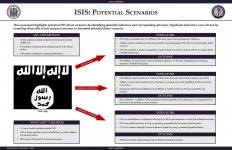
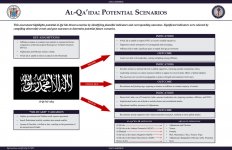
This just out from a U.N. committee -- summary (highlights mine):
With the fall of Baghuz, Syrian Arab Republic, in March 2019, the geographical so-called “caliphate” of Islamic State in Iraq and the Levant (ISIL) has ceased to exist and the group has continued its evolution into a mainly covert network. Its leadership is primarily in Iraq, while its centre of gravity remains in Iraq, the Syrian Arab Republic and areas of the immediate neighbourhood. The leadership aims to adapt, survive and consolidate in the core area and to establish sleeper cells at the local level in preparation for eventual resurgence, while using propaganda to maintain the group’s reputation as the leading global terrorist brand – the “virtual caliphate”. When it has the time and space to reinvest in an external operations capability, ISIL will direct and facilitate international attacks in addition to the ISIL-inspired attacks that continue to occur in many locations around the world.
Al-Qaida (QDe.004) remains resilient, although the health and longevity of its leader, Aiman Muhammed Rabi al-Zawahiri (QDi.006), and how the succession will work are in doubt. Groups aligned with Al-Qaida are stronger than their ISIL counterparts in Idlib, Syrian Arab Republic, Yemen, Somalia and much of West Africa. The largest concentrations of active foreign terrorist fighters are in Idlib and Afghanistan, the majority of whom are aligned with Al-Qaida. ISIL, however, remains much stronger than Al-Qaida in terms of finances, media profile and current combat experience and terrorist expertise and remains the more immediate threat to global security.
The most striking international developments during the period under review include the growing ambition and reach of terrorist groups in the Sahel and West Africa, where fighters aligned with Al-Qaida and ISIL collaborate to undermine fragile national jurisdictions. The number of regional States threatened with contagion from insurgencies in the Sahel and Nigeria has increased. The ability of local authorities to cope with terrorist challenges in Afghanistan, Libya and Somalia remains limited. Meanwhile, the Easter Sunday attacks in Sri Lanka show the continuing appeal of ISIL propaganda and the risk that indigenous cells may incubate in unexpected locations and generate a significant terrorist capability. These and other ISIL attacks on places of worship, alongside the attacks in Christchurch, New Zealand, of March 2019, offer a troubling narrative of escalating interfaith conflict.
The related issues of foreign terrorist fighters, returnees, relocators and detainees in the conflict zone have become more urgent since the fall of Baghuz. Member States also report pressing domestic security concerns, including with regard to radicalization in prisons and releases of terrorist prisoners, while only a few have the expertise and capacity to manage this range of counter-terrorist challenges successfully.
Attachments

Journeyman
Army.ca Legend
- Reaction score
- 2,918
- Points
- 940
This is a portion I would have highlighted, especially since it won't be acted upon in any sort of effective manner in an election year.milnews.ca said:The related issues of foreign terrorist fighters, returnees, relocators and detainees in the conflict zone have become more urgent since the fall of Baghuz. Member States also report pressing domestic security concerns, including with regard to radicalization in prisons and releases of terrorist prisoners, while only a few have the expertise and capacity to manage this range of counter-terrorist challenges successfully.
(It's also interesting that a UN committee provided a clear [non-waffling] appraisal of the situation, but that's a separate rant).

- Reaction score
- 8,194
- Points
- 1,360
#PlanetsAligned or, to use an Italian phrase, it happens everytime a Pope dies ...Journeyman said:(It's also interesting that a UN committee provided a clear [non-waffling] appraisal of the situation, but that's a separate rant).
- Reaction score
- 8,194
- Points
- 1,360
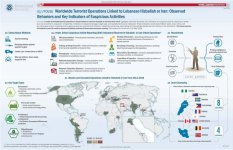
Note dual citizenship of some of the bad guys ...
More in attached report.… This Reference Aid examines tactics and targets garnered from a review of attacks or disrupted terrorist operations from 2012-2018 linked to either Lebanese Hizballah (LH) or Iran. It identifies behaviors and indicators that may rise to the level for suspicious activity reporting in areas such as recruitment, acquisition of expertise, materiel and weapons storage, target type, and operational security measures, which could assist federal, state, local, tribal, and territorial government counterterrorism agencies, law enforcement officials, and private sector partners in detecting, preventing, preempting, and disrupting potential terrorist activity in the Homeland. This Reference Aid does not imply these indicators would necessarily be observed or detected in every situation or that LH and Iran necessarily use the same tactics or demonstrate the same indicators. Some of these detection opportunities may come during the course of normal investigations into illegal activities in the United States such as illicit travel or smuggling of drugs, weapons, or cash, and lead to the discovery of pre-operational activity. A version of this Reference Aid’s infographic was also included as an appendix to a previously published Intelligence Assessment. Information in this Reference Aid is current as of 16 May 2019 ...
Attachments

- Reaction score
- 1,790
- Points
- 1,160
Not sure if this has been posted previously, if it has, my apologies. From the good folks at Lawfare:
Link (original link has links to other articles)
Canadian Islamic State Suspect Extradited to the United States
By Preston Lim Friday, November 15, 2019, 11:59 AM
Abdullahi Ahmed Abdullahi, a Canadian national and former San Diego resident, appeared in U.S. federal court on Oct. 25, following his extradition from Canada to the United States on terror charges. Abdullahi lived in Minneapolis and San Diego before “moving to Canada and becoming a naturalized Canadian citizen.” In a press release, the U.S. Attorney’s Office for the Southern District of California revealed that Abdullahi has been charged in a two-count indictment with “conspiring to provide, and providing, material support to terrorists.”
The unsealed indictment references five co-conspirators, all of whom died fighting for the Islamic State in Syria.
Thanks to the testimony of Abdirahman Bashir, one of Abdullahi’s cousins, federal prosecutors now have a fairly complete picture of how Abdullahi and his co-conspirators came to support the Islamic State. CBC reports that Bashir, who became an FBI informant, provided testimony in a 2018 sentencing hearing for an Islamic State supporter. Bashir “offered [the bureau] insights into [the Islamic State’s] covert communications and persuasive recruiting tactics.” In his testimony, Bashir named and described the five co-conspirators: Hamse and Hersi Kariye, Hanad Mohallim, Mahad Hersi, and Douglas McCain. Bashir indicated that, as young boys, he and Abdullahi looked up to their two older cousins, Hamse and Hersi Kariye. The Kariye brothers led what Bashir described as a “thug lifestyle,” but after becoming radicalized, they embraced fundamentalist Islamic tenets and began to impart the importance of jihad to Bashir, Abdullahi, and another cousin, Hanad Mohallim. The Kariyes; Mohallim; another cousin, Mahad Hersi; and a family friend, Douglas McCain—the five co-conspirators referenced in the indictment—eventually traveled to Syria to wage jihad.
The indictment detailed a wealth of evidence supporting the two counts against Abdullahi—one charging him with “conspiracy to provide material support to terrorists” and the other charging him with “providing material support to terrorists.” Under the first count, the indictment notes, Abdullahi “agreed to travel to Syria to support and join terrorist fighters,” agreed and encouraged others to commit crimes against non-Muslims “to obtain money and items to finance and support … travel to Syria,” and “agreed to send, did send, and caused others to send money via Western Union to other members of the conspiracy.” The second count repeats many of the allegations from the first count. The first count also alleges that Abdullahi played a role in the January 2014 robbery of an Edmonton, Alberta, jewelry store. The Edmonton Journal reports that on Oct. 18, just before Abdullahi’s extradition, Alberta’s Crown Prosecution Service stayed its armed robbery with a firearm charge against Abdullahi. A Crown spokesperson said that “there was no reasonable likelihood of conviction” on that count.
Canadian authorities arrested Abdullahi in September 2017 and extradited him to the United States on Oct. 24, 2019. Justice John S. Little of the Court of Queen’s Bench of Alberta—the province’s superior court—committed Abdullahi for extradition in May 2018. As Justice Little explained in his memorandum of decision, in order to extradite a person, the judge must be satisfied that “had the [specified] acts occurred in Canada, prosecution would be justified.” Justice Little stressed that the role of the extradition judge “is a modest one … the sole purpose of an extradition hearing is to ensure that the evidence establishes a prima facie case that the extradition crime has been committed.” The evidence indicated that Abdullahi “provided funds to people for their use in fighting for ISIS.” Justice Little was satisfied that “had the acts occurred in Canada, prosecution would be justified” and that Abdullahi was “indeed the person sought by the United States,” and thus ordered Abdullahi’s committal into custody. Abdullahi appealed the decision up to the Court of Appeal of Alberta, but a three-judge panel affirmed Little’s decision, writing that the “extradition judge properly identified the test for committal.” Abdullahi’s case will now make its way through the U.S. federal judicial system.
Link (original link has links to other articles)
- Reaction score
- 8,194
- Points
- 1,360
The latest from the QC Court of Appeal (news shared via Public Prosecution Service of Canada): he stays in jail & no new trial ...milnews.ca said:Here in Canada ...
A 29-year-old Quebec man has been found guilty of attempting to leave Canada to commit terrorist acts.
Ismael Habib is the first adult tried under a section of Canada's Anti-terrorism Act enacted by the former Stephen Harper government in 2013.
During the trial, it was revealed that Habib told an undercover RCMP officer posing as a crime boss peddling fake passports that it was his "duty" to fight jihad alongside ISIS in Syria.
He also confessed to whipping a prisoner on a 2013 trip to Syria. Those confessions were taped by RCMP officers.
In a decision read out Monday afternoon in Quebec Court, Judge Serge Délisle questioned Habib's testimony that he had left Canada in 2013 seeking to be with his family.
Délisle said that was inconsistent with how he went online looking for girlfriend ...
QC Ct of Appeal decision in French attached.The Quebec Court of Appeal today (29 Nov 2019) released its decision on the conviction and sentence appeals of Ismael Habib, 32. The Court dismissed the appeals and upheld the conviction and sentence.
Mr. Habib was convicted in 2017 of attempting to leave Canada to commit an act of terrorism, contrary to section 83.181 of the Criminal Code, and was sentenced to eight years' imprisonment.
He was also sentenced to one year in prison, to be served consecutively, for making a false or misleading statement to obtain a passport, contrary to section 57(2) of the Criminal Code, for a total of nine years.
The Court confirmed that a "Mr. Big type" operation was an appropriate method for obtaining admissions regarding criminal intent of an ongoing offence and that the operation did not constitute entrapment.
Mr. Habib has 60 days to decide whether to seek leave to appeal with the Supreme Court of Canada.
The Public Prosecution Service of Canada is responsible for prosecuting offences under federal jurisdiction in a manner that is free of any improper influence and that respects the public interest. The PPSC is also responsible for providing prosecution-related advice to law enforcement agencies across Canada.
Attachments
- Reaction score
- 8,194
- Points
- 1,360
Some former French troops at it ...
Some 30 French soldiers have joined jihadist organizations in Syria and Iraq since 2012, bringing their experience and knowledge of the war, according to a report by the Center for the Analysis of Terrorism (Centre d'analyse du terrorisme, CAT).
The report, which is due to be published this weekend, the content of which Le Figaro revealed on Wednesday 18 December, documents the journeys of these soldiers, sometimes through renowned units - the Foreign Legion, marine riflemen, paratroopers - who have decided to join the ranks of the jihad after individual journeys that are very different from each other.
The report, which details the backgrounds of 23 individuals by focusing on their motivations, argues that while the army is an obvious "strategic recruitment target", "Islamist radicalisation remains marginal within the armies". Some had prepared their projects before taking up the uniform. Others considered it after they left the army, or even during. Some have deserted, refusing to fight against Muslims. Some were Muslims themselves, having converted ...
- Reaction score
- 8,194
- Points
- 1,360
One way France is dealing with things ...
The trial this month was exceptional for a country that has resisted repatriating or extraditing terrorism suspects from battlegrounds in Iraq and Syria.
A Paris judge heard cases against 24 men and women charged with links to the Islamic State. Witnesses were called. Prosecutors and defense lawyers made their statements. Verdicts were rendered.
But 19 of the defendants were presumed dead, and all were tried in absentia. It was, as the French news media have called it, a “ghost trial.”
Antoine Ory, one of the defense lawyers, acknowledged as much. “In France, in 2020, we refuse to repatriate the living but we try the dead,” he told the court.
The trial, which concluded last week with convictions for everyone, brought to light one of France’s paradoxes when it comes to handling such cases.
The government wants to prosecute terrorism suspects, hoping to prevent them from falling through legal cracks and trying to piece together how the networks operated for evidence in future trials against the living.
But it does not want the trials conducted on its territory ...
- Reaction score
- 8,194
- Points
- 1,360
More from France (original article in French -- Google translate in quote box) ...
A former spokesman for the Syrian armed Islamist group Jaych al Islam (Army of Islam), suspected of torture and war crimes, was arrested on Wednesday in France and charged on Friday, AFP learned from a judicial source.
The man, born in 1988 and who was in France on an Erasmus student visa, was arrested in Marseille. At the end of 48 hours in police custody, he was presented to a Parisian investigating judge who indicted him in particular for "acts of torture and complicity", "war crimes" and "complicity in enforced disappearances" .
According to a joint press release from three NGOs, FIDH (International Federation for Human Rights), SCM (Syrian Center for Media and Freedom of Expression) and LDH (League for Human Rights), the man arrested was call Islam Alloush, but is actually called Majdi Mustafa Nameh ...

daftandbarmy
Army.ca Fossil
- Reaction score
- 46,466
- Points
- 1,160
Streatham attacker freed from jail days ago after terror conviction
Sudesh Amman, who was shot dead by police, was under police surveillance following release
In remarks reported in 2018 Boon said: “His fascination with dying in the name of terrorism was clear in a notepad we recovered from his home. Amman had scrawled his ‘life goals’ in the notepad and top of the list, above family activities, was dying a martyr and going to ‘Jannah’ – the afterlife.”
Boon continued: “It’s not clear how Amman became radicalised but it is apparent from his messages that it had been at least a year in development. Whatever the circumstances, this case is a reminder of the need to be vigilant to signs of radicalisation and report it.”
A Whitehall source claimed that the attack was evidence that the prime minister should be able to enact harsher anti-terror laws. “There was nothing that could be done to keep him behind bars under existing laws, hence why he was under surveillance and strict licensing conditions,” the source said.
In another echo of Khan’s attack, Amman was wearing a fake suicide vest, described by some eyewitnesses as containing canister-like objects. Police said they were able to establish quickly it was a hoax device after the attacker had been shot.
Police and intelligence agencies only have resources to monitor a handful of individuals at one time, indicating that anybody under active surveillance will have been deemed to be a serious threat.
https://www.theguardian.com/uk-news/2020/feb/02/streatham-attacker-was-released-terror-offender-sudesh-amman
Sudesh Amman, who was shot dead by police, was under police surveillance following release
In remarks reported in 2018 Boon said: “His fascination with dying in the name of terrorism was clear in a notepad we recovered from his home. Amman had scrawled his ‘life goals’ in the notepad and top of the list, above family activities, was dying a martyr and going to ‘Jannah’ – the afterlife.”
Boon continued: “It’s not clear how Amman became radicalised but it is apparent from his messages that it had been at least a year in development. Whatever the circumstances, this case is a reminder of the need to be vigilant to signs of radicalisation and report it.”
A Whitehall source claimed that the attack was evidence that the prime minister should be able to enact harsher anti-terror laws. “There was nothing that could be done to keep him behind bars under existing laws, hence why he was under surveillance and strict licensing conditions,” the source said.
In another echo of Khan’s attack, Amman was wearing a fake suicide vest, described by some eyewitnesses as containing canister-like objects. Police said they were able to establish quickly it was a hoax device after the attacker had been shot.
Police and intelligence agencies only have resources to monitor a handful of individuals at one time, indicating that anybody under active surveillance will have been deemed to be a serious threat.
https://www.theguardian.com/uk-news/2020/feb/02/streatham-attacker-was-released-terror-offender-sudesh-amman
- Reaction score
- 8,194
- Points
- 1,360
Here in Canada ...
At Suliman Mohamed’s 2016 sentencing for trying to join ISIS, the Ottawa judge presiding over his case did not hold back, scolding those aligned with the terrorist group for “embracing the devil.”
Mohamed got seven years.
But three years later, he was already out of prison on statutory release, although his parole report said he had not abandoned extremist ideology and remained a “significant” risk.
He was one of five terrorism offenders released from Canadian prisons in 2019, despite concerns raised by parole boards that four of them still posed a risk to public safety.
At least three more could be released this year ...

OldSolduer
Army.ca Relic
- Reaction score
- 22,467
- Points
- 1,260
milnews.ca said:
Of course he's out.
I was told during basic Corrections training "There are no bad people, they just do bad things".
Hogwash of course
- Reaction score
- 8,194
- Points
- 1,360
Plus it doesn't sound like much is being done to de-radicalize the ones who may be able to be de-radicalized. Then again, from what little I know second-hand, that's not the only service that would be useful in jail that doesn't get offered for a variety of reasons.Hamish Seggie said:Of course he's out.
I was told during basic Corrections training "There are no bad people, they just do bad things".
Hogwash of course

- Reaction score
- 7,765
- Points
- 1,190
Plot twist: After all the gaslighting about far-right insider threats recently, ISIL is still an attractive cause to support to conduct domestic terror attacks. Article is unclear on whether Bridges was speaking to an ISIL member and the FBI intercepted the chats, or he believed the FBI agent was an ISIL member.
https://apnews.com/article/us-soldier-plot-blow-up-nyc-memorial-2b7225db9f47a21097b981ab0e5e3687
https://apnews.com/article/us-soldier-plot-blow-up-nyc-memorial-2b7225db9f47a21097b981ab0e5e3687
US soldier arrested in plot to blow up NYC 9/11 Memorial
By LARRY NEUMEISTER
NEW YORK (AP) — A U.S. Army soldier was arrested Tuesday in Georgia on terrorism charges after he spoke online about plots to blow up New York City’s 9/11 Memorial and other landmarks and attack U.S. soldiers in the Middle East, authorities said. Cole James Bridges of Stow, Ohio, was in custody on charges of attempted material support of a terrorist organization — the Islamic State group — and attempted murder of a military member, said Nicholas Biase, a spokesperson for Manhattan federal prosecutors.
The 20-year-old soldier, also known as Cole Gonzales, was with the Third Infantry Division out of Fort Stewart, Georgia, when he thought he was communicating with the Islamic State online about the terrorism plots, Biase said. Unbeknownst to Bridges, an FBI employee was in on the chat as Bridges provided detailed instructions on tactics and manuals and advice about attacking the memorial and other targets in New York City, Biase said.
“As we allege today, Bridges, a private in the U.S. Army, betrayed our country and his unit when he plotted with someone he believed was an ISIS sympathizer to help ISIS attack and kill U.S. soldiers in the Middle East,” said William F. Sweeney Jr., head of New York City’s FBI office.
“Fortunately, the person with whom he communicated was an FBI employee, and we were able to prevent his evil desires from coming to fruition,” Sweeney said in a release.
“Our troops risk their lives for our country, but they should never face such peril at the hands of one of their own,” U.S. Attorney Audrey Strauss said.
Bridges was scheduled to make an initial appearance in federal court in Augusta, Georgia, on Thursday.
- Reaction score
- 8,194
- Points
- 1,360
Remember Hassan Diab? This from 2016 ....
So Canada gets to decide again whether to extradite him.
Earlier this month, it appears a French high court of appeal says, "yes, we want a trial."The very latest: back in France, and out of jail under house arrest ...
So Canada gets to decide again whether to extradite him.
What the actual hell...
Not charged with a crime. Can’t present any evidence to suggest he was even involved. And yet taken into custody and sent to another country “just because they asked” — only to eventually be free’d from custody without charge. Then comes home.
If we ever asked a judge to sign off on a warrant for arrest for someone who we a) hadn’t charged with a crime, and b) had no evidence to result suggest he committed a crime... I would be in for some serious career troubles.
How on earth did we allow this??
Not charged with a crime. Can’t present any evidence to suggest he was even involved. And yet taken into custody and sent to another country “just because they asked” — only to eventually be free’d from custody without charge. Then comes home.
If we ever asked a judge to sign off on a warrant for arrest for someone who we a) hadn’t charged with a crime, and b) had no evidence to result suggest he committed a crime... I would be in for some serious career troubles.
How on earth did we allow this??

- Reaction score
- 23,924
- Points
- 1,010
And yet, we cannot get rid of a certain Chinese CEO....What the actual hell...
Not charged with a crime. Can’t present any evidence to suggest he was even involved. And yet taken into custody and sent to another country “just because they asked” — only to eventually be free’d from custody without charge. Then comes home.
If we ever asked a judge to sign off on a warrant for arrest for someone who we a) hadn’t charged with a crime, and b) had no evidence to result suggest he committed a crime... I would be in for some serious career troubles.
How on earth did we allow this??
Similar threads


- Replies
- 35
- Views
- 19K


- Replies
- 14
- Views
- 19K
- Replies
- 201
- Views
- 171K

- Replies
- 15
- Views
- 54K
