- Reaction score
- 13,970
- Points
- 1,160
The heart of any flying machine is the engine that propels it.
At one end of the spectrum we have the spinning wing, applied both horizontally and vertically to move air. The motor used to drive the spinner can be of various types. At the other end of the spectrum we have the rocket which is both motor and propulsor and is inherently simple with no moving parts.
In between there is the jet. A highly complex solution that has speed advantages over propellers and endurance and controllability advantages over rockets.
It is a popular, if pricey, solution.
So, in a UAV world, there is a fascination with low cost, disposable jet engines.
I asked for info on three classes of jet engine.
1000 lbf thrust
100 lbf thrust
10 lbf thrust
This is what I got -
A disposable engine is designed for 2 to 6 hours of flight time.
A conventional turbofan in the 1000 lbf range as is employed on Tomahawks and other cruise missiles costs about $120,000 per unit and take weeks or months to produce despite having mission profiles in the 2 to 6 hour range
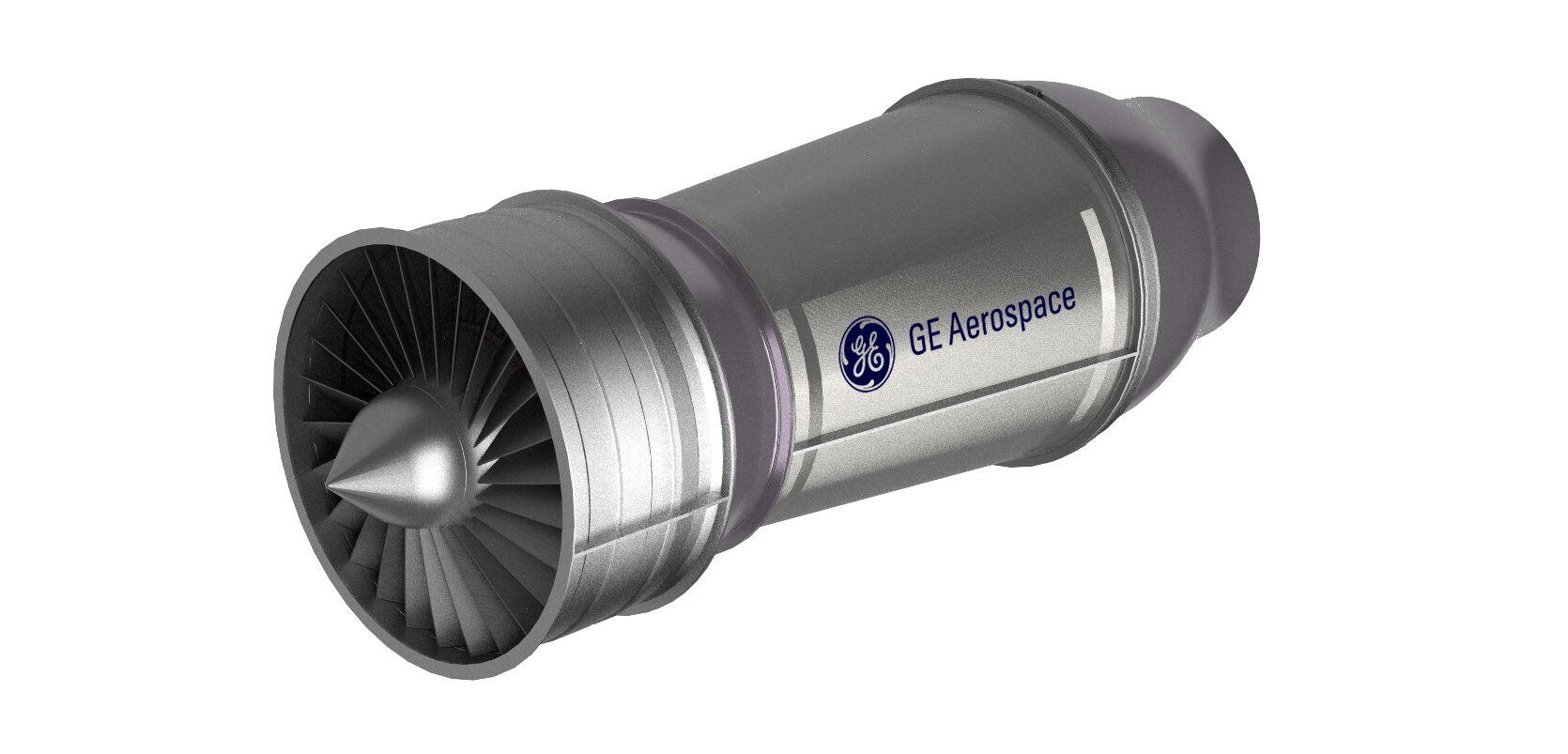
This is the class of engine under consideration for the larger UAVs and the CCAs. The game plan is to reduce these costs to the sub-$50,000 range.
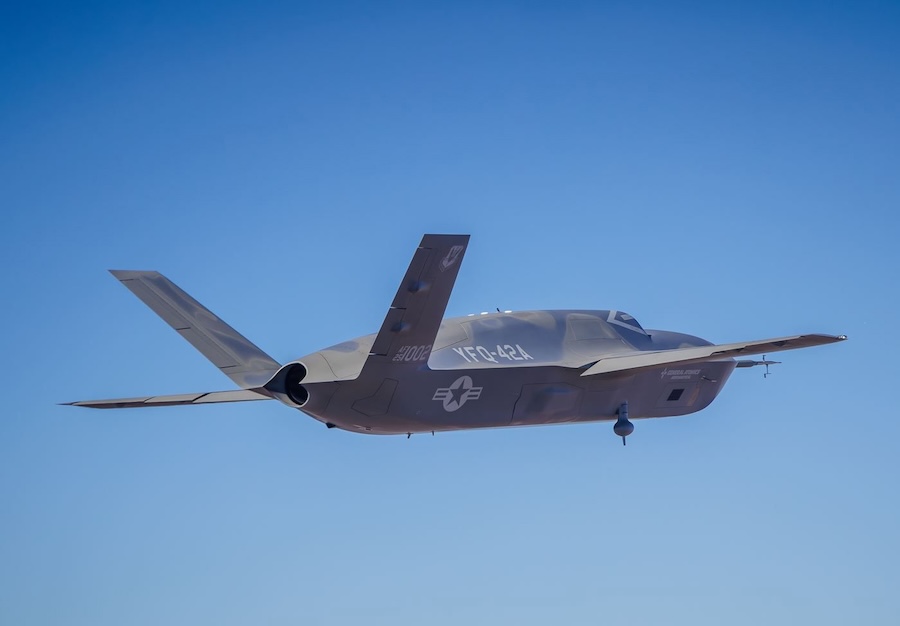
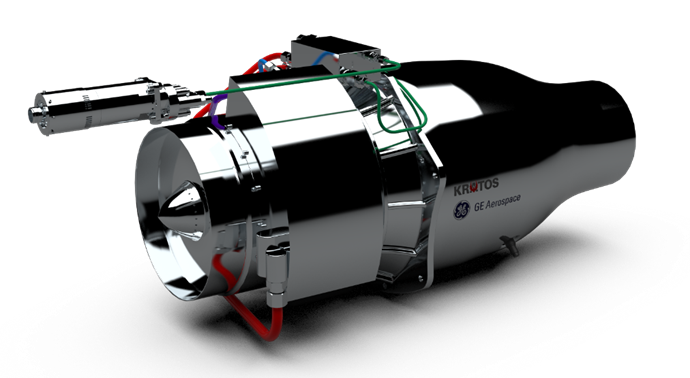
Given the attritable nature of this class of UAV, disposable if necessary but not necessarily disposable then these engines need to be a bit beefier than the true single mission disposable types. Presumably that factors into the difference between the USAFs 30,000,000 USD target and Kratos's 3,000,000 USD offering.
3D additive manufacture is reducing production time from weeks and months to hours and days.
Production volumes at a single plant could be in the 3-5000 units per year range.
The 100 lbf class that would be suitable for smaller UAVs is a developing field currently inhabited by hobbyists. They are generally hand built and cost in the $3000 to $5000 range. Although they are described as not being disposable at that price I would say from a military standpoint they are disposable. The real problem is the speed of production and the availability of supply.
This is a developing field for the same suppliers looking as the 1000 lbf class. 3D printing will also be applied here meaning days and hours of manufacture.
The 10 lbf class costs in the hundreds of dollars as built by hobbyists and enthusiasts. 3D printing is also in their future.
Curiously, currently one of the fastest and cheapest ways to build a jet of this type is to modify a used automotive turbocharger.
Potentially then, I suppose, companies tooled to build turbochargers for the auto-industry might find a profitable sideline or alternate market.
....
1000 lbf result
As of early 2026, the lowest-cost 1000+ lbf thrust disposable jet engines are being developed specifically for the U.S. Air Force Family of Affordable Mass Missiles (FAMM) program, with Beehive Industries emerging as a leader in this space. Their 100-300 lbf thrust engine, the Frenzy 8, is part of this initiative, with larger, higher-thrust variants under development.
MiGFlug
Key Findings on Lowest Cost 1000+ lbf Disposable Engines:
Target Cost: The military goal for these engines is in the tens of thousands of dollars (specifically targeting $50,000 or less) rather than the hundreds of thousands for traditional cruise missile engines like the $190,000+ Williams F107.
Key Manufacturer: Beehive Industries was awarded a $29.7 million contract in April 2026 to produce "Frenzy" series disposable turbojets. They are currently transitioning from rapid prototyping to high-rate, scalable manufacturing.
Production Time: Additive manufacturing (3D printing) allows these engines to be produced in hours or days, a massive reduction from the weeks or months required for conventional engines.
Production Volume: Beehive Industries expects to produce 3,000–5,000 engines in 2027, indicating a rapid manufacturing capacity.
MiGFlug
Alternative/Existing Options (High Cost):
PBS TJ100: A 1000+ lbf-class (approx. 250-280 lbf in standard form, with higher-output versions available) engine used in drones, often costing around $65,000–$80,000, though these are designed for somewhat longer lives, not as pure expendables.
KITPLANES
The industry trend is shifting towards 3D-printed, low-part-count engines that eliminate maintenance, designed solely for a single flight.
MiGFlug
....
100 lbf thrust
The lowest-cost, rapidly produced 100 lbf (approximately 45 kgf) class disposable jet engines are emerging from specialized, 3D-printed, additive manufacturing processes aimed at drone swarms and munitions. Beehive Industries is a leading developer in this space, recently receiving a U.S. Air Force contract to develop the Frenzy engine family.
Yahoo Finance
Lowest Cost Engine: While precise public retail prices for military-contracted "disposable" engines are rarely disclosed, 3D-printed, additive manufacturing—using methods like laser powder bed fusion—aims to produce these engines at 60% lower cost than traditional machined engines.
Time to Make: Using these advanced techniques, development timelines are reduced to months, rather than years. The manufacturing of these disposable engines is designed for mass production in low-cost batches.
Alternative Small Turbines: Commercial/hobbyist 100-kgf (roughly 220 lbf) class engines, such as those listed on Alibaba (e.g., SXH-1200N), can cost between $3,000 and $5,000, but these are not designed as cheap, disposable units.
www.militarydrones.org.cn
Key Manufacturing Features:
Part Reduction: 3D printing enables reducing hundreds of individually machined components to dozens of printed parts, with assembly taking hours rather than weeks.
Material: The engines are generally fabricated using metal powder (e.g., Titanium) through 3D printing.
...
The lowest-cost approach to a ~10 lbf (approx. 45-50 Newton) thrust, "disposable-style" jet engine is a DIY-built micro-turbojet utilizing salvaged automotive turbocharger parts or a custom-printed 3D design using modern additive manufacturing techniques.
Quora
Lowest-Cost Options & Estimated Time
DIY Turbocharger Conversion: The cheapest, functional DIY method uses a small turbocharger (e.g., from a car) modified with a custom combustion chamber.
Cost: ~$200–$500 in materials (if using scrapyard turbo, propane/kerosene, and scrap stainless steel).
Time to Make: Several weeks to months of dedicated hobbyist time (engineering, sourcing, fabricating, and balancing).
3D Printed / Additive Manufacturing: Newer, disposable engines designed for weapons/UAVs are using 3D printing to create engines with fewer parts. While military contracts mention $50,000 engines, experimental DIY 3D printing can reduce costs.
Cost: Variable (high setup, low per-unit cost).
Time to Make: A few days to weeks for design and printing, followed by assembly.
Reddit
Key Considerations
Thrust Requirement: A 10 lbf (44 Newton) engine is in the small-to-mid range of hobby turbines, often produced by modifying small turbocharger cores.
Disposable Nature: True "disposable" engines designed by defense contractors are intended for 2–6 hours of run time, eliminating expensive materials required for long-life turbines.
Alternative (Non-Disposable): Commercial, non-disposable turbine engines in this thrust class (e.g., Kingtech K-45G4) cost over $1,500.
Reddit
For a DIY project, you can create a functional, small-scale turbojet by modifying an existing turbocharger, which usually takes a few weeks, while professional disposable designs are created in weeks via 3D printing, though the R&D to reach that stage is extensive.
At one end of the spectrum we have the spinning wing, applied both horizontally and vertically to move air. The motor used to drive the spinner can be of various types. At the other end of the spectrum we have the rocket which is both motor and propulsor and is inherently simple with no moving parts.
In between there is the jet. A highly complex solution that has speed advantages over propellers and endurance and controllability advantages over rockets.
It is a popular, if pricey, solution.
So, in a UAV world, there is a fascination with low cost, disposable jet engines.
I asked for info on three classes of jet engine.
1000 lbf thrust
100 lbf thrust
10 lbf thrust
This is what I got -
A disposable engine is designed for 2 to 6 hours of flight time.
A conventional turbofan in the 1000 lbf range as is employed on Tomahawks and other cruise missiles costs about $120,000 per unit and take weeks or months to produce despite having mission profiles in the 2 to 6 hour range
This is the class of engine under consideration for the larger UAVs and the CCAs. The game plan is to reduce these costs to the sub-$50,000 range.
Given the attritable nature of this class of UAV, disposable if necessary but not necessarily disposable then these engines need to be a bit beefier than the true single mission disposable types. Presumably that factors into the difference between the USAFs 30,000,000 USD target and Kratos's 3,000,000 USD offering.
3D additive manufacture is reducing production time from weeks and months to hours and days.
Production volumes at a single plant could be in the 3-5000 units per year range.
The 100 lbf class that would be suitable for smaller UAVs is a developing field currently inhabited by hobbyists. They are generally hand built and cost in the $3000 to $5000 range. Although they are described as not being disposable at that price I would say from a military standpoint they are disposable. The real problem is the speed of production and the availability of supply.
This is a developing field for the same suppliers looking as the 1000 lbf class. 3D printing will also be applied here meaning days and hours of manufacture.
The 10 lbf class costs in the hundreds of dollars as built by hobbyists and enthusiasts. 3D printing is also in their future.
Curiously, currently one of the fastest and cheapest ways to build a jet of this type is to modify a used automotive turbocharger.
Potentially then, I suppose, companies tooled to build turbochargers for the auto-industry might find a profitable sideline or alternate market.
....
1000 lbf result
As of early 2026, the lowest-cost 1000+ lbf thrust disposable jet engines are being developed specifically for the U.S. Air Force Family of Affordable Mass Missiles (FAMM) program, with Beehive Industries emerging as a leader in this space. Their 100-300 lbf thrust engine, the Frenzy 8, is part of this initiative, with larger, higher-thrust variants under development.
MiGFlug
Key Findings on Lowest Cost 1000+ lbf Disposable Engines:
Target Cost: The military goal for these engines is in the tens of thousands of dollars (specifically targeting $50,000 or less) rather than the hundreds of thousands for traditional cruise missile engines like the $190,000+ Williams F107.
Key Manufacturer: Beehive Industries was awarded a $29.7 million contract in April 2026 to produce "Frenzy" series disposable turbojets. They are currently transitioning from rapid prototyping to high-rate, scalable manufacturing.
Production Time: Additive manufacturing (3D printing) allows these engines to be produced in hours or days, a massive reduction from the weeks or months required for conventional engines.
Production Volume: Beehive Industries expects to produce 3,000–5,000 engines in 2027, indicating a rapid manufacturing capacity.
MiGFlug
Alternative/Existing Options (High Cost):
PBS TJ100: A 1000+ lbf-class (approx. 250-280 lbf in standard form, with higher-output versions available) engine used in drones, often costing around $65,000–$80,000, though these are designed for somewhat longer lives, not as pure expendables.
KITPLANES
The industry trend is shifting towards 3D-printed, low-part-count engines that eliminate maintenance, designed solely for a single flight.
MiGFlug
....
100 lbf thrust
The lowest-cost, rapidly produced 100 lbf (approximately 45 kgf) class disposable jet engines are emerging from specialized, 3D-printed, additive manufacturing processes aimed at drone swarms and munitions. Beehive Industries is a leading developer in this space, recently receiving a U.S. Air Force contract to develop the Frenzy engine family.
Yahoo Finance
Lowest Cost Engine: While precise public retail prices for military-contracted "disposable" engines are rarely disclosed, 3D-printed, additive manufacturing—using methods like laser powder bed fusion—aims to produce these engines at 60% lower cost than traditional machined engines.
Time to Make: Using these advanced techniques, development timelines are reduced to months, rather than years. The manufacturing of these disposable engines is designed for mass production in low-cost batches.
Alternative Small Turbines: Commercial/hobbyist 100-kgf (roughly 220 lbf) class engines, such as those listed on Alibaba (e.g., SXH-1200N), can cost between $3,000 and $5,000, but these are not designed as cheap, disposable units.
www.militarydrones.org.cn
Key Manufacturing Features:
Part Reduction: 3D printing enables reducing hundreds of individually machined components to dozens of printed parts, with assembly taking hours rather than weeks.
Material: The engines are generally fabricated using metal powder (e.g., Titanium) through 3D printing.
...
The lowest-cost approach to a ~10 lbf (approx. 45-50 Newton) thrust, "disposable-style" jet engine is a DIY-built micro-turbojet utilizing salvaged automotive turbocharger parts or a custom-printed 3D design using modern additive manufacturing techniques.
Quora
Lowest-Cost Options & Estimated Time
DIY Turbocharger Conversion: The cheapest, functional DIY method uses a small turbocharger (e.g., from a car) modified with a custom combustion chamber.
Cost: ~$200–$500 in materials (if using scrapyard turbo, propane/kerosene, and scrap stainless steel).
Time to Make: Several weeks to months of dedicated hobbyist time (engineering, sourcing, fabricating, and balancing).
3D Printed / Additive Manufacturing: Newer, disposable engines designed for weapons/UAVs are using 3D printing to create engines with fewer parts. While military contracts mention $50,000 engines, experimental DIY 3D printing can reduce costs.
Cost: Variable (high setup, low per-unit cost).
Time to Make: A few days to weeks for design and printing, followed by assembly.
Key Considerations
Thrust Requirement: A 10 lbf (44 Newton) engine is in the small-to-mid range of hobby turbines, often produced by modifying small turbocharger cores.
Disposable Nature: True "disposable" engines designed by defense contractors are intended for 2–6 hours of run time, eliminating expensive materials required for long-life turbines.
Alternative (Non-Disposable): Commercial, non-disposable turbine engines in this thrust class (e.g., Kingtech K-45G4) cost over $1,500.
For a DIY project, you can create a functional, small-scale turbojet by modifying an existing turbocharger, which usually takes a few weeks, while professional disposable designs are created in weeks via 3D printing, though the R&D to reach that stage is extensive.