daftandbarmy
Army.ca Fossil
- Reaction score
- 44,292
- Points
- 1,160



Good this most people with actual purchasing power are above the age of 35.So much for 'elbows up'...
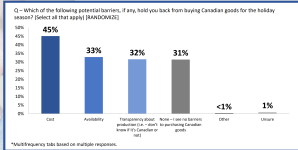
Cost top barrier to buying Canadian goods – Cost is an exceptional constraint for people under 35 years of age. (CTV News/Nanos)
View attachment 97205

Good this most people with actual purchasing power are above the age of 35.
Also, I don't see this as buying American, they can just as easily buy Chinese.
Yeah. Trade with the UK is up 82 percent actually.Or really from anywhere, the US being excluded. Quite a bit of planet out there.
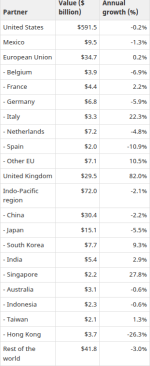
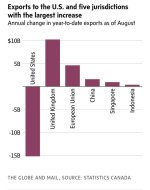

I guess having the King come and open Parliament made quite an impact. Job well done.Yeah. Trade with the UK is up 82 percent actually.
Elbows up doesn't mean one needs to buy Canadian, it means one should avoid buying American. And in that sense, Canadians are doing splendid.
View attachment 97206View attachment 97207

So, mostly conservatives?Good this most people with actual purchasing power are above the age of 35.
First official trip for Carney was England and France.I guess having the King come and open Parliament made quite an impact. Job well done.

Liberals actually. Go figure.So, mostly conservatives?
Funny how that works out.
The generation right behind me is absolutely screwed.More about those under 35s... those young families have been having it too good for too long anyways, right?
Canadians under 35 are debt-stressed — and buy now, pay later ubiquity isn't helping
One debt relief non-profit served more 18 to 34-year-olds this year than at any other point in its history
Mark Kalinowski has been a credit counsellor for nearly 14 years, helping people of all generations manage their debt. But this year, more than a quarter of the clients he saw in his Calgary office were under the age of 35.
"They'll come in and sometimes they'll cry, sometimes they'll be angry, they'll be very, very frustrated because they don't know why their life's on hold," said Kalinowski.
The Credit Counselling Society — the debt management non-profit where Kalinowski works — served more 18-to-34-year-olds in 2025 than at any other point in its history, its spokesperson told CBC News.

Just wait until millenials and such reach retirement age. Most won’t be able to retire due to much worse pensions than previous generations coupled with the inability to save thanks to much higher costs of living and stagnant wages.The generation right behind me is absolutely screwed.
Turns out boomers voting themselves every benefit under the sun and pulling the rug out from under those coming behind has side effects.
I can't seem to find the numbers for the 2025 election. Where are you looking?Liberals actually. Go figure.
The only reason I own a house and will be able to retire is the military.Just wait until millenials and such reach retirement age. Most won’t be able to retire due to much worse pensions than previous generations coupled with the inability to save thanks to much higher costs of living and stagnant wages.
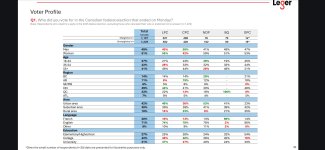
Damn I might have that backwards. What are you using for a source? Nanos is saying 18 to 54 year olds are voting Conservative.Liberals actually. Go figure.

 338canada.com
I was using leger, which says it may have been a wash.Damn I might have that backwards. What are you using for a source? Nanos is saying 18 to 54 year olds are voting Conservative.
338Canada | Nanos Research federal poll, April 2025

Part of it is definitely income vs cost of living, but part of it is, for want of better terms, maturity and financial literacy (numeracy?). As a port retirement gig I did background investigations on people seeking gaming licences. A lot of them were young people, often still living at home. Part of the investigation was a credit check and the number of people who had multiple credit cards that were in debt and inactive, as well as telco accounts in debt, was astonishing. Typically, the answer was they maxed out a card, so they simply got another one. For the telcos, the usual answer was they lost the phone so they simply stopped paying on the contract. The absence of awareness of debt and contractual obligations was consistently astonishing.More about those under 35s... those young families have been having it too good for too long anyways, right?
Canadians under 35 are debt-stressed — and buy now, pay later ubiquity isn't helping
One debt relief non-profit served more 18 to 34-year-olds this year than at any other point in its history
Mark Kalinowski has been a credit counsellor for nearly 14 years, helping people of all generations manage their debt. But this year, more than a quarter of the clients he saw in his Calgary office were under the age of 35.
"They'll come in and sometimes they'll cry, sometimes they'll be angry, they'll be very, very frustrated because they don't know why their life's on hold," said Kalinowski.
The Credit Counselling Society — the debt management non-profit where Kalinowski works — served more 18-to-34-year-olds in 2025 than at any other point in its history, its spokesperson told CBC News.

It's called hard work, choices and sacrifice. The trick is to sacrifice yourself early and resist materialism and expenses at an early age.The only reason I own a house and will be able to retire is the military.
I have no idea how others my age or younger will do it

There are a tonne of opportunities out there, case in point:Part of it is definitely income vs cost of living, but part of it is, for want of better terms, maturity and financial literacy (numeracy?). As a port retirement gig I did background investigations on people seeking gaming licences. A lot of them were young people, often still living at home. Part of the investigation was a credit check and the number of people who had multiple credit cards that were in debt and inactive, as well as telco accounts in debt, was astonishing. Typically, the answer was they maxed out a card, so they simply got another one. For the telcos, the usual answer was they lost the phone so they simply stopped paying on the contract. The absence of awareness of debt and contractual obligations was consistently astonishing.
In contrast, both our daughter and son-in-law are Millennials. I think they got a wee bit lift on a mortgage; both with decent incomes and pensions. It takes discipline (that, and not living in the GTA or Vancouver I guess).

I saved and took out my transfer value and bought a house, and invested the rest in a high interest account that makes passive income. Passive income is key for me. I make half of what i made in the military in passive income currently and the goal is to be at 150 percent by the time I'm retired.It's called hard work, choices and sacrifice. The trick is to sacrifice yourself early and resist materialism and expenses at an early age.
I left home at 18 years old and joined the Armed Forces. I took the fairly typical path until I turned 27: spent more than I made, pissed my $$$ away on useless shit, racked up credit card debt, etc.
Then, something clicked in my brain, and I made a conscientious decision to change my ways.
My wife and I moved in to the smallest and crappiest apartments we could find, I paid off all debt and started accumulating cash. I then started investing....first you build a portfolio to $10k, that took a while... then you get to $100k. At $100k things become much easier and your money starts to work more efficiently.
You need to be constantly resisting the urge to splurge on useless crap: car loans, credit card debt, etc.
Once you have enough $$$, you can start buying stuff with straight up cash. I haven't financed anything other than a mortgage in about a decade. I actually have three separate credit cards but I pay them off every month and collect points and cash back with them. Cashback cards are the best. My cash back card pays me $1500 a year. I I use it for all my bill payments and then pay it off immediately, so it's a credit card that is literally making me $$$.
At certain point as well, your salary/income from work starts to become less important to your actual wealth. This is crucial because income earned from labour is super tax inefficient. The Govt takes a big piece of your pie so you need to create other wealth generating assets that allow you to keep as much for yourself as possible.
There are a tonne of opportunities out there. I left the CAF with 17 years of service and took a transfer value. I invested every single $ in accounts I manage myself because I figured I could do it better than the nanny state and I was absolutely right.
A very simple rule in investing is the Rule of 72:
View attachment 97213
The S&P 500 long-term average is 10-12% annually. 72/10= 7.2 years to double in value.
I also found a career that nobody else is really doing that happens to pay incredibly well. It's a tough environment and is not for the soft but the cheques never bounce and I'm making fantastic money.
That brings me to my next point:
If everyone else is trying to do it, it's probably not a good idea and not going to lead to long-term success. I went to a few SCAN seminars and joined a few Veteran groups and I generally discarded most of what I was told. Things like "Coding for Vets", etc, isn't what's going to help you get ahead in this Country.
I treat money like a game now. I always loved strategy games and $$$ works exactly the same and the same concepts can be applied to dealing with $$$.
This is how you get rich in this Country.