• Thanks for stopping by. Logging in to a registered account will remove all generic ads. Please reach out with any questions or concerns.

Liberal Minority Government 2025 - ???

This is not about manouevre in the maritime domain. It is about the information domain. St.John provides no visible (to Canadians, allies, and adversaries) commitment in the Arctic.....

Maritime Manoeuvre and Logistics also aren't necessarily concerned with the same things. A Deepwater port in Churchill allows us to dominate the entire interior of our Country. This is about resource exploitation, territorial dominance and as you said, messaging to others.

My point was merely that the Arctic resupply route doesn't go the way Humprey's map shows, then pointing out the similarity in distance between posting a ship there or St John's (which is the Coast Guard's main base for the Arctic - with support from Quebec City). I am not saying that we shouldn't use Churchill, nor arguing against the visibility factor.

If this is about the information domain, I'd rather the GoC get on with the Grays Bay road and port project and use that to ressuply and support Arctic operations. Then you can't get bottled up by someone blocking Hudson's Strait.

With Baffinland just receiving approval for the construction of their railway, Churchill absolutely becomes a viable and potentially important port for exploiting the untapped mineral wealth in the North. They were the first but there will certainly be others now.

My only 2 questions would be this;
1) How long is the shipping season from Churchill to Iqaluit without the need for icebreakers?
2) Though 400nm shorter, does a ship from Churchill to Iqaluit run at the same speed as a ship from St John's to Iqaluit? Meaning is the duration the same or less from Churchill to Iqaluit?

1. July to October (4 months). This could be expanded to 6 months with some resources thrown at the problem. If icebreaking vessels are used, it could potentially be even longer.

2. During the summer season, my understanding is speeds are comparable. As the ice comes, speeds will slow down in Hudson Bay sooner than the open ocean.
 
From a practical standpoint, and given the capacity of a rail line to Churchill, how much more economical and efficient from a time perspective would it be to go that route, rather than to other east coast ports?
 
The economy of shipping is, as is right now, to ship from Montreal and Quebec City. The simple reason is that most of what is shipped - vehicles, construction material such as dimensional wood and lumber, steel beams and sheets, insulation, cements, processed and prepackaged food, refined fuels and other POL) are manufactured or processed in Ontario and Quebec and the internal roads and railways from those production sites to the port of Montreal or the port of Quebec are simply much more reli. able and efficient at getting the stuff there than they would be at getting it to Churchill. Moreover, if using Churchill, there would have to be large warehousing capacity so as to preassemble a lot of the resupply goods before shipping, whereas in the South (Mtl and Qc), a lot of the material is assembled and shipped to the port just in time from the various production plants.
 
Who would want to move there…

Would be very difficult to supply as well, roads, rail are not in the best shape, airport would need work to support heavy transports like a C17. Really what strategic value would a full base there even have?

we need to hold ground, and stake out our claim.


It is about staking our claim and sending signals.

In my opinion the first audience being targeted are the Inuit and Cree that were served by seasonal Churchill traffic for three hundred years.

Canada took on the Rupert's land trade zone and never got round to integrating it into Canada.

1770043417336.jpeg1770043457341.png

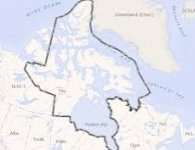
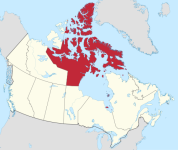
I don't know how many people appreciate that Alert, Churchill, Moosonee and Deception Bay are all on the borders of Nunavut, an area under the control of 36,858 people, mostly Inuit, that could hold an Alberta or Quebec style independence referendum.

Saying that soldiers won't serve where the government sends them is a weak argument.
Saying that there are inadequate LOCs is a statement of the principle problem that Wab and the First Nations want addressed.
 
The economy of shipping is, as is right now, to ship from Montreal and Quebec City. The simple reason is that most of what is shipped - vehicles, construction material such as dimensional wood and lumber, steel beams and sheets, insulation, cements, processed and prepackaged food, refined fuels and other POL) are manufactured or processed in Ontario and Quebec and the internal roads and railways from those production sites to the port of Montreal or the port of Quebec are simply much more reli. able and efficient at getting the stuff there than they would be at getting it to Churchill. Moreover, if using Churchill, there would have to be large warehousing capacity so as to preassemble a lot of the resupply goods before shipping, whereas in the South (Mtl and Qc), a lot of the material is assembled and shipped to the port just in time from the various production plants.
That's because there is an existing supply chain there. We are talking about developing a new supply chain as a matter of national security and developing our nation's economic potential. You are of course right, all of that would need to be developed.

In classic Canadian fashion though, nobody wants to spend the $$$ or put the time and effort in.
 
That's because there is an existing supply chain there. We are talking about developing a new supply chain as a matter of national security and developing our nation's economic potential. You are of course right, all of that would need to be developed.

In classic Canadian fashion though, nobody wants to spend the $$$ or put the time and effort in.

And the elephants in the room are BC and Quebec, who are both 'anti-everything' these days and also happen to be our cheapest routes to tidewater and international markets for various natural resource products...

Sigh... if it wasn't for Lac Megantic ;)
 
And the elephants in the room are BC and Quebec, who are both 'anti-everything' these days and also happen to be our cheapest routes to tidewater and international markets for various natural resource products...

Sigh... if it wasn't for Lac Megantic ;)
It's almost as if there is a regional imperative to keep everyone else down 😉

Imagine if Canada had to build something like the Panama Canal? We would still be arguing a 100+ years later about the costs 🤣

That is par for the course I guess, it only took them a century to build a 10 mile 2 lane Bridge to PEI, which was a promise made to them at Confederation.
 
If we want to even have a CFS, I think the case will be made the government should build a SMR in the city, expand the port to include coast guard facilities to co-own with the RCN to accommodate a future heavy ice breaker. Twin the rail line, and begin construction of an all weather road to connect to the rest of Canada. Set up warehouses for supplies to be staged etc
 
If we want to even have a CFS, I think the case will be made the government should build a SMR in the city, expand the port to include coast guard facilities to co-own with the RCN to accommodate a future heavy ice breaker. Twin the rail line, and begin construction of an all weather road to connect to the rest of Canada. Set up warehouses for supplies to be staged etc
No need for a twin-rail line. Simple sidings for meets will do. If you run your trains on a schedule, they won't be sitting for very long.
 
And the elephants in the room are BC and Quebec, who are both 'anti-everything' these days and also happen to be our cheapest routes to tidewater and international markets for various natural resource products...

Sigh... if it wasn't for Lac Megantic ;)

Vancouver and Montreal are the two largest ports in Canada and they ship everything they are sent. There is only one natural resource the provinces where they are located object to: Oil and Gas. and it is connected to GHG emission concerns of the environmental lobbies, not to concerns over port facilities.
 
That's because there is an existing supply chain there. We are talking about developing a new supply chain as a matter of national security and developing our nation's economic potential. You are of course right, all of that would need to be developed.

It's not quite like that.

We all know that, in terms of shipping cost, expressed in ton per kilometer, shipping (by sea) is the cheapest, followed by rail, then trucking, and finally, air cargo as most expensive.

So here is an example of the situation we are talking about: Hardware chain BMR (the one I work for :)) in Quebec has the contract to provide about 75% of construction materials needs for the Nunavik annual resupply. We get the orders in, and then we know the ships schedules (which one to where and when). We assemble the products at our Chambly store, from our various suppliers, most of which are in the greater Montreal area, but can be as far as Toronto and Chicoutimi, so that all can be packed and crated a few days before the ship's departure. We can accommodate changes to the orders up to 48 hours before departure. When the shipping time comes, our own truck deliver the crates to the port, in 40 to 45 minutes. They often encounter the trucks from Vicwest or Acier Picard delivering the steel construction beams and siding/roofing, both of which produce them at their facilities in Sorel - 1 hour 15 minutes from the port. Most of the other products needed for the resupply be they food or everyday items are in the same situation.
You couldn't do that from Churchill. A lot of that stuff would first have to find its way to Winnipeg (that part is not that hard - just a little more expensive because of the shipping cost by rail/truck over distance) and then sent by train to Churchill. That last part is not only extra cost, but creates a potential bottleneck (single track if something happens) and a need for much longer lead times than "48 hours before shipping" as the cut off time.

It can be done, and IMHO, should be done to the extent possible, but we should be aware that it not a panacea for cheaper resupply of the Arctic.
 
Just one point, Humphrey: You can't go that way for the Arctic Resupply route. The way you show can only go to Iklulik. The passage between that route and Baffin Island is unnavigable, so the Arctic resupply route still has to go around Baffin island. That is the reason why St John's is as good a support base for the Arctic as Churchill would be: there is no distance steamed advantage.

It's almost as if there is a regional imperative to keep everyone else down 😉

Imagine if Canada had to build something like the Panama Canal? We would still be arguing a 100+ years later about the costs 🤣

That is par for the course I guess, it only took them a century to build a 10 mile 2 lane Bridge to PEI, which was a promise made to them at Confederation.


1770048786757.jpeg
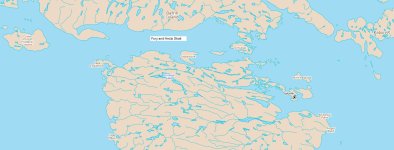
Fury and Hecla Strait is a narrow (from 2 to 20 km (1.2 to 12.4 mi) wide) Arctic seawater channel located in the Qikiqtaaluk Region of Nunavut, Canada.


A little bit of TNT goes a long way.

And no need for locks and pumps.
 
It's almost as if there is a regional imperative to keep everyone else down 😉

Imagine if Canada had to build something like the Panama Canal? We would still be arguing a 100+ years later about the costs 🤣

That is par for the course I guess, it only took them a century to build a 10 mile 2 lane Bridge to PEI, which was a promise made to them at Confederation.
It's not quite like that.

We all know that, in terms of shipping cost, expressed in ton per kilometer, shipping (by sea) is the cheapest, followed by rail, then trucking, and finally, air cargo as most expensive.

So here is an example of the situation we are talking about: Hardware chain BMR (the one I work for :)) in Quebec has the contract to provide about 75% of construction materials needs for the Nunavik annual resupply. We get the orders in, and then we know the ships schedules (which one to where and when). We assemble the products at our Chambly store, from our various suppliers, most of which are in the greater Montreal area, but can be as far as Toronto and Chicoutimi, so that all can be packed and crated a few days before the ship's departure. We can accommodate changes to the orders up to 48 hours before departure. When the shipping time comes, our own truck deliver the crates to the port, in 40 to 45 minutes. They often encounter the trucks from Vicwest or Acier Picard delivering the steel construction beams and siding/roofing, both of which produce them at their facilities in Sorel - 1 hour 15 minutes from the port. Most of the other products needed for the resupply be they food or everyday items are in the same situation.
You couldn't do that from Churchill. A lot of that stuff would first have to find its way to Winnipeg (that part is not that hard - just a little more expensive because of the shipping cost by rail/truck over distance) and then sent by train to Churchill. That last part is not only extra cost, but creates a potential bottleneck (single track if something happens) and a need for much longer lead times than "48 hours before shipping" as the cut off time.

It can be done, and IMHO, should be done to the extent possible, but we should be aware that it not a panacea for cheaper resupply of the Arctic.

This argument is as old as Radisson and Groseilliers. The whole reason for the Hudson Bay Company was to by-pass the Montreal cartel choke-point.

When Montreal succeeded in buying out the HBC in 1871 the Northwest Company won.

The Cree lost.
 
The arctic commitment (facilities) should be at higher latitudes than Churchill.

If the same final (seasonal) sea leg is shared by all routes, it doesn't make a lot of sense to go overland to Churchill and then by sea, rather than directly by sea from the St Lawrence.
 
This argument is as old as Radisson and Groseilliers. The whole reason for the Hudson Bay Company was to by-pass the Montreal cartel choke-point.

When Montreal succeeded in buying out the HBC in 1871 the Northwest Company won.

The Cree lost.

The railway won biggest, I think ;)
 
The railway won biggest, I think ;)

You mean the Scots of The Golden Square Mile?


Northwest Company
Canadian National
Canadian Pacific
Grand Trunk
Bell Telephone
The Chartered Banks
The Insurance, Assurance and Trust industries
Allan Steamship Lines
Brewers, Butchers and Bakers

Check those original directors and see how many Scots names you find with Montreal addresses in that square mile.


The history of the North West Company is instructive


"The North West Company Inc. is a multinational Canadian grocery and retail company which operates stores in Canada's western provinces and northern territories; the US states of Alaska and Hawaii; and several other countries and US territories in Oceania and the Caribbean."


"The North West Company was a Canadian fur trading business headquartered in Montreal from 1779 to 1821. It competed with increasing success against the Hudson's Bay Company in the regions that later became Western Canada and Northwestern Ontario. With great wealth at stake, tensions between the companies increased to the point where several minor armed skirmishes broke out, and the two companies were forced by the British government to merge."

...

"There are historical references to a North West Company as early as 1770, including the Montreal-based traders Benjamin Frobisher, Isaac Todd, Alexander Henry the elder and others, but the standard histories trace the company to a 16-share organization formed in 1779, which included Todd, Simon McTavish and James McGill. Seeking to break the Hudson's Bay Company monopoly over the North American fur trade, in 1780, the organization was joined by Peter Pond and Alexander Ellice, with his brothers, (and, later, his sons, including Edward Ellice).

"In the winter of 1783–1784, the North West Company was officially created on a long-term basis, with its corporate offices on Vaudreuil Street in Montreal. It was led by businessmen Benjamin Frobisher, his brother, Joseph, and McTavish, along with investor-partners who included the Ellices, Robert Grant, Nicholas Montour, Patrick Small, William Holmes, and George McBeath."

...

My argument is that Montreal has a 384 year history of governing (in the sense of choking) trade and development in Canada to its own advantage. What started as a French Protestant rebellion against the French King's taxmen happily absorbed a bunch of Scots Protestants anxious to dodge the English King's taxmen. Now they are Canada's taxmen.
 
If we want to even have a CFS, I think the case will be made the government should build a SMR in the city, expand the port to include coast guard facilities to co-own with the RCN to accommodate a future heavy ice breaker. Twin the rail line, and begin construction of an all weather road to connect to the rest of Canada. Set up warehouses for supplies to be staged etc
I think that the case for an all weather road today is a strong one and regardless what decision is made on the RCN/CCG stationing assets there.
 
Back
Top