• Thanks for stopping by. Logging in to a registered account will remove all generic ads. Please reach out with any questions or concerns.

Multi Role Boats (and other small boats thread).

That's if one puts the emphasis simply on the sea patrol aspect. I look at the boats as also a means of transportation of land troops to a place of need coupled with the patrol function. Helicopters can do that as well but boats have a better, more persistent, physical presence. Presence matters when dealing with security.

🍻

I see no reason we couldn't to sea borne transport. But patrolling water should be a Navy job.
 
I see no reason we couldn't to sea borne transport. But patrolling water should be a Navy job.
I have no idea why the Army would even have that task? Riverine patrols and "brown water" operations should be a Navy mission.

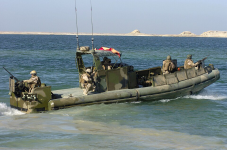
1787247009401.png

Riverine Squadron of the US Navy patrolling the Haditha Dam.


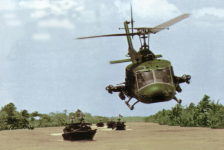
1787247194100.png
US Navy HAL-3 (Seawolves) attack helicopter patrolling the Mekong River Delta with US Navy Patrol Craft.

The US Navy contribution to the Vietnam War is understudied. Operation Game Warden was considered a highly successful operation though and some say the Navy's performance denying the NVA & Vietcong use of the waterways prevented a defeat during the Tet Offensive.
 
I see no reason we couldn't to sea borne transport. But patrolling water should be a Navy job.
Patrolling water is. Patrolling coastlines including shore installations and infrastructure should be joint.

The US Navy contribution to the Vietnam War is understudied. Operation Game Warden was considered a highly successful operation though and some say the Navy's performance denying the NVA & Vietcong use of the waterways prevented a defeat during the Tet Offensive.
I agree that it is understudied but I think there's a bit of a correction here that goes beyond the two ops cited. The entire Riverine Force concept was a joint one of Navy and Army personnel. Interestingly the US Marines were heavily involved further north with I Corps and couldn't spare the brigade's worth of soldiers needed for the riverine operations. Note as well that these operations were integrated with other army land-based operations so the joint planning made sense.


And that's applicable. My thinking is more in the line of the Swedish Amphibious Corps which admittedly has a marine infantry element as its "rifle" component. Note to this grew out of other coastal artillery defence resources.


Canada doesn't have a Marine infantry element and quite frankly I couldn't care less if the RCN wants to turn several of its NavRes into Marines. All that I want are coastal patrol boats operated by sailors with a dismountable infantry-centric component capable of patrolling and fighting on land and that is part and parcel to a bigger joint A2/AD defence structure.

🍻
 
There are times when I honestly believe that both services pretentend to be blissfully unaware of each other's existence.
Strategic thinking of any sort seems sometimes beyond our military's capacity
And I also get the hopefully mistaken impression that they like that way.

Things, as they often do here, spin out in all directions out of a small news item.

In particular, we have lots of Army and Air Force friends that see "nice boats" and suddenly, the CAF just has to have them. However, that is putting the cart before the horse.

Everything at the strategic level has to start with an objective assessment of the threats we can be confronted with, assigning a likelihood to each, then looking at the various ways available for dealing with each threat and then estimating if the combination of the likelihood with the resources required to face it based on the ways you looked at make it reasonable to cover off with peace time assigned forces or simply to plan for it as an expansion if and when the risk increases. From all that, you develop a force structure and materiel needs, which you then build up to and, subject to regular reassessments (every ten years, say, or ongoing to fine tune) that then lead to restructuring of the force.

Now, and I may be called a heretic by some here, but this type of very high level strategic work has to be done by the people that are primarily responsible for fighting the country's battles: the Army. Obviously, their work must be informed by the Navy and Air Force, but they must have the primary responsibility for determining what it is the CAF has to be able to perform to protect our territory and its people. Once the overall strategic frame is thus developed, it's fair to let the Navy and the Air Force develop it's own strategy to achieve that which has been put in their court by the overall strategy.

That is where, amongst others, my friend FJAG goes off half cocked: "We need to be able to defend out ports and harbours"; "We must be able to patrol our rivers and lakes"; "we have to be able to land a few soldiers on our coasts". "Here's a boat that can do that".

Why? Where does the need come from? Is it the job of the Army to patrol our cities? No. Watch out here: There are no repeat no military threat to our harbours and various facilities. Terrorism is NOT a military threat. Thus, those are functions of the police and other security forces of Canada, not the military. Look at the examples of use of riverine forces above from Humphrey Boggart: they are US, but they are not in the US. They are for locations outside the US where the US is at war with someone. In other words: these forces are expeditionary.

If there was a war and a military threat arose, then, and only then, a military response would be needed. And this brings the fact that, while it may be unknown to many, we actually have long standing maritime plans for the wartime defense of our coasts and harbours. They rely in great part on reservists being called out and for a while in the 90's and early 2000, we brought them out into partial effect, mostly to bring them up to date and to test them. This was all done with reservists. I cannot mention more here, but if FJAG was to talk to his friend who served as CO of an MCDV, I am sure he would be able to fill him in some more.

And that is why I say that it's up to the Army to decide what capability it wants to be able to fulfill its strategic objectives and then ask the Navy and Air Force to provide the requirements to meet it.

I also suspect, that unbeknownst to most in the CAF, that strategic position exists and is updated from time to time.

 
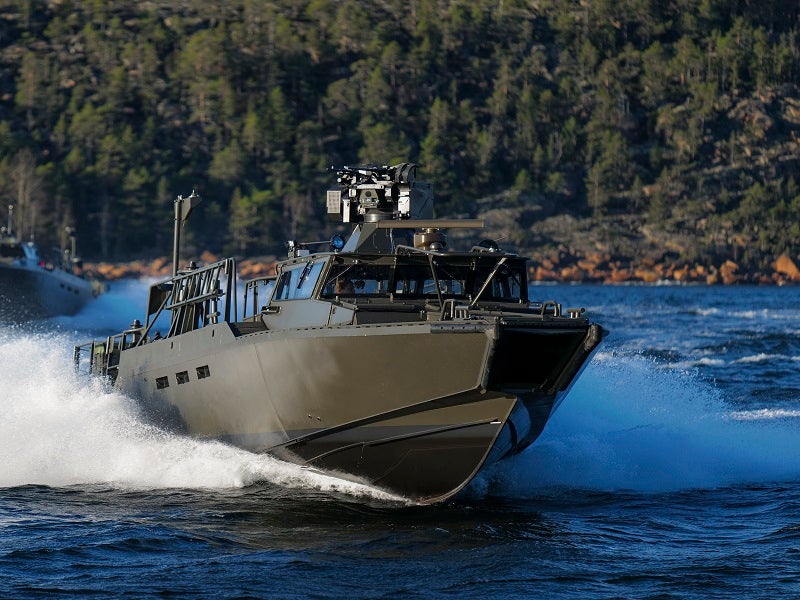
In 2024 Sweden ordered 10 new CB90 Hs at at cost of about 4 MUSD a boat. A CV90 costs between 10 and 13 MUSD.


A CV90 has a crew of 3 and transports 6 troops over land at up to 70 kmh with a maximum range of 300 to 900 km depending on variant.
A CB90 has a crew of 3 and transports 18 to 21 troops over water at up to 83 kmh with a maximum range of 560 km.


The standard production rate for the CB90 fast assault craft at the Saab (Dockstavarvet) shipyard is normally one boat every fourth week, with a peak output capacity of one new unit every third week. The total active build time from start to delivery takes about 16 weeks per vessel using multiple assembly workstations.

....

Get the licence to build the CB90 from SAAB.

And then find out how far afield the Harbour Defence Forces can venture in their new transport.

The CB90 is 15 m long and watertight.
 
I like where your head is at. But let me inject some Geography:

Canada's Atlantic coast is 42 thousand Kms long.
Canada's Pacific coast is 27 thousand Kms long.
Canada's Arctic coast is 162 thousand Kms long.

We will need more than 3 units.

We need many units. We don't necessarily need may regiments.

The RCMP is one regiment following one regimental guidon. 19,000 members.
 
That's if one puts the emphasis simply on the sea patrol aspect. I look at the boats as also a means of transportation of land troops to a place of need coupled with the patrol function. Helicopters can do that as well but boats have a better, more persistent, physical presence. Presence matters when dealing with security.

🍻


The CB90s are operated by the Amphibious Corps of the Swedish Navy who are also responsible for Coastal Defence artillery amd missiles.

....

I like Swedish toys.

CB90s for inshore patrols.
BvS10s for local patrols.
CV90s for the expeditionary corps.
 
Things, as they often do here, spin out in all directions out of a small news item.

In particular, we have lots of Army and Air Force friends that see "nice boats" and suddenly, the CAF just has to have them. However, that is putting the cart before the horse.

Everything at the strategic level has to start with an objective assessment of the threats we can be confronted with, assigning a likelihood to each, then looking at the various ways available for dealing with each threat and then estimating if the combination of the likelihood with the resources required to face it based on the ways you looked at make it reasonable to cover off with peace time assigned forces or simply to plan for it as an expansion if and when the risk increases. From all that, you develop a force structure and materiel needs, which you then build up to and, subject to regular reassessments (every ten years, say, or ongoing to fine tune) that then lead to restructuring of the force.

Now, and I may be called a heretic by some here, but this type of very high level strategic work has to be done by the people that are primarily responsible for fighting the country's battles: the Army. Obviously, their work must be informed by the Navy and Air Force, but they must have the primary responsibility for determining what it is the CAF has to be able to perform to protect our territory and its people. Once the overall strategic frame is thus developed, it's fair to let the Navy and the Air Force develop it's own strategy to achieve that which has been put in their court by the overall strategy.

That is where, amongst others, my friend FJAG goes off half cocked: "We need to be able to defend out ports and harbours"; "We must be able to patrol our rivers and lakes"; "we have to be able to land a few soldiers on our coasts". "Here's a boat that can do that".

Why? Where does the need come from? Is it the job of the Army to patrol our cities? No. Watch out here: There are no repeat no military threat to our harbours and various facilities. Terrorism is NOT a military threat. Thus, those are functions of the police and other security forces of Canada, not the military. Look at the examples of use of riverine forces above from Humphrey Boggart: they are US, but they are not in the US. They are for locations outside the US where the US is at war with someone. In other words: these forces are expeditionary.

If there was a war and a military threat arose, then, and only then, a military response would be needed. And this brings the fact that, while it may be unknown to many, we actually have long standing maritime plans for the wartime defense of our coasts and harbours. They rely in great part on reservists being called out and for a while in the 90's and early 2000, we brought them out into partial effect, mostly to bring them up to date and to test them. This was all done with reservists. I cannot mention more here, but if FJAG was to talk to his friend who served as CO of an MCDV, I am sure he would be able to fill him in some more.

And that is why I say that it's up to the Army to decide what capability it wants to be able to fulfill its strategic objectives and then ask the Navy and Air Force to provide the requirements to meet it.

I also suspect, that unbeknownst to most in the CAF, that strategic position exists and is updated from time to time.


Good enough. So the threat is not military.

Do we agree that there is an elevated threat demanding an increased security presence?
Do we agree that the ability of drones to carry explosive payloads, CBRN payloads and EW payloads to targets within the borders of Canada has created a novel threat that requires addressing?

Do we add an anti-aircraft component to the RCMP? Increase the RCMP harbour and port patrols? The Marine Division? Do we increase the number of RCMP auxilliaries by 300,000 to meet the changed security environment?

....

The military exists to allow the government to act in defence of its interests. It always has done. Police forces, the newer government force, was raised explicitly as an alternative to the armed military to control co-operative civil population.

There are no tasks that are not military.
 
I would start out small, give existing Naval Reserve units RHIB's with a wheelhouse and either a pedestal mount for a MG or a RWS for a MG. Also enough room for a sidescan sonar and a small ROV. Taskings are patrolling the local waterways, guarding HVT's, practicing route clearance and surveying navigation channels to build up regularly updated surveys of all know objects along that route. Liase with CHS to share data. Expect for the first few years to have no more than 75% coverage, as skillsets grow, local contracts to maintain the boats are solidified, you can push that coverage up. Certain harbours become a priority, such as Esquimalt and Vancouver on the West Coast and whichever harbours/bases on the east coast. You are looking at a crew of 4 most of the time. They can also help out the RCMP dive team looking for bodies and providing some visibility for the RCN.
 
Back
Top