

You are using an out of date browser. It may not display this or other websites correctly.
You should upgrade or use an alternative browser.
You should upgrade or use an alternative browser.
Multi Role Boats (and other small boats thread).
- Thread starter Underway
- Start date

Oldgateboatdriver
Army.ca Fixture
- Reaction score
- 6,091
- Points
- 1,040
Aye. There's a plan.
Wait until there's a threat and then we'll figure out what to do about it and conjure a response.
Aye! There is, and its not what you mention.
I don't know how you do things in the Army, but in the Navy, we have a whole bunch of contingency plans for all sorts of things, the are called (or used to be called) MAOP's (Maritime Operations Plans). And there is one for Harbour Defense, and there is one for Coastal Defense. I know because before my retirement, I had worked, with many others, on their updating, and served for a term as the assigned Coastal Defense Sector Commander for a given sector.
So, no, the plan is NOT to wait for a threat to occur and then "figure out" what to do, or "conjure up" a response. It's all been done and can be activated if and when needed.
not suggesting anything but having spent years involved in government contingency planning I discovered that whenever there was a crisis someone would dial up the page labelled emergency procedures and discover that it called for the used of an ALDIS lamp or a red flare pistol in the event of a comm. failure. In other words the book hadn't been updated or probably even opened in a decade or more. So someone would be tasked with revising and re-writing which would be done, the new documents would become part of that year's training programme and that was it until the next crisis. All of the above written to say we were very good at writing plans but not very good at ensuring they are updated and that all those people who had a task in that book were continuously involved in familiarization and sometimes, rehearsal.Aye! There is, and its not what you mention.
I don't know how you do things in the Army, but in the Navy, we have a whole bunch of contingency plans for all sorts of things, the are called (or used to be called) MAOP's (Maritime Operations Plans). And there is one for Harbour Defense, and there is one for Coastal Defense. I know because before my retirement, I had worked, with many others, on their updating, and served for a term as the assigned Coastal Defense Sector Commander for a given sector.
So, no, the plan is NOT to wait for a threat to occur and then "figure out" what to do, or "conjure up" a response. It's all been done and can be activated if and when needed.
Oldgateboatdriver
Army.ca Fixture
- Reaction score
- 6,091
- Points
- 1,040
The plan I am talking about were revised and updated roughly every ten years, and had been so since WWII, when I worked on them. Seeing as some of the work of the MCDV's and now the AOPV/ORCA I can observe incorporate training that I can see derive from those plans, I can only assume that it's been updated once or twice since my retirement. It's not perfect but it's a lot more current than what you seem to imply.

FJAG
Army.ca Myth
- Reaction score
- 21,266
- Points
- 1,160
There are many plans but usually they are short of resources and are never trained on to see if they work and to have people prepared to implement them. When things go sideways the CAF reaction is generally to ignore the plans as outdated and then to cobble together an ad hoc solution.
Here's a simple example - during the Cold War rail moves were a routine part of both military and railroad planning in Germany. The equipment was there and the plans were exercised frequently. Things operated smoothly and rapidly. In Canada none of that occurred. Equipment had to be gathered together or procured; rail companies gave military movements low priority for equipment and time slots; ramp and spur facilities were very limited; personnel were inexperienced in rail loading and unloading. Planning a move had to be done a much longer time in advance and loading generally took many days rather than a few hours.
I don't know, but I suspect that the plans for harbour, infrastructure and coastal defence are very limited, never practiced; virtually without proper resources; and with people unaware they exist much less trained in how to effect them. I could be wrong; but the CAF's attention is too much focused on getting by day-to-day rather than on preparing for future contingencies.

- Reaction score
- 19,334
- Points
- 1,160
One reason why I want harbour defense and patrol delegated to the local Naval Reserve unit. They will get to know the area, the resources available, go on exercises with local authorities, etc. Those local exercises are excellent at identifying gaps, when we did them with the airport for a major plane crash scenario, we discovered most peoples radio's could not talk with each other. Everyone's protocols conflicted and left gaps as to who would/could do what. With each exercise, things went a bit better, then one agency would change their radios and the comms issue would start again, then a key figure would leave and we would have to work at getting people to work together again. Even keeping a basic, multi-agency response viable, is a lot of work and needs regular practice. Having some group take ownership of the challenge is very important.
Oldgateboatdriver
Army.ca Fixture
- Reaction score
- 6,091
- Points
- 1,040
There are many plans but usually they are short of resources and are never trained on to see if they work and to have people prepared to implement them. When things go sideways the CAF reaction is generally to ignore the plans as outdated and then to cobble together an ad hoc solution.
Which is why, when we updated them in the mid 90's, we did it with senior reservists over about three years. A year and a half to update the plans and then ran through a couple of CPX's in each coastal defense region to check them out, and corrected them accordingly before putting them away and zero manning the operation again. When the Vancouver Olympics came about, the security plan for Vancouver's maritime security was pulled right out of those plans.
I don't know, but I suspect that the plans for harbour, infrastructure and coastal defence are very limited, never practiced; virtually without proper resources; and with people unaware they exist much less trained in how to effect them. I could be wrong; but the CAF's attention is too much focused on getting by day-to-day rather than on preparing for future contingencies.
Unless the Navy has changed a lot since my days in its operational outlook, pulling out the general contingency plans from time to time, running them through tiger teams to update them and then running them through a few CPX to check them out used to be the norm. And the coastal and harbour ones were quite developed, not limited at all. They were also quite complete as regards resources required for execution and where to acquire them in any lead up to implementation.
Now, of course, because of the separation of tasks in the "unified" CAF, those plans could only cover the sea side aspects of such defense. Thus, for instance the protection of ports on land from a land attack was assigned to the Army. Did it have plans in place for that? Moreover, does the Army have plans for the protection of Canadian infrastructure, be it power plants (nuclear ones in particular - the Navy did, all sectors with nuclear plants had specific section of the MAOP dedicated to their protection sea side), harbours, rail yards, airports, important plants, etc. etc, Are those plans up to date? Are they fully ressourced? Has anybody practiced them recently? Anybody knows they exists?
One reason why I want harbour defense and patrol delegated to the local Naval Reserve unit. They will get to know the area, the resources available, go on exercises with local authorities, etc. Those local exercises are excellent at identifying gaps, when we did them with the airport for a major plane crash scenario, we discovered most peoples radio's could not talk with each other. Everyone's protocols conflicted and left gaps as to who would/could do what. With each exercise, things went a bit better, then one agency would change their radios and the comms issue would start again, then a key figure would leave and we would have to work at getting people to work together again. Even keeping a basic, multi-agency response viable, is a lot of work and needs regular practice. Having some group take ownership of the challenge is very important.
Colin, the Naval Reserve Units that are located at ports and harbours do practice in those local waters with their boats. That covers three harbours on the West Coast (Vancouver, Victoria and Queen Charlotte) and 14 on the East Coast/Greatlakes/St Lawrence river (St. John's, Halifax, Saint John, Charlottetown, Sept-Iles, Saguenay, Rimouski, Quebec, Trois-rivieres, Montreal, Kingston, Toronto, Hamilton, Thunder Bay). Obviously, when they see something, they report it to the proper authority (Coast Guard if Navaid or maritime safety related, RCMP or local police if criminal/security related) and other than that they help to keep the recognized maritime picture updated - though that is a military intel aspect, but it is not their job to patrol them in peace time for what otherwise is the responsibility of police forces, Dept of transportation, or Fisheries, or Coast Guard (though, in time, there may be changes to that last one as we now both fall under DND).
Colin, one of the things I would like to see with that Coast Guard/DND reorganization is a greater integration and commonality between the Coast Guard and the Naval Reserves since the reserves have more instances of co-location (city wise) with the different Coast Guard installations (i.e. most naval reserve units near water are in the same cities or town as Coast guard stations). It could be anything such as reservists being able to get some class A time on Coast Guard vessels in those towns to keep their skills up to the reverse, with the Coast Guard sailors getting time at the reserve units to get some basic military indoctrination into our operations.
As we are in the small boats thread, one such Coast Guard/ Naval Reserve near commonality I would like to see is the following: Many years ago, multiple NavRes units had small boats in the 55-75 foot range for training in their local waters. Right now, the Coast Guard is in the process of acquiring a series of locally built in Canada 65 feet SAR boats, which I understand to be very good (as an aside, last week, one of them, in the process of being received by the CG on North Shore Quebec, had to go and carry out an actual rescue when on its way to the official entry in service ceremony). I think it would be nice to acquire a series of them painted grey, with the specific SAR equipment removed and replaced with light weapons (perhaps a .50 cal on the bow and a couple of 7.62 mm MG on either side of the stern) and assigned to various Reserve units found at harbours (see list above). That would make some joint training between the two organizations quite efficient, not to mention make for a larger pool of vessels that could be more easily supported in view of the size of the fleet.
- Reaction score
- 19,334
- Points
- 1,160
The Bay Class are very optimized for bad weather SAR, not the best choice for multi-purpose in my opinion.
Updating and running your plans through a CPX and then shelving then is the utter bottom floor on the response curve. It makes people feel like something has been done. But in my experience it's not enough. You need people with current experience and having the relationships with all concerned. I was speaking to a a navy guy who was trying to find the Olympic plans to help as a baseline for the FIFA plans, not sure if he was able to find them in time.
Updating and running your plans through a CPX and then shelving then is the utter bottom floor on the response curve. It makes people feel like something has been done. But in my experience it's not enough. You need people with current experience and having the relationships with all concerned. I was speaking to a a navy guy who was trying to find the Olympic plans to help as a baseline for the FIFA plans, not sure if he was able to find them in time.
FJAG
Army.ca Myth
- Reaction score
- 21,266
- Points
- 1,160
One would expect all of those plans ought to be high on the priority list of the "Canada-side" of CJOC and the Regional JTF headquarters. Which unfortunately creates even more distance from the force generating side of the defence structure.Now, of course, because of the separation of tasks in the "unified" CAF, those plans could only cover the sea side aspects of such defense.
Oldgateboatdriver
Army.ca Fixture
- Reaction score
- 6,091
- Points
- 1,040
One would expect all of those plans ought to be high on the priority list of the "Canada-side" of CJOC and the Regional JTF headquarters. Which unfortunately creates even more distance from the force generating side of the defence structure.
Yes. I forgot that we now have this (IMHO ridiculous) dichotomy between "force generating" and "force employment" responsibilities when it comes to operations, and that those plans are now allegedly firmly in the hands of CJOC. That didn't exist in my days: the Navy had its own Op Plans.
I now wonder how much of what I said above remains true, because in the RCN we were pretty good at keeping those plans up?

- Reaction score
- 14,022
- Points
- 1,160
Huzzah! 
 www.armyrecognition.com
Hope, anyway.
Canada tests Swedish CB90 fast assault craft for future amphibious operations
Canadian Armed Forces evaluate Swedish CB90 combat boats in tactical trials assessing transit speed, shallow-water maneuverability, and littoral mobility metrics.
www.armyrecognition.com
Hope, anyway.

OldSolduer
Army.ca Relic
- Reaction score
- 23,423
- Points
- 1,260
Like I said, if green folks need water borne TN that's something we should be doing.
You need to get to some isolated bay in Labrador, I'd love to the RCN have the small boats to do that.
I'm going to add if the CAF wants a capability of a combined naval/army unit you don't need to form a new unit. A few people that are interested in this sort of thing can form the core of specialists that can expand if need be., no, the plan is NOT to wait for a threat to occur and then "figure out" what to do, or "conjure up" a response. It's all been done and can be activated if and when needed.
- Reaction score
- 14,022
- Points
- 1,160
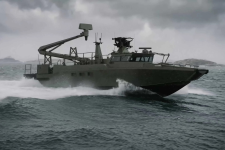
Saab's new CB90 CX combat boat can attack warships beyond 100 km and shoot down drones autonomously
Saab unveils the 18m CB90 CX combat boat ahead of Euronaval 2026. Featuring 40-knot speed, Autonomous Ocean Core navigation, and Marte ER missile or SeaSnake 30 air defense options, launch customer Sweden begins trials.
www.armyrecognition.com
Optionally crewed CB90s operating in the ISR Role (Sea Giraffe 1X on an elevating mast), the anti ship role (2x MBDA Marte ER - 70 kg to 100 km) and air defense (Seasnake 30 - KCE 30x173 with AHEAD). Every variant is also armed with the SAAB Trackfire autonomous CUAS turret (M230LF 30x113 or M2/M3 12.7 or FN MAG 7.62 or 40mm GMG).
"every CB90 CX can operate with up to ten personnel on board or entirely autonomously, without an embarked crew, although the required personnel complement for the three configurations remains unspecified. The CX's Combat Core common digital system combines vessel automation, equipment monitoring, steer-by-wire controls and fire control functions, while the Autonomous Ocean Core enables remote control and autonomous navigation. A radar-equipped variant could operate with an embarked crew while a missile carrier receives navigation commands and targeting information remotely, but weapons employment nevertheless remains subject to human decisions. The common architecture thus allows different CX configurations to share navigation, monitoring and mission-management functions while carrying different sensors and weapons, reducing the need to develop a separate hull for each mission."
"The CB90 CX's operational contribution depends on how the three configurations are distributed within an amphibious formation and connected to existing surveillance, targeting and command systems. For Swedish amphibious operations, a hypothetical eight-boat detachment with two ISR vessels, four missile carriers and two SHORAD boats would combine two surveillance radars, eight ready anti-ship missiles and two air defense turrets. Such a force would allow the missile boats to operate beyond the surface radar horizon of the surveillance vessels using externally supplied targeting information, while the gun-equipped boats would protect troop transports or selected coastal approaches."
"Sweden's recent procurement comprises ten CB90-family boats ordered in June 2024 for SEK 400 million (57 MCAD), followed by 22 in the second quarter of 2025 for SEK 900 million
(129 MCAD) and four more during the first half of 2026, but the distribution between NG and CX configurations remain unspecified. The first 32 vessels represent SEK 1.3 billion (185 MCAD) in contracts, with averages of SEK 40 million (5.7 MCAD) and SEK 40.9 million (5.9 MCAD) per boat, respectively."
....
"In February 2026, Sweden's Defence Materiel Administration (FMV) ordered eight SeaSnake 30s for €63 million (99 MCAD or 12.4 MCAD per gun) , including associated equipment and support, with deliveries beginning in February 2028 and an option for 29 additional guns. The contract also includes ammunition, training equipment and integration support, with the SeaSnake installation intended for CB90 NG boats and accompanied by the Hensoldt Spexer 2000 3D Mk III naval radar."
...
To be operated in flotillas.
McHale's Navy sails again.naval radar."
...
To be operated in flotillas.
Similar threads


- Replies
- 5
- Views
- 13K


