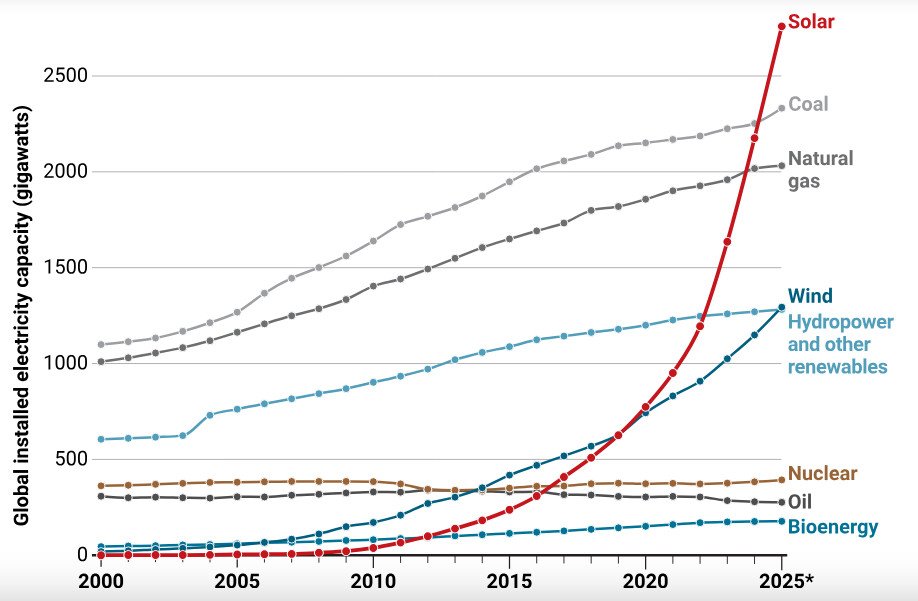
And the speed at which it is happening is rather not well understood on this side of the Atlantic and Pacific. In 2004, it took a year to install 1 GW of solar. Today, the world installs 2 GW per day. Science Magazine just named the renewable surge as the breakthrough of the year. Because solar is now the world's most popular individual source of electricity. And wind has surpassed nuclear, hydro, oil and biomass as a source of power generation.
But if you hear the conversation in North America, one would think this is a minor passing fad instead of a trend that will reshape geopolitics in due course.
And they're awesome until it's night time, or calm, or the cost accountants tell you the truth

Bjorn Lomborg: Why solar and wind power aren’t winning
All-in costs too high once you count fossil fuel and battery backups, land requirements and damage their equipment does
We are
constantly being told that solar and wind are now the cheapest forms of electricity. Yet governments around the world felt they had to spend
US$1.8 trillion on the green transition last year.
Wind and solar only produce power when the sun is shining or the wind is blowing. When they are not, electricity from these sources is infinitely expensive and back-ups are needed. This is why fossil fuels still account for two-thirds of global electricity and why, on current trends, we are a century away from eliminating their use in electricity generation.
Imagine if a solar-driven car were launched tomorrow, running cheaper than a gas vehicle. It sounds great, until you realize it won’t run at night or when it’s overcast. So if you did buy a solar car, you would still need a gas car as back-up. You would have to pay for two cars.
Modern societies need power 24/7. Solar and wind power’s unreliable and intermittent operation involve large, often hidden costs. This is a smaller problem for wealthy countries that already have fossil-power plants and can simply use more of them as backup. But even in wealthy countries it makes electricity more expensive.
In the world’s poorest, electricity-starved countries, however, there is little fossil fuel energy infrastructure to begin with. Hypocritically, wealthy countries refuse to fund sorely needed fossil fuel energy in the developing world. Instead, they insist the world’s poor cope with unreliable green energy supplies that can’t power the pumps or agricultural machinery needed to lift populations out of poverty.
It Is often reported that emerging industrial powers like China, India, Indonesia and Bangladesh are getting more power from solar and wind. But these countries get
much more additional power from coal. Last year, China got more additional power from coal than it did from solar and wind. India got three times more electricity from coal than from green energy sources, Bangladesh 13 times more and Indonesia an astonishing 90 times more. If solar and wind really were cheaper, why would these countries not use them? Because reliability matters.
Wind and solar's all-in costs are too high once you count battery backups, land requirements and the damage their equipment does. Read more.

financialpost.com