• Thanks for stopping by. Logging in to a registered account will remove all generic ads. Please reach out with any questions or concerns.

Police Folk Allegedly Behaving Badly

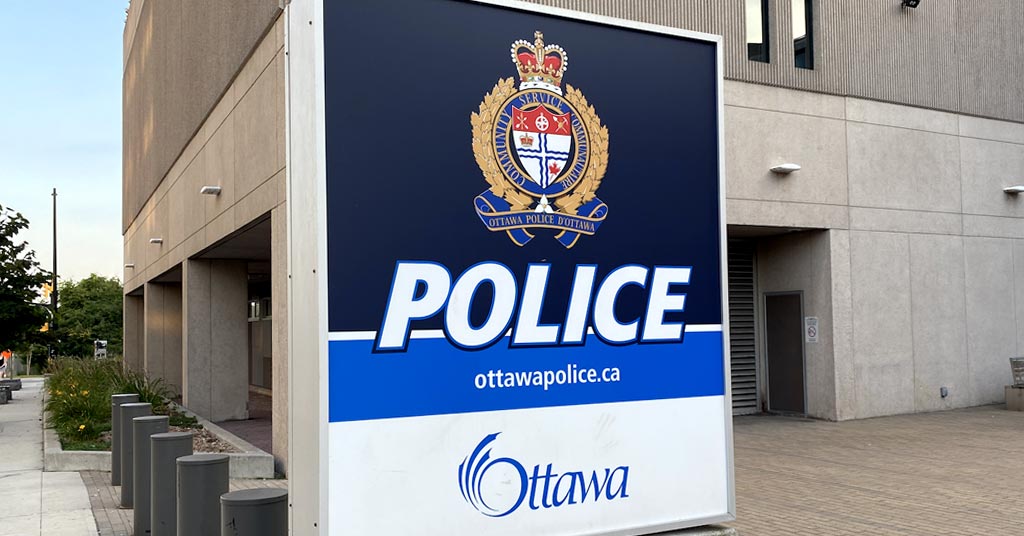
Police adjacent: Head of Ottawa's Police Oversight Board resigns after seven months in the job. Not mentioned in the press release? Her son's arrest as part of what's being called "the biggest drug bust in Ottawa history".


Is a police oversight board one of those organizations filled non experienced "academics" who judge police actions after the fact ?
 
Is a police oversight board one of those organizations filled non experienced "academics" who judge police actions after the fact ?

The board in question:

The Ottawa Police Services Board is a seven-member civilian body that oversees the Ottawa Police Service.

The Board is responsible for setting the overall objectives and priorities for the provision of police services, after consultation with the Chief. It is also responsible for hiring and monitoring the performance of the Chief, approving the annual police budget, and preparing a business plan for the Police Service every three years.

And its statement about the resignation of its Chair.
 
Is a police oversight board one of those organizations filled non experienced "academics" who judge police actions after the fact ?

They aren’t in any way a part of investigating and recommending charges on police incidents, if that’s what you mean. In Ontario a police services board is basically the link between municipal government and the strategic direction of the police service.
 
Police adjacent: Head of Ottawa's Police Oversight Board resigns after seven months in the job. Not mentioned in the press release? Her son's arrest as part of what's being called "the biggest drug bust in Ottawa history".

Question (I asked s few friends last night while we were out, I'm not confident in the answers I kinda sorta got...)

But are the police boards a volunteer position? (But like a serious volunteer position that one can't just walk away from after showing up twice...)

Or are these full time civilian jobs? Part time?
 
Generally in my experience they are paid for their time spent at the meetings or doing their work for the commission as a part time job. Some are honorarium positions.

You can see on their job postings usually how much time a week/ how much a month they anticipate they’ll be working
 
Is a police oversight board one of those organizations filled non experienced "academics" who judge police actions after the fact ?
That's usually reserved for university criminology professors.

Question (I asked s few friends last night while we were out, I'm not confident in the answers I kinda sorta got...)

But are the police boards a volunteer position? (But like a serious volunteer position that one can't just walk away from after showing up twice...)

Or are these full time civilian jobs? Part time?
In Ontario they are appointed positions. The Police Services Act sets out the size and composition of the board based on population. A set number of positions represent the municipal council, community member(s) at large (appointed by council) and the provincial government (appointed by Cabinet). The remuneration (pay) of a provincial appointee is set out in regs under the Act and it is little more than a small honourarium, paid by the municipality. The members of municipal council will make whatever they make for committee work and I assume the community appointee(s) will make whatever the terms of appointment is.

They are technically the employer of the police service. MoUs are signed between the Board and Ass'n, the appoint the Chief, etc.
 
It blows my mind sometimes how shady & clearly incompetent (I'd bluntly say corrupt, but also realize there may be something that I've missed that is relevant) some folks are...

Like he didn't die from natural causes, that part has been made clear...

"He died from asphyxiation via choke hold? AND an overdose of ketamine? Golly gee, how did THAT happen!?"

"He was attacked by the police while walking home from the store, and wasn't committing any crimes when doing so?"

"The medics injected him with HOW MUCH KETAMINE!?"

"Nah, I'm not going to pursue any charges against these guys. It's Bob, and Larry!"

"Nothing to see here folks, nothing at all...move along now, go get some KFC or something...."


I'm glad everybody involved ended up charged. Big time. Poor kid...

Update in today's news.

They are in the middle of the third and final criminal trial of three police officers, and two City of Aurora, Colorado paramedics.


The Civil Rights lawsuit by the family against the City of Aurora was settled for $15 million USD.
 
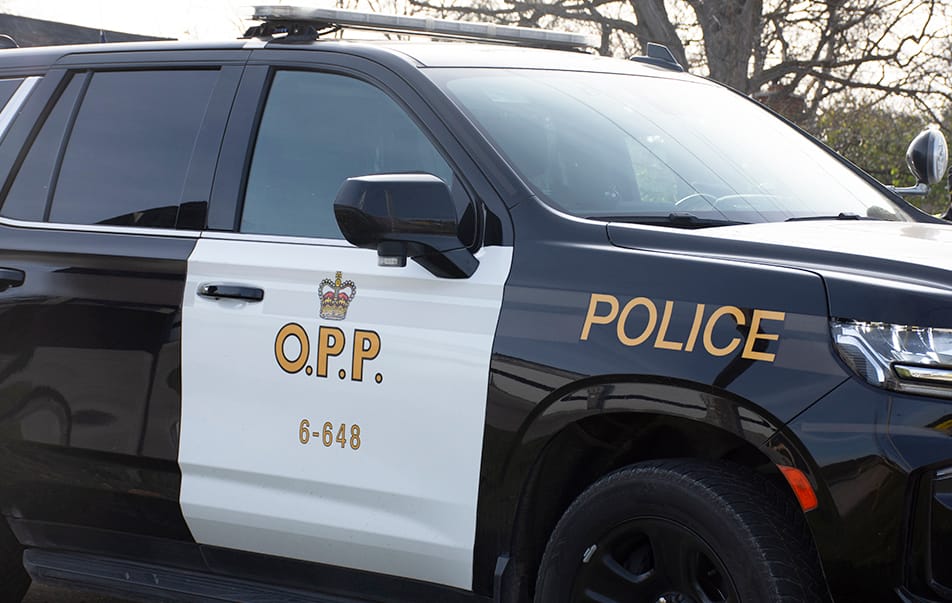
OPP detain a reporter and seize their SD card on the site on an accident; the Canadian Association of Journalists is unamused.

 
OPP detain a reporter and seize their SD card on the site on an accident; the Canadian Association of Journalists is unamused.

Oof. That’s gonna be very tough to justify. Doesn’t sound like his photos afforded evidence he was uniquely capable of obtaining or that was perishable and would be lost otherwise. Sounds like they could have stood in the same spot and taken the same photos.
 
Oof. That’s gonna be very tough to justify. Doesn’t sound like his photos afforded evidence he was uniquely capable of obtaining or that was perishable and would be lost otherwise. Sounds like they could have stood in the same spot and taken the same photos.
Of particular interest is the journalist's claim that "Other people were nearby capturing images on their cell phones, but police did not accost or detain them or take their devices, Vivian noted."

If that is in fact the case, this appears even more problematic.
 
Of particular interest is the journalist's claim that "Other people were nearby capturing images on their cell phones, but police did not accost or detain them or take their devices, Vivian noted."

If that is in fact the case, this appears even more problematic.
Yes and no. If he was taking photos with a good camera versus buddy with a cell phone, that aspect of it could be articulated- if you put it in enough of a frictionless vacuum.

I’ll keep an open mind, but I definitely need to be convinced this was necessary, even if the Coroner’s Act grants broad authority making it lawful.
 
Oof. That’s gonna be very tough to justify. Doesn’t sound like his photos afforded evidence he was uniquely capable of obtaining or that was perishable and would be lost otherwise. Sounds like they could have stood in the same spot and taken the same photos.
Another Guelph media's take on it though...... some heavy accusations against the reporter. Local Reporter Detained, Equipment Seized by OPP
 
Maybe something in managing the scene failing to follow a lawful command. Camera and photos are evidence that he was interfering. 🤔

Other people being “nearby” could just mean they were told to stand up on the side walk or shoulder over there and listened, but this person didn’t and is arguing it’s only “15 feet”
 
Not referring to this scene, or any in particular.

But, as a viewer of local TV news, what I notice now is bodies left in public view draped with orange sheets.
 
Another Guelph media's take on it though...... some heavy accusations against the reporter. Local Reporter Detained, Equipment Seized by OPP
Uhh…. Nothing in that convinces me. A journalist isn’t legally obligated to be nice or considerate or decent. Taking photos of something from a public space where there’s no reasonable expectation of privacy is not in and of itself ‘obstructing’. Photographing a fatal collision from a public vantage point, while distasteful, is not an offense.

If he was specifically directed to move back or to give them space and didn’t, that would be one thing. I don’t see anything corroborating that. There’s no word of charges. Flip side, the seizure of the camera and the statement that the coroner wants the photos corroborate the original reporter’s account.

I remain convinceable, but not convinced.
 

Little more info. I think the OPP is going to eat crow on it.

I think the last time I arrested a journalist for obstruction was like 2008.

I’m a little surprised when cops do stuff like this- it’s been a long time. Most guys weren’t on the road when this was more common. Same with the “stop filming me” crowd.
 

Little more info. I think the OPP is going to eat crow on it.

I think the last time I arrested a journalist for obstruction was like 2008.

I’m a little surprised when cops do stuff like this- it’s been a long time. Most guys weren’t on the road when this was more common. Same with the “stop filming me” crowd.
I think so too. No idea what the grounds for detention were, doesn’t sound like he was Chartered either. If you’re gonna lay hands on someone, better get that out pretty quick.
 
Uhh…. Nothing in that convinces me. A journalist isn’t legally obligated to be nice or considerate or decent. Taking photos of something from a public space where there’s no reasonable expectation of privacy is not in and of itself ‘obstructing’. Photographing a fatal collision from a public vantage point, while distasteful, is not an offense.

If he was specifically directed to move back or to give them space and didn’t, that would be one thing. I don’t see anything corroborating that. There’s no word of charges. Flip side, the seizure of the camera and the statement that the coroner wants the photos corroborate the original reporter’s account.

I remain convinceable, but not convinced.
Likewise. There was a somewhat similar incident elsewhere in that region a couple of years ago where a couple of local journalists were charged which were later tossed. Obviously, we don't know all of the information. If the scene had been taped off and the reporter crossed inside, that's one thing but; otherwise, it seems extremely questionable to restrict the recording of public space.

In a sense, I can see some of the member's concerns. Revealing the identity of persons and vehicles involved before NOK notifications and other activities are completed can be a concern; although moreso with TV coverage, but they can be easily solved with a chat with professional media (not so much with so-called 'citizen journalists, who generally neither know nor care about the rules).

It has always be tacitly assumed that, during a death investigation, we were working on behalf of the coroner, but it's always been a little confusing when there are criminal or provincial matters being simultaneously being investigated. Typically, when criminal matters are involved, it was not unusual to assign one member to 'assist' the coroner and kept separate from the criminal side. Any authority being exercised on behalf of the coroner better ensure that it is in furtherance of the Coroners Act and not something else; it's not a blanket authority. Additionally, we don't know if the authority of the coroner was formally delegated as required by the Act. It's usually not a big deal if you are just 'doing stuff', but if you're going to start actively exercising authorities, you'd better have your grounds in order. I'm not sure if the coroner's authority under Sec. 16 has ever been Charter tested. It seems pretty broad in today's terms.

But, as a viewer of local TV news, what I notice now is bodies left in public view draped with orange sheets.

Given court rulings on evidence admissibility, and the advancements in forensics, leaving a body 'in situ' is increasingly common in a criminal investigation. Even without criminality, they might be waiting for a coroner to attend the scene. If death has been confirmed in an acceptable way, the police need the coroner's authority - somehow - to move the body. If a criminal investigation is underway, the Coroners Act takes a back seat.

In the beforetimes, it was not uncommon for local coroners to not attend scenes, heck, some didn't even attend the hospital. In the above discussion, this made the police assumption of the coroner's authority a little more tenuous. Those days of coroners not attending scenes is all but gone.

 
Likewise. There was a somewhat similar incident elsewhere in that region a couple of years ago where a couple of local journalists were charged which were later tossed. Obviously, we don't know all of the information. If the scene had been taped off and the reporter crossed inside, that's one thing but; otherwise, it seems extremely questionable to restrict the recording of public space.

In a sense, I can see some of the member's concerns. Revealing the identity of persons and vehicles involved before NOK notifications and other activities are completed can be a concern; although moreso with TV coverage, but they can be easily solved with a chat with professional media (not so much with so-called 'citizen journalists, who generally neither know nor care about the rules).

It has always be tacitly assumed that, during a death investigation, we were working on behalf of the coroner, but it's always been a little confusing when there are criminal or provincial matters being simultaneously being investigated. Typically, when criminal matters are involved, it was not unusual to assign one member to 'assist' the coroner and kept separate from the criminal side. Any authority being exercised on behalf of the coroner better ensure that it is in furtherance of the Coroners Act and not something else; it's not a blanket authority. Additionally, we don't know if the authority of the coroner was formally delegated as required by the Act. It's usually not a big deal if you are just 'doing stuff', but if you're going to start actively exercising authorities, you'd better have your grounds in order. I'm not sure if the coroner's authority under Sec. 16 has ever been Charter tested. It seems pretty broad in today's terms.


Given court rulings on evidence admissibility, and the advancements in forensics, leaving a body 'in situ' is increasingly common in a criminal investigation. Even without criminality, they might be waiting for a coroner to attend the scene. If death has been confirmed in an acceptable way, the police need the coroner's authority - somehow - to move the body. If a criminal investigation is underway, the Coroners Act takes a back seat.

In the beforetimes, it was not uncommon for local coroners to not attend scenes, heck, some didn't even attend the hospital. In the above discussion, this made the police assumption of the coroner's authority a little more tenuous. Those days of coroners not attending scenes is all but gone.

Thanks for your insight on this.
 
Back
Top