
- Reaction score
- 28,573
- Points
- 1,360
I knew cops and basement savers had a feud but this is going a bit far.
VFD and VPD: hold our beers…


I knew cops and basement savers had a feud but this is going a bit far.

For a while in Alberta on the QEII, which had fatals constantly and large incidents- we actually shut down the section of the highway altogether and push the traffic out to adjacent roadways- it was just too much for distracted drivers going 130 on the highway to close off a section that was safe.Readers with an interest in highway scene safety may, or may not, find Blocking Techniques for Roadway Incidents worthwhile.
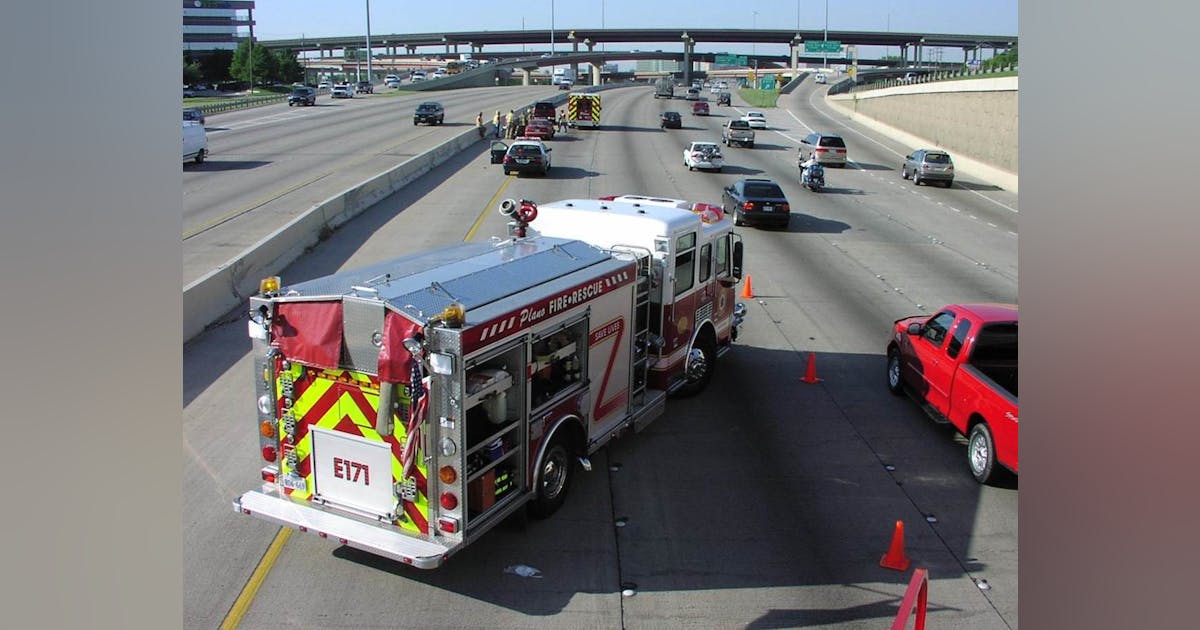
Blocking Techniques for Roadway Incidents
Jack Sullivan illustrates blocking and parking tactics for roadway incidents to protect responders and increase scene safety.www.firehouse.com

He must be a riot at the annual First Responders picnic.Not high ranking, but what was this officer thinking? Probably something to be dealt with after the fact on the sidelines.
I go back far enough that we all worked behind a line or cones and/or flares. It was common to hold one lane and still have traffic whizzing by in the remainder, but those days are long gone. Traffic is too dense and too fast and drivers are too dense and too slow. It really became a matter of occupational health and safety. First responders can't be expected to focus on their task at-hand and still maintain traffic awareness. With collision reconstruction, scenes are held much longer now than they used to be. It's almost gotten to the point on the major highways now that even a traffic stop should have a blocker truck.For a while in Alberta on the QEII, which had fatals constantly and large incidents- we actually shut down the section of the highway altogether and push the traffic out to adjacent roadways- it was just too much for distracted drivers going 130 on the highway to close off a section that was safe.
Booted, does Alberta have EDRs (emerg detour rtes) like Ontario has in the 400-series? The thought of vehicular morons whizzing past first responders on a main highway even with lane control, sounds dangerous.For a while in Alberta on the QEII, which had fatals constantly and large incidents- we actually shut down the section of the highway altogether and push the traffic out to adjacent roadways- it was just too much for distracted drivers going 130 on the highway to close off a section that was safe.


First responders can't be expected to focus on their task at-hand and still maintain traffic awareness.
Booted, does Alberta have EDRs (emerg detour rtes) like Ontario has in the 400-series? The thought of vehicular morons whizzing past first responders on a main highway even with lane control, sounds dangerous.

Or an SQ cruiser with the big light board on top. I drive the 20 and 40 daily. See the SQ more often blocking than Transports Québec.In Quebec, nothing takes place on the highways (Autoroutes - the equivalent of the 400 series in ON) without a blocker truck from the dept. of transports.
The 400-series Emergency Detour Routes are signed but usually not patrolled when in use. There simply isn't the staffing to do that. The biggest problem is trying to funnel the traffic volume onto an adjacent usually 2-lane road. The more savvy traveller will use their GPS to find another route. Southern Ontario is similar in the sense of numerous rural roads; northern Ontario not so much.Some sections do, it’s not the whole way- but there are always, if I recall correctly, adjacent rural roads- so you place cops on those roads controlling everyone’s speed until you can re-merge them on to the highway. It’s slightly slower but faster over all than crushing people into a single lane driving by workers. The perpetual movement of sending them away and remerging makes it smoother and slightly faster.
For the short time I worked traffic, the initial steps of shutting down the QE2 were always the most stressful (for me anyways) and thankfully I only had to do so twice.Some sections do, it’s not the whole way- but there are always, if I recall correctly, adjacent rural roads- so you place cops on those roads controlling everyone’s speed until you can re-merge them on to the highway. It’s slightly slower but faster over all than crushing people into a single lane driving by workers. The perpetual movement of sending them away and remerging makes it smoother and slightly faster.

The nice thing about the QE2 is that there is an overpass about 10km, so you can realistically do a shutdown and route traffic onto the parallel rural roads.For the short time I worked traffic, the initial steps of shutting down the QE2 were always the most stressful (for me anyways) and thankfully I only had to do so twice.
Talk about feeling small all of a sudden, like..."Ooooohhhhhh boy, well, here it goes!"
That amount of traffic, where hardly anybody is going the actual speed limit, was daunting as heck the first time I saw how it was done & did my small part to assist.
(For those of you who haven't travelled it, Booter is right - the average speed is about 130km/h. Minus the folks in the far right lane who mostly just set their cruise control, it's a fairly fast moving highway)
Blocking is also often done by highway maintenance trucks, particularly if the need for fire to be on scene has passed.

I’ve used maintenance trucks, tractors, plows and cranes to deal with all types of emergencies- as blocking or even including in place of an armoured vehicle.
I really appreciate those operators and their expertise. They are also agile when it comes to how they’ll use their equipment when the “police” ask… “you’ll pay and talk to my boss?” With a grin…, always a good story. Good folks.
 www.mobilebarriers.com
And yet I know some really good people who are wanting to get into law enforcement - who are fit, sharp, genuinely kind hearted, emotionally mature, and have the desire to be a source of good in the community - that can't get hired on for whatever reason...New West's turn...
Police watchdog orders review in case of New West officer who sexually harassed colleagues
An unnamed sergeant in the New Westminster Police Department (NWPD) who sexually harassed lower ranked female employees has had his discipline decision put under review.
In a posted notice, British Columbia Police Complaint Commissioner Clayton Pecknold said there are questions about whether the punishment facing the unidentified man — a reduction in rank — fit the level of his misconduct.
"I have concluded that there is a reasonable basis to believe that the disciplinary or corrective measures proposed do not adequately reflect the seriousness and circumstances of the member's conduct; namely that the member used his rank and position of power within the NWPD to engage in an ongoing pattern of non-consensual behaviour of a sexual nature toward junior and vulnerable employees of the NWPD," wrote Pecknold.
The man is described as holding a supervisory rank and leadership role within the NWPD.
An investigation by the Vancouver Police Department found he made inappropriate sexual advances toward lower ranked female employees that were "very serious," "predatory in nature," and amounted to a "high-range level" of misconduct.
There should also be directionally-illuminated signage/arrows on the side of the trailer, ie if the trailer is swing out 22° for a 2-lane closure, then have LEDs/etc. pivoted back 22° so they point directly back towards oncoming traffic and light up the entirety of the span of the second (outboard) closed lane.This is what they have now,
Fire Blocking Apparatus | Fire Blocker Truck | Blocking Fire Truck | Barrier Truck | Blocker-Tanker/Tender Fire Apparatus - Mobile Barriers for Emergency Response
The Mobile Barriers ERB is the first traffic barrier in the country made to protect Fire, EMT, and Police emergency response teams & apparatus. The Mobile Barriers ERB can serve as either a Blocker Truck or Blocker-Tanker/Tender Apparatus to protect firetrucks & emergency responders at highway...
I wonder how many are in actual service? Outside of major urban areas and their well funded and equipped fire and EMS services, highway response is the responsibility of the local municipality.This is what they have now,
Fire Blocking Apparatus | Fire Blocker Truck | Blocking Fire Truck | Barrier Truck | Blocker-Tanker/Tender Fire Apparatus - Mobile Barriers for Emergency Response
The Mobile Barriers ERB is the first traffic barrier in the country made to protect Fire, EMT, and Police emergency response teams & apparatus. The Mobile Barriers ERB can serve as either a Blocker Truck or Blocker-Tanker/Tender Apparatus to protect firetrucks & emergency responders at highway...
I vote for turret gunners. No effin' around.There should also be directionally-illuminated signage/arrows on the side of the trailer, ie if the trailer is swing out 22° for a 2-lane closure, then have LEDs/etc. pivoted back 22° so they point directly back towards oncoming traffic and light up the entirety of the span of the second (outboard) closed lane.
I wonder how many are in actual service? Outside of major urban areas and their well funded and equipped fire and EMS services, highway response is the responsibility of the local municipality.
Blocking is also often done by highway maintenance trucks
I go back far enough that we all worked behind a line or cones and/or flares.
I'm not sure the 'who is responsible for what' has ever been formally worked out between the agencies in Ontario.
I vote for turret gunners. No effin' around.


