
- Reaction score
- 1
- Points
- 410
I think the Lav could have used a phone as well.




Firing a 60mm high velocity round at the M1 at close range would, in my opinion, be futile. The biggest threat would be dismounts who get up close with satchel charges, flamethrowers etc (the fate of the Elefants at Kursk). The M1 has plenty of machine guns at least.
Perhaps we are talking a company sized operation here: one platoon as the screen (not only against AT teams, but also to protect against enemy snipers and forward observers), one platoon to assault and one platoon for reserve/exploitation tasks, backed by a tank platoon. In the future, we may see armoured vehicles evolve to carry their own personal escort or close protection sections; the Merkava ands Centurio are two current vehicles with that ability today.Devil's advocate time - how much of the platoon to you want to hold as a screen to protect the tank vice moving forward clearing buildings?
My understanding is the tanks are mostly used as cutoffs, laying on down defined streets or other boundries, but not as intimate support for the Infantry. This gives the best of both worlds: observation and firepower for the infantry, plus the tanks are less likely to suffer a close engagement and can still use their mobility to influence the battle (drive down another street to take the enemy under fire) rather than slugging it out as a somewhat mobile pillbox.The platoon of infantry with the single tank would not be on their own, nor would they just be tank bodyguards. I do suggest that the normal armoured principles of concentration might be put aside in the urban battle. A company operation against a block or building might just have a Troop or single tank. Each platoon in a company operation might have a tank attached to provide fire support. This is a departure from normal armoured thinking but I figure that the urban battlefield deserves special treatment.
2Bravo said:The nice thing about the M1 is that it has shown that it is adaptable to different environments. It excels out in the open but it has also shown the ability to go into built up areas (with infantry!). Having a tank that carries a section as a routine function might turn into a vehicle of compromise that excels at nothing. Still, an urban support vehicle (multiple weapon stations geared at shooting up buildings as opposed to vehicles) might be interesting. Didn't you write an article on that a little while ago? I believe that the Russians have developed an urban fire support variant of the T-72.
 ) as to some possible future directions. The vehicle you are alluding to is conceptualizing an improved version of the ACHZARIT with both close in fire power and the ability to carry long range fire power as well (Think of LOSAT, HELLFIRE, BRIMESTONE or FOG-M being launched from the weapons station. An "Infantry" vehicle would only carry a few rounds, while an "Armoured" vehicle would replace the section with lots more reloads of the missiles).
CFL said:"And yet our gov't is content with the MGS. sigh

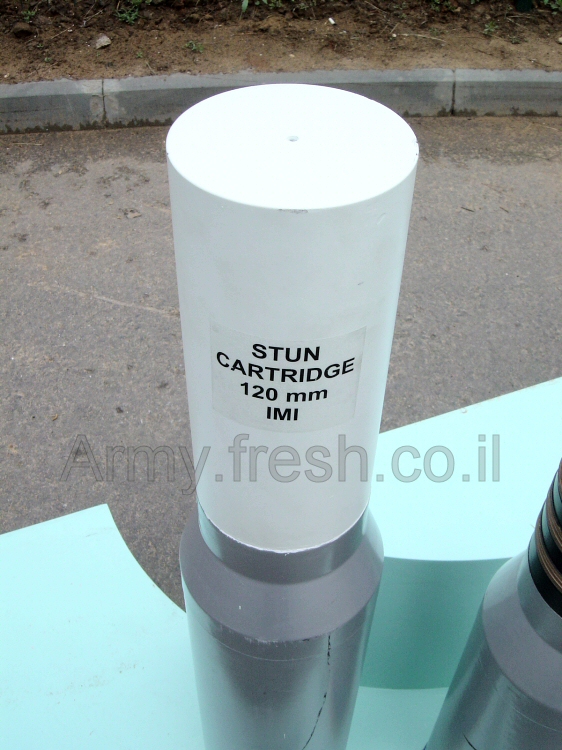
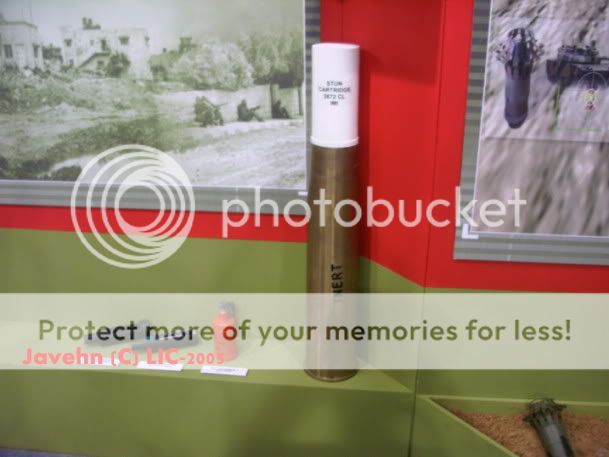
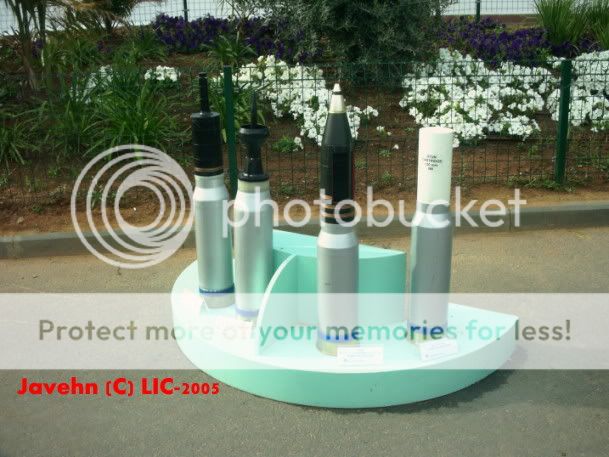
Britney Spears said:Perhaps our tankers may find gainful employment at the next WTO summit?
Non- lethal or not, I'm sure the sight of a leopard thundering towards them with the main gun blazing would really dampen the mood of any protester mob.....
Description
The prototype of the BMPT is based on the chassis of the well-known T-72 MBT which is used in large numbers by the Russian Army and has been manufactured under licence by many countries.
To the rear of the driver's compartment, at the front of the vehicle, the hull has been raised providing greater internal volume. On top of the hull is mounted a new turret armed with an externally mounted 30 mm 2A42 dual-feed cannon with a cyclic rate of fire of up to 600 rds/min. A total of 500 rounds of ready use ammunition are carried.
This 30 mm 2A42 cannon is already in widespread use with the Russian Army and can fire a wide range of ammunition types including High Explosive - Tracer (HE-T), Armour-Piercing Discarding Sabot (APDS), High-Explosive FRAGmentation (HE-FRAG) and Armour-Piercing - Tracer (AP-T).
Mounted coaxial with the 30 mm cannon is a 30 mm AG-30 or AGS-17A automatic grenade launcher which can be a stabilised in two axis.
Mounted on the left side of the turret is a four-round launcher for the 9M113 Konkors (NATO AT-5 Spandrel) Anti-Tank Guided Weapon (ATGW) which has a maximum range of 4,000 m and can be fitted with various types of warhead.
To enable targets to be engaged under day and night conditions when the BMPT is stationary or moving, a computerised fire-control system is fitted, which uses proven elements from that fitted to the T-90S series MBT.
This includes a PNK range-finding sight, day and thermal sighting systems, Agat-MR course operator's sight, combined day and night sighting system with image converter tube. Either the commander or gunner can lay the weapons onto the target using the PNK sighting system.
There is a 7.62 mm PKT machine gun mounted in either side of the raised superstructure to provide suppressive fire over the frontal arc and aimed via a roof mounted periscope sighting device. As an alternative these can be replaced by a 30 mm automatic grenade launcher with a similar sighting system. Standard 81 mm smoke grenade launchers are positioned on the hull and turret to cover the frontal arc.
The driver, seated in the centre of the hull at the front, has day vision devices and a TBH-5 night driving device with a range of 60 to 180 m.
The BMPT has a combat weight of 47 tonnes and has a crew of five, maximum road speed is 65 km/h and cruising range, with external drum type diesel fuel tanks at the rear, is 550 km.
The power pack, mounted at the rear, consists of a B92C2 four-stroke multifuel diesel with liquid cooling and supercharging, develops 1,000 hp and gives the vehicle a power-to-weight ratio of 21.2 hp/tonne.
For a higher rate of battlefield survivability, the BMPT is fitted with additional explosive reactive armour, on the front and sides. The forward part of the suspension either side is provided with skirts fitted with explosive reactive armour, while the rear part of the suspension is fitted with a grill type passive armour array. This has been designed to detonate the incoming High-Explosive Anti-Tank (HEAT) projectile before it impacts the main armour.
Standard equipment includes NBC system, 5 kW diesel generator which is mounted in an armoured compartment on the right side of the hull and an automatic two-shot fire detection and suppression system. A laser detection system is fitted which can be used in conjunction with the 81 mm smoke grenade launchers.
Mounted at the front of the hull is a standard T-72 type dozer blade that can be used for clearing obstacles or for preparing fire positions. If required, the vehicle can be fitted with various types of mineclearing equipment, such as the KMT-8 plough type device or the EMT system, which has been designed to detonate magnetic mines well ahead of the vehicle.

Israel unveils tank protection system
Big News Network
Wednesday 9th March, 2005 (UPI)
Israel Tuesday revealed a system it says will protect vehicles -- from
Humvees to tanks -- against attacks launched from a very close range.
The system could help American troops in Iraq if they stay there long
enough, indicated the head of the government's Rafael armaments development
authority, retired Vice Admiral Yedidia Yaari.
Yaari told United Press International militant attacks on U.S. troops in
Iraq were the kind of a reality to which (Israel) had to prepare.
The system, called Trophy, detects incoming threats, such as anti-tank
rockets, and sprays tungsten balls at them. The tungsten disintegrates a
rocket-propelled grenade for example. It thus neutralizes the threat without
causing an explosion, Yaari said.
The danger of attacks on cumbersome tanks in tight urban areas has concerned
officers. Palestinians eventually approached tanks and even stole equipment.
The problem has been attacks from a very close range, Yaari said. The new
system provides all round protection from attacks launched from as close as
30 to 60 feet away, he said.
Israel showed the system to U.S. officers and, according to Yaari, those who
saw it were excited.


