• Thanks for stopping by. Logging in to a registered account will remove all generic ads. Please reach out with any questions or concerns.

The Arctic

I would not be surprised if Canada positions a AOP's at Nuuk and opens a small Naval Station there. Seems to be a lot of dock space. Rotate the ship or the crew and have them patrol out of their during the winter, at least for the time being to this issue is resolved.
 
I would not be surprised if Canada positions a AOP's at Nuuk and opens a small Naval Station there. Seems to be a lot of dock space. Rotate the ship or the crew and have them patrol out of their during the winter, at least for the time being to this issue is resolved.

And concurrently 'twin' Iqaluit with Nuuk to help them develop the town, which sounds like something they want to do ....


Nuuk’s progress ‘aspirational’ to Iqaluit
Greenland capital has seen commercial, residential building boom; airport, school improvements underway

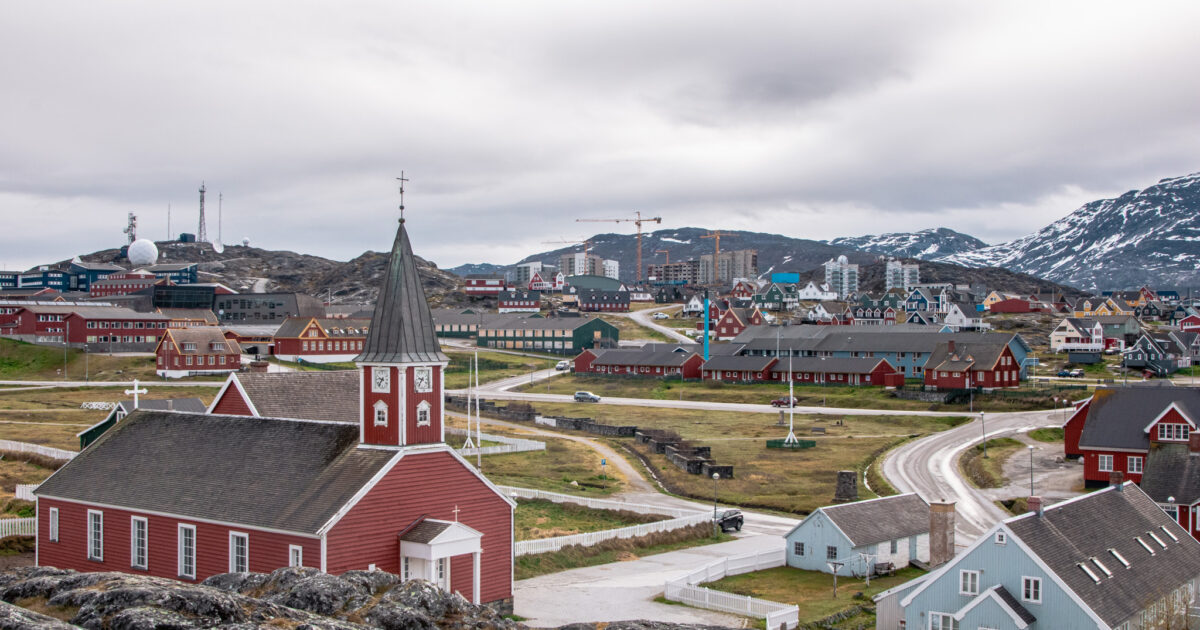
With a new seasonal air link to Nuuk, Greenland, travellers from Iqaluit will find a city that in some ways is similar but bigger, faster-growing and with services not seen in the Nunavut capital.

They will land in a fly-in city with a similar climate and array of colourful buildings, owing to a discontinued tradition of colour-coding structures based on their function.

However, they will also discover Nuuk as a capital city that has grown much vaster and taller than Iqaluit and includes businesses and amenities Iqaluit lacks.

 
I would not be surprised if Canada positions a AOP's at Nuuk and opens a small Naval Station there. Seems to be a lot of dock space. Rotate the ship or the crew and have them patrol out of their during the winter, at least for the time being to this issue is resolved.
I would be. Been to Nuuk around a dozen times over the years. Its a busy port, with containerships coming from Denmark, fishing boats and Danish warships. It's sufficiently busy that we had to shift berths, leave early or couldn't get a berth because of the traffic numerous times Love the town but I can't see a naval station.
 
And concurrently 'twin' Iqaluit with Nuuk to help them develop the town, which sounds like something they want to do ....


Nuuk’s progress ‘aspirational’ to Iqaluit
Greenland capital has seen commercial, residential building boom; airport, school improvements underway

With a new seasonal air link to Nuuk, Greenland, travellers from Iqaluit will find a city that in some ways is similar but bigger, faster-growing and with services not seen in the Nunavut capital.

They will land in a fly-in city with a similar climate and array of colourful buildings, owing to a discontinued tradition of colour-coding structures based on their function.

However, they will also discover Nuuk as a capital city that has grown much vaster and taller than Iqaluit and includes businesses and amenities Iqaluit lacks.

I think the first time I been to Nuuk and Iqaluit was over 20 years ago. Nuuk has grown a lot and a lot of its due to mining exploration. Busy port, access to food resupply through Royal Arctic, fuel, paved roads, a small mall what's not there to like. Here's a few pics from some of my visits there. Note the blue building is their Arctic Command.
20150919_151553.jpg
20150919_140701.jpg
20150920_121724.jpg
20180817_092100.jpg
20180817_092054.jpg
20180817_093505.jpg20200814_053239.jpg20200814_053207.jpg
 
They better stock up, because the deckhands will have them covered in paint and buoy slime in no time. Nice thing about the old uniform is it is cheap to make.
 
I would be. Been to Nuuk around a dozen times over the years. Its a busy port, with containerships coming from Denmark, fishing boats and Danish warships. It's sufficiently busy that we had to shift berths, leave early or couldn't get a berth because of the traffic numerous times Love the town but I can't see a naval station.
Hmmm, maybe a bunch of Arctic NATO countries can contribute to a dedicated Naval Station with it's own berths, warehouses, services and offices there?
 
I think the first time I been to Nuuk and Iqaluit was over 20 years ago. Nuuk has grown a lot and a lot of its due to mining exploration. Busy port, access to food resupply through Royal Arctic, fuel, paved roads, a small mall what's not there to like. Here's a few pics from some of my visits there. Note the blue building is their Arctic Command.
View attachment 97766
View attachment 97765
View attachment 97764
View attachment 97763
View attachment 97762
View attachment 97761View attachment 97760View attachment 97759
Seems pretty modern and well serviced. About 2 1/2 the population of Iqaluit (7500:20000).
 

I have told this tale before but in sync with this article it is worth telling again.

When I got into the Alaska fishing business it was because the company I worked for wanted to take advantage of a boom that was going on. A new industry was being launched. A fish that the Americans hadn't considered worth harvesting as they focused on salmon, halibut and herring, was being caught offshore by the Japanese to make a traditional Japanese product and the market was worth billions. America, led by Ted Stevens decided they wanted to get in on the action. To do that it had to exercise its rights in its permissible Economics Exclusion Zone. America had been reluctant to do so because it was concerned that recognizing EEZs as legitimate might reduce America's Freedom of Navigation elsewhere. But the money and the political pressure was too much. This was the era of Bruce Willis and Nakasoni Towers and Sean Connery's Sensei. Japan was buying up large chunks of American opportunity and politicians were worried. Japanese fishing in America's backyard and filching American fish, even if Americans had no use for it, was not acceptable. Thus EEZs and public dollars invested in converting this scrap fish into something that foreigners would buy.

The Alaska fishery at that time was an inshore fishery. It was a seaonal fishery tied to the shore-bound canneries that anchored the small communities along the Alaska coast. And it was a small boat fishery.

It was also dominated by fishermen from Seattle who came up for the season and lived down south. That fishery was dominated by the Norwegian community. The Ballard district hosts the largest Norwegian Constitution Day celebration outside of Norway on May 17th every year. When this new fishery opened up it was natural that the Norwegians were going to get involved and as we see today the Scandinavians tend to cluster.

As I said, the Alaska fishery was a small boat in-shore fishery. The Japanese were fishing from deep water trawlers and processing the fish on-board. The Americans needed to recapitalize their fleet to catch this fish they were claiming as their own. This being America money was less of a problem than figuring out how to spend it.

The first problem they ran into was the Jones Act. Their new ships had to be built in America. But nobody in America knew how to build a deep water trawler. So the solution was to convert existing American hulls into factory trawlers. That was easier said than done. The solution came from the Seattle Norwegian community. Rather than trying to find a close match fromthe existing fleet and building something that would work they did the other thing.

Mud boats from the Gulf (Mexico/America) were bought and sent to Norway for conversion. The Norwegians knew how to build modren deep water trawlers and knew how to sail them, fish them and operate them. They also had the money to finance them. The American mud boats were brought to Norwegian yards and converted. Yards like those that built the Svalbard.

The conversions consisted of removing the superstructure and all the hotel space, removing the macinery, clipping the bow, removing the stern, and stripping the sides. They famously kept that portion of the keel into which the registration was stamped and Theseus built a new ship. They were longer, wider, drew more, displaced more, were more powerful and equipped with with every electronic gadget known to man. They could haer a pollock chirp at 200 miles. Their crew accommodations and galleys were bulit like a Scandinavian hotel. Complete with brass raile and potted plants.

They were expensive.

But the industry was lucrative.

Once the fish was brought on board four products were possible. Fish eggs, Fish meat, Fish oil and Dried Fish. There was a market for all four. But the Fish Eggs, the Roe was king. When I got into the industry I was selling equipment into a market where customers were buying $500,000 equipment based on a marginal return that resulted in a 2 to 5 year payback. When I did the math on what I was selling and saw that I could achieve a 2 year or better payback I assumed that I was going to be making lots of money.

I was wrong. That first year was pretty dry. The industry was taking that same 500,000 that I wanted and investing it in roe strippers. And getting payback in two weeks. Roe paid for the fleet.

The fleet and its new shore plants were also capable of producing meal, oil and fish meat (as fillets, mince or surimi)but roe was the targeted crop, The Japanese loved the stuff, would pay top dollar and didn't quibble over quality, unlike the secondary product, surimi.

...

Now every fishery has its limits, there are only so many fish in the sea so catches are regulated, especially in America. In Alaska the traditional regulatory system was the Olympic, or Derby system. It worked well for small boats delivering to shore plants. It turned out not to work so well for factory trawlers.

The Derby system, as in the Kentucky Derby, was a race. It was a race to see who could get the most fish before the season closed. It was also a race to get the most fish first. And this is wher my tale crosses with the article above.

As I said these ships had the ability to make many products from the fish. But they didn't. They only harvested roe and enough fish meat to look dignified. They burned the fish oil as fuel and discarded the rest of the fish. Typical yields in those early days were down around 9% - 100 lbs of fish brought on board and only 9 lbs delivered to market. The rest was disposed of to the atmosphere or overboard.

The reason was that ships sink when they weigh too much. The available tonnage was best filled with the most profitable cargo. The fishers did what they had to to keep the environmental regulators off their back, if not happy, but they did so reluctantly.

They filled up with roe.

....

Now the other part of this tale is the boom in the ships themselves. Those fancy new Norwegian ships needed paying for and there were lots of them. And the fish paid for them but, as said, there were only so many fish in the sea and all these ships were chasing the same number of fish allowed by the government. If no fish then no money. If no money then no boat. If no boat then no competition and more fish for the survivors next year.

So the other story told is that of beggar thy neighbour.

It was worth sacrificing recovery if it meant fishing longer and denying fish to your competitor so that they would go bankrupt and next year you had the fish they caught and probably their boat as well.

Ultimately the industry concentrated into three factions, one Japanese and two with Norwegian ties. Thee Norwegians dominated with two Seattle companies that ended up having a punch up in a parking lot over quota when the Derby system was abolished to discorage roe stripping abd encourage full utilization. Ships could then catch their quota at their leisure. Yields improved, the size of the fleet shrank and profitability improved.

Those two companies in the parking lot, on was run by a Norwegian American from Ballard who was instrumental in buliding the American surimi industry on the back of his existing on-shore assets and adding deep sea capabilities.

The other company was owned by a reputedly dyslexic Norwegian from the motherland that started his career as a high school drop out that got a job as a deck hand on Seattle crabber fishing King crab. And making a fortune. Which he promptly pissed away like every other rich teenager. And went back to sea a couple more times before wisening up and converting his wages into a boat of his own. Which went broke a couple of times. But perseverance and a good marriage saw him eventually build the largest, newest trawl fleet in Seattle and was fishing the Bering, the Ochotsk, the Barents, off NewZealand off both coasts of South America with ships built to his spec. He went on to buy the yards that built his ships and the bought American and Korean yards. Kjell Inge Rokke of Aker. He did a little time in a Norwegian clink for some white collar crime before selling off much of his holdings to Fincantieri. But that is kind of by the way.

The key point of my story is the beggar thy neighbour bit.

Winning is not just about doing better than the other guy. Sometimes active measures are necessary to ensure he doesn't do better than you.

Ruthlessness.

.....

And next time I will tell you a tale of a Norwegian, a Japanese delegation, a Goose, A gun and a skerry.

 
Last edited:
It has finally happened.

The BBC has noticed Canada


Canada's Arctic is a massive, treacherous, and largely inhospitable place, stretched out over nearly 4 million square kilometres of territory - but with a small population roughly equal to Blackburn in England or Syracuse, New York.

"You can take a map of continental Europe, put it on the Canadian Arctic, and there's room to spare," Pierre Leblanc, the former commander of the Canadian Forces Northern Area told the BBC. "And that environment is extremely dangerous."

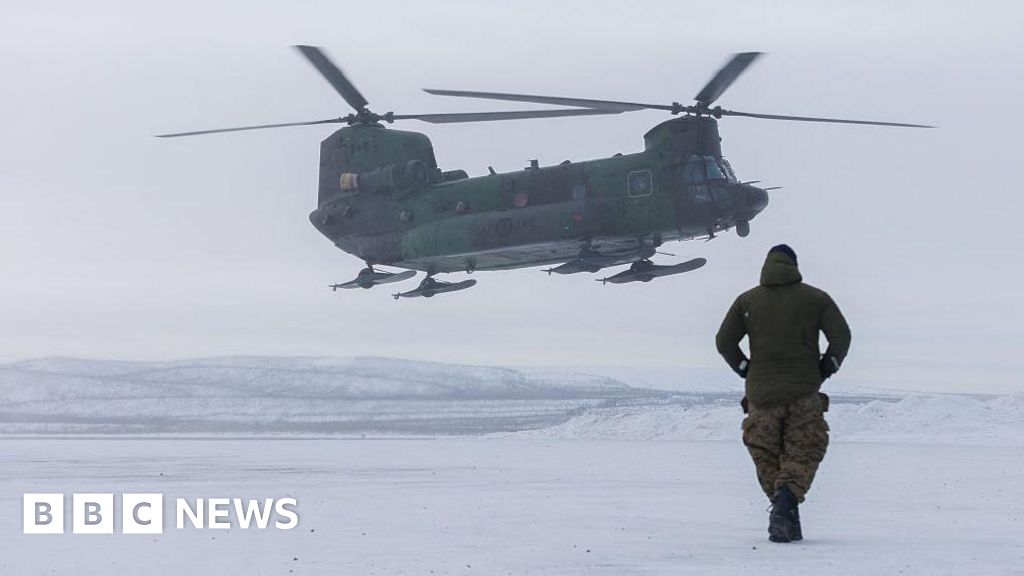
Standing at the defence of that massive landmass is an aging string of early warning radars, eight staffed military bases and about 100 full-time Coast Guard personnel covering 162,000km of coast, about 60% of Canada's total oceanfront.


.....


A Globe and Mail article by Tom Lawson argued that it was unfair to compare our Northwest Passage to Russia's Northeast Passage because the Russians had Arctic ports to connect and we didn't. The argument was that the Russians didn't have to justify the entire length of the route. They had multiple short hauls to justify the expense.

Now if only somebody had built more harbours in our North. We may lack for people up there. It is not as if we lack for mines. Or reasons to install bases and service hubs for the locals we do have.


The reason there are ports on the Russian side is not because of the people. They are there because the Chinese and Europeans need the resources and the Russians want the money.
 
“If you look at Siberia, they have at least 16 deep-water ports. And you look at Canada, we got nothing,” Flaherty told POLITICO.

Flaherty represents a business group proposing a port in the community of Qikiqtaaluk (population 600) on Baffin Island in the northern territory of Nunavut.

vs

Canada’s Arctic is “still going to be cold, dark and miserable in winter up there,”

.....


In the meantime, there is widespread disagreement over where Canada’s first major Arctic military installation ought to be.


The commander of Canada’s navy says a first-ever Arctic port is not a ready-made solution because all proposed locations will be iced in for at least part of the year.

Vice-Admiral Angus Topshee says the Canadian Arctic looks nothing like Europe’s northern reaches. “All you need to do is go north of the Arctic Circle in Sweden, Finland or Norway, and it looks like the west coast of British Columbia,” he told POLITICO.

Canada’s Arctic is “still going to be cold, dark and miserable in winter up there,” Topshee said.

“So could we build more ports in the north? Yes, but that doesn’t change the fact that those ports are not going to be effective for a large chunk of the year when it’s winter,” he said. “What are you going to do for the five, six, seven months of the year where you can’t get to any of those places — even with an icebreaker?”

Topshee said a vessel that could serve as a “mobile Arctic base” makes more sense because “there’s no amount of money that’s going to make Iqaluit ice-free, year round.”

....

Cold, dark and miserable sez the Southerner. What is the least we can do to plant our flag up there. Perhaps a ship once a year in the summer will suffice.

Meanwhile, we have a population that has lived up there for at least 3500 years. They consider it home. They're staying.

Why is an annual ship an inadequate claim?

The National Post's Brit answers the question.

Why would America be hell-bent on owning Greenland; if they already have access, why would they need to own the place?

America would need permissions to build up infrastructure in Greenland, Tim reports, and he agrees, they could do that without owning the place. But, he conjectures, with all these economic, security, and geo-political layers of strategies, “they need to be in the Arctic permanently… they don’t want to mess around.”

“You know,” he adds, “it’s like a billionaire saying that I can stay at the best hotels in London, but if I’m going to be doing major deals in the next ten years, I’m going to buy a couple of houses. I’m going to buy. I don’t want to rent, I want to buy. I’m serious. This is a signal that this billionaire is in town. You need to take me seriously.”


.....

If we want to be taken seriously we need to buy and we need to build.

And if we Southerners don't want to spend time up North then we need to do the other thing - make friends with the locals, figure out how they can earn a comfortable living so they can acquire the technology that works best for them. And help them secure their homeland. Ideally they will share it with us.

.....

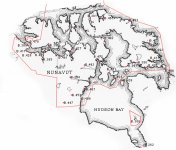
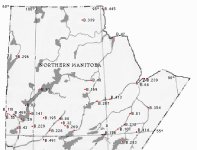
1769385599719.png1769385523833.jpeg


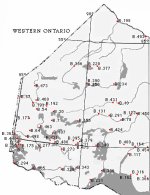
1769385650364.jpeg1769385683038.jpeg

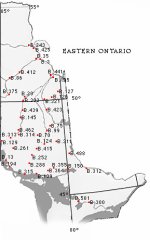
1769385702395.jpeg1769385726654.jpeg


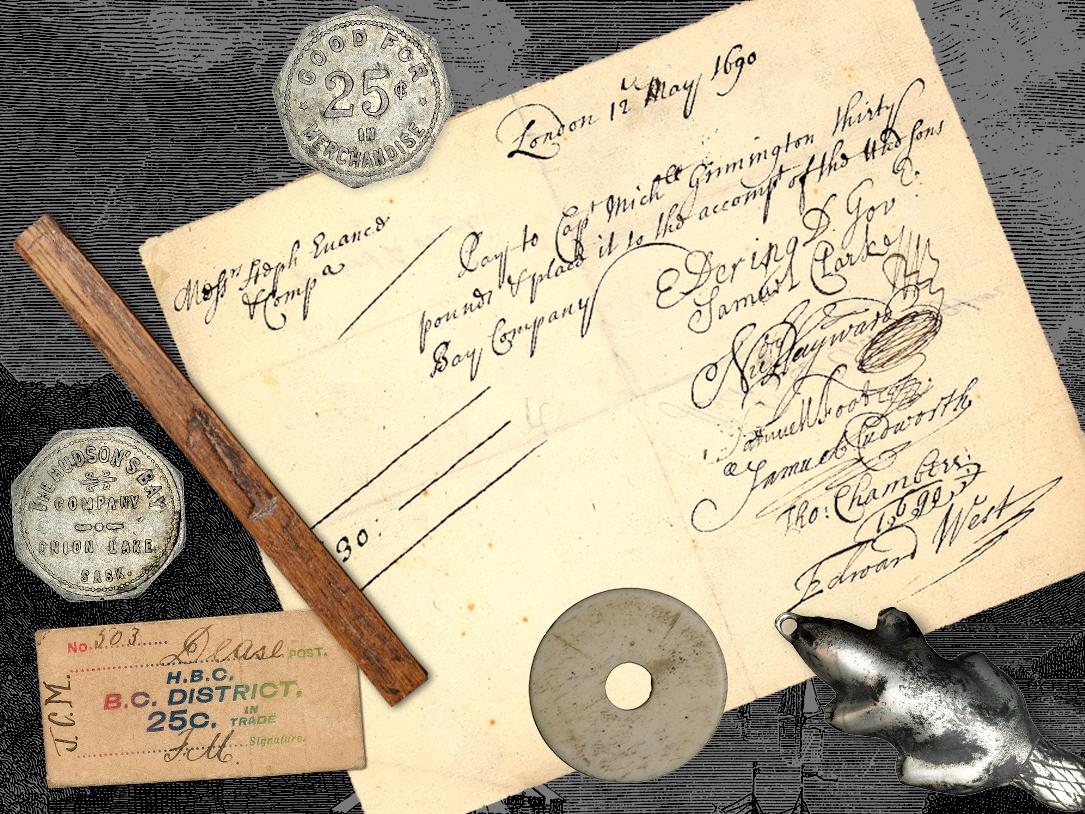
These are HBC trading posts. More than 500 of them. Operated from 1670 to almost the present day. The HBC never conquered the land. It set up stores. Its employees took up residence among the locals and swapped the latest European technology for furs. That system worked well enough until Confederation and then a bit longer. Until some European decided they were too good for furs and killed the economy. The locals were then short of things to trade and the posts and the HBC blew away. And they took their harbours and annual ships with them.

The best solution to securing the North in Canada's interests is figuring out what the locals can procure from their backyard and sell it to us for goods and services - shelter and security.
 
Back
Top