I wonder if their demographic has something to do with it.
and
For some reason, the text didn't copy but it is sort of a map of the US, and the darker the shade, the higher the number of recruits - in 2018.
View attachment 98244
Not sure about this particular circumstance but...
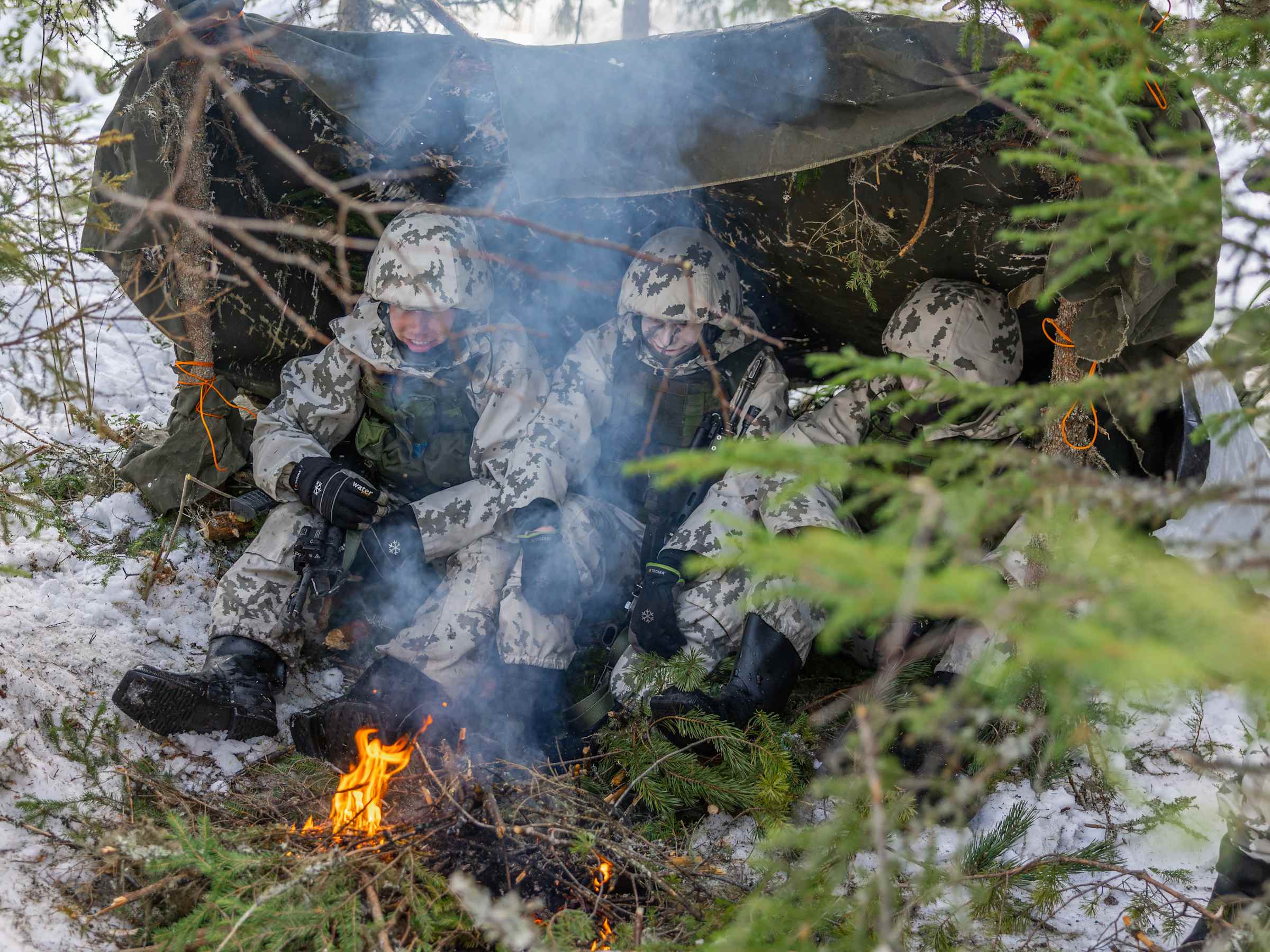
Based on personal experience it's because that, like the Russians, they are largely unable to operate off roads, and on skis, so they're 'snowshoe slow', and concentrated around their vehicles and equipment and easily surrounded and cut off. They also tend to treat the cold as an enemy, not an ally...
"If NATO intends to maintain credible deterrence in the High North, it must strengthen the combined winter warfare capabilities that Norway, Finland, Sweden, the British Army, and the Royal Marines have already begun to build. This requires expanding joint training, investing in equipment suited to deep cold, and ensuring that every allied soldier sent north is properly prepared not merely to survive the Arctic but to master it."
Deterring Russia in Scandinavia: Are We 'Mobility Ready'?
“All the sovereignty issues [in the Arctic region] stem from the same desires and fears -- the desire to safeguard routes for military and commercial shipping, the desire to own the natural riches of the region, and the fear that others may gain where you lose.”
―Tim Marshall
The High North is once again a region of urgent strategic concern. Russia’s growing assertiveness, its military concentration on the Kola Peninsula, and its increasing pressure on NATO’s northern flank make Arctic readiness essential to European and North Atlantic security. With Finland and Sweden now full members of NATO, the alliance must be able to operate seamlessly across a vast and unforgiving winter battlespace. That means developing, sustaining, and deploying highly trained ski troops who can move, survive, and fight in conditions that would immobilize unprepared forces.
As Admiral Giuseppe Cavo Dragone, Chair of the NATO Military Committee, recently put it: “Our mission in the High North is to prevent others from militarizing, uphold stability, guarantee freedom of navigation, and ensure that the Arctic remains governed by international law, not by the law of the strongest.” He continued, stressing that NATO must show strong will and alliance, because we can only defend or achieve peace if we are strong.
Equally telling is the assessment by Admiral Rob Bauer, former Chair of NATO’s Military Committee, who noted NATO’s emphasis on mobility in the High North: “We regularly conduct various exercises…to ensure that our forces are ready to operate in all conditions. We are testing rapid movement of troops, their deployability, and interoperability.”
These statements reflect a growing consensus among allied military leaders that mobility in the Arctic is not optional — it is foundational to deterrence.
Training Ski Troops for a New Strategic Reality
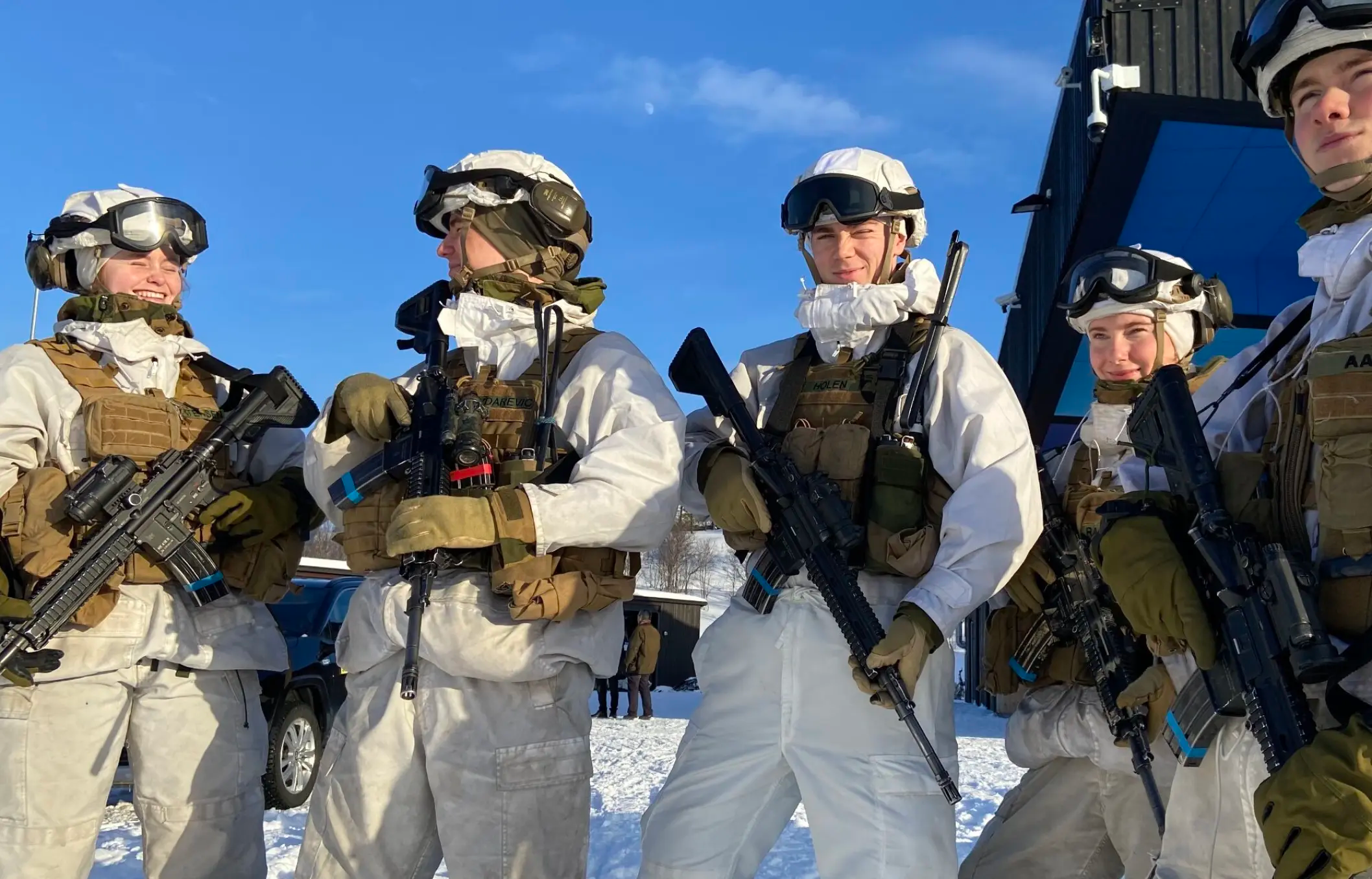
I soldiered through several winters in Norway's high arctic, and have completed winter warfare training with the Canadian, British and Norwegian Armies, as well as the Royal Marines Commando with whom I also qualified as a Military Ski Instructor. I also helped manage the delivery of arctic warfare training to hundreds of troops, in the Narvik region and elsewhere, many of whom had rarely seen much snow before they reached Norway.
Preparing an Arctic soldier begins with teaching them to dominate an environment that has defeated armies throughout history. For Norwegians, the winter landscape is practically cultural heritage. For British soldiers and Royal Marines, weeks of intense acclimatization in northern Norway are required before they can begin to operate with confidence. Early in their training, they learn to respect the cold rather than to fight it, because only by accepting the environment can they hope to master it.
Every force employs rigorous winter tests to push soldiers past their assumed limits. Norwegian troops carry out long-distance ski marches of twenty to thirty kilometers in full winter kit, pulling pulks and navigating complex terrain often in low visibility. The British Army uses similarly demanding tests, such as all-day ski mobility assessments that require soldiers to move across varied snow conditions while carrying loads that simulate real Arctic operations.
Royal Marines undergo a suite of cold-weather challenges during their initial deployment to Norway, including progressive ski marches beyond thirty kilometers, controlled cold water exposure drills, and a comprehensive mobility and survival test in which marines must demonstrate skiing proficiency, weapon safety in deep cold, stove and shelter skills, and reliable navigation in whiteout conditions.
The thirty-kilometer ski biathlon-style assessment represents the psychological threshold of winter soldiering. It demands steady movement over long distances, repeated climbs and descents, careful energy management, and accurate navigation through terrain that rarely offers a clear reference point. Completion of this test indicates not only physical strength but also mental resilience.
As one Norwegian officer said afterward, you realize you have stopped fighting the cold and started working with it. A British soldier admitted that on his first long march, the mountains decided how the day would unfold. A Royal Marine described the experience as negotiating with the Arctic and knowing that some days the condition barely agrees to let you pass. These challenges prepare troops for the culminating event of winter training, the multi-day tactical exercise. Here the Arctic reveals its full power.
The Tactical Exercise: A Trial of Endurance and Judgment
A typical winter exercise draws combined units deep into the mountains for weeks at a time. Over snow vehicles transport the force only so far before the terrain becomes too steep or fragile. From there everything depends on skis. Troops navigate to remote locations to establish temporary patrol bases, carving wind-protected hollows and digging snow shelters while the temperature falls. Sleep is fragmented and always uncertain. Patrols depart at irregular intervals. Whiteout can descend so quickly that visibility shrinks to a few feet. Decisions must be made with calm precision because in the Arctic a poor choice can have consequences as real as any opposing force.
Opposing units challenge them at every opportunity. Ambushes are launched after taxing ascents. Withdrawal maneuvers occur on icy slopes where balance, teamwork, and discipline matter as much as marksmanship. Groups of up to battalion size, 600 or so troops, might be tasked with attacking rear areas and skiing 10s of kilometers through deep snow covered mountains ranges in the dark to emerge from the forest and surprise rear area formations. Commanders and noncommissioned officers must account for avalanche risk, route spacing, exhaustion, and weather and snowpack conditions while still conducting tactical tasks.
One British Army sergeant recalled the moment his platoon was ordered to dig emergency snow shelters after a simulated vehicle breakdown. They were already exhausted, yet the instructors warned that the temperature was falling rapidly. “You do not argue,” he said. “You dig. And when the snow hole begins to hold heat you realize you have created a home you never wanted but absolutely needed.”
A Norwegian soldier summarized the experience even more succinctly: “The mountain does not care that you are tired. It cares only whether you understand it.” Royal Marines frequently describe these exercises as career defining. One marine admitted that when he stepped into a warm building after the final extraction he realized he could go anywhere on Earth.
Historical Foundations: Lessons from Finland’s Winter War
The roots of modern Arctic warfare can be traced to the Finnish Winter War of 1939 and 1940. Finnish ski troops, operating in forests and across frozen lakes, used their agility to cut Soviet formations into isolated pockets known as mottis; a word used to describe bundles of firewood. They demonstrated that mobility, initiative, and deep familiarity with winter terrain can offset a numerically superior opponent. Modern NATO armies do not duplicate those tactics directly, yet the spirit of the approach remains central to winter doctrine. Speed matters. Decentralized command strengthens resilience. Units capable of moving efficiently over snow can dictate the tempo of operations against heavier, road-bound forces.
Norwegian troops have preserved this legacy through practice. British units have absorbed its lessons through joint training and long-term deployments. With Finland and Sweden now fully integrated into NATO, these principles are more relevant than ever because the geography of defense has expanded dramatically.
The Expanding Strategic Threat from Russia
Russia’s military posture in the Arctic is not theoretical. The Kola Peninsula remains one of the most heavily militarized areas in Europe, home to Russia’s Northern Fleet, key air assets, and bases that oversee much of its strategic deterrent. Over the past decade, Russia has invested in new runways, air defense systems, and hardened facilities throughout its northern frontier. Activity in the Barents Sea has increased. Pressure on undersea infrastructure has grown. Russian forces have repeatedly signaled their intent to shape events in the High North.
With Finland and Sweden now part of NATO, the alliance must protect a significantly extended frontier. The Finnish border alone stretches over eight hundred miles. As Sweden integrates its advanced air and naval forces into NATO planning, the alliance gains enormous capability but also new obligations. The terrain across northern Finland, Sweden, and Norway is some of the most challenging winter ground in the world. To operate and prevail there, NATO needs troops who can move silently over snow, endure prolonged exposure, and execute complex tasks across isolated, roadless terrain.
Simply put, the defense of the northern flank now depends on an alliance-wide ability to field high-quality ski troops who can interoperate seamlessly with Norwegian, Finnish, and Swedish winter forces.
If We Are Not Ready: The Consequences of Inadequate Arctic Deterrence
Failure to master rapid movement and sustainment in the Arctic could have serious strategic consequences:
Diminished Credible Deterrence: NATO’s inability to move rapidly over snow and ice would reduce the credibility of its deterrent posture, making Russian coercion or probing actions in the High North more likely to succeed.
Operational Vulnerability: Without robust Arctic mobility, allied forces could be slow to reinforce or resupply northern outposts, leaving key infrastructure and populations at increased risk.
Strategic Imbalance: Russia’s continued investment in hardened bases and Arctic-capable forces, combined with NATO’s shortfalls in winter-specific mobility, could tilt the regional balance, emboldening Moscow to escalate pressure across the High North.
Escalation Risk: In a crisis, slower allied response times and lack of familiarity with Arctic conditions might invite miscalculation, increasing the risk of unintended escalation or conflict.
In geopolitical terms, the Arctic is not a static frontier but a theater of competition. As Admiral Bauer observed, conducting exercises to test “rapid movement of troops, their deployability, and interoperability” is vital not only for preparedness but for deterrence itself.
Call to Action
If NATO intends to maintain credible deterrence in the High North, it must strengthen the combined winter warfare capabilities that Norway, Finland, Sweden, the British Army, and the Royal Marines have already begun to build. This requires expanding joint training, investing in equipment suited to deep cold, and ensuring that every allied soldier sent north is properly prepared not merely to survive the Arctic but to master it.
The future security of northern Europe will belong to those who can travel farthest, endure the longest, and maintain clarity of judgment when the temperature falls and the snow begins to move. The Arctic rewards only those who respect it. Now is the time for the alliance to prepare with seriousness and unity because the stability of Scandinavia and the safety of the North Atlantic may depend on it.
“All the sovereignty issues [in the Arctic region] stem from the same desires and fears -- the desire to safeguard routes for military and commercial shipping, the desire to own the natural riches of the region, and the fear that others may gain where you lose.” ―Tim Marshall Executive Summary The H

www.linkedin.com



 boereport.com