• Thanks for stopping by. Logging in to a registered account will remove all generic ads. Please reach out with any questions or concerns.

The Arctic

How much winter and Arctic warfare training is really going on in Pet?
Not sure, I'm not posted there and my experience with the army was nearly two decades ago... I do know that Ottawa and Pet get colder winters on average than Anchorage. That means the people there are more acclimatized to colder weather than people in warmer climates.

As I said, there is likely some truth to the notion that on average Canadians are more accustomed to/better at cold weather operations than the average American.
 
Fair. I am just deeply suspicious of the assumptions that we're automatically good at Winter and Arctic Warfare just because we exist in a cold country. That's a specific skillset and doctrine that needs to be regularly trained and exercised.

Amen!

Especially with our winter... 60 below above the treeline is a whole different kettle of fish...
 
Not sure, I'm not posted there and my experience with the army was nearly two decades ago... I do know that Ottawa and Pet get colder winters on average than Anchorage. That means the people there are more acclimatized to colder weather than people in warmer climates.

As I said, there is likely some truth to the notion that on average Canadians are more accustomed to/better at cold weather operations than the average American.
Sure. But being acclimatized to cold and fighting in the cold are two different things.
 
How much winter and Arctic warfare training is really going on in Pet?
Quite a bit from what I gather. Army reservists in Canada regularly ride sleds and conduct patrols 100s of km North. 5 CMBG exercises in Nord-du-Québec from time to time from what I hear. Winter warfare is something we do well, lets take the Ws when we find the rare one haha.

This straight up sounds like national mythmaking. The Americans have more forces in Alaska alone than the CAF in total. I find this a real stretch.
Ive been on some of those exercises. We had to loan them sleeping kit...werent exactly prepared.
 

‘This is huge for Inuvik and huge for Yellowknife’​


On January 28, in a corner of the internet, a notice appeared that sets in motion billions of dollars of spending in two Northwest Territories communities.​

The notice advises contractors that later this year, procurement begins for work in Yellowknife and Inuvik associated with upgrading their military installations.

The estimated total contract value “may exceed $5B for each location,” the notice states, listing tasks ahead like:
  • airfield improvements, including new or repurposed hangars;
  • ammunition compounds and fuel facilities; and
  • “multi-purpose facilities,” accommodation and warehouses.
The $5-billion figure in the notice is extremely preliminary. Assigning a contract of that value doesn’t mean Yellowknifers or northerners will see all or even most of it. The Department of National Defence, approached for comment, did not immediately provide a more detailed breakdown of where that figure came from

Inuvik has spent years trying to recapture the mood of its oil and gas boom that unfolded in the 1970s and early 1980s.

By the late 1980s, that boom had ended. The town’s military base closed in 1986 (though a small presence remained), at the time a marker of Inuvik’s entry into economic decline.

Clarkson has been doing the math. If the federal spend in Inuvik comes in at even a fraction of the $5 billion in the procurement notice, the consequences would be significant at the town hall.

“If DND did $1 billion-worth of infrastructure in Inuvik – within the municipal boundaries, at the airport – that equates to $20 million in grant in lieu of taxes,” he said. (The federal government is legally exempt from paying property taxes but makes grants in lieu of taxes across the country to ensure it shares local costs.)

“Our current annual budget for capital and operating is about $20 million a year,” Clarkson continued, joining the dots.

“This is akin to somebody opening a mine or several large facilities within municipal boundaries.

“There are some longer-term benefits to the municipal government. I mean, there’s going to be additional work – you’ve got water and sewer to deal with, you’ve got roads to deal with – but there are additional benefits that will help with the operations of the community.”

In late 2024, Ottawa said it wanted to reach “initial operational capability” in the two communities by 2034 and full operations by 2039. Calls for speedier investment in Arctic sovereignty have only grown since then, and it’s not clear whether those timelines have since been moved up.

 
Fair. I am just deeply suspicious of the assumptions that we're automatically good at Winter and Arctic Warfare just because we exist in a cold country. That's a specific skillset and doctrine that needs to be regularly trained and exercised.
Especially as NDHQ changes it mind as to the importance of the North more often then some people change socks.
An old friend of mine now passed on used to tell a story of trying sell arctic capable gear in the early 70s and being told point blank in a letter the DND had absolutely no interest in operating in the Arctic .
They were more interested in the "Big Picture" ....you know West Germany.
 

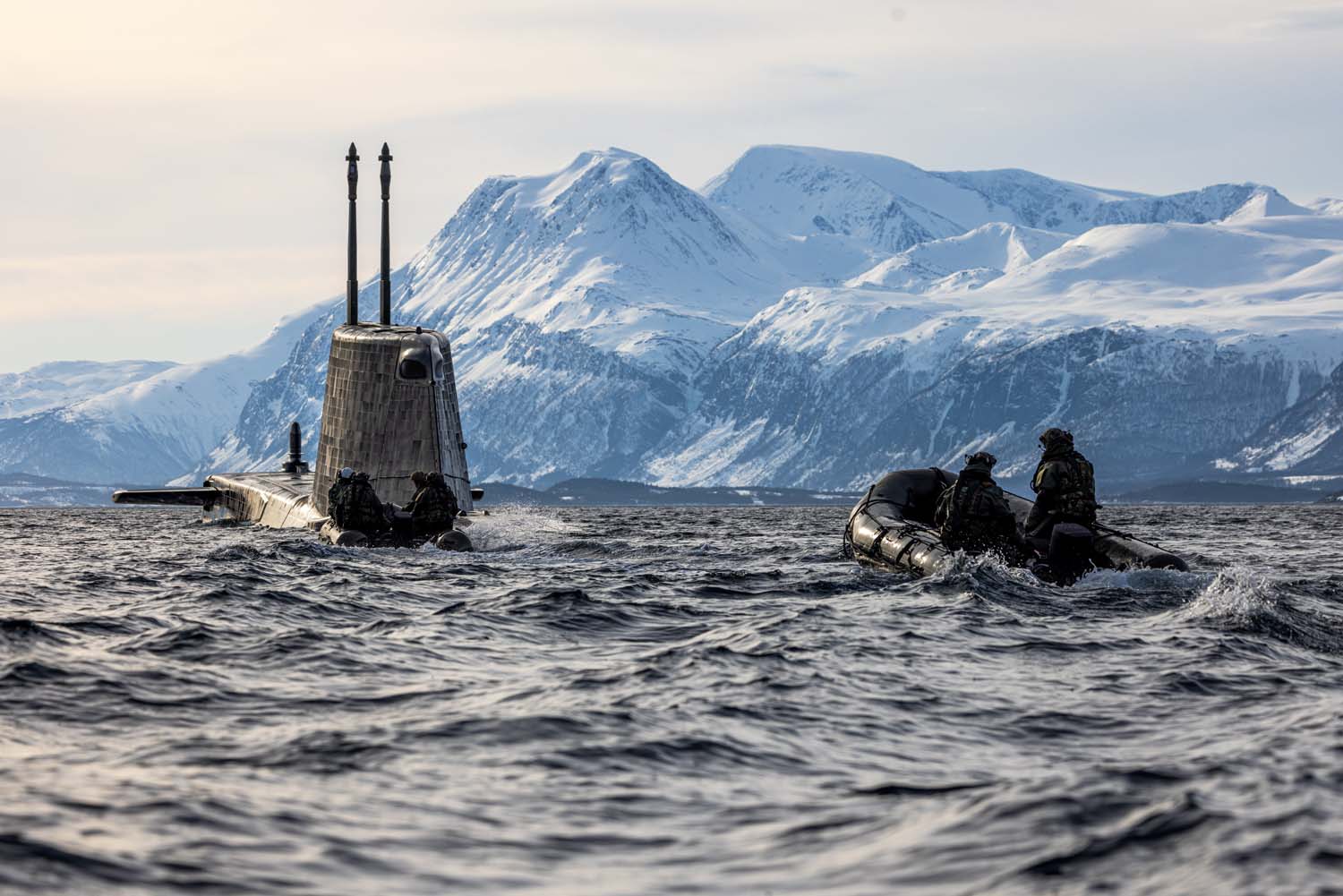
Ministers and senior military leaders have warned that rising Russian activity and growing Chinese interest in the Arctic and High North are driving renewed focus on UK and NATO security in the region.​

During a Defence Committee evidence session on 27 January, Defence Secretary John Healey confirmed that Russian military activity around the UK and across the wider North Atlantic remains on an upward trend, alongside an expanding pattern of hostile cyber operations linked to state actors.

Healey told MPs that a previously cited 30 percent increase in Russian activity in UK waters should be understood as a headline figure, but said the broader trend of aggression was clear. He pointed to increased maritime activity, incursions into NATO airspace, threats to critical infrastructure and the continued use of shadow shipping as indicators of a deteriorating security environment.

He added that cyber activity now forms a major part of the threat picture, telling the committee that the UK had experienced around 90,000 separate cyber attacks in the past year alone, with the majority assessed as linked to state or state-sponsored actors. “If you look at cyber in the last year alone, we’ve had 90,000 separate cyber attacks,” Healey said, adding that Russia, China and Iran were all linked to elements of that activity.

When questioned specifically on the extent of Russian subsea activity, both Healey and the Vice Chief of the Defence Staff declined to provide detailed breakdowns, citing the sensitivity of operational information. However, senior military leaders acknowledged a clear increase in threat levels.

General Dame Sharon Nesmith told the committee that while it would be inappropriate to delineate proportions of surface and subsurface activity in public, the overall direction of travel was unmistakable.

“We recognise the uptick in the threat, and therefore the need for us to do more about it in the high north either at surface or subsurface,” she said.
 
Back
Top