

You are using an out of date browser. It may not display this or other websites correctly.
You should upgrade or use an alternative browser.
You should upgrade or use an alternative browser.
The RCAF's Next Generation Fighter (CF-188 Replacement)
- Thread starter WingsofFury
- Start date

- Reaction score
- 7,034
- Points
- 1,160
My gut tells me that we need a larger Reg Force fighter fleet...as much to have a large enough pool of pilots to support all the non-operational pilot roles we require as for the purely military requirement.
But when it comes to adding a Reserve fighter fleet in addition to (ideally?) 130-150 Reg Force fighters I'm pretty sure that the major resources required to do so would be much better spent on UCAVs and GBAD to support the Reg Force fighters. I don't see the need for crewed aircraft disappearing any time soon, but definitely see unmanned systems and missile defences taking a much more prominent role going forward. I see Reserve fighter squadrons as more of a 1960's requirement than a 2060's requirement.
But when it comes to adding a Reserve fighter fleet in addition to (ideally?) 130-150 Reg Force fighters I'm pretty sure that the major resources required to do so would be much better spent on UCAVs and GBAD to support the Reg Force fighters. I don't see the need for crewed aircraft disappearing any time soon, but definitely see unmanned systems and missile defences taking a much more prominent role going forward. I see Reserve fighter squadrons as more of a 1960's requirement than a 2060's requirement.
I don't see the need for crewed aircraft disappearing any time soon, but definitely see unmanned systems and missile defences taking a much more prominent role going forward.
It's a question of ratio. Most major air forces are aiming for a ratio of 2-3 unmanned systems for every manned system by 2050.
By this view, after we get 88 F-35s (or whatever our final mix is in 2035), our biggest gap won't be manned aircraft.
You're falling for the same fallacy here as a lot of the kids on Reddit. You find it harder to understand unmanned systems. So you to default to saying we need a lot more manned systems. What we need is a balanced force. And the only way to build substantially more mass these days is unmanned systems.

- Reaction score
- 13,560
- Points
- 1,160
Does he mention kill switches?An interesting video from an american commentator
The F35 has to have em. The government can take control of my issued cell phone and Telsa can lock down their vehicles remotely


ArmyRick
Army.ca Fixture
- Reaction score
- 4,244
- Points
- 1,160
Watch the video, he says its a mythDoes he mention kill switches?
The F35 has to have em. The government can take control of my issued cell phone and Telsa can lock down their vehicles remotely
Max,
Some very good points to ponder. Related question - with the F-35's mission awareness/situational awareness/data sharing/sensor fusion aspects, will that make the fighting part of flying easier for the pilots?
And, I suspect you're understating how easy it is to fly a fighter...I suspect there's more to it than meets the eye.
NS
I'll let Max give the true professional opinion. But I do remember this anecdote from a Red Flag:
One pilot who flew in the exercise reported that even novice pilots were quickly “killing” fourth generation aircraft during air-to-air combat.
“My wingman was a brand new F-35A pilot, seven or eight flights out of training,” Col. Joshua Wood, 388th Operations Group commander, said in a news release. "He gets on the radio and tells an experienced, 3,000-hour pilot in a very capable fourth-generation aircraft: ‘Hey bud, you need to turn around. You’re about to die. There’s a threat off your nose.’”
The younger pilot “killed” the simulated enemy aircraft and was able to rack up three more kills over the next hour.
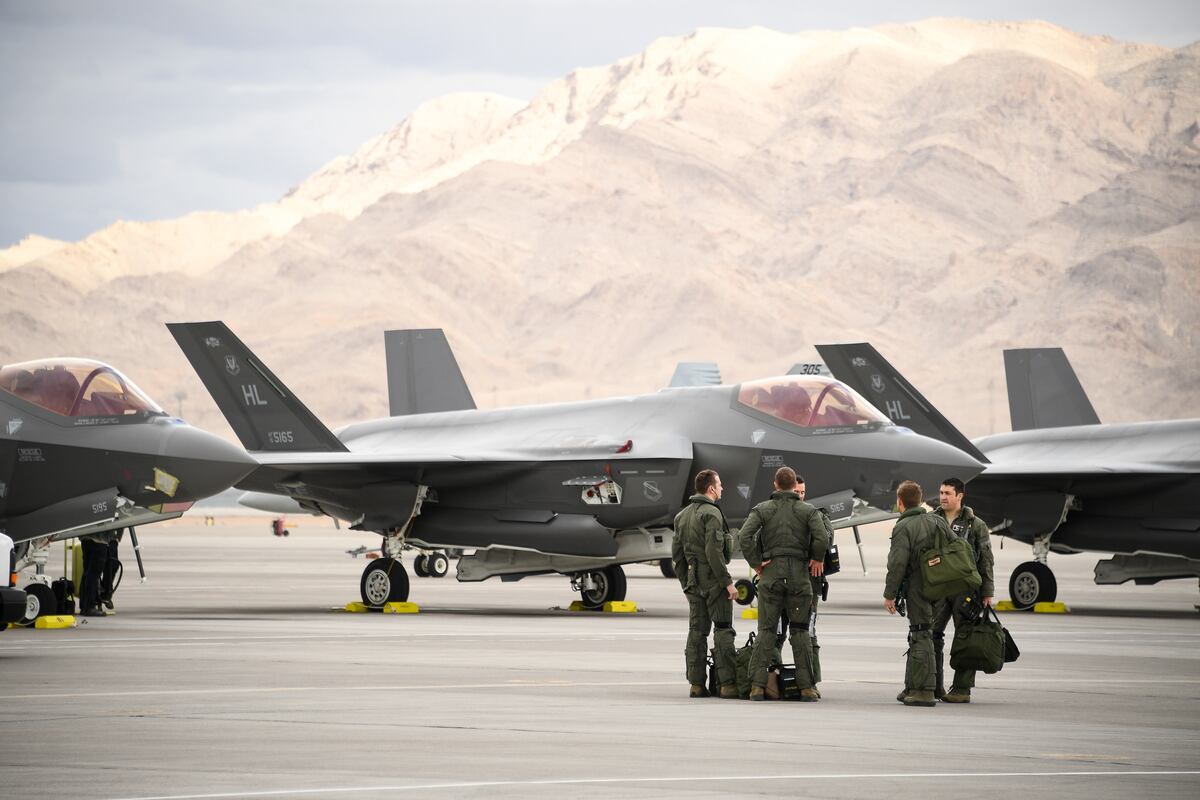
Air Force chief defends F-35A against critics, boasting kills at Red Flag
Think of the F-35 as the “quarterback of the joint team," and not simply another stealth fighter, the Air Force chief of staff said Tuesday.
 www.airforcetimes.com
The automation and information fusion was specifically designed to substantially reduce pilot workload. The pilot can't operate the radar beyond on/off. Very different from doing different types of scans with radars of the past. This should help explain it:
However, I would caution against thinking this might make it easier to be a fighter pilot. That headspace is probably going to get taken up by CCAs over time.

- Reaction score
- 8,908
- Points
- 1,260
Is that like the myth there was no back door into Blackberries?Watch the video, he says its a myth

- Reaction score
- 13,947
- Points
- 1,160
A lot of discussion about pilots and training of pilots being the rate limiting factor to change and adaptation here.
....
 www.airforcetimes.com

 aerospaceglobalnews.com
 taskandpurpose.com

 www.stripes.com
 taskandpurpose.com
.....
The US Army has about 30,000 in its aviation group and plans to reduce the number of slots by 6500 through wastage.
But the drumbeat on drones and cutting crewed numbers is having an effect on the morale of the pilots.
....
"The message being sent to Army aviators is “we can replace you with robots,” a UH-60 Black Hawk pilot said, adding, “whether it’s intentional or not, that’s a lot of what my junior pilots are getting.”"
But in the same article is this comment:
"“It feels like we are designing a force that looks like Ukraine with just a ton of drones and robots and stuff and forgetting the fact that our primary thing is maneuver. We do that very well,” said a pilot with three combat deployments, one as an Army aviator. “We’re not a scrappy underdog trying to fight off somebody on our border.”
"Another senior pilot, a chief warrant officer five, said that in real-world missions, “70% of what the pilots” do is coordination, not just flying.
"“I can’t tell you how many times I’ve been tasked to go to a specific location and pick up these people, and I get there and they’re not there because they moved and they tried to get a hold of someone and they had radio connection issues or they told someone who didn’t pass that information along, right?” the pilot said. “If [an] unmanned aircraft arrives there, how does it find out that the people aren’t there? Like, how does the guy with the tablet find out from the unit there that these people moved and where they went to, and then update the location?”"
...
There are two aspects to flying, as far as I can tell. Part one is keeping the aircraft in the air - head inside the cockpit. Part two is actually doing something with the vehicle in which you are flying - head outside the cockpit.
From what I can tell the important bit is the "head outside the cockpit" bit. Actually using the tool in which you are flying.
The "head inside the cockpit" bit is a distraction from actually doing the job.
It is also the most time consuming and expensive part of getting the vehicle into the air.
AI aircraft should not eliminate crews. They should convert them from pilots struggling to keep their aircraft in the air while trying to do their real job into commanders trusting their vehicle to do as it is told while the commander does his real job.
From where I sit proper deployment and development of AI should reduce the amount of resources spent on training pilots and more time spent on training commanders who can exploit the capabilities of their vehicles, whether they are riding in them or controlling them remotely.
....
Fighters can benefit, perhaps, from reducing the number of platforms through which a commander has to progress before being seated in a top of the line vehicle.
Likewise for rotary wing commanders.
I was going to put this in the Drones or Rotary Wing files but I will stick it here.
Helicopters were being shot down in Ukraine so they were withdrawn and drones started piling up brownie points.
But a helicopter is just a vehicle, crewed or uncrewed, inhabited or uninhabited.
As a vehicle nothing beats it as a means for quickly getting a load from point a to b over all terrains quickly.
It is the best Quick Reaction insurance policy available in any theatre for any domain.
It can lift soldiers, sonobuoys, UGVs or APKWS missiles.
It can operate safely behind the lines with an onboard commander or uninhabited in a high risk environment. It can tackle air and ground targets equally well.
....
So what I am getting at is that we will need people for planes. But we need to spend more time training them in using the plane and a lot less time in training them to fly the plane.
....
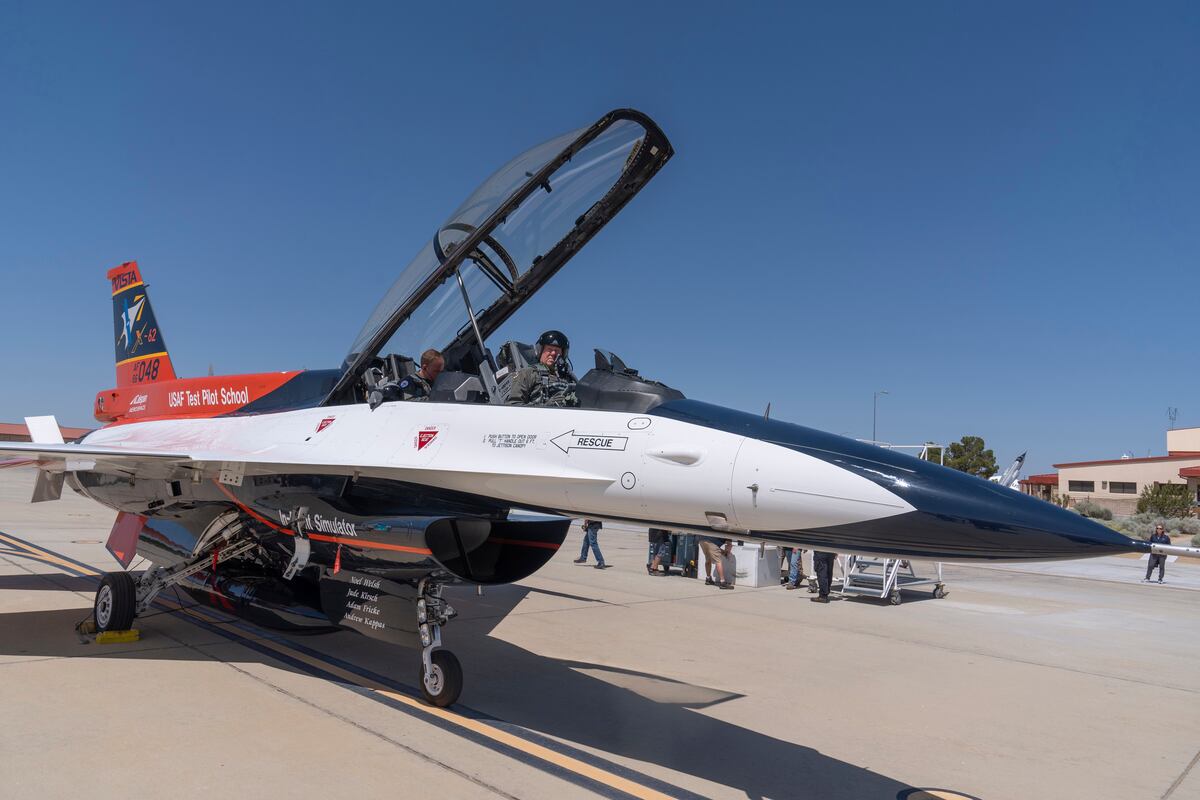
AI-controlled fighter jet takes Air Force secretary on historic ride
An AI-controlled F-16 flew Air Force Secretary Frank Kendall in lightning-fast maneuvers at more than 550 miles an hour as it pursued a manned jet nearby.
www.airforcetimes.com
Kratos XQ-58A Valkyrie to be 1st US Marines CCA
The US Marine Corps has named the Kratos XQ-58A Valkyrie as its first Collaborative Combat Aircraft programme of record.
aerospaceglobalnews.com
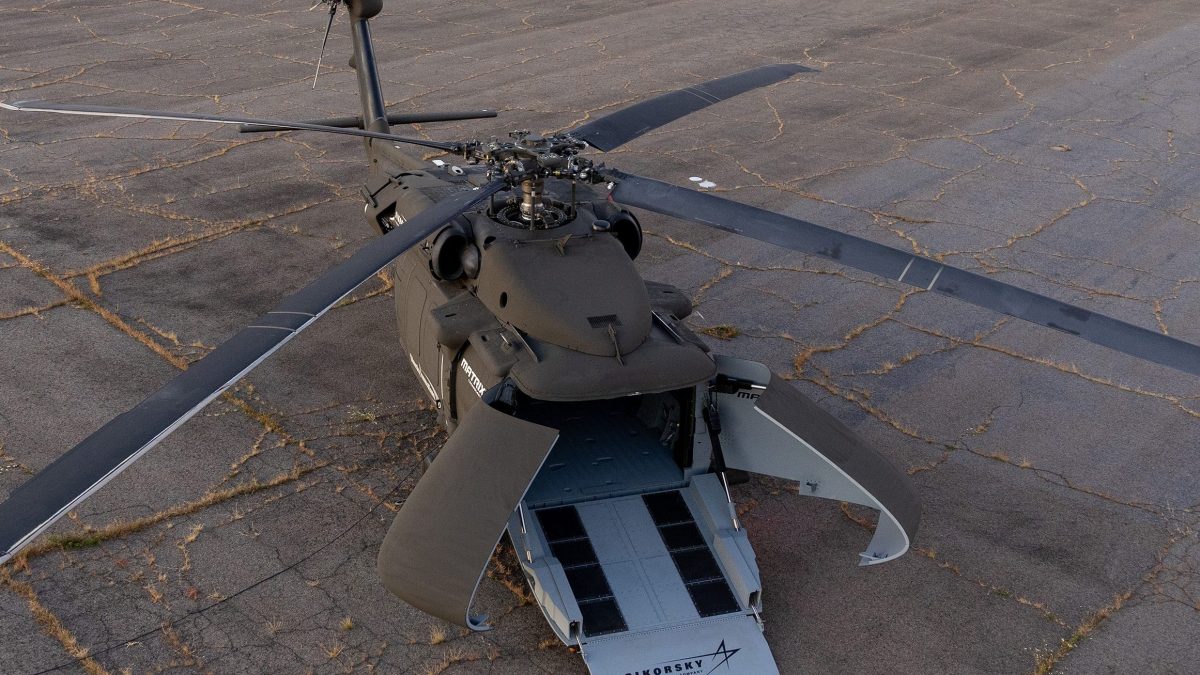
This wild new Black Hawk prototype is part drone, part Transformer
Sikorsky revealed a Black Hawk prototype into an autonomous aircraft with the goal of accompanying manned missions in the air.
taskandpurpose.com
Soldier flies drone Black Hawk from tablet in training first for optionally piloted helicopter
It took less than an hour for a National Guard soldier with no past aviation experience to train to remotely fly a Black Hawk helicopter.
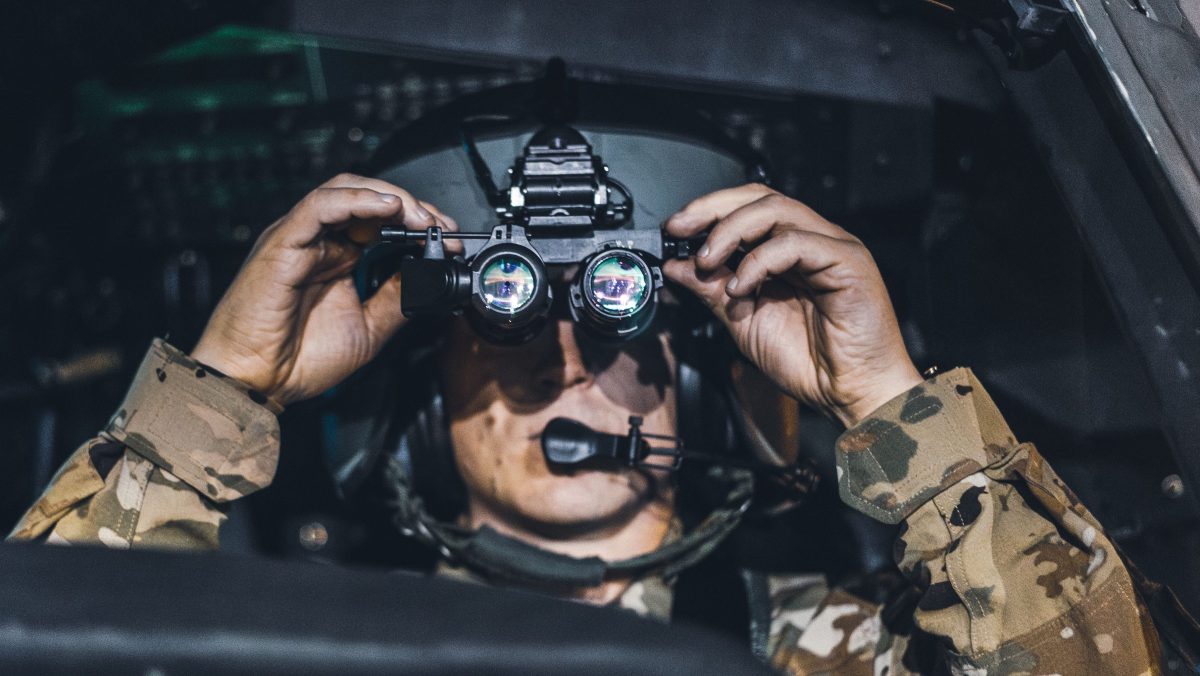
Army pilots face low morale and 'survivor remorse' amid massive cuts
One pilot said a focus on Ukraine-like unmanned systems ignores that "our primary thing is maneuver. We do that very well."
taskandpurpose.com
.....
The US Army has about 30,000 in its aviation group and plans to reduce the number of slots by 6500 through wastage.
But the drumbeat on drones and cutting crewed numbers is having an effect on the morale of the pilots.
....
"The message being sent to Army aviators is “we can replace you with robots,” a UH-60 Black Hawk pilot said, adding, “whether it’s intentional or not, that’s a lot of what my junior pilots are getting.”"
But in the same article is this comment:
"“It feels like we are designing a force that looks like Ukraine with just a ton of drones and robots and stuff and forgetting the fact that our primary thing is maneuver. We do that very well,” said a pilot with three combat deployments, one as an Army aviator. “We’re not a scrappy underdog trying to fight off somebody on our border.”
"Another senior pilot, a chief warrant officer five, said that in real-world missions, “70% of what the pilots” do is coordination, not just flying.
"“I can’t tell you how many times I’ve been tasked to go to a specific location and pick up these people, and I get there and they’re not there because they moved and they tried to get a hold of someone and they had radio connection issues or they told someone who didn’t pass that information along, right?” the pilot said. “If [an] unmanned aircraft arrives there, how does it find out that the people aren’t there? Like, how does the guy with the tablet find out from the unit there that these people moved and where they went to, and then update the location?”"
...
There are two aspects to flying, as far as I can tell. Part one is keeping the aircraft in the air - head inside the cockpit. Part two is actually doing something with the vehicle in which you are flying - head outside the cockpit.
From what I can tell the important bit is the "head outside the cockpit" bit. Actually using the tool in which you are flying.
The "head inside the cockpit" bit is a distraction from actually doing the job.
It is also the most time consuming and expensive part of getting the vehicle into the air.
AI aircraft should not eliminate crews. They should convert them from pilots struggling to keep their aircraft in the air while trying to do their real job into commanders trusting their vehicle to do as it is told while the commander does his real job.
From where I sit proper deployment and development of AI should reduce the amount of resources spent on training pilots and more time spent on training commanders who can exploit the capabilities of their vehicles, whether they are riding in them or controlling them remotely.
....
Fighters can benefit, perhaps, from reducing the number of platforms through which a commander has to progress before being seated in a top of the line vehicle.
Likewise for rotary wing commanders.
I was going to put this in the Drones or Rotary Wing files but I will stick it here.
Helicopters were being shot down in Ukraine so they were withdrawn and drones started piling up brownie points.
But a helicopter is just a vehicle, crewed or uncrewed, inhabited or uninhabited.
As a vehicle nothing beats it as a means for quickly getting a load from point a to b over all terrains quickly.
It is the best Quick Reaction insurance policy available in any theatre for any domain.
It can lift soldiers, sonobuoys, UGVs or APKWS missiles.
It can operate safely behind the lines with an onboard commander or uninhabited in a high risk environment. It can tackle air and ground targets equally well.
....
So what I am getting at is that we will need people for planes. But we need to spend more time training them in using the plane and a lot less time in training them to fly the plane.

OldSolduer
Army.ca Relic
- Reaction score
- 23,173
- Points
- 1,260
I am well past the age of loading into a Huey, Blackhawk, Griffon or Chinook but I would rather have a human at the controls than a droid.A lot of discussion about pilots and training of pilots being the rate limiting factor to change and adaptation here.
....
[
.....
The US Army has about 30,000 in its aviation group and plans to reduce the number of slots by 6500 through wastage.
But the drumbeat on drones and cutting crewed numbers is having an effect on the morale of the pilots.
....
"The message being sent to Army aviators is “we can replace you with robots,” a UH-60 Black Hawk pilot said, adding, “whether it’s intentional or not, that’s a lot of what my junior pilots are getting.”"
But in the same article is this comment:
"“It feels like we are designing a force that looks like Ukraine with just a ton of drones and robots and stuff and forgetting the fact that our primary thing is maneuver. We do that very well,” said a pilot with three combat deployments, one as an Army aviator. “We’re not a scrappy underdog trying to fight off somebody on our border.”
"Another senior pilot, a chief warrant officer five, said that in real-world missions, “70% of what the pilots” do is coordination, not just flying.
"“I can’t tell you how many times I’ve been tasked to go to a specific location and pick up these people, and I get there and they’re not there because they moved and they tried to get a hold of someone and they had radio connection issues or they told someone who didn’t pass that information along, right?” the pilot said. “If [an] unmanned aircraft arrives there, how does it find out that the people aren’t there? Like, how does the guy with the tablet find out from the unit there that these people moved and where they went to, and then update the location?”"
...
There are two aspects to flying, as far as I can tell. Part one is keeping the aircraft in the air - head inside the cockpit. Part two is actually doing something with the vehicle in which you are flying - head outside the cockpit.
From what I can tell the important bit is the "head outside the cockpit" bit. Actually using the tool in which you are flying.
The "head inside the cockpit" bit is a distraction from actually doing the job.
It is also the most time consuming and expensive part of getting the vehicle into the air.
AI aircraft should not eliminate crews. They should convert them from pilots struggling to keep their aircraft in the air while trying to do their real job into commanders trusting their vehicle to do as it is told while the commander does his real job.
From where I sit proper deployment and development of AI should reduce the amount of resources spent on training pilots and more time spent on training commanders who can exploit the capabilities of their vehicles, whether they are riding in them or controlling them remotely.
....
Fighters can benefit, perhaps, from reducing the number of platforms through which a commander has to progress before being seated in a top of the line vehicle.
Likewise for rotary wing commanders.
I was going to put this in the Drones or Rotary Wing files but I will stick it here.
Helicopters were being shot down in Ukraine so they were withdrawn and drones started piling up brownie points.
But a helicopter is just a vehicle, crewed or uncrewed, inhabited or uninhabited.
As a vehicle nothing beats it as a means for quickly getting a load from point a to b over all terrains quickly.
It is the best Quick Reaction insurance policy available in any theatre for any domain.
It can lift soldiers, sonobuoys, UGVs or APKWS missiles.
It can operate safely behind the lines with an onboard commander or uninhabited in a high risk environment. It can tackle air and ground targets equally well.
....
So what I am getting at is that we will need people for planes. But we need to spend more time training them in using the plane and a lot less time in training them to fly the plane.
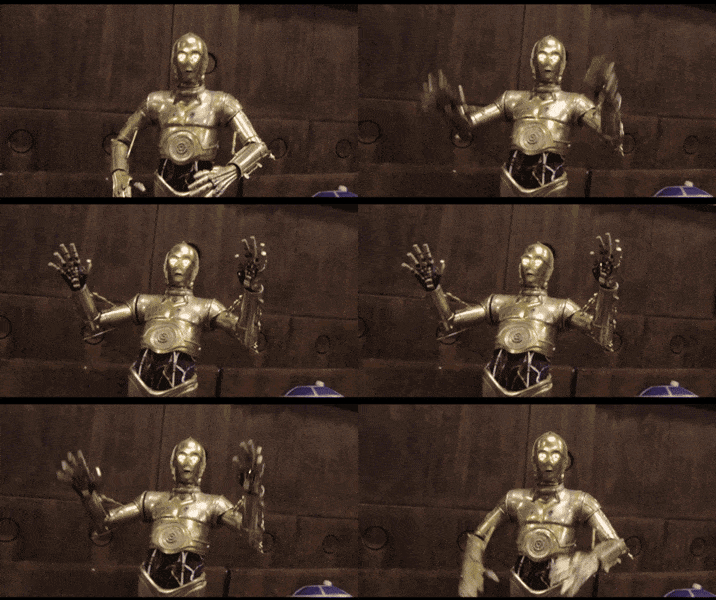
Especially THIS droid......
I am well past the age of loading into a Huey, Blackhawk, Griffon or Chinook but I would rather have a human at the controls than a droid.
Not that we'll be there soon (fully automated transport of personnel). But if and when the day comes I don't see people refusing it. You gonna refuse the ride out if it doesn't have a human in front?
Here's the reality. There was a time when elevators had operators. People moved on when the technology got better. And people move on even quicker if they're getting shot at.....
OldSolduer
Army.ca Relic
- Reaction score
- 23,173
- Points
- 1,260
I’m not doing any airmobile ops soon but I have to agree with you on thisNot that we'll be there soon (fully automated transport of personnel). But if and when the day comes I don't see people refusing it. You gonna refuse the ride out if it doesn't have a human in front?
Here's the reality. There was a time when elevators had operators. People moved on when the technology got better. And people move on even quicker if they're getting shot at.....

- Reaction score
- 2,072
- Points
- 1,240
Absolutely. A lot of the sensors on the F-35 are similar in nature to those in the Hornet, albeit more modern. The real difference is sensor fusion. In the Hornet, I have to take the data from individual sensors, analyze it, determine which ones are more accurate in the situation I am in, and use my brain to integrate all the data into actionable information. After all this, I have to make a tactical decision for the 4-ship I lead, communicate that decision and execute the tactic.Related question - with the F-35's mission awareness/situational awareness/data sharing/sensor fusion aspects, will that make the fighting part of flying easier for the pilots?
In the F-35, the data from all sensors is automatically turned into actionable information, allowing pilots to almost entirely focus on tactical execution. It frees up an enormous amount of mental capacity.
And, I suspect you're understating how easy it is to fly a fighter...I suspect there's more to it than meets the eye.
Perhaps. But when compared to the challenge of fighting with the aircraft, flying is extremely easy.

- Reaction score
- 28,514
- Points
- 1,360
Meh. I bet you he didn’t program control code into F/A-18s and CF-18s in 1987 using FORTRAN.Watch the video, he says its a myth
God code is real, IMO.

- Reaction score
- 19,110
- Points
- 1,160
Is that 2-3 UAS fulfilling the fighter role (or direct support of the fighters) or is it including recce drones and bomber drones?It's a question of ratio. Most major air forces are aiming for a ratio of 2-3 unmanned systems for every manned system by 2050.
By this view, after we get 88 F-35s (or whatever our final mix is in 2035), our biggest gap won't be manned aircraft.
You're falling for the same fallacy here as a lot of the kids on Reddit. You find it harder to understand unmanned systems. So you to default to saying we need a lot more manned systems. What we need is a balanced force. And the only way to build substantially more mass these days is unmanned systems.
PrairieFella
Army.ca Veteran
- Reaction score
- 4,802
- Points
- 1,110
I mean the RCAF comd could try it and fall on their sword honourably and resign. I agree with Czech that the RCAF senior leaderaship is far too silent on these issues. Pull from Topshee, pull from Norman, pull from Eyre who I remember being vocal at times on Army issues. Do the hard thing. Service before self. I will be fair and say thats easy for me to say chilling with a beer as a lowly SNCO.You know what happens when that is tried? Commanders of the RCAF get fired. That’s what.
I will re-iterate: when the Prime Minister will not listen to your advice, you shut the fuck up and do your job. That is literally how a Parliamentary Democracy works.

- Reaction score
- 25,060
- Points
- 1,010
They could resign. Absolutely.I mean the RCAF comd could try it and fall on their sword honourably and resign. I agree with Czech that the RCAF senior leaderaship is far too silent on these issues. Pull from Topshee, pull from Norman, pull from Eyre who I remember being vocal at times on Army issues. Do the hard thing. Service before self. I will be fair and say thats easy for me to say chilling with a beer as a lowly SNCO.
The next Comd RCAF will then follow the PM’s order.
What you guys going to be saying about the RCAF leadership if this happens?

 www.reuters.com
ROME, Dec 4 (Reuters) - Italy's defence minister on Thursday said other countries, including Germany and Australia, may be interested in entering the GCAP fighter jet programme in the future, with requests also coming from Saudi Arabia and Canada.
Italy says Germany and other countries may be interested in GCAP jet programme
Italy's defence minister on Thursday said other countries, including Germany and Australia, may be interested in entering the GCAP fighter jet programme in the future, with requests also coming from Saudi Arabia and Canada.
www.reuters.com
OldSolduer
Army.ca Relic
- Reaction score
- 23,173
- Points
- 1,260
To the bonehead "elbows up, we hate the Americans" this was a call for "buy no kit from the USA".I wouldn't say that's entirely accurate. Carney had said on multiple occasions we should buy less equipment from the US. It was part of his election campaign and early speeches. He has framed reliance on US defence procurement as a risk for Canada. Just no kill switch talk.
PrairieFella
Army.ca Veteran
- Reaction score
- 4,802
- Points
- 1,110
BZ and a thanks to Global Affairs?What you guys going to be saying about the RCAF leadership if this happens?
Italy says Germany and other countries may be interested in GCAP jet programme
Italy's defence minister on Thursday said other countries, including Germany and Australia, may be interested in entering the GCAP fighter jet programme in the future, with requests also coming from Saudi Arabia and Canada.
Is that 2-3 UAS fulfilling the fighter role (or direct support of the fighters) or is it including recce drones and bomber drones?
A mix. There's some CCAs and support in there. CCAs carrying EW and playing bomb truck. But also in the US for example where like a third of the Super Hornet's sorties are buddy tanking they are working on this:
CCAs are also going to be capable of acting more independently than just wingman. So eventually CCAs could replace even Reapers.
Similar threads


- Replies
- 559
- Views
- 320K

- Replies
- 68
- Views
- 77K


- Replies
- 3
- Views
- 19K