• Thanks for stopping by. Logging in to a registered account will remove all generic ads. Please reach out with any questions or concerns.

The RCAF's Next Generation Fighter (CF-188 Replacement)

And is that for the Gripen E or the Gripen C/D, because there is currently one production model Gripen E in operational service in the world, so we have zero data on real world maintenance and flight hour costs.
As of Nov 2025 the Brazilian Air Force had 11 Gripen E. Fact check.


Over what time horizon? This is the problem with these discussions. Everybody looks at the news today and thinks the Gripen will be fine. Meanwhile the Air Staff is looking at data points like this"


If we buy Gripens, we are getting them past 2030 and intend to fly them into the 2060s. Can anybody confidently say that the threat picture in 2045 (not even halfway point on aircraft life) will be just fine for non-LO aircraft?


We're literally having a national debate on how much we want to rely on those traditional allies. I think there's a growing understanding that reliance comes with a quid pro quo that many Canadians may not want. Albeit, with the irony that buying the Panther creates a dependence the same lot don't like either.

But also, governments have a habit of not putting such assumptions in policy. And then risking the troops anyway when the time comes. Let them state in the defence policy that the RCAF won't fight high end threats outside of a coalition with allies who are bringing more advanced aircraft.
Im not expert and nor will I pretend to be. But from a utility perspective is there some wisdom in having some Hawker Hurricanes to our Supermarine Spitfires? A cheaper workhorse for less complex tasks?
 
As of Nov 2025 the Brazilian Air Force had 11 Gripen E. Fact check.


Those are in test squadrons. Only one Gripen E has been added to an operational squadron so far.
 
Im not expert and nor will I pretend to be. But from a utility perspective is there some wisdom in having some Hawker Hurricanes to our Supermarine Spitfires? A cheaper workhorse for less complex tasks?
There are better options, like adding bombs and missiles to our trainer fleet. The new T-7 and T-50 are both being offered in an armed configuration, or at least able to be armed.
 
get stuffed. making a statement and being informed that what you thought has flaws is a great way to learn more. By answering you contribute to my general knowledge and, incidentally, produce a whole bunch more questions. For instance if your F35 launches in a clean configuration it is only carrying internal stores so it is limited. Are your alert a/c loaded or clean? If clean than you need a truck to go with you? If loaded than why launch the F35 in the first place? I know the sensors are great and it is a great battlefield manager but sensors can be mounted in a Challenger or a Wedgetail so where is the advantage? And no, I am not advocating for the Gripen I am simply asking.
You asserted very wrong data.

Loaded vs clean is confusing for you i think? The RCAF alert air craft are launched armed. We aren't going to send unarmed air craft on intercept missions. Why lunch an F35 it is carrying weapons seems like a weird question. While certainly its stealth would be degraded if its carrying externally thats a question of threat match. I also dont think you understand that fighters engage BVR with their onboard sensors.

@PrairieFella the question becomes what is the cost increase of maintaining this two fleets for the off set cost of the lower tier jets and at what loss of capability. Would you want to be in a tank who's primary benefit was low cost?
 
  • Like
Reactions: ytz
You asserted very wrong data.

Loaded vs clean is confusing for you i think? The RCAF alert air craft are launched armed. We aren't going to send unarmed air craft on intercept missions. Why lunch an F35 it is carrying weapons seems like a weird question. While certainly its stealth would be degraded if its carrying externally thats a question of threat match. I also dont think you understand that fighters engage BVR with their onboard sensors.

@PrairieFella the question becomes what is the cost increase of maintaining this two fleets for the off set cost of the lower tier jets and at what loss of capability. Would you want to be in a tank who's primary benefit was low cost?
clean to me on the F35 would be internal stores only. I am pre-supposing that an alert aircraft is just that loaded with stores and ready to launch. With internal stores it can prosecute a maximum of 4 targets so coupled with his wingman you have 8 possible hits which would be OK for the incoming a/c but woefully inadequate if they have attained their launch point. So my question remains: why focus on the extra costs of stealth for our north country? Our NATO requirements would definitely say "yes" but for the north I can't get my head around the benefits of the stealth aspect. Sensors yes.
 
During WW2 it wasn't the loss of aircraft that disturbed people - it was the loss of pilots.

Won't even get to that point in near-peer short of a world war. Either the politicians will get cold feet to deploy when they see the threat assessment and/or predicted losses, or quite simply theatre entry standards might say, "Nope. You're not joining the party unless you bring xyz to the fight.

I wonder if that expensive 'over the horizon' radar we are buying from Australia will impact aircraft numbers at all? 🤷🏼‍♂️

Why would it?

get stuffed. making a statement and being informed that what you thought has flaws is a great way to learn more. By answering you contribute to my general knowledge and, incidentally, produce a whole bunch more questions. For instance if your F35 launches in a clean configuration it is only carrying internal stores so it is limited. Are your alert a/c loaded or clean? If clean than you need a truck to go with you? If loaded than why launch the F35 in the first place? I know the sensors are great and it is a great battlefield manager but sensors can be mounted in a Challenger or a Wedgetail so where is the advantage? And no, I am not advocating for the Gripen I am simply asking.

Dude. You're constantly making assertions with authority/knowledge you don't have. It wouldn't have taken much for you to know that there are plans to fly the SkyGuardian in the Arctic. So if you want to engage, at least try in good faith to make it based on fact and not entirely on opinion. On the topic at hand itself, you keep making assertions that any operator or planner would find bizarre. To begin with, we are buying these aircraft with the Sidekick mod. That's 6 AAMs internal. Not sure why any F-35 needs more than that for a normal NORAD response. But if they do, no big deal on the gas, because a tanker launches at the same time. It's why we bought so many. And in the future there will be AEWC pushing out the sensor range too.
 
There are better options, like adding bombs and missiles to our trainer fleet. The new T-7 and T-50 are both being offered in an armed configuration, or at least able to be armed.

It'll keep those Snowbird pilots proficient in weapon systems in-between airshows.
 
People really don't realize why the F-35 is such a chunky aircraft, it doesn't have external fuel tanks because it carries an ungodly amount of fuel internally as standard. The F-35A carries something like 20% more fuel internally than Gripen E does with its internal fuel and three drop tanks, while also currently being able to also carry 4 AIM-120 internally (with the upcoming 'Sidekick' rack upgrades allowing you to fit 2 additional AIM-120 inside the weapon bay). From what I recall, Gripen E can also carry 4 AIM-120's externally, but most of its other weapon stations are eaten up by the required fuel tanks and add on ECM/sensor pods which are standard on the F-35A. Gripen E's ability to supercruise basically disappears when all loaded up, and it's vaunted maneuverability suffers a fair bit.

F-35 can do all of these roles clean, even before you start talking about its obvious VLO features.

For all the smack people give to the F-35A about being a hanger queen, deploying an AEW&C aircraft with a sizable footprint and a much larger crew load isn't as efficient when your frontline fighter can do many of the roles with its own internal systems for less. The F-35 is a sensor fusion and sensing monster, it's a miniature AEW&C platform compared to some legacy fighters. Something like an AEW&C business jet or an E-7 is a major supplemental element to make F-35's even more effective, but they don't strictly require that support for many missions.

Thank you. People do not understand how much gas "Fat Amy" holds. And they don't realize how much range is eaten up by external drag on stores. I think an F-35 with internal carriage only has the same range as the CF-18 with drop tank or just about close. While also having a much lower signature. The Gripen would need so much more tanking at the edge of our AOR.

And also yep people don't get how effective sensor fusion is. Some sixth gen concepts eschew having dedicated AEW platforms and just go to a mesh network of fighters and UAS as collectors. Especially when you can go multi-static with enough fusion in the future.

Im not expert and nor will I pretend to be. But from a utility perspective is there some wisdom in having some Hawker Hurricanes to our Supermarine Spitfires? A cheaper workhorse for less complex tasks?

For what though. That's the question. The Gripen is useless as the missile truck. Need something like the F-15 EX for that. And a lot of the non-air control missions can actually be moved to drones or helos (which the CAF is planning on). If all you need to do is put a rocket or AGM on a vehicle, a SkyGuardian or attack helo can do that just fine. That's fundamentally the problem with the Gripen, it's utility will get squeezed over time. Not useful to control the air. And increasingly overkill for other missions.
 
clean to me on the F35 would be internal stores only. I am pre-supposing that an alert aircraft is just that loaded with stores and ready to launch. With internal stores it can prosecute a maximum of 4 targets so coupled with his wingman you have 8 possible hits which would be OK for the incoming a/c but woefully inadequate if they have attained their launch point. So my question remains: why focus on the extra costs of stealth for our north country? Our NATO requirements would definitely say "yes" but for the north I can't get my head around the benefits of the stealth aspect. Sensors yes.
Because stealth is a gamechanger for fighter aircraft survivability and is basically the basic starting point of any nation serious about their defence in 2026. Stealth isn't a binary on and off switch, it's integrated into every design aspect of the F-35 and makes detection by enemy ground systems, air systems and weapons much more difficult. If an enemy aircraft can see a stealth aircraft on its radar, it very much still may not have the quality of a lock required to sufficiently guide a weapon onto target. The F-35 is the whole package, range, stealth, sensors, interoperability, weapons, etc. You will pay more to get a worse platform elsewhere, and few if any platforms have the same inbuilt sensor array package which the F-35 sports without any bolt on equipment.

If we're intercepting targets in the North, F-35's have a distinct advantage where our adversary radars will either not be able to spot us or will have difficulty properly engaging us. That allows our aircraft much more breathing room to engage, shape the battle and dominate the enemy. 4th generation, non-stealthy platforms do not offer this at all. When the missiles start flying, our pilots will have drastically higher chances of survival and victory piloting F-35's versus any other Western fighter available on the market.

I will also point out that the F-35's stealth features are not simply just a coating, but a robust set of materials that are baked into the very structural parts of the aircraft itself. The idea that the F-35 shares the extreme short and medium term maintenance requirements of earlier stealth aircraft is not true, LM has abused the F-35 significantly in testing and came to the conclusion that its stealth is minimally affected by service wear and tear. All fighter aircraft eventually require upkeep and the F-35 certainly eventually does need its own specialist and expensive upkeep, but not to the degree many seem to think on a regular basis.


The F-35 achieves its Very Low Observable stealth performance through its fundamental design, its external shape and its manufacturing processes, which control tolerances to less than half the diameter of a human hair. Special coatings are added to further reduce radar signature.

The package is designed to remain stealthy in severe combat conditions, and tests have validated that capability. After obtaining baseline radar cross section (RCS) measurements from a highly detailed, full-scale Signature Measurement Aircraft (SigMA), a team of Lockheed Martin and Northrop Grumman engineers intentionally inflicted extensive damage -- more than three dozen significant defects -- on the model. The damage represented the cumulative effect of more than 600 flight hours of military aircraft operations. RCS measurements taken after the damage showed that the stealthy signature remained intact.

"Even operating in harsh carrier-deck conditions, the F-35C will require no special care or feeding. In fact, its stealth adds very little to the day-to-day maintenance equation," O'Bryan said. "We've come a long way from the early stealth airplanes, which needed hours or even days of attention and repair after every flight. The F-35 not only avoids that intensive level of upkeep, it will require significantly less maintenance than the nonstealth fighters it is designed to replace."
 
clean to me on the F35 would be internal stores only. I am pre-supposing that an alert aircraft is just that loaded with stores and ready to launch. With internal stores it can prosecute a maximum of 4 targets so coupled with his wingman you have 8 possible hits which would be OK for the incoming a/c but woefully inadequate if they have attained their launch point. So my question remains: why focus on the extra costs of stealth for our north country? Our NATO requirements would definitely say "yes" but for the north I can't get my head around the benefits of the stealth aspect. Sensors yes.

You're not understanding how ops is done here.

First of all, the launch is cued by some ISR. Be that satellites, airborne radar, SIGINT, or some dude calling in on a payphone outside Engels.

Next, with awareness of what is coming, sufficient fighters are launched and others cued for readiness to ensure the response is appropriate.

Lastly, the focus on stealth/LO is not exclusive to the North. It's a preference for a more survivable platform. That increase in survivability is useful across the board.
 
Conceptually, operating F35 as sensors that can shoot, coupled with Gripens to carry more missiles, would mean a significant (multi billion dollar) investment in integration.

Assuming that LockMart and the US Government would want to open the IT infrastructure of the F35 to permit it.

Without that integration, you've instead made battle space management significantly more challenging while increasing risk to pilots and platforms.
 
Because stealth is a gamechanger for fighter aircraft survivability and is basically the basic starting point of any nation serious about their defence in 2026. Stealth isn't a binary on and off switch, it's integrated into every design aspect of the F-35 and makes detection by enemy ground systems, air systems and weapons much more difficult. If an enemy aircraft can see a stealth aircraft on its radar, it very much still may not have the quality of a lock required to sufficiently guide a weapon onto target. The F-35 is the whole package, range, stealth, sensors, interoperability, weapons, etc. You will pay more to get a worse platform elsewhere, and few if any platforms have the same inbuilt sensor array package which the F-35 sports without any bolt on equipment.

If we're intercepting targets in the North, F-35's have a distinct advantage where our adversary radars will either not be able to spot us or will have difficulty properly engaging us. That allows our aircraft much more breathing room to engage, shape the battle and dominate the enemy. 4th generation, non-stealthy platforms do not offer this at all. When the missiles start flying, our pilots will have drastically higher chances of survival and victory piloting F-35's versus any other Western fighter available on the market.

I will also point out that the F-35's stealth features are not simply just a coating, but a robust set of materials that are baked into the very structural parts of the aircraft itself. The idea that the F-35 shares the extreme short and medium term maintenance requirements of earlier stealth aircraft is not true, LM has abused the F-35 significantly in testing and came to the conclusion that its stealth is minimally affected by service wear and tear. All fighter aircraft eventually require upkeep and the F-35 certainly eventually does need its own specialist and expensive upkeep, but not to the degree many seem to think on a regular basis.

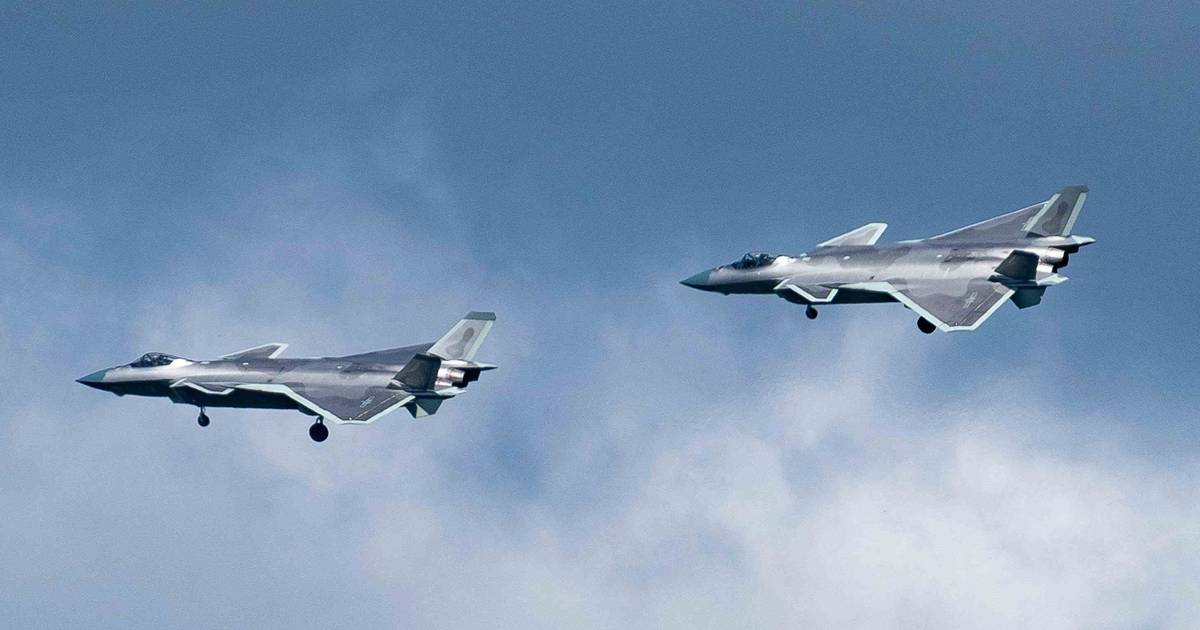
Is the most realistic scenario of the RCAF going up against the PLAAF only one where the PLAAF is based out of Russian airfields or flying through Russia airspace?

Otherwise the PLAAF would need to eliminate the SK, Japanese and US air forces in order to be able to stage aircraft well east/north-east of Japan in order to be able to reach NA airspace. Or, if the RCAF is based out of Japan and is then dealing directly with the PLAAF.
 
I will also point out that the F-35's stealth features are not simply just a coating, but a robust set of materials that are baked into the very structural parts of the aircraft itself.

The majority of the signature reduction on VLO aircraft come from three specific things:

1) Internal carriage of stores.
2) S ducting of engine intakes so turbines are not in view.
3) Aircraft design aligning seams (parallel lines for control surfaces, panel mounts, etc.) and surface tangents (flat faces).

The coatings and material composition are what take that reduction from say 60% to 80-90%.

Something not understood substantially, even among a lot military folks, is that these designs are just as focused on signature management as signature reduction. The F-35 tells the pilot where the return spikes are. So they can plan their flight paths to redirect or emit in certain directions to minimize risk or sometimes even attract attention as a decoy. 4/4.5 Gen aircraft just can't do this.
 
Conceptually, operating F35 as sensors that can shoot, coupled with Gripens to carry more missiles, would mean a significant (multi billion dollar) investment in integration.

Assuming that LockMart and the US Government would want to open the IT infrastructure of the F35 to permit it.

Without that integration, you've instead made battle space management significantly more challenging while increasing risk to pilots and platforms.

Yep. F-35s use MADL. Everybody else on Link 16. So you need a translator (some kind of AEWC or BACN) just to integrate Gripens and F-35s. Oh and the Saab AEWC candidate isn't MADL capable.
 
Is the most realistic scenario of the RCAF going up against the PLAAF only one where the PLAAF is based out of Russian airfields or flying through Russia airspace?

Otherwise the PLAAF would need to eliminate the SK, Japanese and US air forces in order to be able to stage aircraft well east/north-east of Japan in order to be able to reach NA airspace. Or, if the RCAF is based out of Japan and is then dealing directly with the PLAAF.

China basically decided that it was a "Near-Arctic state". Whatever the heck that means. They have decided that they now have Arctic interests and get to play. For now, a lot of it is co-operating with Russia. But I think we should anticipate Chinese naval forces acting independently in the Arctic. And that might even include aircraft carriers some day. So maybe not the PLAAF. But the PLANAF.
 
China basically decided that it was a "Near-Arctic state". Whatever the heck that means. They have decided that they now have Arctic interests and get to play. For now, a lot of it is co-operating with Russia. But I think we should anticipate Chinese naval forces acting independently in the Arctic. And that might even include aircraft carriers some day. So maybe not the PLAAF. But the PLANAF.
No, I was assured that that aircraft carrier was being converted into a hotel / casino.
 
China basically decided that it was a "Near-Arctic state". Whatever the heck that means. They have decided that they now have Arctic interests and get to play. For now, a lot of it is co-operating with Russia. But I think we should anticipate Chinese naval forces acting independently in the Arctic. And that might even include aircraft carriers some day. So maybe not the PLAAF. But the PLANAF.
Has there been any public info on the PLAAF stationing any of their airframes out of a Russian airfields during any inter-forces training exercises?
 
Back
Top