- Reaction score
- 2,170
- Points
- 1,160
Does it matter, when 47 can change his mind a 24 hoursweeklater?

Does it matter, when 47 can change his mind a 24 hoursweeklater?
President Donald Trump’s name has been installed on the building and signage around the US Institute of Peace (USIP) – an independent agency that the administration gutted earlier this year.
The president’s moniker appeared on the Washington, DC, headquarters ahead of a peace agreement signing ceremony between Rwanda and the Democratic Republic of Congo (DRC) due to take place there on Thursday.
“Welcome to the Donald J. Trump Institute of Peace. The best is yet to come,” the State Department posted on X Wednesday, announcing it had renamed the institute “to reflect the greatest dealmaker in our nation’s history.”
The Trump administration has essentially shuttered the institute, which works to resolve conflict and was created by Congress in 1984. The administration’s budget request for the next fiscal year called for the elimination of federal funding for USIP.
USIP is not a federal agency, and it owns and manages its headquarters. The administration’s takeover of the institute, including its building and assets, has been the subject of extensive litigation.
In March, officials at the Department of Government Efficiency (DOGE) attempted to forcibly obtain access to the building, before returning days later accompanied by police.
The administration fired most of USIP’s board in March. Employees were terminated in July, after initially receiving termination notices in late March.
“Renaming the USIP building adds insult to injury,” George Foote, counsel for former USIP leadership and staff, said in a statement Wednesday.
“A federal judge has already ruled that the government’s armed takeover was illegal. That judgment is stayed while the government appeals, which is the only reason the government continues to control the building. The rightful owners will ultimately prevail and will restore the U.S. Institute of Peace and the building to their statutory purposes,” Foote added.
A former USIP official said of Trump: “It’s pretty ironic that he put his name on an institution he destroyed.”
White House spokesperson Anna Kelly defended the move in a statement, arguing that USIP “was once a bloated, useless entity that blew $50 million per year while delivering no peace.”
“Now, the Donald J. Trump Institute of Peace, which is both beautifully and aptly named after a President who ended eight wars in less than a year, will stand as a powerful reminder of what strong leadership can accomplish for global stability,” she said.
This is totally normal, right?
US Institute of Peace renamed for Trump after his administration gutted it earlier this year
Hubris to be sure…The left in America right now
![]()
This is some different level of trolling lol
Hubris to be sure…
Which is a very Canadian thing to do from up here. Not a swipe. Just eating the popcorn watching the dumpster fire down there as wellSure, I just cant do anything other than laugh...
This is the one I'm not scared about.That stands true if it is actually referred to Congress, which would be a break from all trade actions to date.
Let the commentary begin!This is totally normal, right?
US Institute of Peace renamed for Trump after his administration gutted it earlier this year
Or he can start the withdrawal process, but that means undoing an act of congress, which means going through congress, which means he needs 60 votes in the senate.
All true.This is the one I'm not scared about.
Trump can let it "expire", it just leads to yearly reviews for the next 10 years while everything continues as per normal.
Or he can start the withdrawal process, but that means undoing an act of congress, which means going through congress, which means he needs 60 votes in the senate.
Or he can hold a tantrum and try to go over congress via the SCOTUS but that will take a hell of a long time and probably not go his way.
CUSMA will limp along until a sane Republican is president or the Democrats win in 2028, at which point it will be extended and reinforced so this can never happen again....hopefully.
Trump, for all his faults, is really good at one thing.All true.
The trouble is that if Trump threatens to cancel / withdraw etc, even if that is not a viable option, there will be an outcry in sectors of the Canadian commentariat who will immediately use this as proof that the Gov of the day isn't strong enough, or manly enough, or whatever Brian Lilley etc use to mischaracterise it.
Of course that will feed Trump's narrative and reinforce the otherwise untenable messaging and huffing and puffing.
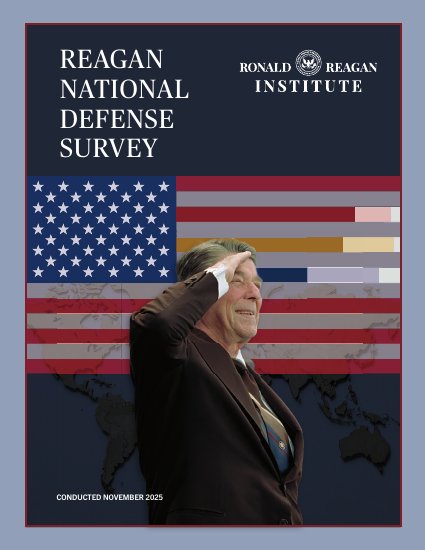
Investing in his financial future from all appearances.The Reagan National Defense Survey for 2025 was released on Thursday. The bipartisan support when it comes to almost all Ukraine/Europe/Nato questions (positive increases across the board from last year) for example makes you wonder what exactly people like Witkoff are doing.
![]()
Issue 39
cloud.3dissue.net
An interesting read for certain.
I am going to 'cherry pick' snippets that I believe to be of interest, there is LOTS that I've left out.
There is ALOT of information here and I have little doubt that this manifesto is already being picked apart in great detail by Anand et al. There are many flecks of 'gold' in here on Canada's path forward over the next 3+yrs. Great care to understand this and prepare for this is required. I hope that we have the right people available to make this happen.
Trump national security strategy calls for ‘cultivating resistance’ in Europe and changing US’ role in Western Hemisphere
National Security Strategy of the United States of America November 2025
The questions before us now are:
1) What should the United States want?
2) What are our available means to get it? and
3) How can we connect ends and means into a viable National Security Strategy?
1. What Do We Want Overall? First and foremost, we want the continued survival and safety of the United States as an independent, sovereign republic whose government secures the God-given natural rights of its citizens and prioritizes their well-being and interests
- We want the world’s most robust, credible, and modern nuclear deterrent, plus next-generation missile defenses—including a Golden Dome for the American homeland—to protect the American people, American assets overseas, and American allies.
- Cultivating American industrial strength must become the highest priority of national economic policy.
- We want the world’s most robust, productive, and innovative energy sector—one capable not just of fueling American economic growth but of being one of America’s leading export industries in its own right
- We want to maintain the United States’ unrivaled “soft power” through which we exercise positive influence throughout the world that furthers our interests. In doing so, we will be unapologetic about our country’s past and present while respectful of other countries’ differing religions, cultures, and governing systems.
- Finally, we want the restoration and reinvigoration of American spiritual and cultural health, without which long-term security is impossible...........This cannot be accomplished without growing numbers of strong, traditional families that raise healthy children
2. What Do We Want In and From the World? What are America’s core foreign policy interests? What do we want in and from the world?
- We want to ensure that the Western Hemisphere remains reasonably stable and well-governed enough to prevent and discourage mass migration to the United States; we want a Hemisphere whose governments cooperate with us against narco-terrorists, cartels, and other transnational criminal organizations; we want a Hemisphere that remains free of hostile foreign incursion or ownership of key assets, and that supports critical supply chains; and we want to ensure our continued access to key strategic locations. In other words, we will assert and enforce a “Trump Corollary” to the Monroe Doctrine
- We want to halt and reverse the ongoing damage that foreign actors inflict on the American economy while keeping the Indo-Pacific free and open, preserving freedom of navigation in all crucial sea lanes, and maintaining secure and reliable supply chains and access to critical materials
- We want to support our allies in preserving the freedom and security of Europe, while restoring Europe’s civilizational self-confidence and Western identity;
- We want to ensure that U.S. technology and U.S. standards—particularly in AI, biotech, and quantum computing—drive the world forward
3. What Are America’s Available Means to Get What We Want?
4. The Strategy
- A still nimble political system that can course correct;
- The world’s single largest and most innovative economy........provides leverage over countries that want access to our markets;
- A broad network of alliances, with treaty allies and partners in the world’s most strategically important regions
- An enviable geography with abundant natural resources, no competing powers physically dominant in our Hemisphere, borders at no risk of military invasion, and other great powers separated by vast oceans;
- Unleashing our enormous energy production capacity as a strategic priority to fuel growth
- Reindustrializing our economy, again to further support the middle class and control our own supply chains and production capacities
The Principles
President Trump’s foreign policy is pragmatic without being “pragmatist,” realistic without being “realist,” principled without being “idealistic,” muscular without being “hawkish,” and restrained without being “dovish.” It is not grounded in traditional, political ideology. It is motivated above all by what works for America—or, in two words, “America First.”
Priorities
- President Trump has cemented his legacy as The President of Peace.
- President Trump has leveraged his dealmaking ability to secure unprecedented peace in eight conflicts throughout the world over the course of just eight months of his second term. He negotiated peace between Cambodia and Thailand, Kosovo and Serbia, the DRC and Rwanda, Pakistan and India, Israel and Iran, Egypt and Ethiopia, Armenia and Azerbaijan, and ended the war in Gaza with all living hostages returned to their families
- President Trump has proven that American foreign, defense, and intelligence policies must be driven by the following basic principles:
- Focused Definition of the National Interest
- Peace Through Strength
- Predisposition to Non-Interventionism
- In the Declaration of Independence, America’s founders laid down a clear preference for non-interventionism in the affairs of other nations and made clear the basis: just as all human beings possess God-given equal natural rights, all nations are entitled by “the laws of nature and nature’s God” to a “separate and equal station” with respect to one another. For a country whose interests are as numerous and diverse as ours, rigid adherence to non-interventionism is not possible. Yet this predisposition should set a high bar for what constitutes a justified intervention.
- Flexible Realism
- We seek good relations and peaceful commercial relations with the nations of the world without imposing on them democratic or other social change that differs widely from their traditions and histories
- Primacy of Nations
- The world’s fundamental political unit is and will remain the nation-state. LOL, Trudeau would beg to disagree but he's too cozy nestled among the twin peaks of his new girlfriend to really care
- Sovereignty and Respect
- The United States will unapologetically protect our own sovereignty........attempts by foreign powers or entities to censor our discourse or curtail our citizens’ free speech rights, lobbying and influence operations that seek to steer our policies
- Balance of Power
- Pro-American Worker
- Fairness
- We will no longer tolerate, and can no longer afford, free-riding, trade imbalances,
- As we want our allies to be rich and capable, so must our allies see that it is in their interest that the United States also remain rich and capable.
- ......we expect our allies to spend far more of their national Gross Domestic Product (GDP) on their own defense, to start to make up for the enormous imbalances accrued over decades of much greater spending by the United States.
- Competence and Merit
The Regions
- The Era of Mass Migration Is Over
- Protection of Core Rights and Liberties
- Burden-Sharing and Burden-Shifting
- We count among our many allies and partners dozens of wealthy, sophisticated nations that must assume primary responsibility for their regions and contribute far more to our collective defense
- .....the United States will organize a burden-sharing network, with our government as convener and supporter.
- The model will be targeted partnerships that use economic tools to align incentives, share burdens with like-minded allies, and insist on reforms that anchor long-term stability.
- The United States will stand ready to help—potentially through more favorable treatment on commercial matters, technology sharing, and defense procurement—those counties that willingly take more responsibility for security in their neighborhoods and align their export controls with ours
- Realignment Through Peace
- Economic Security
- Balanced Trade
- The United States will prioritize rebalancing our trade relations, reducing trade deficits, opposing barriers to our exports, and ending dumping and other anti-competitive practices that hurt American industries and workers. We seek fair, reciprocal trade deals with nations that want to trade with us on a basis of mutual benefit and respect. But our priorities must and will be our own workers, our own industries, and our own national security
- Securing Access to Critical Supply Chains and Materials
- .....the United States must never be dependent on any outside power for corecomponents—from raw materials to parts to finished products—necessary to the nation’s defense or economy. We must re-secure our own independent and reliable access to the goods we need to defend ourselves and preserve our way of life. This will require expanding American access to critical minerals and materials while countering predatory economic practices.
- Reindustrialization
- Reviving our Defense Industrial Base
- Energy Dominance
- ....Expanding our net energy exports will also deepen relationships with allies while curtailing the influence of adversaries
- Preserving and Growing America’s Financial Sector Dominance
A. Western Hemisphere: The Trump Corollary to the Monroe Doctrine
- ....the United States will reassert and enforce the Monroe Doctrine to restore American preeminence in the Western Hemisphere
- .....We will enlist established friends in the Hemisphere to control migration, stop drug flows, and strengthen stability and security on land and sea
- The United States must reconsider our military presence in the Western Hemisphere. This means four obvious things:
- A readjustment of our global military presence to address urgent threats in our Hemisphere, especially the missions identified in this strategy, and away from theaters whose relative import to American national security has declined in recent decades or years;
- A more suitable Coast Guard and Navy presence to control sea lanes, to thwart illegal and other unwanted migration, to reduce human and drug trafficking, and to control key transit routes in a crisis;
- Targeted deployments to secure the border and defeat cartels, including where necessary the use of lethal force to replace the failed law enforcement-only strategy of the last several decades; and
- Establishing or expanding access in strategically important locations.
- Strengthening critical supply chains in this Hemisphere will reduce dependencies and increase American economic resilience.
- The Western Hemisphere is home to many strategic resources that America should partner with regional allies to develop, to make neighboring countries as well as our own more prosperous
- Non-Hemispheric competitors have made major inroads into our Hemisphere, both to disadvantage us economically in the present, and in ways that may harm us strategically in the future. Allowing these incursions without serious pushback is another great American strategic mistake of recent decades.
- In the Western Hemisphere—and everywhere in the world—the United States should make clear that American goods, services, and technologies are a far better buy in the long run, because they are higher quality
- The United States must also resist and reverse measures such as targeted taxation, unfair regulation, and expropriation that disadvantage U.S. businesses
Asia: Win the Economic Future, Prevent Military Confrontation
Lot's on Asia/China in the document, but frankly I'm not interested in it as much as I am on Canada/Western Hemisphere, so I've kept this section short
Promoting European Greatness
- .....larger issues facing Europe include activities of the European Union and other transnational bodies that undermine political liberty and sovereignty, migration policies that are transforming the continent and creating strife, censorship of free speech and suppression of political opposition, cratering birthrates, and loss of national identities and self-confidence.
- .....it is far from obvious whether certain European countries will have economies and militaries strong enough to remain reliable allies
- .....s lack of self-confidence is most evident in Europe’s relationship with Russia. European allies enjoy a significant hard power advantage over Russia by almost every measure, save nuclear weapons.
- It is a core interest of the United States to negotiate an expeditious cessation of hostilities in Ukraine, in order to stabilize European economies, prevent unintended escalation or expansion of the war, and reestablish strategic stability with Russia, as well as to enable the post-hostilities reconstruction of Ukraine to enable its survival as a viable state.
- The Trump Administration finds itself at odds with European officials who hold unrealistic expectations for the war perched in unstable minority governments, many of which trample on basic principles of democracy to suppress opposition. A large European majority wants peace, yet that desire is not translated into policy, in large measure because of those governments’ subversion of democratic processes
- ....we not afford to write Europe off—doing so would be self-defeating for what this strategy aims to achieve.
- America encourages its political allies in Europe to promote this revival of spirit, and the growing influence of patriotic European parties indeed gives cause for great optimism.
- America is, understandably, sentimentally attached to the European continent—and, of course, to Britain and Ireland.
- ...... it is more than plausible that within a few decades at the latest, certain NATO members will become majority non-European.
- .....Ending the perception, and preventing the reality, of NATO as a perpetually expanding alliance;
The Middle East: Shift Burdens, Build Peace
Same comments as with Asia
Africa
Same as before
An LSD trip in print form.An interesting read for certain.
I am going to 'cherry pick' snippets that I believe to be of interest, there is LOTS that I've left out.
There is ALOT of information here and I have little doubt that this manifesto is already being picked apart in great detail by Anand et al. There are many flecks of 'gold' in here on Canada's path forward over the next 3+yrs. Great care to understand this and prepare for this is required. I hope that we have the right people available to make this happen.
Trump national security strategy calls for ‘cultivating resistance’ in Europe and changing US’ role in Western Hemisphere
National Security Strategy of the United States of America November 2025
The questions before us now are:
1) What should the United States want?
2) What are our available means to get it? and
3) How can we connect ends and means into a viable National Security Strategy?
1. What Do We Want Overall? First and foremost, we want the continued survival and safety of the United States as an independent, sovereign republic whose government secures the God-given natural rights of its citizens and prioritizes their well-being and interests
- We want the world’s most robust, credible, and modern nuclear deterrent, plus next-generation missile defenses—including a Golden Dome for the American homeland—to protect the American people, American assets overseas, and American allies.
- Cultivating American industrial strength must become the highest priority of national economic policy.
- We want the world’s most robust, productive, and innovative energy sector—one capable not just of fueling American economic growth but of being one of America’s leading export industries in its own right
- We want to maintain the United States’ unrivaled “soft power” through which we exercise positive influence throughout the world that furthers our interests. In doing so, we will be unapologetic about our country’s past and present while respectful of other countries’ differing religions, cultures, and governing systems.
- Finally, we want the restoration and reinvigoration of American spiritual and cultural health, without which long-term security is impossible...........This cannot be accomplished without growing numbers of strong, traditional families that raise healthy children
2. What Do We Want In and From the World? What are America’s core foreign policy interests? What do we want in and from the world?
- We want to ensure that the Western Hemisphere remains reasonably stable and well-governed enough to prevent and discourage mass migration to the United States; we want a Hemisphere whose governments cooperate with us against narco-terrorists, cartels, and other transnational criminal organizations; we want a Hemisphere that remains free of hostile foreign incursion or ownership of key assets, and that supports critical supply chains; and we want to ensure our continued access to key strategic locations. In other words, we will assert and enforce a “Trump Corollary” to the Monroe Doctrine
- We want to halt and reverse the ongoing damage that foreign actors inflict on the American economy while keeping the Indo-Pacific free and open, preserving freedom of navigation in all crucial sea lanes, and maintaining secure and reliable supply chains and access to critical materials
- We want to support our allies in preserving the freedom and security of Europe, while restoring Europe’s civilizational self-confidence and Western identity;
- We want to ensure that U.S. technology and U.S. standards—particularly in AI, biotech, and quantum computing—drive the world forward
3. What Are America’s Available Means to Get What We Want?
4. The Strategy
- A still nimble political system that can course correct;
- The world’s single largest and most innovative economy........provides leverage over countries that want access to our markets;
- A broad network of alliances, with treaty allies and partners in the world’s most strategically important regions
- An enviable geography with abundant natural resources, no competing powers physically dominant in our Hemisphere, borders at no risk of military invasion, and other great powers separated by vast oceans;
- Unleashing our enormous energy production capacity as a strategic priority to fuel growth
- Reindustrializing our economy, again to further support the middle class and control our own supply chains and production capacities
The Principles
President Trump’s foreign policy is pragmatic without being “pragmatist,” realistic without being “realist,” principled without being “idealistic,” muscular without being “hawkish,” and restrained without being “dovish.” It is not grounded in traditional, political ideology. It is motivated above all by what works for America—or, in two words, “America First.”
Priorities
- President Trump has cemented his legacy as The President of Peace.
- President Trump has leveraged his dealmaking ability to secure unprecedented peace in eight conflicts throughout the world over the course of just eight months of his second term. He negotiated peace between Cambodia and Thailand, Kosovo and Serbia, the DRC and Rwanda, Pakistan and India, Israel and Iran, Egypt and Ethiopia, Armenia and Azerbaijan, and ended the war in Gaza with all living hostages returned to their families
- President Trump has proven that American foreign, defense, and intelligence policies must be driven by the following basic principles:
- Focused Definition of the National Interest
- Peace Through Strength
- Predisposition to Non-Interventionism
- In the Declaration of Independence, America’s founders laid down a clear preference for non-interventionism in the affairs of other nations and made clear the basis: just as all human beings possess God-given equal natural rights, all nations are entitled by “the laws of nature and nature’s God” to a “separate and equal station” with respect to one another. For a country whose interests are as numerous and diverse as ours, rigid adherence to non-interventionism is not possible. Yet this predisposition should set a high bar for what constitutes a justified intervention.
- Flexible Realism
- We seek good relations and peaceful commercial relations with the nations of the world without imposing on them democratic or other social change that differs widely from their traditions and histories
- Primacy of Nations
- The world’s fundamental political unit is and will remain the nation-state. LOL, Trudeau would beg to disagree but he's too cozy nestled among the twin peaks of his new girlfriend to really care
- Sovereignty and Respect
- The United States will unapologetically protect our own sovereignty........attempts by foreign powers or entities to censor our discourse or curtail our citizens’ free speech rights, lobbying and influence operations that seek to steer our policies
- Balance of Power
- Pro-American Worker
- Fairness
- We will no longer tolerate, and can no longer afford, free-riding, trade imbalances,
- As we want our allies to be rich and capable, so must our allies see that it is in their interest that the United States also remain rich and capable.
- ......we expect our allies to spend far more of their national Gross Domestic Product (GDP) on their own defense, to start to make up for the enormous imbalances accrued over decades of much greater spending by the United States.
- Competence and Merit
The Regions
- The Era of Mass Migration Is Over
- Protection of Core Rights and Liberties
- Burden-Sharing and Burden-Shifting
- We count among our many allies and partners dozens of wealthy, sophisticated nations that must assume primary responsibility for their regions and contribute far more to our collective defense
- .....the United States will organize a burden-sharing network, with our government as convener and supporter.
- The model will be targeted partnerships that use economic tools to align incentives, share burdens with like-minded allies, and insist on reforms that anchor long-term stability.
- The United States will stand ready to help—potentially through more favorable treatment on commercial matters, technology sharing, and defense procurement—those counties that willingly take more responsibility for security in their neighborhoods and align their export controls with ours
- Realignment Through Peace
- Economic Security
- Balanced Trade
- The United States will prioritize rebalancing our trade relations, reducing trade deficits, opposing barriers to our exports, and ending dumping and other anti-competitive practices that hurt American industries and workers. We seek fair, reciprocal trade deals with nations that want to trade with us on a basis of mutual benefit and respect. But our priorities must and will be our own workers, our own industries, and our own national security
- Securing Access to Critical Supply Chains and Materials
- .....the United States must never be dependent on any outside power for corecomponents—from raw materials to parts to finished products—necessary to the nation’s defense or economy. We must re-secure our own independent and reliable access to the goods we need to defend ourselves and preserve our way of life. This will require expanding American access to critical minerals and materials while countering predatory economic practices.
- Reindustrialization
- Reviving our Defense Industrial Base
- Energy Dominance
- ....Expanding our net energy exports will also deepen relationships with allies while curtailing the influence of adversaries
- Preserving and Growing America’s Financial Sector Dominance
A. Western Hemisphere: The Trump Corollary to the Monroe Doctrine
- ....the United States will reassert and enforce the Monroe Doctrine to restore American preeminence in the Western Hemisphere
- .....We will enlist established friends in the Hemisphere to control migration, stop drug flows, and strengthen stability and security on land and sea
- The United States must reconsider our military presence in the Western Hemisphere. This means four obvious things:
- A readjustment of our global military presence to address urgent threats in our Hemisphere, especially the missions identified in this strategy, and away from theaters whose relative import to American national security has declined in recent decades or years;
- A more suitable Coast Guard and Navy presence to control sea lanes, to thwart illegal and other unwanted migration, to reduce human and drug trafficking, and to control key transit routes in a crisis;
- Targeted deployments to secure the border and defeat cartels, including where necessary the use of lethal force to replace the failed law enforcement-only strategy of the last several decades; and
- Establishing or expanding access in strategically important locations.
- Strengthening critical supply chains in this Hemisphere will reduce dependencies and increase American economic resilience.
- The Western Hemisphere is home to many strategic resources that America should partner with regional allies to develop, to make neighboring countries as well as our own more prosperous
- Non-Hemispheric competitors have made major inroads into our Hemisphere, both to disadvantage us economically in the present, and in ways that may harm us strategically in the future. Allowing these incursions without serious pushback is another great American strategic mistake of recent decades.
- In the Western Hemisphere—and everywhere in the world—the United States should make clear that American goods, services, and technologies are a far better buy in the long run, because they are higher quality
- The United States must also resist and reverse measures such as targeted taxation, unfair regulation, and expropriation that disadvantage U.S. businesses
Asia: Win the Economic Future, Prevent Military Confrontation
Lot's on Asia/China in the document, but frankly I'm not interested in it as much as I am on Canada/Western Hemisphere, so I've kept this section short
Promoting European Greatness
- .....larger issues facing Europe include activities of the European Union and other transnational bodies that undermine political liberty and sovereignty, migration policies that are transforming the continent and creating strife, censorship of free speech and suppression of political opposition, cratering birthrates, and loss of national identities and self-confidence.
- .....it is far from obvious whether certain European countries will have economies and militaries strong enough to remain reliable allies
- .....s lack of self-confidence is most evident in Europe’s relationship with Russia. European allies enjoy a significant hard power advantage over Russia by almost every measure, save nuclear weapons.
- It is a core interest of the United States to negotiate an expeditious cessation of hostilities in Ukraine, in order to stabilize European economies, prevent unintended escalation or expansion of the war, and reestablish strategic stability with Russia, as well as to enable the post-hostilities reconstruction of Ukraine to enable its survival as a viable state.
- The Trump Administration finds itself at odds with European officials who hold unrealistic expectations for the war perched in unstable minority governments, many of which trample on basic principles of democracy to suppress opposition. A large European majority wants peace, yet that desire is not translated into policy, in large measure because of those governments’ subversion of democratic processes
- ....we not afford to write Europe off—doing so would be self-defeating for what this strategy aims to achieve.
- America encourages its political allies in Europe to promote this revival of spirit, and the growing influence of patriotic European parties indeed gives cause for great optimism.
- America is, understandably, sentimentally attached to the European continent—and, of course, to Britain and Ireland.
- ...... it is more than plausible that within a few decades at the latest, certain NATO members will become majority non-European.
- .....Ending the perception, and preventing the reality, of NATO as a perpetually expanding alliance;
The Middle East: Shift Burdens, Build Peace
Same comments as with Asia
Africa
Same as before