• Thanks for stopping by. Logging in to a registered account will remove all generic ads. Please reach out with any questions or concerns.

Trump administration 2024-2028


2-year note yield is up to 4.071%
10 year spiked 10.9 basis points to 4.568%
30 year spiked 9.9 basis point to 5.112%
 

2-year note yield is up to 4.071%
10 year spiked 10.9 basis points to 4.568%
30 year spiked 9.9 basis point to 5.112%
And still climbing. Absolutely wild day for bond markets… The inflation reality is starting to set in.
 
The Chinese are thanking Trump for American decline.


For decades, many Chinese viewed the United States with a mix of admiration, envy and resentment. America represented wealth, technological sophistication and institutional confidence. Even critics of Washington who reviled the American system often assumed that it worked.
ADVERTISEMENT
SKIP ADVERTISEMENT


Mr. Trump’s ascent and his volatile second term shattered that image.

In January, a nationalistic Beijing think tank affiliated with Renmin University published a triumphant report about Mr. Trump’s first year back in office. The report argued that his tariffs, attacks on allies, anti-immigration policies and assaults on the American political establishment had inadvertently strengthened China while weakening the United States. Its title: “Thank Trump.”

The report called Mr. Trump an “accelerator of American political decay,” with the United States sliding toward polarization, institutional dysfunction and even “Latin American-style instability.” His hostility toward China, the authors argued, was a “reverse booster” that unified the country and helped bring about its strategic self-reliance.
A 31-year-old education consultant in northern China who advises families on overseas study told me that parents who had once aspired to Ivy League degrees for their children now saw America as “too chaotic.” A decade ago, more than 80 percent of his students considered the United States for study abroad, said the consultant, who asked me to use only his family name, Wang, for fear of government retribution. Now, he estimated, the figure has fallen to 45 percent.

Mr. Wang described watching footage of the Jan. 6, 2021, attack on the U.S. Capitol and finding himself thinking of the Red Guards that Mao Zedong dispatched to tear apart China’s institutions during the Cultural Revolution. That feeling returned more insistently with the immigration raids and the targeting of perceived enemies during Mr. Trump’s second term.

“The America that represented wealth, freedom and institutional confidence feels like it belonged to a different era,” Mr. Wang said.

If the above link doesn’t work:

 
And still climbing. Absolutely wild day for bond markets… The inflation reality is starting to set in.

This is a solid read of the current thinking of a former deputy national security advisor who ran the desk at the NY Federal Reserve. He lays out his thought process on dealing with increasing bond yields and he talks specifically on where he thinks the 10yr yield will be by end of year.


Q: How great is the risk of the 10-year Treasury yield getting to 5% in the next couple of months?

Singh:
I think it’s probable. We’re on the cusp of a bond-vigilante trade right now. It’s materializing in the U.K. These moves tend to take on a life of their own, and they don’t self-correct until there’s a policy response.

Q: The 10-year Treasury yield topped 4.6% at one point on Friday, the highest in nearly a year. Yields in the U.K., Japan, and elsewhere are rising. What is your diagnosis of the global bond market?
Singh:
It’s the byproduct of these forces we’re discussing. If we’re going to live in a world in which fiscal deficits continue to increase indefinitely, there’s really not any political will to do something about that, and you have, at least in the U.S., a central bank that’s, let’s just say, uniquely hesitant to hike, then it just stands to reason that the yield curve is going to steepen. Long-term yields will continue to increase, because buyers need more compensation against the fiscal risk and the inflation risk that they’re absorbing now.

If this continues, and let’s say Treasury yields [on the 10-year note] march to 5% or above, it won’t be long before the Treasury secretary says, “Listen, I have a toolkit as well, and I’m not afraid to use it.” The Treasury secretary can shorten the weighted average maturity of our debt issuance, make more aggressive use of the buyback tool, and potentially jawbone the market with the Fed and say we may have to engage in purchases of long-end bonds to align them with long-term fundamentals.

In other words, that is financial repression [when the government artificially holds interest rates down, making debt more manageable at the cost of harming savers, among other risks].

I think that’s the end game for the bond market, because 5%-plus bond yields are not sustainable for a variety of reasons.

Q: Let’s turn to Iran. Can you lay out your thinking on what is happening there?

Singh:
I think neither side has escalation dominance, but neither the U.S. nor Iran fully realizes that reality.

The costs both politically and economically of a ground invasion that effectuates regime change in Iran are too high for President Trump, both because of the casualty count on the ground, but also because Iran would undoubtedly further weaponize its asymmetric advantages in the Strait of Hormuz and the Red Sea.

For Iran, I think it also understands that if it overplays its hand, it may precipitate what it’s trying to prevent, which is the U.S. sending in ground troops.

We require both sides to recognize this reality that neither side can subdue the other, and that’s why we’re in this stalemate.

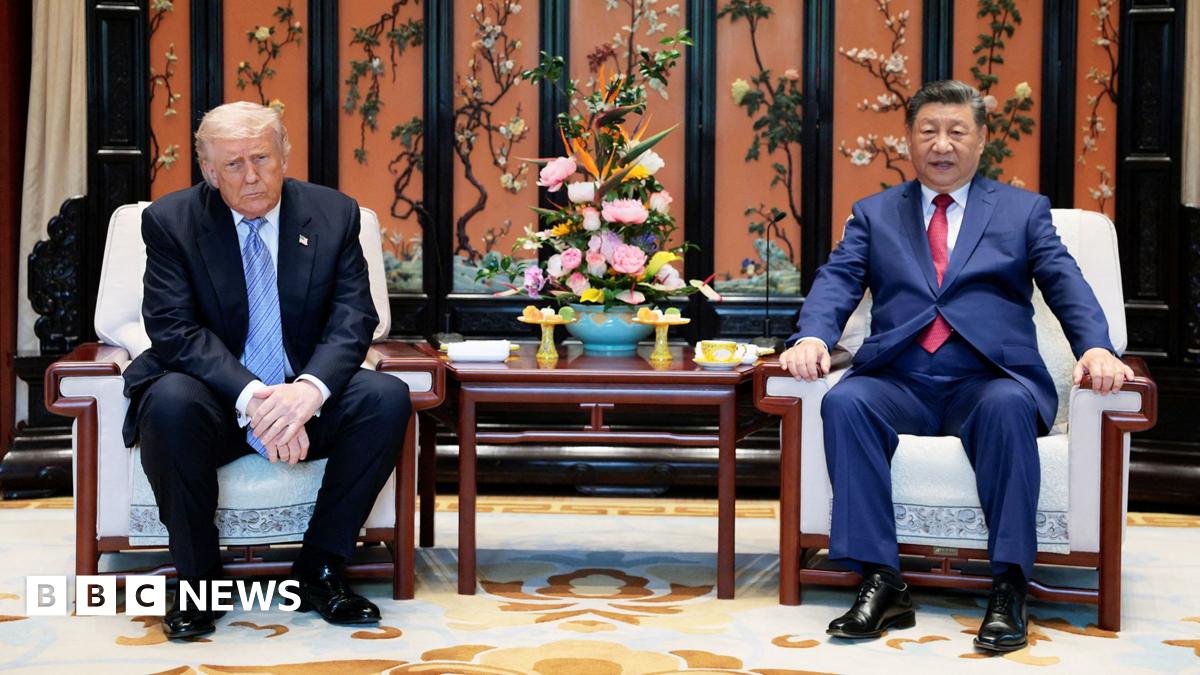
That’s where China comes in, and I’ll be interested to hear more details of what was said and agreed in Beijing [during Trump’s summit with Xi Jinping].

We’re probably a month or two away from this type of deal coming together, because if it lingers much longer then this becomes an unsustainable conflict for the White House.

Q: What is your sense of how long the Iranians can withstand the kind of economic pressure that they’re under now from the blockade?

Singh:
My experience firsthand, in terms of applying maximal economic pressure to an autocratic regime, is they tend to have a much longer runway than democratic, Western leaders assume, because necessity is the mother of invention. They will, they will develop workarounds to get paid through barter arrangements, through crypto, through non-dollar currencies, and it becomes a cat-and-mouse game.

Because their risks are existential, they have a greater incentive to find ways to continue to get paid that are outside of our capacity to detect.

I’ve been very skeptical of claims that the blockade by itself is sufficient to cause the Iranian regime to surrender to an unfavorable deal.



This is a solid read of the current thinking of a former deputy national security advisor who ran the desk at the NY Federal Reserve. He lays out his thought process on dealing with increasing bond yields and he talks specifically on where he thinks the 10yr yield will be by end of year.


Q: How great is the risk of the 10-year Treasury yield getting to 5% in the next couple of months?

Singh:
I think it’s probable. We’re on the cusp of a bond-vigilante trade right now. It’s materializing in the U.K. These moves tend to take on a life of their own, and they don’t self-correct until there’s a policy response.

Q: The 10-year Treasury yield topped 4.6% at one point on Friday, the highest in nearly a year. Yields in the U.K., Japan, and elsewhere are rising. What is your diagnosis of the global bond market?
Singh:
It’s the byproduct of these forces we’re discussing. If we’re going to live in a world in which fiscal deficits continue to increase indefinitely, there’s really not any political will to do something about that, and you have, at least in the U.S., a central bank that’s, let’s just say, uniquely hesitant to hike, then it just stands to reason that the yield curve is going to steepen. Long-term yields will continue to increase, because buyers need more compensation against the fiscal risk and the inflation risk that they’re absorbing now.

If this continues, and let’s say Treasury yields [on the 10-year note] march to 5% or above, it won’t be long before the Treasury secretary says, “Listen, I have a toolkit as well, and I’m not afraid to use it.” The Treasury secretary can shorten the weighted average maturity of our debt issuance, make more aggressive use of the buyback tool, and potentially jawbone the market with the Fed and say we may have to engage in purchases of long-end bonds to align them with long-term fundamentals.

In other words, that is financial repression [when the government artificially holds interest rates down, making debt more manageable at the cost of harming savers, among other risks].

I think that’s the end game for the bond market, because 5%-plus bond yields are not sustainable for a variety of reasons.

Q: Let’s turn to Iran. Can you lay out your thinking on what is happening there?

Singh:
I think neither side has escalation dominance, but neither the U.S. nor Iran fully realizes that reality.

The costs both politically and economically of a ground invasion that effectuates regime change in Iran are too high for President Trump, both because of the casualty count on the ground, but also because Iran would undoubtedly further weaponize its asymmetric advantages in the Strait of Hormuz and the Red Sea.

For Iran, I think it also understands that if it overplays its hand, it may precipitate what it’s trying to prevent, which is the U.S. sending in ground troops.

We require both sides to recognize this reality that neither side can subdue the other, and that’s why we’re in this stalemate.

That’s where China comes in, and I’ll be interested to hear more details of what was said and agreed in Beijing [during Trump’s summit with Xi Jinping].

We’re probably a month or two away from this type of deal coming together, because if it lingers much longer then this becomes an unsustainable conflict for the White House.

Q: What is your sense of how long the Iranians can withstand the kind of economic pressure that they’re under now from the blockade?

Singh:
My experience firsthand, in terms of applying maximal economic pressure to an autocratic regime, is they tend to have a much longer runway than democratic, Western leaders assume, because necessity is the mother of invention. They will, they will develop workarounds to get paid through barter arrangements, through crypto, through non-dollar currencies, and it becomes a cat-and-mouse game.

Because their risks are existential, they have a greater incentive to find ways to continue to get paid that are outside of our capacity to detect.

I’ve been very skeptical of claims that the blockade by itself is sufficient to cause the Iranian regime to surrender to an unfavorable deal.

Thanks for that- insightful.
 
Just when you think this administration can't sink any lower...

Well, there's this...

Trump news at a glance: billions of taxpayer dollars could go to president and his allies in unprecedented move​

If case is settled for full amount Trump is requesting, a $10bn payment would more than double his family’s net worth – key US politics stories from Saturday, 16 May at a glance

 
Like on a loop, but there are all sorts of wacky and off-the-cuff** soundbites they can use.

**Or, according to his fans, wise and considered pronouncements.
1) C’mon, you KNOW what he REALLY means …
2) Oh yeah?!?! <insert crazy grab quote from someone on the other side of the political spectrum here>
 
Last edited:

Yields on U.S. Treasurys advanced Tuesday as investors continued to dump bonds on fears inflation is reigniting. The 30-year Treasury yield hit the highest level in nearly 19 years.

The longer-dated 30-year Treasury bond yield rose about 6 basis points to 5.198%, its highest level since July 2007.
2007....2007....why do I feel like something happened around then...
 
Where is Army.ca data stored?

lord of the rings GIF
 
Back
Top