• Thanks for stopping by. Logging in to a registered account will remove all generic ads. Please reach out with any questions or concerns.

Trust in our Institutions

Has your trust in our institutions changed?


  • Total voters
    57
Speaking of trust...

Ottawa asks FSIN to pay back $28.7 million after forensic audit​


The federal government is asking the Federation of Sovereign Indigenous Nations (FSIN) to repay more than $28.7 million following a forensic audit into its spending.

In a letter dated March 13 and addressed to the FSIN, Indigenous Services Canada outlines its response to the findings of the forensic audit conducted by KPMG that reviewed FSIN’s use of federal funding between April 2019 and March 2024. That audit flagged $34 million in questionable, ineligible or unsupported transactions.

 
Speaking of trust...

Ottawa asks FSIN to pay back $28.7 million after forensic audit​


The federal government is asking the Federation of Sovereign Indigenous Nations (FSIN) to repay more than $28.7 million following a forensic audit into its spending.

In a letter dated March 13 and addressed to the FSIN, Indigenous Services Canada outlines its response to the findings of the forensic audit conducted by KPMG that reviewed FSIN’s use of federal funding between April 2019 and March 2024. That audit flagged $34 million in questionable, ineligible or unsupported transactions.


It's about time. Although I doubt we'll ever see a penny of our ill used taxes. At least it has sunlight on it and just confirms what we've suspected for ages. Same as reserves, where council members drive Denali's and the rest of the band lives in quettos.

Now, about those supposed residential school ground anomalies and our accusations of causing genocide.🙄
 
We could look at it the same way when the government misuses funds.
"Oh that's just a rounding error"
 
Please remember that our system of 'responsible' (vs 'representative') democratic government is very old - it does back beyond Simnon de Montfort and beyond even Magna Carta. It has its roots in the Anglo Saxon 'witan' which, eventually, established control over the king's "privy purse,' and controlled him (or very occasionally her) by limiting his ability to raise taxes. Some historians say that some witans even elected their monarchs when there was not a clear and popularly acceptable choice. (Remember, please, that there were many kingdoms in Anglo Saxon Britain.)

De Montfort gave us the idea of a modern parliament in the 13th century (which he lifted from the Icelandic Althing which was established in the 9th or 10th century) in which every 'commune' (or community) was represented by someone other than just the hereditary lord of bishop - by knights of the shire or burghers (landowners or merchants). We still use his term in Canada: the House of Commons in French is 'Chamber des Communes.)

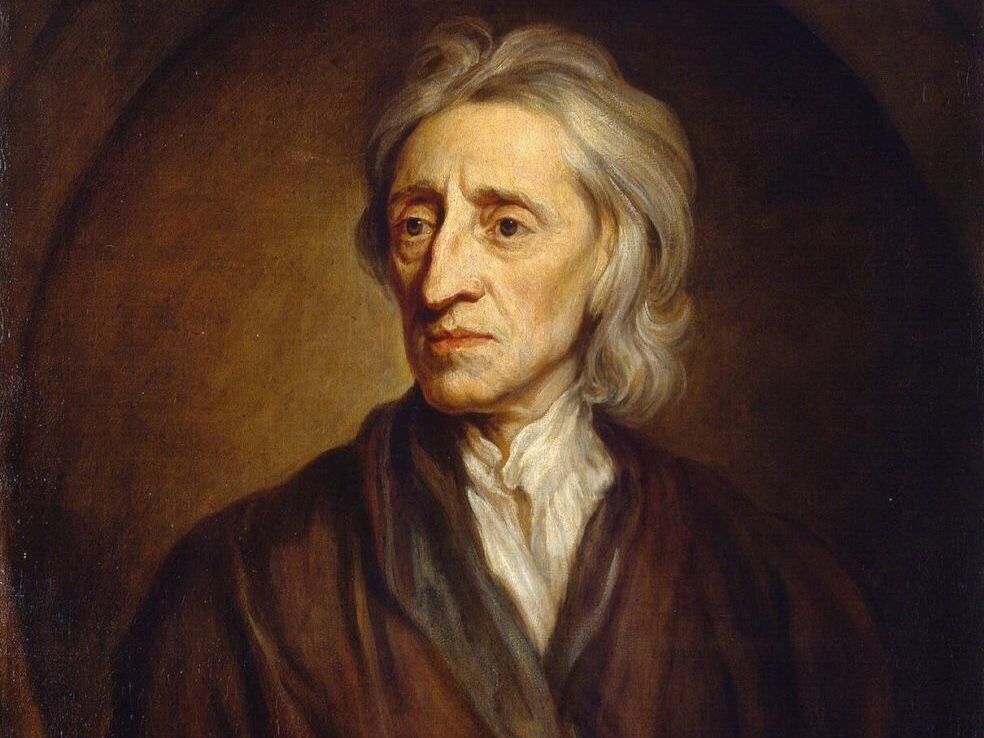
John Locke, in the 17th century, gave Britain (and America) the idea that each individual had certain fundamental, natural (or "inalienable") rights which the sovereign and her for his government was duty bound to maintain but did NOT grant and could not take way.

In the 17th and 18th centuries the British developed the idea that the government, actually the "executive - "the sovereign's "privy council" - was "responsible" to the people by requiring it to have the "confidence" of the House of Commons, of the people's elected representatives. The Americans, and many others, adopted a slightly different system: once elected by a free and fair vote a "representative" government held power for a fixed term.

Canada's constitution represents the first attempt to write a formal, written constitution for a "responsible" ('Westminster' type) parliamentary democracy. It's many flaws, including PEI's Senate seat allocation, for example, were not addressed inter 1970s and '80s when Pierre Trudeau was negotiating the partition and reform of the British North America Act of 1867 because, simply, he didn't care about or even much like "liberal democracy;" his primary interests were: language rights for French Canadians and national management by the political executive.


I miss him.

I think he would have appreciated this article.


"Liberal democracy is in danger. The assertion is often repeated, but the nature of the danger seems to vary. "

...

The underlying premise of the article is that everything needs an underlying premise.

Random chance is a poor basis on which to base anything: argument or institution. That which appears by chance can disappear by chance.

Some things that used to be self-evident are no longer.

Mod edit to fix link to article
 
I miss him.

I think he would have appreciated this article.


"Liberal democracy is in danger. The assertion is often repeated, but the nature of the danger seems to vary. "

...

The underlying premise of the article is that everything needs an underlying premise.

Random chance is a poor basis on which to base anything: argument or institution. That which appears by chance can disappear by chance.

Some things that used to be self-evident are no longer.

Mod edit to fix link to article
Meh. I wasn’t impressed. He says a lot without really saying a lot, but essentially it boils down to an assertion that the fundamental principles of liberalism - free will, human equality, and moral responsibility - can only be rationally defended if we drill down those philosophical notions to the point where they’re founded on belief that humanity is created in the image of the Christians’ god. But it still comes down to blind belief in the end.

If it is possible to believe in some version or another of some deity and to believe that that deity directly or indirectly prescribes these philosophical principles, then it’s just as valid to simply believe directly in notions like inherent human equality, and of course to observe and experience free will directly; one no more needs someone else’a god to believe in ‘free will’ than to believe in gravity or momentum or any of a plethora of other things we can directly and personally do and experience. And to ‘moral responsibility’? Well, that’s more nebulous, but I’ve never found it challenging to believe in right and wrong as they pertain to how my choices affect others without resort to some religion or another.

With that fundamental flaw - that the liberal principles can only stand when faith in their rightness is via indirectly accepting some divine provenance that itself is based on a blind faith - the argument doesn’t ultimately take us anywhere. People are free to choose for themselves a belief that they can only adhere to moral principles that they can link to a divine belief. Trying to generalize that to the rest of us is assumptive and fails to grasp that we are equally capable of believing in rightness directly without needing the middle-deity.
 
Meh. I wasn’t impressed. He says a lot without really saying a lot, but essentially it boils down to an assertion that the fundamental principles of liberalism - free will, human equality, and moral responsibility - can only be rationally defended if we drill down those philosophical notions to the point where they’re founded on belief that humanity is created in the image of the Christians’ god. But it still comes down to blind belief in the end.

If it is possible to believe in some version or another of some deity and to believe that that deity directly or indirectly prescribes these philosophical principles, then it’s just as valid to simply believe directly in notions like inherent human equality, and of course to observe and experience free will directly; one no more needs someone else’a god to believe in ‘free will’ than to believe in gravity or momentum or any of a plethora of other things we can directly and personally do and experience. And to ‘moral responsibility’? Well, that’s more nebulous, but I’ve never found it challenging to believe in right and wrong as they pertain to how my choices affect others without resort to some religion or another.

With that fundamental flaw - that the liberal principles can only stand when faith in their rightness is via indirectly accepting some divine provenance that itself is based on a blind faith - the argument doesn’t ultimately take us anywhere. People are free to choose for themselves a belief that they can only adhere to moral principles that they can link to a divine belief. Trying to generalize that to the rest of us is assumptive and fails to grasp that we are equally capable of believing in rightness directly without needing the middle-deity.

I can agree.

But I believe it is not the nature of the belief that matters but the commonality of belief.

It matters less if a community believes in god or man than that a community shares a common set of beliefs which establish the assumptions on which that community rests and bases their individual actions.

Kipling's "The Stranger" continues to resonate with me.


And I do not think the expressed view is unique to White Anglo Saxon Protestant imperialist colonialist settlers. I think it speaks to a common trait of humanity.

It represents the necessary shorthand developed over millenia that sports teams and armies try to forcibly create. It is the ability to sense without being told what others are thinking, of what they are capable, what they will tolerate and what they are likely to do next.

Our institutions are built on British experience. Currently only one third of the population identifies with the cultures that created those institutions. Even the Irish share the culture that underlies those institutions.

One of the characteristics of those cultures for the best part of a millenium or two was a belief in Christ's God. Another was a strong degree of self-reliance and individualism. A third characteristic was a desire for elbow room.

The French community and virtually all the European settlers shared the Christian belief even as they disagreed with other beliefs. Many of them were more communitarian than Brits.

Although there are Christians among the third of Canadians that have recently arrived they have no sense of the cultures that created the institutions under which they have chosen to live, and the history and assumptions that inform them.

In my view the article addresses those shared assumptions.

Equally, in my view, there is no reason for all incomers to become Christians. But they would be better served if they had a solid understanding of why the compromises represented in our national institutions were agreed. After all it was those institutions and the cultures that created them that resulted in this patch of dirt, one of 200 or so alternates, their preferred destination.

Somebody must have done something right.
 
Back
Top